Video yükleniyor...

Video Yüklenemedi

Ana Sayfaya Dön

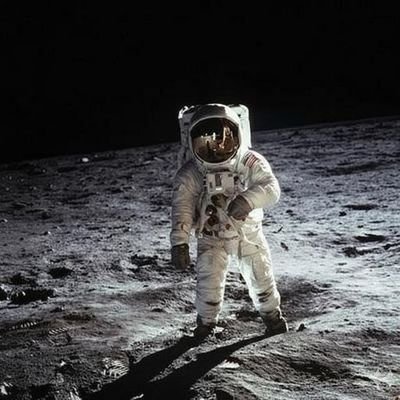
How did SpaceX film inside a 33-Engine Raptor inferno without the camera melting? 🚀🔥 What looks like a camera melting inside a massive explosion is actually a masterclass in extreme aerospace engineering: SpaceX capturing close-up footage of its 33-Engine Raptor ring firing simultaneously. Instead of relying on standard commercial...

36,346 görüntüleme • 2 ay önce •via X (Twitter)

0 Yorum

Yorum bulunmuyor

Orijinal gönderinin yorumları burada görünecek

Benzer Videolar

This guy built a visual scanner that reads 468 points on his face and 42 points on his hands from a regular webcam and turns them into a cloud of thousands of particles right between his palms. Inside, MediaPipe and TouchDesigner are linked: the first captures hands and face from the webcam with high accuracy, the second turns those coordinates into a live plane and feeds it into a POP system that instantly generates a swarm of particles in the shape of a head. No studio, no render farmer, no VR headset. Just a laptop, a webcam, and 1 TouchDesigner session. And traditional VJ studios keep teams of 5 people on a setup with lighting, custom hardware, and commercial plugins, while his expenses are only a TouchDesigner subscription and a regular USB camera. One laptop runs MediaPipe and TouchDesigner simultaneously, holds the camera stream at 60 FPS without drops, and in parallel processes 468 face points + 21 points on each hand. The camera captures frame after frame, MediaPipe in real time sends TouchDesigner the finger coordinates and face geometry, and the POP operator inside the engine translates those numbers into thousands of particle points with colors from bright pink to gold. This setup immediately defines the role of the tool and the limits of its autonomy. It knows where the fingertips are at every moment of the frame. It knows how to read the face geometry at any angle to the camera. It knows how to draw a swarm of particles between them with the right color and contour. → MediaPipe pulls 468 points from the face and 21 points from each hand, 60 times per second → TouchDesigner receives those coordinates, builds a virtual rectangle between the fingertips, and feeds it into the POP system → POP generates thousands of particle points in the shape of a head, coloring them in a gradient from bright pink to gold → The HUD layer adds green corners and a blue neon frame, styling the image like an AR interface → All layers assemble into 1 real-time frame that projects back onto the video in the camera window → The final image is recorded to a file or broadcast to a projector for a live installation And only when the guy spreads his hands wider does the plane between the palms stretch; brings them together, it narrows. Otherwise the system runs on its own. And when he moves from his home room to a concert hall, the same laptop with the same webcam launches the same TouchDesigner session in just 5 minutes, without reconfiguration, without a new team, and without a single line of new code. In his work setup there is no studio of his own and no team for assembly. On the desk sits a laptop with a webcam, on top run MediaPipe and TouchDesigner with POP operators, and the same setup through a USB camera moves to any concert without a new configuration. Out of everything I have seen this year, this is the cleanest Creative Coding setup on 1 laptop: 0 render farms, 0 studio lighting, and between them 3 libraries, thousands of particle points, and 1 webcam.

Blaze

38,242 görüntüleme • 4 ay önce

Realistic footage with Seedance 2.0 👇 Prompt: This is handheld documentary footage recorded on an early-2000s consumer DV camcorder at the construction site of the Great Pyramid of Giza. The footage feels like real, imperfect documentation of one of the largest building projects in history. The recording shows hundreds of workers moving massive stone blocks on a large construction ramp. Teams of men are pulling ropes attached to sledges with heavy limestone blocks. Overseers with sticks walk along the lines giving orders. Dust fills the air. In the background, the partially built pyramid rises against the sky. The work is extremely physical and organized. The camera moves along one of the work gangs, following a team of workers as they pull a large block up the ramp. It occasionally tilts up to show the height of the structure. There are natural cuts between different groups of workers and close views of the ropes straining and the stone moving slowly. The movement of the camera feels like someone walking among the workers documenting the labor. The handheld camera shows constant shake, drifting framing, autofocus hunting in the bright sunlight and dust, exposure changes, motion blur, and the typical look of filming heavy physical work with an old DV camcorder. The person filming is clearly moving through the active construction site. Natural sound only: the sound of hundreds of men shouting and grunting in rhythm, ropes creaking under tension, stones scraping on the ground, and general noise of a massive construction site. No music. The result must feel like authentic, raw footage of the construction of the Great Pyramid, captured on an old camcorder.

TechHalla

71,215 görüntüleme • 2 ay önce

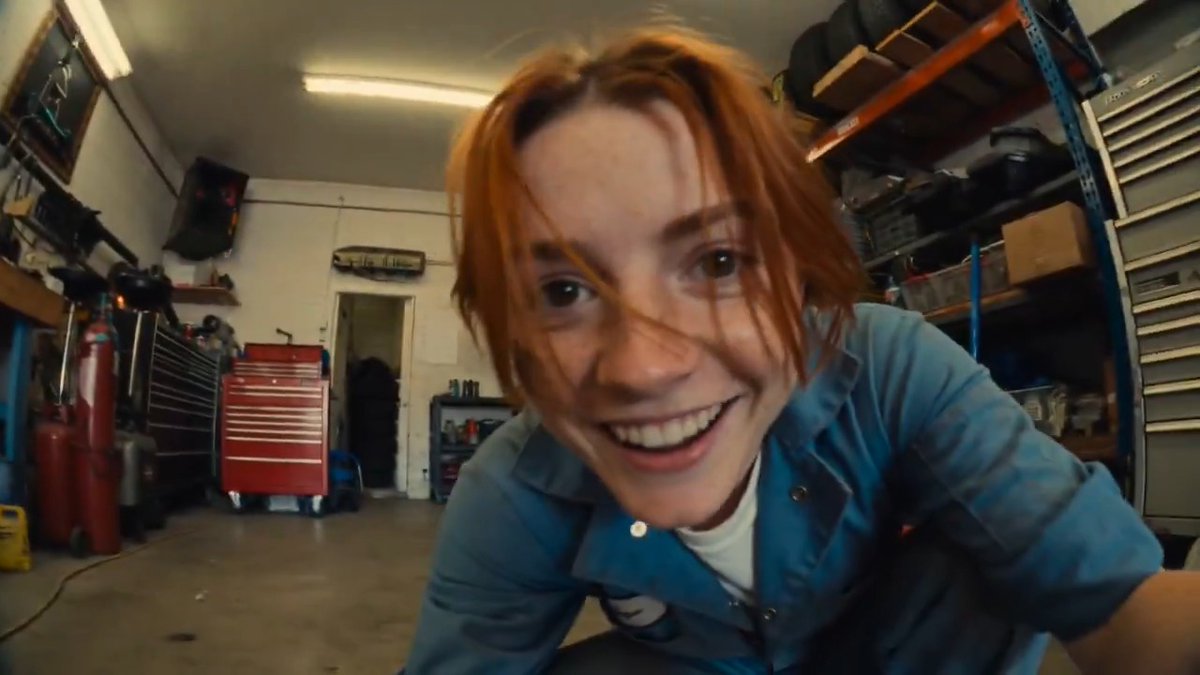
Made with Seedance on Runway. Prompt: 👇 CAMERA: Handheld vintage consumer camcorder footage. First-person footage recorded entirely by RILEY as she documents an afternoon working on an old sports car inside a small independent garage. The camera remains physically handheld throughout. Natural hand tremors, crooked framing, occasional autofocus hunting, abrupt zooms, accidental lens obstruction, shaky low-angle shots and quick selfie transitions. She frequently places the camera momentarily on nearby surfaces before picking it back up, creating imperfect improvised compositions. The physical camera is never visible. LOOK: Authentic late-1990s DV home-video aesthetic. Soft slightly degraded image, mild tape noise, subtle chromatic imperfections, occasional exposure shifts, muted highlights, realistic skin tones and warm fluorescent garage lighting. Slightly nostalgic color reproduction without looking artificially stylized. STYLE: Relaxed DIY car-project vlog with a spontaneous, slightly chaotic atmosphere. Riley talks directly to the camera, jokes about mistakes and gets increasingly excited as the repair progresses. The footage feels completely unscripted and personally recorded. CHARACTER: RILEY — a charismatic woman in her late 20s with short messy auburn hair, freckles, expressive eyes and a practical appearance. She wears faded blue mechanic overalls over a plain white T-shirt, worn sneakers and work gloves. A few strands of hair fall across her face while working. Her clothes become slightly dusty and greasy during the repair. SETTING: A cramped independent automotive workshop on a sunny afternoon. Old tool cabinets, hanging fluorescent lights, shelves of spare parts, hydraulic equipment, scattered tools and an iconic vintage sports car occupying the center of the garage. Sunlight enters through a partially open garage door, creating bright patches on the concrete floor. STORYBOARD: (~2s, low-angle handheld shot) The camera enters the garage while RILEY's footsteps approach the old sports car. RILEY (off-camera): “Today we're finally getting this thing running.” (~2s, quick selfie) She crouches beside the car and grins at the lens. RILEY: “Hopefully.” (~2s, fast whip pan) The camera swings across the engine bay, tool bench and piles of spare parts before settling on the open hood. (~2s, close POV) Her gloved hands work on a stubborn component. The camera moves too close and briefly loses focus. RILEY (off-camera): “Come on…” (~2s, sudden handheld reaction shot) The component finally comes loose. RILEY pulls her hand back triumphantly. RILEY: “YES!” (~2s, camera placed on a toolbox) A static-but-imperfect wide shot captures RILEY leaning into the engine bay while she works. She occasionally glances toward the camera. (~2s, low handheld tracking shot) She climbs into the driver's seat. The camera follows awkwardly through the open door. (~2s, dashboard-level POV) The engine suddenly starts. RILEY freezes for a second, then laughs in disbelief. RILEY: “No way. No WAY!” (~2s, excited selfie) She jumps out of the car holding the camera, grinning with dirty hands and grease on her cheek. RILEY: “Okay, I definitely wasn't expecting that.” The camera shakes as she laughs and reaches toward the lens, ending the recording.

awesome_visuals

19,135 görüntüleme • 1 ay önce

NEWS: SpaceX has released a statement after today's successful 11th Starship test flight. "Every major objective of the flight test was achieved, providing valuable data as we prepare the next generation of Starship and Super Heavy. The flight test began with Super Heavy igniting all 33 Raptor engines and ascending over the Gulf. The successful first-stage ascent was followed by a hot-staging maneuver, with Starship’s upper stage igniting its six Raptor engines to continue its flight to space. Following stage separation, the Super Heavy booster completed its boostback burn to put it on a course to a pre-planned splashdown zone off the coast of Texas using 12 of the 13 planned engines. Under the same angle of attack tested on the previous flight, the booster descended until successfully igniting all 13 planned engines (including one that did not relight during the boostback burn) for the high-thrust portion of the landing burn. The booster successfully executed a unique landing burn planned for use on the next generation booster. Super Heavy hovered above the water before shutting down its engines and splashing down. After completing a full-duration ascent burn, Starship achieved its planned velocity and trajectory. During flight, Starship successfully deployed eight Starlink simulators and executed the third in-space relight of a Raptor engine, demonstrating a critical capability for future deorbit burns. Starship re-entered the Earth’s atmosphere and was able to gather extensive data on the performance of its heatshield as it was intentionally stressed to test the limits of the vehicle’s capabilities. In the final minutes of flight, Starship performed a dynamic banking maneuver to mimic the trajectory that future missions returning to Starbase will fly. Starship then guided itself using its four flaps to the pre-planned splashdown zone in the Indian Ocean, successfully executing a landing flip, landing burn, and soft splashdown. Focus now turns to the next generation of Starship and Super Heavy, with multiple vehicles currently in active build and preparing for tests. This next iteration will be used for the first Starship orbital flights, operational payload missions, propellant transfer, and more as we iterate to a fully and rapidly reusable vehicle with service to Earth orbit, the Moon, Mars, and beyond."

Sawyer Merritt

273,302 görüntüleme • 11 ay önce

Angel of the Gym, seedance prompt: Presented in the style of raw, handheld iPhone video footage, with all camera settings set to automatic, no post-processing color grading or special effects. The footage features slight hand-held shake and the operator's breathing sensation, occasional autofocus searching, delay, and brief loss of focus, automatic white balance switching between gym lighting and natural light. The image is flat overall, preserving real edge color fringing, slight overexposure, motion blur, and other optical imperfections. Only in-camera natural ambient sounds are used, including gym equipment sounds and faint air conditioning noise. Shot from a first-person handheld perspective, with natural reactive camera movements, occasionally slight swaying due to walking or adjusting angles. Medium and close-up compositions alternate, clearly showing the full body and action details of a plus-size Asian woman. Wearing the reference image of an elegant gold-embroidered long dress, she is exercising in the gym. She is wearing this formal dress, using cable machines and seated machines. At 0 seconds, the camera focuses on the woman from a medium shot, she is standing in front of the cable machine, hands gripping the handles ready to pull, the dress naturally flowing down. She slightly bows her head, quickly glancing at the camera with a hint of shyness. At 1 second, she starts pulling the cable with force, her body swaying back and forth, the sheer shoulder cape and skirt fluttering slightly with the movement. She frowns slightly as she exerts effort, occasionally looking up at the camera with a shy gaze. At 2 seconds, the woman continues pulling the machine, her movements accelerating, the dress fluttering with her body's sway. She looks up with a faint smile on her lips as she gazes at the camera. At 3 seconds, she stops pulling and walks to the nearby seated machine, sitting down, the dress swaying significantly with the movement. She lowers her head to adjust the hem and collar of the dress, her face showing a shy expression. At 4 seconds, she sits on the machine, leaning slightly forward, hands placed on her legs adjusting her posture. As she lowers her head to adjust her clothes, she looks at the camera with a shy gaze. At 5 seconds, she gently places her hands on her chest, slightly tilting her head up as she looks at the camera, a natural, slightly shy smile on her lips. At 6 seconds, she remains seated on the machine, looking at the camera with a soft gaze, a shy yet happy smile on her face, slightly adjusting her sitting posture. At 7 seconds, she stands up from the machine, the camera follows her movement, the dress fluttering slightly as she walks. She looks back at the camera with a shy and gentle smile. The footage presents a genuine, raw, handheld video quality with a documentary-level sense of natural imperfection, without any post-processing color grading or special effects. All camera behaviors conform to the physical characteristics of an iPhone being used in a gym.

John

61,102 görüntüleme • 4 ay önce

how to prompt undetectable ai shots while designing a running scene, first think about these 3 basic questions: how does the camera move? what is it looking at? where does it stop? a good motion prompt is really just a timeline it needs to follow real-world physics, and it needs to carry story at the same time 1. start with the narrative goal of the shot camera movement is not just movement it is the storytelling so before writing the prompt, define what the shot is trying to do for example, in a 15-second one take, the goal could be: follow the female lead laterally while she runs, to build speed and tension then briefly reveal the people chasing her then let the camera hesitate for a moment and find her again that small “lose and recapture” moment adds spatial depth and makes the chase feel more intense 2. build a clear space for the camera to work in if the space is vague, the shot gets messy very fast i like breaking the scene into layers so the model knows where everything belongs foreground: passing objects, environmental motion main subject layer: the woman running midground: cafe tables, pedestrians, the people chasing her background: the vanishing point of the street, and the entrance to the pedestrian area once the space is clear, the camera has a stage to move through 3. describe motion like a physical process a good moving shot has to respect inertia if the movement feels weightless or too perfect, it instantly feels fake so instead of using broad words, describe a chain of actions the camera can actually perform what accelerates what slows down when it adjusts when it slightly overshoots when it catches itself again that little bit of imperfection is usually what makes it feel real 4. use focus as part of the storytelling in a one take, focus is one of the best ways to guide attention you can design moments where focus shifts with intention for example: focus briefly drifts from the chasers’ faces, passes beyond them, lands on the woman in the distance, then quickly pulls back again it feels like a small mistake, but that’s exactly why it works it simulates a camera operator re-evaluating the subject in the middle of a fast-moving shot that kind of temporary focus loss and recovery adds a lot of immediacy and documentary feeling 5. build the sound space with the camera sound should move with the shot when the camera turns toward the chasers, the woman’s breathing should fall deeper into the sound field, while the chasers’ footsteps and breathing move to the center when the camera finds the woman again, her breath becomes the main sound again that shift in audio perspective helps the scene feel much more immersive it’s not just about what we see it’s also about where we feel the scene from 6. use negative constraints to stop common ai mistakes this part matters a lot i usually add clear “don’ts” at the end to stop the model from breaking the shot for example: no cuts no teleporting zooms no sliding characters no body fusion no floating props the travel bag must keep believable weight and inertia these negative constraints act like guardrails they help keep the result inside a believable physical world for me, the core of a strong motion prompt is simple: organize space, camera, focus, action, and sound into one executable timeline that’s really the difference instead of prompting a vague feeling, you’re designing a physical process and that’s usually what helps ai generate a moving shot that feels coherent, grounded, and full of tension

el.cine

14,644 görüntüleme • 1 ay önce

When darkness rises, legends answer. One flaming strike is all it takes to change destiny Credit: SeaArt.Ai🐋 SeaArt Creator Lab Prompt: Epic fantasy battle scene in a volcanic wasteland at night. A towering demonic monster with glowing lava cracks across its body faces a fearless armored warrior. The camera rapidly orbits around the combatants in a fast cinematic 360-degree motion, creating intense speed and energy. Sparks, ash, and embers swirl through the air as the ground trembles beneath them. The demon suddenly lunges forward and swings one of its enormous razor-sharp claws in a devastating attack. The claw tears through the air with explosive force, generating shockwaves, flying debris, and motion blur. At the exact moment of impact, the warrior dashes forward fearlessly. The warrior's legendary sword ignites with blazing orange and golden flames, fire wrapping around the blade and leaving a bright trail of sparks. In a dramatic slow-motion moment, the warrior unleashes a powerful flaming slash directly toward the demon. The fiery sword arc cuts through the darkness, illuminating the battlefield with intense light. Flames erupt outward as the attack connects, creating a massive explosion of fire, sparks, smoke, and molten energy. Ultra-detailed cinematic visuals, dynamic camera movement, dramatic lighting, volumetric smoke, realistic fire simulation, epic fantasy atmosphere, high contrast, action-packed choreography, motion blur, particle effects, AAA game cinematic quality, Unreal Engine 5 style, 4K, highly detailed textures, masterpiece, intense and heroic mood.

Hope Ai

17,560 görüntüleme • 2 ay önce

seedance 2.0 Our website is now live. prompt: Theme: The final play in the atmosphere of the NBA Finals, a superstar's step-back three-pointer for the game-winning shot. Duration: 15 seconds. Frame: 9:16. Vertical screen. Style: Ultra-realistic sports live broadcast + cinematic bullet time replay of key moments. Core principle: Like a live broadcast, not a game, not a commercial studio shoot. 15-second storyboard: 0.0s - 2.5s Close-up sideline shot, the protagonist dribbles the ball at a 45-degree angle on the right side. The arena is packed, with a real score bar and countdown at the top. The camera shakes slightly, like a handheld stabilizer used with a telephoto lens for broadcasting. The rubbing of shoes and the suppressed cheers of the crowd can be heard. 2.5s - 5.0s The defender closes in, the protagonist dribbles and changes direction repeatedly, probing with his shoulder, the physical contact is obvious. The camera zooms in on the dribbling area above the chest and waist, sweat, breathing, and jersey movements are clearly visible. The basket remains visible in the upper part of the frame. 5.0s - 7.0s The protagonist suddenly stops and steps back, creating half a step of space. The timer has only 2 to 3 seconds left. The commentator's volume rises, and the audience begins to stand. This is a build-up of emotion, no slow motion. 7.0s - 8.5s: Jump and release, entering bullet time. The camera circles in a semi-circle from the protagonist's side and front, moving at an extremely slow speed. Focused close-ups: fingers flicking the ball, beads of sweat hanging in the air, jersey fibers, shoe soles leaving the ground, audience flashes, the backboard and lights creating a strong sense of spatial depth. 8.5s - 10.5s: Instantly returning to normal speed, the basketball arcs high towards the basket. The camera zooms in slightly, the net, rim, and scoreboard all in focus. The sound effects tighten, briefly lowering the ambient noise to make the basket more impactful. 10.5s - 12.0s: Swish through the net, the "swish" of the net is very clear, the buzzer sounds almost simultaneously. The score changes, the commentator explodes, the audience erupts. 12.0s - 15.0s: The protagonist lands, turns around, and roars or spreads his arms in celebration; teammates rush over, the audience erupts in cheers, and cell phone flashes fill the screen. The camera then switches back to a live broadcast style, retaining a slight sense of compression and the chaotic atmosphere of the scene, like capturing the actual moment after the match.

underwood

33,358 görüntüleme • 5 ay önce

Grok Imagine Cinematic Prompt A cinematic, wide-angle shot of a massive, heavily armored mecha sniper emerging from a thick layer of ice and snow in a desolate arctic tundra. The mecha is pristine white and industrial, featuring a colossal railgun-style sniper rifle with glowing blue energy components. It shifts into a stable firing stance, shedding chunks of ice as it moves. The Shot Sequence: The Activation: Close-up on the barrel as blue electrical arcs and a swirling energy vortex charge up at the muzzle. A high-tech digital HUD overlay flickers across the screen with targeting data. The Firing: The railgun fires a powerful kinetic blast, creating a massive sonic boom and shockwave that clears the snow. The Impact: The camera follows a high-speed projectile or a jet-propelled craft streaking across the frozen plains at ground level, leaving a dual trail of displaced snow behind it, culminating in a massive explosion against a distant ice wall. Environment & Atmosphere: Setting: A vast, wind-swept arctic landscape with towering icebergs and a heavy, overcast grey sky. Lighting: Cold, diffused natural light with high-contrast glowing blue accents from the mecha’s sensors and weaponry. VFX: Realistic particle effects for falling snow, shattering ice, and swirling mist. Heavy motion blur on the high-speed chase sequence. Style: * Ultra-realistic 3D animation, 8k resolution, cinematic sci-fi aesthetic, reminiscent of Armored Core or Metal Gear Solid. Quick Tips for AI Generation: Keywords: "Mecha," "Railgun," "Arctic Tundra," "Energy Vortex," and "Cinematic HUD" are your best friends here. Lighting: Specifying "Cold lighting" or "Overcast" helps maintain that desolate, frosty mood.

Thoughts Creator

23,678 görüntüleme • 4 ay önce

🚨 SPACEX IS ABOUT TO TEST A RADICALLY DIFFERENT KIND OF SPACECRAFT AND IT COULD UPEND THE ENTIRE ORBITAL MANUFACTURING INDUSTRY. On Tuesday, SpaceX plans to fly the first prototype of Starfall, a flat, disk-shaped reentry capsule designed to return up to 1,000 kilograms of cargo from orbit in a single flight. That’s roughly 30 times more payload capacity than current commercial return vehicles (like those from Varda Space Industries). It’s not a scaled-down Dragon it’s a completely different approach: no onboard deorbit engine, a wide flat disk geometry, and Starlink terminals mounted to maintain communication through the plasma blackout during reentry. Why this matters: • Current orbital manufacturing companies are limited to returning only dozens of kilograms per mission • Starfall’s design could make large-scale commercial production in space economically viable for the first time • SpaceX would be directly competing with companies (like Varda) that currently pay SpaceX to launch their capsules • Successfully testing Starlink through reentry plasma would be a major technical win with applications across SpaceX’s vehicles The deeper implication: SpaceX is quietly expanding its vertical integration. They already dominate launch. Now they’re moving into the return leg of the orbital manufacturing supply chain the part that has been the biggest bottleneck for companies trying to make products in microgravity and bring them back to Earth. If Starfall works at scale, it doesn’t just give SpaceX another revenue stream. It gives them significant control over the economics of an entire emerging industry. The disk shape and high-capacity design suggest they’re thinking about high-cadence, lower-cost returns rather than the traditional high-value, low-volume approach. This is classic SpaceX: take an existing problem (expensive, low-capacity return from orbit), apply first-principles thinking to the vehicle design, and try to make it dramatically cheaper and higher volume. How do you think this move into orbital return changes the competitive landscape for companies trying to build businesses in space manufacturing? Follow for more analysis on SpaceX’s expanding role across the space economy.

TheNewPhysics

445,776 görüntüleme • 3 ay önce

"But where's the flash?" Watch this CNN demonstration of 6g of PETN being ignited by open flame. What happens? The PETN burns with a visible flame for several seconds. Then it detonates. The detonation happens so fast there is no visible flash — the camera goes straight from fire to debris field. And here's the key: the fire that WAS there is blown OUT by the blast wave. This is not a shaped charge. This is unconfined PETN in open air. No flash. No fireball. The blast wave actually extinguishes the existing flame. Why? Three reasons: PETN's reaction zone is measured in microns and completes in nanoseconds (Anderson et al., Propellants Explosives Pyrotechnics, 2022). At gram scale, the entire detonation event is over in single-digit microseconds. A 30fps camera captures 33,000 μs per frame. The event occupies <0.03% of one frame. The visible "flash" people expect from explosions comes from compression-heating of surrounding air — not the explosive itself. At gram scale there simply isn't enough gas volume being heated to produce visible light that registers on a standard camera. In a shaped charge, it's even less visible because the energy is directed INTO the target as a hydrodynamic metal jet (Munroe effect), not radiated outward as heat and light. The Hezbollah pager attacks (Sept 2024) used 3-6g PETN per device. Watch the CCTV footage — no fireballs. Just a pop and casualties. Sandia National Labs detonates ~32mg PETN and researchers stand next to the chamber in safety glasses. No flash. No fire. "No flash = no explosive" is a Hollywood education, not a physics one. Joe Rogan shaw

Jon Bray

25,456 görüntüleme • 5 ay önce

We have released Seedance 2.0. Due to the 2500-character limit, please translate the following prompts into Chinese before use. [Technical Specs] Generate a 10-second, 16:9, 720p cinematic video. Smooth continuous camera motion with no cuts. The overall pacing is fast and tightly compressed, with rapid escalation from start to finish. Audio evolves quickly from a high-performance engine idle into intricate mechanical shifting and clicks, culminating in a soft electronic chime and the distinct sound of a "mwah" blowing kiss. [Global Constraints] Only the evolving mechanical character appears; no other humans or characters. All transformations must follow physical logic and maintain structural continuity. No object should pass through or intersect with other solid objects. Every robotic component must originate from visible parts of the Porsche 911 (doors, hood, wheels, chassis) through unfolding, splitting, or reconfiguration. [Scene Setup — 0:00–0:01] A sleek, metallic silver Porsche 911 sits on a rain-slicked futuristic city street at night, neon lights reflecting off its polished surface. The camera starts at a low-angle front-quarter view and begins a fast, smooth tracking-arc towards the side. [Rapid Transformation Initiation — 0:01–0:03] Transformation triggers instantly. The car’s suspension drops, and the frame begins to fracture into a complex grid of panels. The doors swing open and begin to segment into articulated arm structures. The front hood splits down the center, folding inward to reveal a glowing internal core. The headlights flicker and start to reorient as the "eyes." [Accelerated Feminine Reconfiguration — 0:03–0:07] The mechanical action is dense, overlapping, and fluid, emphasizing graceful but powerful motion. Lower Body: The rear wheels and wheel arches split and rotate downward, reassembling into slender, high-heeled mechanical legs. Torso: The roof and rear engine cover slide and compress, forming a sleek, curvaceous hourglass torso that retains the car’s aerodynamic lines. Arms & Hands: The side mirrors and door panels unfold into delicate but strong hands and fingers. Head: The front bumper and emblem area segment and rise, folding into a feminine-shaped head with a sleek metallic "helmet" visor. [Logical Transformation Constraints — No Spontaneous Appearance] The robot’s "skin" is composed of the car's outer silver panels. The internal frame and wiring emerge from the engine and undercarriage. No parts appear out of thin air; every joint is a reconfigured automotive component. [Transformation Completion — 0:07–0:08.5] The robot stands tall and elegant. The silver panels lock into place with a satisfying "click," revealing glowing blue LED accents in the seams. The silhouette is clearly feminine, humanoid, and sophisticated, reflecting the premium design of the original vehicle. [Final Hero Ending — 0:08.5–0:10] As the robot stabilizes, the camera performs a rapid, smooth zoom-in (Dolly-In) directly to her face. The robot tilts its head slightly, and the optic sensors (eyes) brighten. It brings its mechanical hand to its metallic lips and performs a graceful blowing kiss (fly-kiss) gesture toward the camera. The video ends with a close-up of the face, capturing the reflection of neon lights in its visor just as the kiss is released. [Cinematography Notes] Continuous Motion: No cuts or fades; the camera must transition from the car-tracking shot to the face-zoom seamlessly. Material Consistency: The robot must maintain the exact metallic silver paint, texture, and reflections of the Porsche. Energy: The transformation should feel high-energy and "force-driven," while the final gesture is soft and charismatic.

underwood

19,462 görüntüleme • 5 ay önce

This is a turbine blade from a 571 MW General Electric gas turbine. It sits inside the hottest part of a machine where combustion gases can reach roughly 1,600°C, while the turbine rotor spins at 3,000+ rpm depending on the grid. At that speed the blade tips are a couple of metres out and the centrifugal load is in the range of something like 10,000+ g or more. And yet this blade isn't bolted to the rotor. It’s root slides into a precision Fir-tree groove machined into the turbine disc, spreading the enormous centrifugal load across multiple contact surfaces instead of concentrating it through a fastener. The hottest first stage buckets are single crystal nickel superalloys like Rene N5 or similar. No grain boundaries, which is what would fail first under the heat and creep The blade is also cooled internally and protected by thermal barrier coatings, allowing the metal itself to remain far below the temperature of the gas flowing around it. At full power you’re looking at 571 MW and about 93 tonnes of natural gas burn rate an hour, that’s roughly a tonne and a half every minute. And the exhaust still contains enormous amounts of usable heat. In a combined cycle plant, that heat is recovered in a heat recovery steam generator, which boils water into steam. The steam then drives a second steam turbine, extracting energy that would otherwise disappear out of the exhaust into the environment. The result is more than 64% thermal efficiency, compared with about 44% for the gas turbine operating alone. For a sense of scale, A single gas turbine installation of this scale can supply electricity equivalent to roughly 600,000+ homes. What’s still odd is that, the blade carrying all of this load can still look like a simple piece of metal being hammered into a slot to the untrained eye. Source, 1989alibek

Ammanichanda

85,980 görüntüleme • 1 ay önce