正在加载视频...

视频加载失败

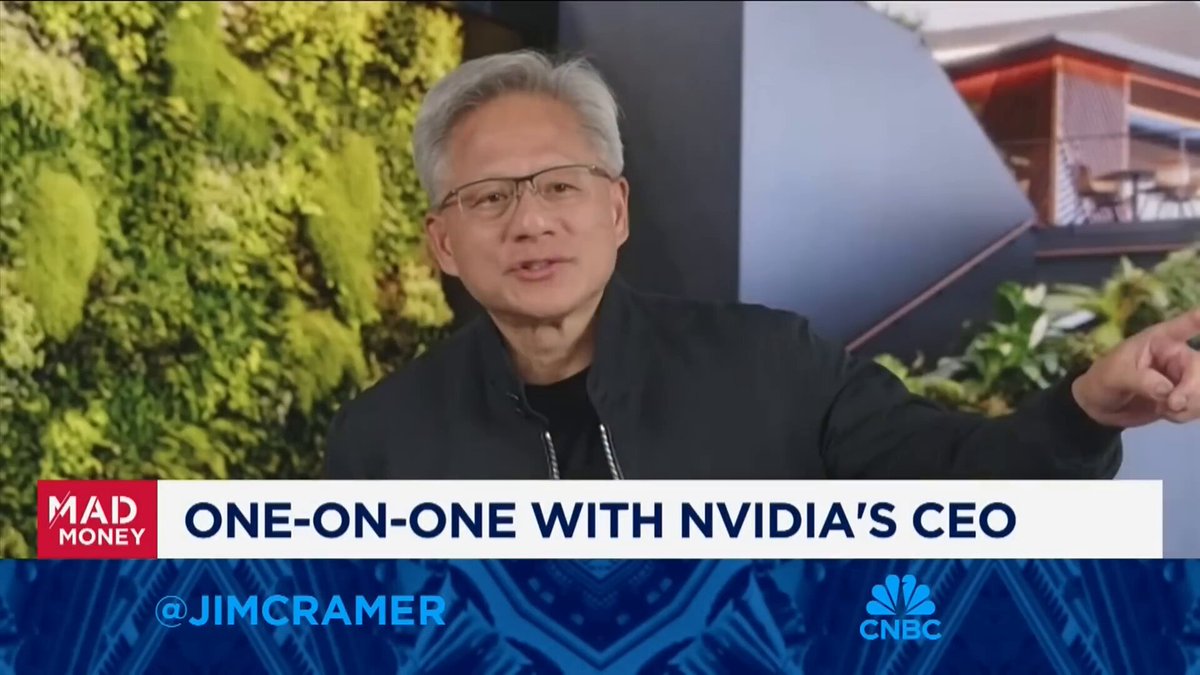
How does the U.S. win the AI race without tightening export controls on advanced AI chips to China? NVIDIA CEO: • China will not base its defense on Western tech • The Pentagon doesn’t use Chinese chips • China has domestic AI chips (Huawei, startups) and manufactures at scale,...

156,952 次观看 • 9 个月前 •via X (Twitter)

0 条评论

暂无评论

原始帖子的评论将显示在这里

相关视频

Jensen Huang just made the most direct argument of his career about why banning Nvidia from China is not a national security strategy but rather a national security failure. Dwarkesh asks why Nvidia should be allowed to sell chips to China at all, if China would just use Huawei chips without them. Jensen's answer was that in the absence of a better choice, you take the only choice you have. As long as China has to settle for inferior chips, they are building their AI infrastructure on a foundation that is slower, harder to program, and years behind American technology. The moment the US decides to ban Nvidia from selling to China entirely, it removes that disadvantage. China is 40 percent of the global technology industry, Jensen said. Conceding that market, handing it entirely to Huawei is a disservice to American national security, American technology leadership, and American economic power. The data shows what has already happened since the export bans tightened. Nvidia's share of China's AI chip market collapsed from 95 percent to 55 percent in 2025 and at one point during the H20 ban, Jensen himself declared Nvidia had gone from 95 percent share to zero on advanced accelerators. The Trump administration's ban on H20 chips cost Nvidia an estimated 15 billion dollars in lost sales, plus a 4.5 billion dollar inventory write-down. Without the export controls, Nvidia was on track to generate roughly 23 billion dollars in H20 chip sales to China in 2025 alone. Meanwhile Huawei shipped 812,000 AI chips in 2025 and Beijing has now mandated that all state-funded data centers must switch to domestic chips. Jensen's deeper argument is about the global stack, not the quarterly revenue. When developers around the world build AI on CUDA, Nvidia's programming platform, they are building on American technology. When those AI models deploy into every country, the American stack goes with them. Cutting Nvidia out of China does not slow Chinese AI but rather accelerates the construction of a parallel Chinese tech stack that, once built at scale, competes with American technology everywhere else in the world.

Milk Road AI

21,133 次观看 • 3 个月前

The Great Chip Comedy of 2025: A Tragedy in Three Acts 🎭 Last night on Fox News Nvidia’s CEO Jensen Huang—once the poster boy of U.S. tech arrogance—has now been reduced to pleading on Fox News like a rejected lover: "Let us back into China, please!” Act I: US bans Nvidia from selling chips to China to "protect national security" Act II: Nvidia's China market share drops from 95% → 0% Act III: Huang Jensen begs on Fox News to return to China, confessing... 😂 "America underestimated China. Now they make millions of AI chips on their own. They don’t need us" anymore Oops - The very architect of America’s AI boom admits: the blockade failed. Spectacularly While Washington clung to fantasies of “decoupling” and "tech containment" China didn’t just catch up—it started to leapfrogged. Huawei’s Ascend chips, Alibaba’s AI stacks, Baidu’s homegrown models… the U.S. didn’t slow China down, it accelerated China’s self-reliance And now Huang’s desperate refrain: "Excluding Nvidia hurts America more than China" Of course it does! You can’t weaponize your own market access and expect the world to keep buying your overpriced, politically poisoned chips of which Huang has to give Uncle Sam 15% of his China sales - like some digital protection racket Meanwhile, back in Beijing, regulators aren’t just watching—they’re auditing and investigating. H20 chips? Politically poisoned chips might also have Backdoors? Monopoly violations? Oops. Turns out, “trusted partner” status doesn’t survive U.S. coercion😉 Washington's "tech containment" strategy achieved what Beijing's industrial policy couldn't: convincing Chinese companies to ditch foreign chips and build their own - on course to outgrow and surpass their foreign competitors ✌️ Full interview link:

StarBoySAR 🇭🇰 🇨🇳 🥭

39,027 次观看 • 8 个月前