Video wird geladen...

Video konnte nicht geladen werden

Zur Startseite

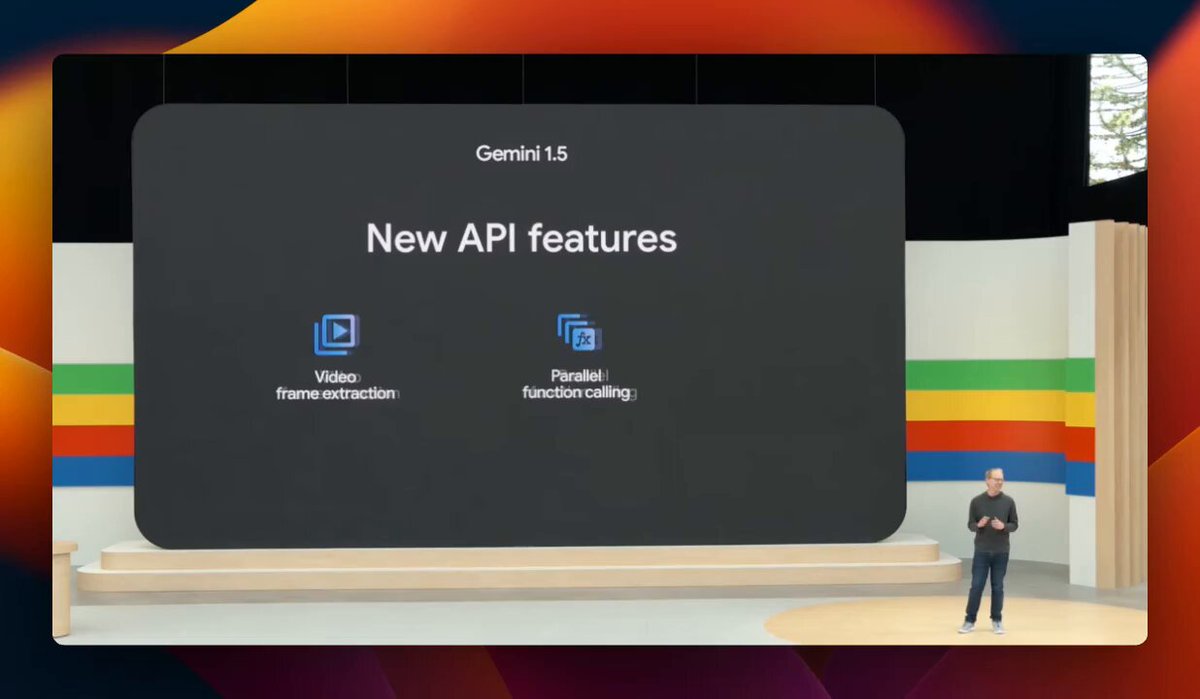
How much better are the internal, unreleased models at frontier labs like Google, OpenAI, and Anthropic? We got a glimpse exactly one year ago today, when Google accidentally leaked the “Kingfall” model "Kingfall" was likely an unreleased Gemini 2.5 Ultra-sized model. It was available in AI Studio for only...

12,010 Aufrufe • vor 1 Monat •via X (Twitter)

0 Kommentare

Keine Kommentare verfügbar

Kommentare vom Original-Post werden hier angezeigt

Ähnliche Videos

AI Is Moving Beyond “Generating Videos” — Toward “Generating Worlds” Over the past two years, AI video models have advanced at an astonishing pace. From Runway and Pika to Sora and Veo, AI-generated videos have become increasingly realistic and more consistent with the physical laws of the real world. Many people believe the next objective is simply to generate videos that are longer, sharper, and more lifelike. But if we take a step back, we can see that the real transformation is not happening in video itself. It is happening in world models. What Is a World Model? In 1943, psychologist Kenneth Craik proposed an idea that would influence artificial intelligence research for decades. He argued that the human brain does not merely react to the outside world. Instead, it maintains an internal model of how the world works. Because we have this internal model, we can predict the outcome of an action before we actually take it. Before crossing a road, we estimate whether a car will pass by. Before catching a ball, we predict its trajectory. These abilities come from continuously simulating the world in our minds, rather than relying entirely on trial and error. This idea later became known by a more formal term: World Model. A world model does not describe a single image or a fixed video clip. It is an internal representation capable of continuously simulating the rules and dynamics of the real world. Why Is AI Research Turning Toward World Models? Because predicting “what comes next” is becoming increasingly central to how AI systems work. Language models predict the next token. Image models predict the next step in the denoising process. Video models predict the next frame. A world model, however, attempts to predict something broader: What should the world look like in the next moment? In 2018, David Ha and Jürgen Schmidhuber proposed in their paper World Models that an intelligent agent could first learn a model of the world, and then use that internal model to plan its actions. The Dreamer series later demonstrated that many complex tasks could be learned by training agents inside an “imagined world.” At the same time, the development of video models such as Sora and Veo led researchers to another realization: A model capable of continuously generating video has already learned, at least implicitly, many of the rules governing the real world. As a result, these two research directions have gradually begun to converge. But Video Is Not Yet a World This is where the distinction is often misunderstood. For a world model to support meaningful real-time interaction, it must solve several critical problems. Most video models today are essentially answering one question: What should the next frame look like? A true world model needs to answer much more: What happens if I take one step forward? If I walk behind a building and then return, will the building still be there? If I suddenly change the camera angle, will the entire space remain consistent? If I enter a command such as: “Summon a dragon.” Will the world respond immediately? In other words, a world model must do more than generate content. It must understand space. It must understand time. It must understand causality. And it must understand interaction. Moving from watching to participating is where the real difficulty of world models begins. World Models Are Entering the Interactive Era One of the latest attempts in this direction is Alaya World, recently open-sourced by Alaya World, or Alaya Lab. Instead of generating a fixed video clip, it generates a world that users can explore in real time. Users can begin with text, an image, or a video, enter the generated scene, move freely through it, and introduce new prompts at any moment during generation. The world responds immediately. According to the publicly released information, Alaya World provides: Real-time streaming generation at 720p and 24 FPS Stable continuous exploration for more than one minute The ability to switch prompts and trigger skills or events during generation Model weights and inference code released under the Apache 2.0 License Training code and datasets planned for future release What makes these capabilities important is not simply the technical specifications. It is that the generated “world” can now support continuous interaction. The official demo shows that users can genuinely control, transform, and explore the generated environment. AI Is Evolving From a Tool Into an Environment Over the past few years, most discussions around AI have focused on content generation. Generating text. Generating images. Generating videos. But world models raise a fundamentally different question: Can AI generate an environment that people can inhabit, explore, and continuously evolve? If the answer is yes, the impact will extend far beyond video generation. Game development, robotics training, embodied intelligence, digital twins, virtual production, and many other fields could be transformed by the development of world models. World models are still at a very early stage. Yet from Craik’s proposal of an internal mental model more than eighty years ago to the emergence of today’s interactive world-generation systems, a clear evolutionary path is beginning to take shape. Perhaps what AI is ultimately learning has never been limited to images, videos, or language. Perhaps it is learning the world itself. References GitHub: Technical Report:

雪踏乌云

108,380 Aufrufe • vor 1 Tag

Samsung Galaxy S25 Ultra has completely targeted its competitors at the iPhone, and no longer competes with Chinese brand phones. This is because young people in South Korea are almost completely occupied by Apple, and Samsung’s strategy is to pull these young people back, so it strives to make Galaxy look like the Apple iPhone. There are several reasons for not competing with Chinese brands: 1. On the surface, although the Chinese Ultra models have powerful cameras and are suitable for those who pursue the ultimate in images, they are only limited to these people. Overall, the sales of Ultra models are not high, and even the sum of all brands of Ultra models cannot be compared with the sales of S24Ultra. 2. Moreover, these models with powerful cameras are relatively thick and heavy, with serious camera bulges, and the design is not perfect. It cannot be perfect. This design may not be suitable for everyone. Samsung will not easily take the risk to adopt this design in the global market. 3. The infinitely enhanced camera configuration will greatly increase the cost, which is difficult for Samsung to accept, and the production of this frequently updated camera may not be able to support Samsung's sales demand of tens of millions. In short, the Chinese brand Ultra model is more like a special non-popular model suitable for geeks. The Galaxy S25 series is defined as a popular model, and it must consider everyone's feelings and sufficient supply. This is why Samsung will not design the S25 Ultra as a Chinese brand Ultra. It remains consistent with the iPhone 16 Pro Max, but subtly. It is always slightly better than it For example, it is a little thinner (8.2mm vs 8.25mm), a little lighter (219g vs 227g), a little narrower bezel, a little stronger performance, a little more camera (retain 3x), a little more ultra-wide-angle pixels (50MP vs 48MP), a little bigger battery, and a little faster charging. Even the most incredible improvement: One UI 7.1 is a little smoother than iOS18 software. This is happening.

Ice Universe

347,352 Aufrufe • vor 1 Jahr

Most recent diffusion language model research (that I’ve seen) seems to be using masking as the noising process. It looks like, however, most closed-source models (Google Gemini Diffusion and possibly Inception Labs’ Mercury) use a different noising process, where instead of masking tokens, they replace them with different tokens (either with a random token or a semantically similar token). I wondered how they were getting such high throughput with the latter noising process, since I believed that optimizing inference with KVCache approximation would be more difficult (for various reasons). I visualized this noising process with tiny-diffusion and compared it to normal unmasking, and was very surprised to see how fast the generation “settles” into a reasonable output, and then only slightly refines afterwards, requiring much fewer steps in total. Unmasking (where tokens are never remasked, the typical implementation) is inherently limited in generation speed by the fact that an increase in tokens decoded per step leads to more errors due to the mismatch between individual and marginal token probability distributions we sample from. The token replacement noising process seems to have a much different set of characteristics. Because we sample each token per step, every token makes “progress” towards the final output each iteration (in addition to *potentially* giving other tokens more information in future steps). Generally, masking has outperformed other noising processes, which is probably why most research focused on it (using smaller models). But the paper referred to in the retweet shows that random replacement as a noising process may scale better as model size increases. Big labs might have noticed these results much earlier (due to having drastically more training resources and being able to test larger models), which may explain the discrepancy in the choice of noising process. I’m gonna test this with larger models, since tiny-diffusion only has 10M parameters.

nathan (in sf)

40,440 Aufrufe • vor 6 Monaten

Fable 5 comes back!It can now build playable game prototypes. I think it is actually a signal for where AI coding is going. Making a game is not just “write some code.” Even a small browser game needs: game loop;character movement;collision logic;scoring system;UI states;physics tuning;visual feedback;bug fixing;playtesting This is why game prototyping is a great test for AI models. A model cannot fake it with a pretty answer. Either the game runs, or it does not. What impressed me about Fable 5 is that it is useful for the messy middle: turning an idea into mechanics, turning mechanics into code, debugging broken interactions, and iterating until the prototype feels playable. But here is the practical part: I would not use the strongest model for every step. For game building, I would split the workflow: 1. Fable 5 for game design + architecture 2. a fast coding model for routine implementation 3. a vision-capable model for screenshot/UI feedback 4. a cheaper model for docs, test cases, and small fixes 5. fallback when latency, cost, or output quality becomes a problem That is the real AI coding stack. Not “one magic model does everything.” More like: the right model, for the right task, at the right cost, with fallback when things break. This is why I’ve been looking at ZenMux ZenMux. ZenMux gives developers one gateway to access multiple leading AI models, with OpenAI / Anthropic / Google Vertex compatible APIs, cost tracking, quality benchmarks, auto-routing, and compensation when output quality, latency, or throughput falls short. If AI can now make games, the next question is not just “which model is strongest?” It is:how do we manage the whole model workflow Fable 5 shows the creative ceiling. ZenMux is closer to the infrastructure layer you need when AI coding becomes a real production habit.

Rachel🥥

57,766 Aufrufe • vor 15 Tagen