Video wird geladen...

Video konnte nicht geladen werden

Zur Startseite

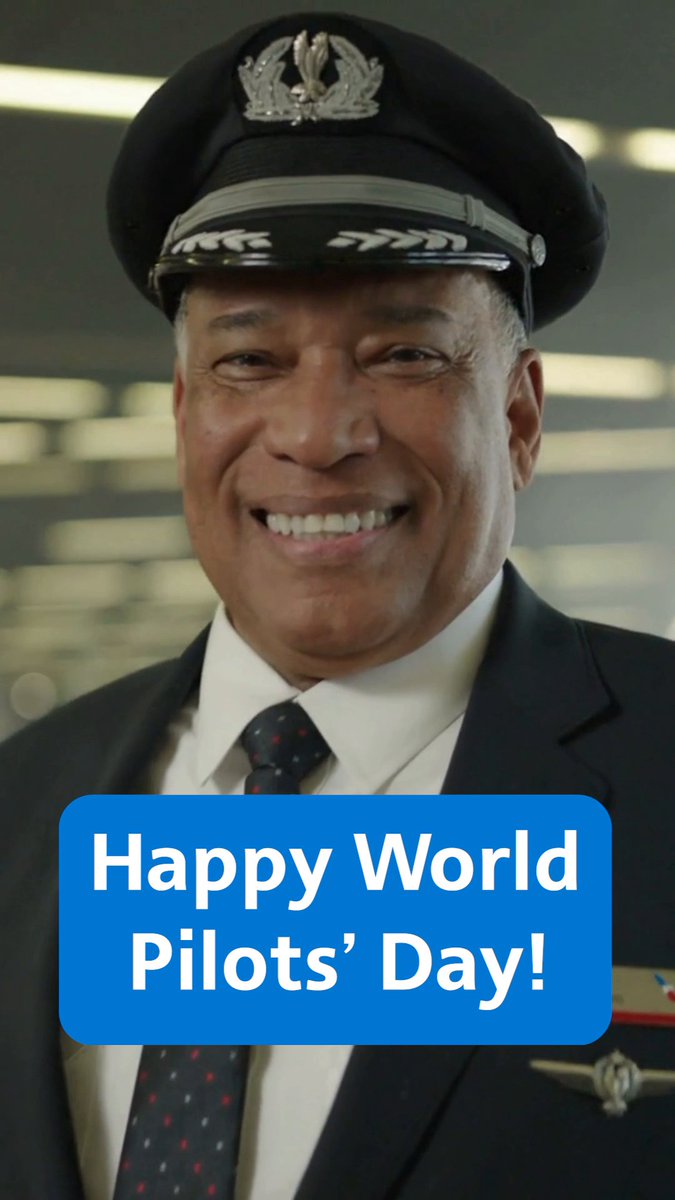
Huge win! With AETC - First Command’s innovative new pilot training model, we’re on track to produce 1,500 pilots a year by 2027—an increase of 200 aviators annually! Our pilots are the finest in the world & these changes guarantee they keep getting the absolute best training available.

41,492 Aufrufe • vor 1 Jahr •via X (Twitter)

8 Kommentare

Profilbild von AETC - First Command
AETC - First Commandvor 1 Jahr

Proud to execute the mission and train the best pilots in the world!

Profilbild von ARK Electronics
ARK Electronicsvor 2 Jahren

Elevate your drone game with our USA-made, NDAA-compliant flight controllers! Trust in reliable technology that not only enhances your flights but also supports US drone manufacturing capability. 🇺🇸✈️ #USAMade #NDAA #drones #uav #uas #px4 #ardupilot #USA #unmanned #opensource

Profilbild von Christopher Korger
Christopher Korgervor 1 Jahr

@AETCommand What happened to the UPT model where all STUDs got the exact same training on high performance jet aircraft? Allowed USAF pilots to flex between heavies & fighters durning VN.

Profilbild von PointLuck
PointLuckvor 1 Jahr

@AETCommand If they end up in an F-35 unit, it's garbage MC rates will give pilots too few hours per month.

Profilbild von Tom Jones
Tom Jonesvor 1 Jahr

@AETCommand Yes, and pilots that got through T38 training should be getting fighters and bombers, not heavies !!!

Profilbild von e
evor 1 Jahr

@AETCommand You need verified Sir

Profilbild von super squirrel
super squirrelvor 1 Jahr

@AETCommand I volunteer to be a pilot for zero pay

Profilbild von Ben
Benvor 1 Jahr

@AETCommand They are certainly very good. Unfortunately your civilian leadership team placed a whole bunch of them in jeopardy. 🔥🤡🧑‍✈️👩‍✈️

Ähnliche Videos

Courage, skill, and passion know no gender. Four female fighter pilots have created a TikTok-style transition video. In reality, their contributions extend far beyond making clips. Female pilots remain uncommon worldwide, with China boasting the largest number in civil aviation (around 941). Even rarer are women qualified for combat roles in the military. On International Women’s Day in 1952, the 3rd year after the founding of the People’s Republic of China, the first group of 14 female pilots flew over Beijing, announcing to the world that China had joined the ranks of nations with women aviators. It wasn’t until over 50 years later that Chinese women were cleared to fly fighter jets. These female pilots haven’t missed out on key historical moments. After the 1976 7.8-magnitude earthquake, the first plane to land in the disaster zone was piloted by a woman. Following China’s first atomic bomb test, female pilots twice entered the mushroom cloud to collect aerial samples. And the two Chinese women who have ventured into space both started their careers as PLA pilots. Today, China has a dedicated system for selecting and training female flight cadets, identifying extremely talented young women and launching them into the skies. This program has run for 14 cycles, recruiting over 700 girls at the age of 18. They enroll in the country’s top universities like Tsinghua and Peking, balancing academics with flight training. As a result, just over half graduate and become pilots—a testament to the program’s grueling standards. China’s requirements for female pilots—in terms of physical fitness, flying skills, and more—are identical to those for men. The same applies to ongoing training, evaluations, and promotions, forcing these women to overcome every physiological and psychological challenge. Those who meet the bar are undeniably capable, having earned a place in the jet through sheer merit.

Sinical

102,548 Aufrufe • vor 5 Monaten

Two air forces started the Pacific war. One trained its pilots, then kept them fighting until they died. The other trained its pilots, then often pulled many of its experienced combat pilots out to teach everyone else. This is one of the reasons America won the Pacific air war, let's dive in.. Japan's Elite Aviators At the start of the war, Japan had some of the finest fighter pilots in the world. The aviators who attacked Pearl Harbor were elite. Many had hundreds of hours in the cockpit and real combat experience from the fighting in China. Flying the nimble A6M Zero, they cut through Allied opposition in the early months of the war and earned a fearsome reputation. But Japan made a fateful choice about these men. It kept them in combat, more or less indefinitely. Japanese pilots flew mission after mission with no real system to rotate them home. They fought until they were shot down, crippled, or killed. It seemed ruthless and efficient. In reality, it was a slow-motion disaster. The Difference in Philosophy Because every time Japan lost one of those veterans, everything he knew died with him. America did the opposite. It regularly rotated many of its experienced combat pilots back home once they had done their share of fighting. There, they became instructors, pouring everything they had learned in real air combat directly into the next generation of pilots. So the two systems pulled in opposite directions. Japan's pool of skill drained away with every ace it buried. America's pool of skill grew, as each returning veteran multiplied his knowledge across hundreds of students. One nation was teaching. The other was simply dying. The Training Gap The gap became a chasm, and it was made worse by sheer scale. By 1944, the United States was training around 8,000 new aviators every month, each of them getting well over a year of instruction and hundreds of hours in the air before they ever saw combat. Japan could not come close. As its veterans vanished, its training program collapsed, and it was crippled by something else, too. Fuel. Japan was running so short of it that many trainees could barely fly enough hours to learn their trade. By the later part of the war, Japanese pilots were being rushed into battle with barely 100 hours of flying time, and sometimes far less. They were teenagers with almost no training, being sent up against American veterans who had been taught by the best combat pilots in the fleet. The outcome was no longer a contest. It was a slaughter. The Great Marianas Turkey Shoot Nowhere was that clearer than in the skies over the Mariana Islands in June 1944. When the Japanese launched hundreds of aircraft against the American fleet, they flew into a wall of Hellcat fighters, guided by radar and expert fighter direction that positioned the Americans at the perfect height and moment to strike. The green Japanese pilots in their now outdated Zeros never had a chance. In and around that battle, Japan lost nearly 480 aircraft, while the Americans lost only a few dozen. It was so one-sided that the American aviators nicknamed it the Great Marianas Turkey Shoot. Japan's naval air power, once the terror of the Pacific, was broken in a matter of days. Better Aircraft, Better Technology It was not only the pilots. It was the machines too. America kept producing better and better aircraft, like the tough, heavily armed F6F Hellcat, designed after studying a captured Zero and built to beat it. It could take punishment, out-dive and out-gun its opponent, and it was forgiving enough that even a less experienced pilot could survive his first fights and become a veteran. Over the war, Hellcat pilots claimed more than 5,000 enemy aircraft for a tiny fraction of that in losses. Japan, meanwhile, kept sending men up in the aging Zero, a plane that had been revolutionary in 1941 but was now underpowered, fragile, and outclassed. It was fast and agile, but a single burst of American fire could tear it apart, because it had traded armor and protection for maneuverability. Better pilots, in better planes, backed by better technology. The advantages stacked on top of one another. The Spiral Ends By the end, Japan had reached the final, desperate stage of the spiral. With almost no trained pilots left, and no way to make more in time, it turned to the kamikaze. A pilot did not need 500 hours of training to crash his aircraft into a ship. He only needed to take off, aim, and die. It was the last resort of an air force that had run out of the one thing it could never mass produce. Experienced men. America won the Pacific air war for many reasons. Its factories out-built the enemy. Its radar and intelligence gave it eyes the Japanese lacked. Its aircraft grew deadlier every year. But underneath all of it was something simpler. America treated its best pilots as a resource to be protected and passed on. Japan treated them as fuel to be burned. One of those choices built an air force that kept getting stronger. The other burned brightly, and then burned out. This was why America won the Pacific air war. I post a story like this every single day. Most people never see them. Follow so you don't miss the next one.

Untold War Stories

155,561 Aufrufe • vor 25 Tagen