Video wird geladen...

Video konnte nicht geladen werden

Zur Startseite

I discovered Hanuman Ansh almost by accident. And what an extraordinary discovery it has been. A small film built around the life and spiritual legacy of Neem Karoli Baba - Maharaj-ji - whose influence eventually travelled from the Himalayas to Silicon Valley. Steve Jobs came to India seeking spiritual...

24,700 Aufrufe • vor 16 Tagen •via X (Twitter)

19 Kommentare

Profilbild von AadityaAN
AadityaANvor 16 Tagen

Power of good content hanuman ansh in 5th sat is trashing a 100 cr capital movie on 2nd day.. No Competition..it's rolling over everything.. sitaram @ndtv @toi #power #track

Profilbild von Adarsh Nataraj
Adarsh Natarajvor 16 Tagen

Haven't watched the movie yet, will do that.. But came across few documentary videos on Neem Karoli Baba on YouTube, truly inspiring 🥰 Shall definitely visit the ashram too 🙏🏻

Profilbild von Kumar Abhishek
Kumar Abhishekvor 16 Tagen

Baba knows how to connect with his people and this way he is reaching out to the mass.

Profilbild von Karan Ravi Ahluwalia
Karan Ravi Ahluwaliavor 16 Tagen

Honestly just realised seeing your tweet this film is based on Neem Karoli Baba ji - wow - have to see it.. always been inquisitive on this. 🙏🙏👍

Profilbild von 108Bharatiya🇮🇳
108Bharatiya🇮🇳vor 16 Tagen

AUM HUNG HANUMANTEY NAMAH 🙏🏻❤️🙏🏻

Profilbild von Rajiv Mishra
Rajiv Mishravor 16 Tagen

Thank you Sir for watching it appreciating it and motivating others too.

Profilbild von anjaligangoli
anjaligangolivor 16 Tagen

It is heartening that there is indeed an inward turn taking place. Many are searching for answers, if only to make sense of the madness & adharma around us. This movement (asduming it's the start of something bigger) is exactly how it should be.

Profilbild von विचार विमर्श 🇮🇳
विचार विमर्श 🇮🇳vor 16 Tagen

Dear Sir A small correction I visited Kainchi Dham And their written is "Neeb Karori Baba" I don't understand from where Neem Karoli Baba came

Profilbild von judgemental Shark Test cricket is best
judgemental Shark Test cricket is bestvor 16 Tagen

सीता राम 🙏

Profilbild von Kaarthikeyan Gopalaswamy
Kaarthikeyan Gopalaswamyvor 16 Tagen

👍🏼🙏🏼

Profilbild von Rakesh Prabhakar
Rakesh Prabhakarvor 16 Tagen

Bollywood gang, liberals, activists, opposition parties, sold out anchors Rajdeep Sardesai, Preeti Chaudhry, Raveesh etc are in coma … where are Amitabh Bachchan, Khans, Karan Johar… the list is long

Profilbild von Rakesh D.
Rakesh D.vor 16 Tagen

Bakwas Sindhi

Profilbild von BINAY KUMAR SINGH
BINAY KUMAR SINGHvor 16 Tagen

🙌🙌

Profilbild von Veekkas Gupta
Veekkas Guptavor 15 Tagen

Sitaram

Profilbild von Vijay Menon
Vijay Menonvor 15 Tagen

Very well said mahesh ji. People like you should come out ans speak about spirituality to make our Hindu Dharma a guide for the world to live.

Profilbild von (Intel Inside)er
(Intel Inside)ervor 11 Tagen

You missed out on Hollywood; Julia Roberts....

Profilbild von Ashwani Dwivedi 🇮🇳
Ashwani Dwivedi 🇮🇳vor 15 Tagen

well said!!

Profilbild von Viral Dominoes
Viral Dominoesvor 16 Tagen

Pure bliss

Profilbild von Deepak Shenoy
Deepak Shenoyvor 16 Tagen

Watched by mere chance. Full connect. 150 minutes passed in a second!

Ähnliche Videos

Meet Anupriya Nagar, a 21-year-old economics graduate who put ₹50 lakh rupees of her own savings into a ₹2 crore film that was declared a flop by its second Friday. She had her whole life mapped out. Job locked in Zurich, a role in art administration at one of the world's biggest investment firms, degree in economics already done. Then, while researching founder mindsets for a college portfolio project, she went down a rabbit hole on Steve Jobs and kept hitting the same name in every article: Neem Karoli Baba, a mystic in the Kumaon hills who was said to have shaped Jobs before he ever built Apple. She came back to India instead of leaving it, read director Vishal Chaturvedi's 120-page script for Hanuman Ansh in one sitting, and signed on as a producer. The film opened to just ₹10 lakh . By the eighth day its screen count had been cut from 300 to 30, and the team was told it might vanish from theaters by the next morning. It didn't. By day 24 it had crossed ₹40 crore net in India. By today it already crossed ₹150 crore ($15.8 USD) During the shoot in Chitrakoot, a langur wandered onto set while the crew filmed the Hanuman idol song. Villagers said no langur had been seen there in fifteen years. It climbed the tree behind the idol and calmly ate through the crew's entire community meal, then walked, unbothered, straight past actors mid-scene without anyone flinching. Later that same day, it went inside a cave the team had dug for another shot and simply sat there while they worked around it. "To rush is not to Hanuman." ~ Anupriya Nagar What stays with me from her story is: when you want something, all the universe conspires in helping you to achieve it.

Vaibhav Bodana

121,681 Aufrufe • vor 12 Tagen

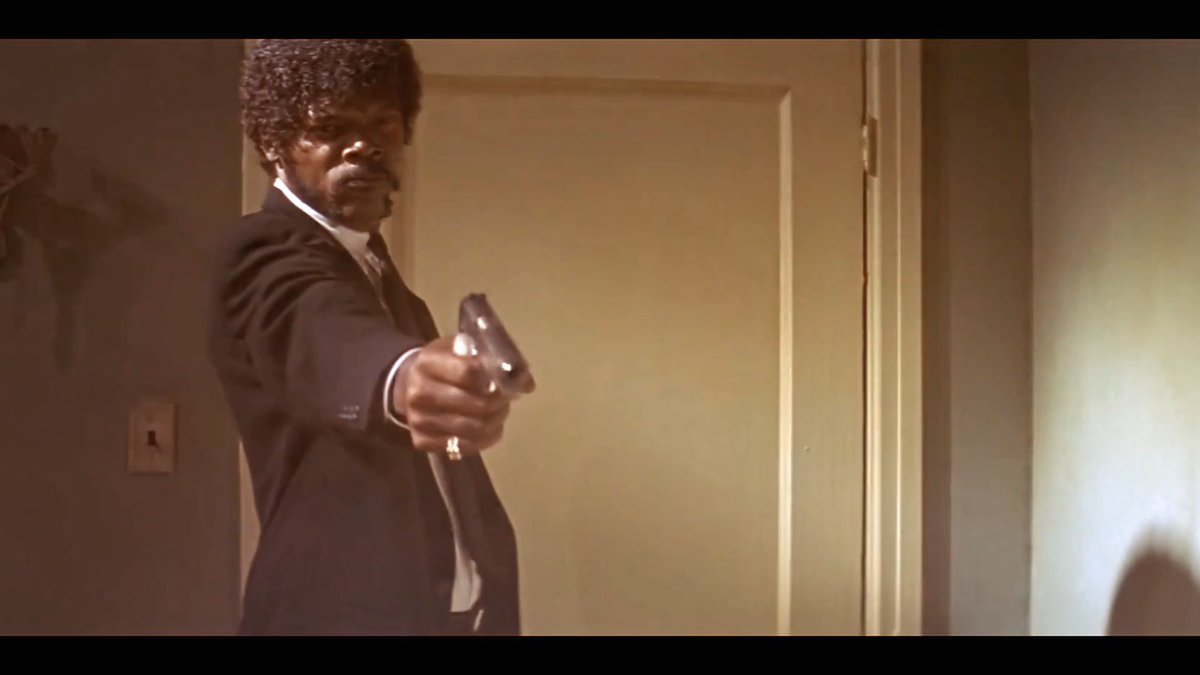
Samuel L. Jackson explains how he landed the role of Jules in Pulp Fiction, and what it was like seeing the film for the first time on the big screen: “Pulp Fiction and I came together in a very strange kind of way. I remember auditioning for Quentin for Reservoir Dogs in New York (for the role of of Detective Jim Holdaway, Mr. Orange’s police contact). And apparently I didn't get that role. But I was at Sundance the year that he screened it for the first time. I was sitting there and I watched that movie - I was awed by it. I mean, there were people running up the aisles when Michael Madsen was cutting the cop's ear off. People were going, "Oh my God, this is horrible!" All these “auteurs” were running out of the theatre. I was like, "This is good. This is happening. This is different." So after the film, I walked up to Quentin and said, "This film's amazing, man. It's great." And he looked at me and said, "Hey! How'd you like the guy who got your part?" And I was amazed that he even remembered who I was - but he remembered me. A year or so later, I got a phone call saying Quentin Tarantino wants to have dinner with you, because he'd seen Jungle Fever and he liked that Gator character. When we had dinner, we were sitting there talking. We started talking about Hong Kong films and cartoons and foreign movies and obscure things that we watched, horror movies. We found out we liked the same kind of stuff. And he told me he was writing this thing, and he was writing this part with me in mind. He was going to send it to me. I went off to do another film. I was in the backwoods of Virginia somewhere doing a film, and the script came. A little plain brown wrapper from Jersey Films. And Jersey's got these gangster images on the logo. And it said, "If you show this script to anybody, two guys named Ernie and Luigi will come and break both of your legs." Whatever. I went, "Yeah, right." So I sat down and read it. Boom. I read this thing. It's like, "Oh my God. This is awesome." And then I said to myself, "Nobody writes a script this good. There's no way that this script is as good as I thought it was." I closed it. I opened it again. I read it immediately. Okay. This is great - If whoever produces this film lets him shoot exactly what I just read, if they stay away from it, they don't try to edit any of this stuff out - this is going to be a great film. It's going to be kind of audience-specific, because I like that kind of stuff. I have friends that I knew would like it. It was a generational kind of film. I never thought it would cross over and do all this stuff. We shot it. We had a great time doing it. And the first time I actually saw the film was at the Cannes Film Festival. That night, it screened, and I was sitting there watching the film. The audience was loving this movie, loving it. About halfway through, I realized there were subtitles at the bottom of it. So I said, "Hey, these people are reading it, and they're getting it. This might be special. This really might be something special." And actually, by the time it was over, there were tears running down my face. I was just so pleased that I was part of that particular film… I never felt that satisfied, and that kind of full about a performance and about being part of something as I was in that particular moment.” Quote comes from an Interview with the American Film Institute 2010

Gangster Cinema Central

85,366 Aufrufe • vor 2 Monaten

Jack Dorsey on becoming a better storyteller: "I found myself very early on thinking about something like thinking about this early idea for Twitter and saying to myself, I could build this awesome. You have those shower-like moments, or you're walking at midnight in some town in New York City, and you've got these amazing brand ideas. And then you start thinking, well, I could really start doing this if only X and if I had this person or if this technology existed or if this happened or this happened. And what I realized was that I was constantly making excuses for not working on it. And then the window had passed, and then I couldn't do anything. So I think it's really, really important to write it out or to draw it out or to code it. But you need to get it out of your head. And the reason you have to get it out of your head is that you need to be able to see it on a surface that is not in your mind. And once you can see it, and once you can step back from it, then you can also decide this passes my filter, my constraints, so maybe I can show it and share it with some other people. And then they will be like that's the stupidest idea ever and or that's somewhat interesting, but maybe this and this and this. So the sooner you can do that, then you have a lot of momentum around it, and you can really decide if you want to commit to it and work on it more or put it on the shelf for a later date. And the realization that I think everyone needs to have about that latter option, putting it on the shelf, is that you can come back to it and it will surface back up in another piece of work or another idea at some point in your life. So having that ability to close off a chapter and move on is really, really important. You can't have all these open threads, and that's what I realized I was doing. And that also encouraged me to really write more and to really think about what's the story? How are people coming to this? And like when I show my friends this, how are they going to react and I would write it down. I would actually treat it like a play. And when I realized that I was writing plays, I read a lot more plays for style and for substance and for technique and I think it's really good. I think there is another company that I have always looked towards for inspiration and I know a number of people in this room probably have a similar company in mind, which is Apple. Apple, I think, is run like a theater company. It has a great sense of pacing, has a great sense of story and has a great sense of execution and it's all about event-driven, it's all stage-driven, the stage being a billboard or the stage being a keynote or the stage being a product launch. All of it has a very, very cohesive end-to-end story. I mean you think about what happened when Steve Jobs came back to the company. The first thing he did was kill every product line the company was working on. And for two years,rs they had no product on the market whatsoever. All they had were a bunch of posters all around the world with Steve Jobs' heroes, and it said, think different. And it was just focused on bringing up the brand and making people aware of the brand again and how the brand is aligning to this particular feeling and story. And then they came out with the iMac and then built iTunes and then the iPod, and they realized that, wait a minute, people are carrying music on their phones now, so we better build a phone, an iPhone. And so this unfolding of the plot and the epic story has been very, very interesting to watch, especially if you look back to that time when he came back to the company. So I've learned a lot from that company and other companies that operate in a similar fashion."

Founder Mode

107,213 Aufrufe • vor 9 Monaten

"For a lot of people, 'Jeanne Dielman' (1975) could represent the ideal woman, but when you look at the life of an ideal woman, it is unbearable." --- Chantal Akerman Full Excerpt: "I remembered, at first fleetingly but then very strongly, that I wanted to dedicate this film to my mother: that I wanted to say 'for my mother Natalia, called Nelly' and that I immediately repressed this idea out of modesty or censorship...and I also tell myself that if I had not known my mother, I would not have made this film, which is, however, absolutely not the portrait of my mother. I began with several very precise images from my childhood: watching my mother at the stove; my mother carrying packages...Why did I chose a beautiful woman? Because men always think that women inside their homes are ugly. My mother is beautiful. I think that Delphine [Seyrig] carried with her all the roles that she had played up to then, that is to say, the cinema...If I had used my mother, it would have only been my mother. At the beginning, I thought I was simply telling the story of three days in the life of a woman, but later I realised that it was a film about occupying time to avoid anguish, to keep moving so as not to think about the fundamental thing, which is being. There is also the contradictory aspect of these movements; when you see that woman, you tell yourself that it isn't possible; at the same time, I am talking about a woman I love who is my mother. All that is very ambiguous; for a lot of people, Jeanne Dielman could represent the ideal woman, but when you look at the life of an ideal woman, it is unbearable. The camera is not positioned to say that, but it is so obvious. For me this is very old; it goes back to images of my mother when I was a child." ("Identity and Memory: The Films of Chantal Akerman", Edited by Gwendolyn Audrey Foster, 2003) P.S: Remembering the great Belgian Filmmaker, Chantal Akerman, on her 76th birthday!

DepressedBergman

45,278 Aufrufe • vor 3 Monaten