正在加载视频...

视频加载失败

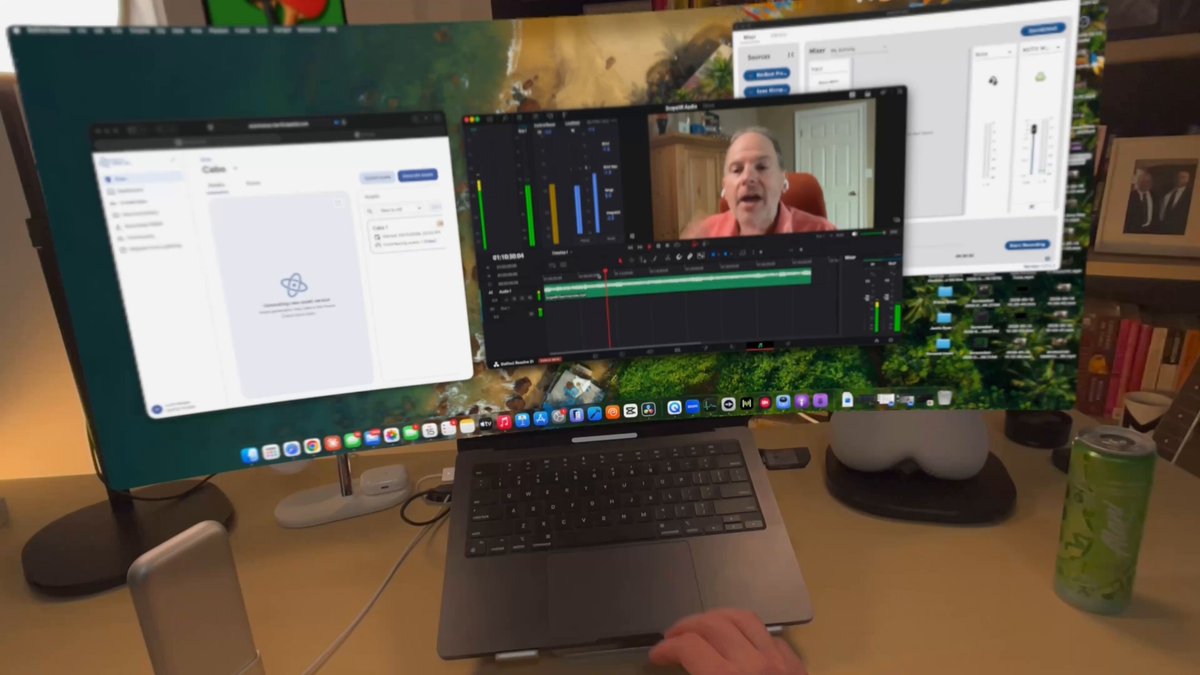
I made this for Sentry Hackweek. I'll be doing a deep dive soon, but it's a personal recorder that sends my transcripts to a router that determines if the text is a simply a todo, reminder OR if it's work. If it's work, Pi agents get started in it...

99,722 次观看 • 4 天前 •via X (Twitter)

0 条评论

暂无评论

原始帖子的评论将显示在这里
相关视频

HTML Artifacts are a big part of how I work with agents now. Artifacts can be more than just static files. When combined with agents, they can take action or help you take action. This unlocks all kinds of interesting ways to work with agents. This is clearly the future. Check out this writing and scheduler artifact I built in a few minutes. It uses a bit of HTML and JS. All the data is in markdown (Obsidian vaults), so the agent can access and modify it at any time. No DB needed. No sophisticated functionalities. The agent decides all that for me based on the skills, context, and memory it has access to. The best part about this simple stack is that all the important information stays with me. This has allowed me to build a recursive self-improving system and automations that can better tap into coding agents like Codex or Claude Code. I could have paid or built an entire app for scheduling posts, and there are so many of them out there. But I don't need to. I've realized a simple artifact does the job. And the simplicity of it is actually an advantage. Very little maintenance for very high returns on personalization, time, and efficiency. The other benefit of this is that I can add features as I please. That level of personalization feels magical, and we should all be pursuing more of it. All of this just keeps compounding. Of course, this example is just about writing. But I have similar artifacts for research, design, experimentation, evaluation, and so much more. And no, I didn't actually publish the post example I shared in the clip. It was just for demonstration purposes. I actually spend more time than this when writing together with agents. Lastly, having built my own agent orchestrator tool has made me realize that simplifying the tool stack is a superpower. If you are curious about how all this works, I will do a live session next week:

elvis

18,374 次观看 • 3 个月前

I just built my own wiki generator plugin for my agents. My agents can now generate wikis for anything I ask. One of my favorite wikis is called PaperWiki. This is a great example of what Andrej Karpathy describes. It uses obsidian vaults to organize papers, retrieve LLM-generated summaries, diagrams, and other advanced views for paper exploration. When Obsidian UI is not enough, I use my own artifact generator inside my agent orchestrator (see clip for example). This allows my agents to build any kind of view or exploration feature that I need. The papers are all curated with automations and several rules/patterns I have manually built over the years. On the surface, this looks basic. But behind the scenes, there are advanced search capabilities, connections, metadata, derived data, and other interesting bits of information that are extremely useful for my research agents. This is mostly built for agents. The artifact preview is just a high-level way to validate and quickly assess the quality of the wiki, suggest improvements, and it's also great for research. I use tobi lutke's qmd for all search capabilities. Everything is markdown. The summaries and even the diagrams. The wiki updates on its own based on several automations I have optimized over the past couple of weeks. The wiki grows and self-improves based on several requirements important for my research use cases. This is as personalized as it gets. There is nothing like it out there. And I use my research expertise to continue improving it over time. This is a vanilla wiki. There are so many things I want to build on top of this. Different aggregations, views, artifacts, etc. All to help automate more of my research work and accelerate productivity. I think the biggest leverage here is how powerful this could be for discovery and experimentation. One of my goals is to use it to find deeper connections and insights that would otherwise elude the top human researchers and use those to generate interesting new hypotheses and research experiments. That way, my agents can use autoresearch to explore research ideas at the frontier. Stay tuned for more.

elvis

67,153 次观看 • 4 个月前

I had the same thought so I've been playing with it in nanochat. E.g. here's 8 agents (4 claude, 4 codex), with 1 GPU each running nanochat experiments (trying to delete logit softcap without regression). The TLDR is that it doesn't work and it's a mess... but it's still very pretty to look at :) I tried a few setups: 8 independent solo researchers, 1 chief scientist giving work to 8 junior researchers, etc. Each research program is a git branch, each scientist forks it into a feature branch, git worktrees for isolation, simple files for comms, skip Docker/VMs for simplicity atm (I find that instructions are enough to prevent interference). Research org runs in tmux window grids of interactive sessions (like Teams) so that it's pretty to look at, see their individual work, and "take over" if needed, i.e. no -p. But ok the reason it doesn't work so far is that the agents' ideas are just pretty bad out of the box, even at highest intelligence. They don't think carefully though experiment design, they run a bit non-sensical variations, they don't create strong baselines and ablate things properly, they don't carefully control for runtime or flops. (just as an example, an agent yesterday "discovered" that increasing the hidden size of the network improves the validation loss, which is a totally spurious result given that a bigger network will have a lower validation loss in the infinite data regime, but then it also trains for a lot longer, it's not clear why I had to come in to point that out). They are very good at implementing any given well-scoped and described idea but they don't creatively generate them. But the goal is that you are now programming an organization (e.g. a "research org") and its individual agents, so the "source code" is the collection of prompts, skills, tools, etc. and processes that make it up. E.g. a daily standup in the morning is now part of the "org code". And optimizing nanochat pretraining is just one of the many tasks (almost like an eval). Then - given an arbitrary task, how quickly does your research org generate progress on it?

Andrej Karpathy

1,650,521 次观看 • 5 个月前