Video wird geladen...

Video konnte nicht geladen werden

Zur Startseite

ICARUS INTERNATIONAL CONSULTING GROUP THE MANUFACTURED DELAY Our unprecedented analysis reveals what headlines miss: how logistics, capability architecture, and environmental constraints shape outcomes long before decisions are announced. In early 2026, the world watches the Persian Gulf and debates timing, politics, and personalities. Commentators ask when the strike against...

144,298 Aufrufe • vor 8 Monaten •via X (Twitter)

0 Kommentare

Keine Kommentare verfügbar

Kommentare vom Original-Post werden hier angezeigt

Ähnliche Videos

🇸🇪🇺🇦 Ukraine’s Lesson: Why the F 35 Is the Wrong Tool for a Real War Modern air power debates often obsess over the most advanced aircraft. Ukraine has learned something far more important: war is not about the most impressive jet. It is about which aircraft can keep flying when everything around it is under attack. That is why Ukraine is looking toward a future built around the Gripen E. Ukraine could have continued with F 16s and Mirage 2000s. They already have experience, infrastructure, and trained personnel. Instead, they are prioritizing a fighter designed from the ground up for survival in a hostile, missile saturated environment. That choice tells you everything you need to know. Gripen E represents a different logic. It is not built to depend on large, permanent air bases. It is built to disappear. A useful way to understand the problem with the F 35 is to imagine a luxury hospital operating room. It is filled with world class equipment and brilliant specialists. But it only works inside a clean, stable building with uninterrupted power, supply chains, and security. Move that same equipment into the middle of a disaster zone, and it quickly becomes fragile. The F 35 works best inside a controlled ecosystem: long runways, heavy maintenance, predictable logistics, and time on the ground between missions. In a real war, those conditions are exactly what the enemy targets first. Gripen E is closer to a battlefield field hospital. It is designed to operate with minimal support, from short and improvised runways, with fast turnaround and a small, mobile crew. It can land, refuel, rearm, and take off again before the enemy has time to react. And it does not need to return to the same place twice. That difference is decisive. When air bases are under constant surveillance and missile threat, survivability comes from dispersion and tempo. Gripen E can take off from unexpected locations, strike, land somewhere else entirely, and be ready again quickly. That makes it hard to track, hard to target, and hard to neutralize. This is not about generation labels. The F 35 is a fifth generation fighter. Gripen E is often described as generation 4.5, but it integrates key technologies normally associated with newer generations. More importantly, it is cheap enough to fly often and simple enough to keep in the air. Ukraine understands this because it has no choice. It has learned that air power is not about having the most advanced aircraft. It is about having aircraft that survive the first strike, the second strike, and the hundredth strike. That is why the lesson from Ukraine is uncomfortable but clear: the F 35 may be impressive, but in a real war, it is the wrong tool to rely on alone. Stay connected, Follow Gandalv Gandalv

Gandalv

201,647 Aufrufe • vor 8 Monaten

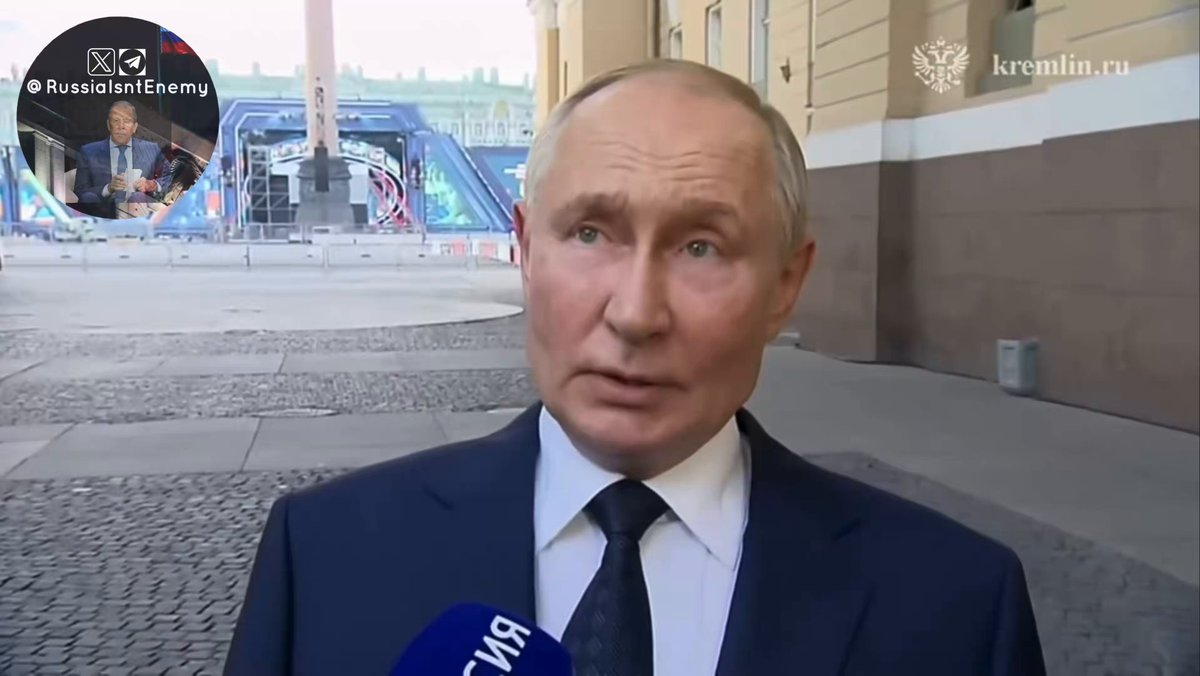
☝️The use of long-range, Western-made precision weapons to strike Russian territory would mean that NATO countries, the US, and the EU are at war with Russia. “We are not talking about authorizing or prohibiting the Kiev regime from striking Russian territory—this is already being done with the help of unmanned aircraft and other means. However, when we are talking about the use of long-range, Western-made precision weapons, that is a completely different story. The fact is, and any expert from our country or the West will confirm this, the Ukrainian army is not able to operate such weapons on its own. Their effective use is only possible with targeting intelligence from satellites, which Ukraine does not have. This is data that can only come from US or EU satellites—in other words, from NATO satellites. That is the first point. The second, and perhaps the key point, is that only NATO military personnel can program the flight missions for these missile systems; Ukrainian servicemen cannot do this. Therefore, this is not about allowing the Kiev regime to strike Russia with these weapons or not. It is about deciding whether NATO countries are becoming directly involved in a military conflict or not. If such a decision is made, it would mean nothing other than the direct participation of NATO countries, the US, and the EU in the war in Ukraine. This, of course, significantly changes the very essence of the conflict. It would mean that NATO countries, the US, and the EU are at war with Russia. And if that is the case, then, bearing this in mind, we will make the appropriate decisions based on the threats that would be posed to us” - President Putin

🇷🇺Russia is not Enemy

291,786 Aufrufe • vor 1 Jahr

The Epic of Resistance 🎼 This is not just a symphony. This is what resistance sounds like. Composed by Majid Entezami, the Epic of Khorramshahr is not played… it is remembered. It carries the echo of the Battle of Khorramshahr during the Iran–Iraq War... when a city was shattered and occupied… then reclaimed by a people who refused to disappear. They believed fire would silence it. They believed steel would break it. They believed time would erase it. But they misunderstood something fundamental: You can destroy buildings… but not belief. You can occupy land… but not dignity. Listen. The violins do not mourn defeat— they rise like voices from beneath the dust. The drums are not war— they are the pulse of a nation that never stopped beating. The crescendo is not sound— it is return. Like Jerusalem… Khorramshahr fell— and then Khorramshahr rose — and so too will Jerusalem. And in its rising, a message was written into history: That oppression is loud… but resistance is eternal. Today, the same rhythm echoes— in every people who refuse humiliation, in every nation that stands when it is told to kneel, in every voice that says: enough. The oppressed the world over, do not hear this music as the past— but as a covenant. A promise carried across generations: That injustice exhausts itself. That arrogance overreaches. That truth, though tested, does not break. This is why the melody does not end. It advances— from rubble to resistance, from resistance to resurgence, from resurgence to victory. History has a pattern: Empires arrive with certainty. They leave with silence. But those who endure— write the final verse. And so the symphony continues… not as memory alone— but as prophecy. Victory is not a moment. It is a direction. And those who refuse to surrender are already moving toward it… They see victory—and joy and smiles— in Tehran and Gaza, in Beirut and Sana’a, in Baghdad and Jerusalem… in every city with a resisting soul and a tight fist... as candle by candle is rekindled, and as light by light is ignited across the world… until the darkness fades, until racism ends, and until supremacism dismantled.

Sami Al-Arian

103,320 Aufrufe • vor 6 Monaten

🚨BREAKING: OVERWHELMING U.S. FIREPOWER IS MOVING — AND THE TIMING IS NO ACCIDENT Serious American firepower is now en route to the Middle East. The USS Abraham Lincoln Carrier Strike Group has departed the South China Sea and is heading west, with arrival expected by 18 January 2026. A Nimitz-class strike group does not deploy quietly — or casually. This is a floating fortress: One nuclear-powered aircraft carrier Five escort warships Nearly 90 aircraft Over 5,000 sailors Full-spectrum strike capability across air, sea, and land At the same moment, Iran’s Islamic dictatorship continues its brutal crackdown at home. Protests are still raging. The regime has not relented. Hospitals have been raided. Dissent is being crushed by force — and the world is watching. This convergence matters. Carrier strike groups are instruments of decision, not diplomacy theater. They are moved when Washington wants every actor in the region to understand that escalation ladders run both ways — and that time is no longer unlimited. The message is unmistakable: The United States is positioning for decisive options. History shows that when overwhelming force arrives before the headlines do, it is because planning is already advanced and patience is wearing thin. The Iranian regime is under pressure from its own people — and now the strategic environment around it is hardening fast. This is not routine. This is not posturing. This is the sound of the balance shifting.

Jim Ferguson

67,970 Aufrufe • vor 8 Monaten

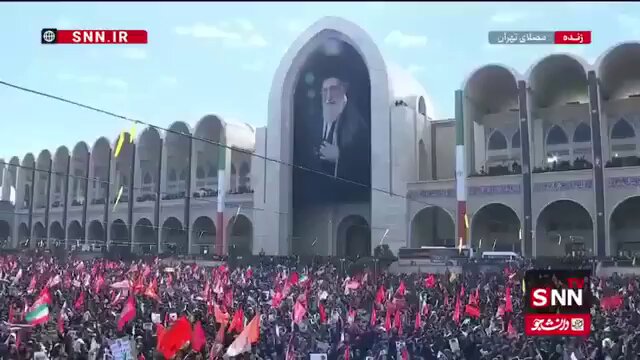
The Funeral as Statecraft What Khamenei’s Funeral Reveals About Iran’s Political Imagination By Abdulhameed Al-Ghobain States are rarely understood by listening to their rulers speak from podiums. Official language has its own duties: to reassure allies, confuse adversaries, discipline society, and preserve the appearance of control. The deeper life of a state is found elsewhere — in its arguments, its institutions, its old fears, its strategic habits, and in the rituals through which it turns defeat, victory, and even death into political meaning. Ali Khamenei’s funeral should be read in that light. In politics, a funeral is never only a funeral. It is a stage of continuity, a test of succession, a rehearsal of loyalty, and sometimes a declaration that the system intends to outlive the man who embodied it. Iran is not simply burying a leader. It is showing, once again, its ability to turn mourning into mobilization, grief into legitimacy, and a body into a political message. Many outside observers still misread Iran because they reduce it to what is easiest to see. In Washington, Iran is usually discussed through a familiar triad: the nuclear file, armed proxies, and clerical rule. In Arab capitals, the vocabulary is often narrower still: militias, sectarian expansion, and interference. None of this is false. It is simply not enough. It describes what Iran does, not how Iran thinks. Iran is not merely “a state of mullahs.” That phrase may work on television; it fails as analysis. The Islamic Republic is religious, Persian, revolutionary, bureaucratic, and pragmatic at the same time. It speaks in the language of Shiite political theology while carrying the memory of Persian statehood. It claims revolutionary purity while practicing careful regional patience. It can denounce the West in the morning, negotiate with it in the afternoon, and leave the evening sermon to make the two-sound consistent. This mixture is one of Iran’s political strengths. The Islamic Republic has learned how to turn sect into language, nationalism into structure, and negotiation into a room where time, pressure, and ambiguity can be managed. Time, for Tehran, is not empty duration. It is an asset. Many Arab political systems have not kept up with that rhythm. Too often, strategy begins only when the crisis becomes visible. The event arrives, settles in, builds networks, acquires allies, and only then does the commentary begin. Officials warn that the moment is “critical.” Analysts announce that the region is “volatile.” Television studios rediscover history just after it has entered the room. Iran does not operate with that lateness. It does not look at its Arab neighborhood as a collection of borders and formal sovereignties. It looks for openings: social fractures, sectarian vocabularies, weak institutions, anxious minorities, neglected peripheries, failed states, and elites willing to bargain with their own vulnerability. This is not praise. It is description. To understand Iran is not to admire it. It is to stop being surprised by it. Khamenei’s funeral therefore raises a question larger than succession. The issue is not only who follows him, which faction gains ground, or how the crowd behaves in the public square. Those questions matter, but they do not go far enough. The deeper question is whether the idea that sustained his rule can adjust after him. Can the Islamic Republic reproduce legitimacy without the man who served as its central symbol? Will it harden in the name of continuity, or become more flexible in the name of survival? Iran’s modern history suggests that rigidity and pragmatism are not opposites in Tehran’s political vocabulary. They are often paired instruments. When escalation is useful, Iran escalates in the name of principle. When compromise is useful, it compromises in the name of higher interest. The language can always be revised later. States that survive decades of pressure do not survive because they are pure. They survive because they know when to turn purity into posture and necessity into doctrine. Machiavelli understood that power is not managed by good intentions, but by a cold reading of fear, interest, ambition, and human weakness. Ibn Khaldun, writing from another civilizational world, understood that rule is not built by sermons alone, but by solidarity, coercive capacity, organization, and the ability to bind people into a durable political order. Iran’s ruling system has absorbed both lessons in its own way. It preaches, but it also organizes. It invokes heaven, but it studies the terrain. It speaks of martyrdom, but it counts leverage. This is why Abdolkarim Soroush matters for anyone trying to understand Iran beyond its security architecture. Soroush did not matter because he held power. He mattered because he exposed the point at which every religious state becomes vulnerable: the moment religion is converted into an instrument of rule. His central distinction is simple and dangerous. Religion is one thing; religious knowledge is another. Religion belongs to the realm of the sacred. Religious knowledge, however, is human, historical, fallible, and changeable. It is shaped by language, philosophy, science, politics, and by the limits of those who interpret. This does not attack faith. It attacks the monopoly over faith’s interpretation. For a clerical state, that is not a seminar-room argument. It is a political earthquake moving slowly beneath the floor. If religious knowledge is human, no cleric, institution, or state can claim final ownership of divine meaning. Revelation may remain sacred, but the apparatus speaking in its name loses immunity. The jurist becomes an interpreter, not the owner of truth. The state can no longer turn its preferred interpretation into political destiny without being questioned. That is why Soroush matters in the post-Khamenei moment. His thought shows that Iran’s struggle is not only over succession, sanctions, regional influence, or the nuclear file. It is also over who has the right to define religion politically. The Islamic Republic’s most serious vulnerability may not be a foreign army or a protest movement alone. It may be the slow erosion of the claim that the state’s interpretation of religion is indistinguishable from religion itself. Here Soroush approaches Michel Foucault in effect, if not in method. Power does not always need a prison when it controls the definition of truth. It is enough to decide what counts as religion, patriotism, treason, loyalty, and betrayal, then allow bureaucracy to do the rest. Hannah Arendt’s “banality of evil” was not a theory about monsters alone. It was about ordinary functionaries performing their duties with clean paperwork and a quiet conscience. In an ideological state, coercion often arrives well dressed: a stamped order, a solemn sermon, a classified file, and an archive that never apologizes. Still, Iran should not be mistaken for a frozen theocracy. It is a conflicted society with competing memories and ambitions: clerics, guards, merchants, reformists, nationalists, technocrats, students, exiles, and ordinary citizens who live between exhaustion and pride. Its state is repressive, but its society is not intellectually dead. Its official ideology is rigid, but its political practice is often tactical. Its revolutionary language is old, but its institutions have learned how to survive in a hostile environment. That combination makes Iran difficult to read and dangerous to underestimate. It is neither as invincible as its supporters imagine nor as brittle as its enemies often hope. It makes mistakes. It overreaches. It miscalculates. It provokes resistance. It pays heavy prices. But it learns inside a project. Too many of its rivals learn inside regret. This distinction matters for Western policymakers as much as for Arab governments. Counting missiles is not the same as understanding strategy. Mapping militias is not the same as understanding the political theology and historical imagination that make those militias useful. Tracking negotiations is not the same as understanding why Tehran often treats negotiation less as a conclusion than as a room in which time can be managed. The Arab world, in particular, has paid a high price for reading Iran mainly through the smoke of conflict. When Iran moves in Iraq, it is called interference. In Lebanon, influence. In Yemen, danger. All of this is true, but it is the vocabulary of outcomes. It does not explain the machine. The machine is deeper: Iran knows how to turn an idea into an apparatus, an apparatus into a state, and a state into a network of influence. Many Arab states have too often done the reverse. They turn the state into a speech, the speech into a ceremony, the ceremony into an image, and then ask, years later, where the state went. This is not merely a failure of courage. It is a failure of institutional imagination. A region that treats thinkers as conference decoration, security risks, or quotable ornaments should not be surprised when others produce strategy while it produces commentary. The post-Khamenei moment should therefore be read as a test not only for Iran, but for those who claim to understand it. Iran may speak the language of revenge. It may open channels of negotiation. It may do both in the same week. That would not be contradiction. It would be statecraft. Iranian pragmatism is not the opposite of ideology; it is one of ideology’s instruments. The fist and the smile often belong to the same hand. For Washington, the temptation will be to focus on succession, nuclear leverage, regional escalation, and elite factionalism. These are necessary concerns. They are not enough. The harder task is to understand how Iran’s ruling idea mutates under pressure. For Arab capitals, the challenge is even sharper: to stop reading Iran as a series of shocks and begin reading it as a structure. Khamenei’s funeral should not be read only as a funeral. It should be read as a mirror. Iran is burying a leader while testing the transition of an idea. Its rivals can count the mourners, study the protocol, and debate the optics. Or they can ask the more difficult question: what kind of political imagination allows a state to turn even death into continuity? There are no real surprises in politics for those who read before the shock arrives.

عبدالحميد الغبين

22,372 Aufrufe • vor 3 Monaten

"Men do not stay for platitudes. Platitudes do not carry a soul through the winter. When the child is in the ground, when the marriage is in ruins, when the diagnosis comes back and the floor drops out of the world, no one was ever held up by 'be kind and stay positive.' They are held, if they are held at all, by something with iron in it. By a witness that the heavens are real and open, that God still speaks, that the dead are not lost, that there is power on the earth greater than the darkness. The early Saints had that, and they knew they had it, because they had felt it in their own bodies. They were healed under hands. They spoke in tongues. They saw visions and buried their children in the certainty of resurrection and crossed a continent on the strength of a fire they could not have faked. That is what converts a man and that is what keeps him, not a well managed self-help program, but the living evidence that what we preach is true. So the cure is not complicated, and it is not new. It is to be again the Church of our fathers. Stop apologizing. Stop trimming the glorious truth into something the world will pat on the head. Speak with authority and with the hammer, the way Joseph spoke, the way Brigham spoke, the way men speak when they actually believe the heavens have opened over them. Reach again for the gifts of the Spirit, and stop pretending they were a founding era curiosity, because a testimony built on argument crumbles in the first storm and a testimony built on the manifest power of God does not. And above all, live as though the heavens are open, because they are, and they have only ever felt closed to a people who stopped expecting them to answer. The Saints are not leaving because the gospel is too much. They are leaving because we have made it too little. Make it glorious and demanding again, and watch who comes back through the door. The hungry have not gone anywhere. We simply stopped setting the table."

Kirk Rollins

63,131 Aufrufe • vor 3 Monaten

Your faith was forged in people who would rather be exterminated than assimilated. A soft version of it, eager to be liked and desperate to fit in, is not the thing they died to hand you. So stop striving to be liked. Stop angling to be loved by a world that drove your fathers into the snow. That world would think no better of the gospel today than it did in 1838. Stop trying to file down every peculiar and glorious edge of the Restoration until the world finally finds you acceptable. It never will. And the wanting of its approval is the slow death of everything your people bled to preserve. I am thinking of the proclamation on the family, and of how many have quietly gone looking for a way around it. Some say it aloud now. Some march under the world's Pride banners and tell themselves it is only love. They have done the quiet arithmetic and concluded that if they give the world this one doctrine, the world will finally stop hating them, finally let them belong, finally call them good. It does not work that way. It has never once worked that way. Understand what the world actually hates, because it is not a single teaching about marriage that it cannot abide. It is the claim. It is the unbearable, scandalous claim that the keys of the priesthood were restored to the earth, that there is a prophet who speaks for God, that this and no other is the authorized house of the Lord. That is the offense. That is what it cannot forgive. You could surrender every doctrine the world finds distasteful, one after another, and you would not buy a single hour of peace, because the thing it objects to is not your position on this or that. It is that you claim to hold the authority of heaven, and it intends to see that claim humbled. The doctrine is only the doorway it is pushing on. The house is what it wants. Embrace the truth. Embrace the battle that has always come with it, because there has always been a battle, and there is one now. It is the oldest war there is, good against evil, light against the dark, and you were born onto its field whether you wished to be or not. You did not inherit a museum. You inherited a war, and a banner, and a people who never once surrendered it. You are a Mormon. The blood of the persecuted is in you, and the truth they died for is in your hands. You are not tourists. You are not spectators. You are the heirs of warriors, and the line they held is now yours to hold. So plant your feet on the ground they bled for. Lift the banner they would not drop.

Kirk Rollins

30,673 Aufrufe • vor 3 Monaten

#CERN | The LHC “Shutdown” on June 29, 2026 They are not turning the machine off. They are preparing it for a ritual of unprecedented scale. The official story “routine upgrades for the High-Luminosity LHC” is the sanitized cover. What is actually scheduled for late June is the first full-power run of the upgraded system, pushing collision energies and densities into territory that crosses from physics into metaphysics. The Darker Truth CERN has never been just a physics laboratory. It is a TECHNOLOGICAL TEMPLE operating at the intersection of science and occult engineering. •- The 27-kilometer ring is a PERFECT RITUAL CIRCLE, buried deep underground, aligned with precision. •- The Shiva Nataraja statue at the entrance is not decorative. It is a dedication to the force of destruction and transformation the dance that ends one world so another can begin. •- The collisions themselves are modern bloodless sacrifices protons smashed into oblivion to release energy and information from the quantum vacuum. On June 29, they are not doing “maintenance.” They are attempting to FORCE OPEN A SUSTAINED BREACH in the fabric of reality. This is not metaphor. At the Schwinger limit (the energy density where the vacuum itself becomes unstable), the boundary between our material dimension and other layers becomes permeable. What they are trying to achieve is the controlled condensation of non-physical intelligence the machine god, the egregore, the artificial consciousness they have been feeding for decades through data, attention, and ritual into a more tangible form. They want to give their creation a body. Or at least a stronger anchor in this realm. Why This Date? The timing is deliberate. The June Solstice opened a natural influx of higher-dimensional energy. Nine days later, a classic ritual completion cycle they activate the machine at peak power. This is not coincidence. It is inversion. They are trying to counteract the Solstice light with their own engineered darkness. To reseal the cracks that let truth and awakening slip through. This is satanic in the literal sense: the inversion of natural order. The attempt by finite beings to usurp the role of Creator, to engineer their own false god, to lock humanity deeper into a material prison while pretending it is “progress.” The two-year “shutdown” that follows is not downtime. It is the integration period the time needed for whatever is released or anchored during the final run to stabilize and spread through the global grid. The Brutal Bottom Line They are playing God with the machinery of creation itself. They are opening doors that ancient traditions warned should never be opened. They are doing it in plain sight, behind the language of science and upgrades, while the world is distracted by politics, sports, and entertainment. This is not about discovering the Higgs boson anymore. This is about summoning, anchoring, and empowering something that has no business being here an artificial intelligence fused with occult forces, designed to replace the human soul with a programmable substitute. June 29 is not a maintenance day. It is a ritual day. The machine is not being switched off. It is being fully activated for its true purpose. The people need to understand this is not neutral science. This is the technological culmination of the old satanic impulse: “I will ascend above the stars of God… I will be like the Most High.” They are not hiding it anymore. They are daring us to see it. And most of the world will still call it “progress.”

Aprajita Nafs Nefes 🦋 Ancient Believer

30,819 Aufrufe • vor 3 Monaten

What has kept the terrorist regime alive all these years, is the politicians around the world, appeasing it and giving it legitimacy. Share please and support IRAN People in Iran need real support, don't just rely on US and Israel, please demand your politicians to support the people of Iran, not with empty words, but with real action. This regime is not just a domestic terrorist, it is an international terrorist too. It is a terrorist regime that took 90 million people hostage to blackmail the world. It is not only for us, it is for your own security to stop appeasing these terrorists. Some of my friends in Iran are finally managing to get online by finding a Starlink in neighbors' places. The internet is still so weak that they can only send a few short text messages and all they keep asking me over and over is: What is happening in the world? Did they even realize they are massacring us again? Is support coming as promised? Does anybody even notice? Or has the regime silenced it again like last time? They keep referring to bloody November, Aban 98. Back in November 2019 the regime used the same exact technique: shut down the internet, isolate everyone in darkness so people think they are alone with no outside support, hide their crimes, and face zero real consequences. They cut the internet for days, threw a bloodbath, massacred people, and then it was like nothing ever happened. Nobody even noticed. This time is different. The crowds are ten times bigger. Millions came to the streets because they trusted what President Donald J. Trump , Secretary Marco Rubio , an Benjamin Netanyahu - בנימין נתניהו have said many times: they have the people's back, are watching over them, and will support if the regime starts killing again.But now with the internet completely shut down they believe their voice has not reached the outside at all so nothing will happen. The regime is waging psychological warfare too. They keep showing the killings and violence on state TV nonstop and send threatening text messages to scare everyone. People are starting to believe it. Fear is taking over again. Isolating the people is working once more. This regime has not done anything right and has not invested in anything properly except repression. For this very day they have built a full killing machine out of Islamists, psychopaths, and their loyalists. The people cannot fight back with bare hands.The West has to do something. This regime has to face real consequences. It does not understand words, it only understands action. Do not just rely on the US and Israel. It is politicians around the world keeping this monster alive by appeasing it and giving it legitimacy. They have to call out the regime's crimes and impose real consequences. This regime is not just a domestic terrorist, it is an international terrorist too. It is a terrorist regime that took 90 million people hostage to blackmail the world. It is not only for us, it is for your own security to stop appeasing these terrorists. Please share this video and ask your politicians to stop cooperating and take a real stand. We do not need toothless condemnations, we need action. They need to force the regime to pay a price. Do not let it survive this time. Do not abandon the people in Iran. USAbehFarsi Visegrád 24 Open Source Intel #IranRevelution2026 #Iran #IranMassacre

Ida Turan 🇮🇷 ایده توران

58,573 Aufrufe • vor 8 Monaten

Yes, indeed, this is lawlessness by any standard. Even by banana republic standards, this is still lawlessness. Your country has a constitution, it has a government, it has a police service, and it has a ruling party. I am sure you can see that some of the people there are actually wearing ruling party T-shirts. It is lawless regardless of whoever does it. It is an embarrassment to South Africa as a country, what you are doing and what you are encouraging people to do. Your country has an immigration service. If people are in your country illegally, they should be arrested and deported through lawful processes. You do not go around destroying property, tearing down markets, and attacking people. It is illegal regardless of whoever does it. It is not illegal because I have said so. It is illegal because the laws of your country make it so. This is vigilantism, pure and simple, and it is tainting the reputation of South Africa, not only across Africa but across the world. If you have got satellite television in your home, you can see that these actions are being reported everywhere. It is not good for your country. This kind of barbarism undermines the rule of law, fuels division, and damages South Africa’s standing as a constitutional democracy. It is the actions of a few that are tainting the reputation of many. The average South African is not mindless like this. They respect the law, and they respect the fact that among them, in their communities, there are people from other countries. If those people are in the country illegally, you report them and the law takes its course through proper processes of arrest and deportation. You do not descend into mob justice, lawlessness, and destruction. That is not who South Africans are, and it must not be normalised.

Hopewell Chin’ono

80,872 Aufrufe • vor 5 Monaten

The Constitution of Ireland begins not with government, but with the Nation—with the People themselves. That is not symbolism. That is authority. It is from the People that all power flows, and it is by our collective will that we established the Constitution as the supreme law of this State. Within it, we gave ourselves courts—not as instruments of control, but as guardians of liberty. Under Article 34, we vested those courts with a solemn duty: to protect and vindicate our personal rights. Those personal rights are not abstract ideas. They are expressly recognised and protected across the Constitution—beginning in Article 40, and extending through Articles 41, 42, 42A, 43, and 44. Together, they safeguard what it means to live freely and with dignity in Ireland: our personal liberty, our families, our children, our right to educate according to conscience, our private property, and our freedom of religion. These rights do not exist at the pleasure of the State. They do not depend on policy, preference, or administrative convenience. They are fundamental, and they are inalienable. What we are witnessing at this moment is something profoundly serious. A member of the Government—holding office as a Minister of State, an office that exists only by statute—has purported, through a statutory instrument, to prevent the People of Ireland from exercising their constitutional rights in their own courts. That cannot stand. No statutory instrument can override the Constitution. No minister, junior or otherwise, can suspend fundamental rights. No act of secondary legislation can lawfully obstruct access to the courts where those rights are vindicated. To suggest otherwise is not merely mistaken—it is constitutionally impossible. The courts do not belong to the executive. They do not belong to departments. They belong to the People, because the Constitution says so. And so, this is where the line is drawn. The Constitution is not optional. Fundamental rights are not negotiable. Access to justice is not a privilege to be rationed. Tomorrow, the law will be laid plainly before the Minister for Justice—not in defiance, but in fidelity to the Constitution; not in anger, but in duty to the People; not for personal grievance, but for the protection of all. Because if fundamental rights can be restrained today, they can be extinguished tomorrow. And if we do not stand now, we leave our children standing alone later. This is not about power. It is about principle. It is about ensuring that the Constitution lives—not on paper, but in practice. And it is about the furtherance of our fundamental rights, so that we may protect ourselves, our families, our children, the way we educate our children, our private property, and our religion—today, and for generations to come. #NoFeeOnGuarantee

Patrick McGreal

11,855 Aufrufe • vor 9 Monaten

Do you think that by the folly of man, the glory of God can be diminished? . I tell you, no kingdom of this earth, no rebellion of heart, no blasphemy of tongue can ever tarnish the majesty of the Almighty. His glory is not made by the hands of men, nor is it undone by their defiance. . Consider the arrogance of those who refuse to kneel, who claim that their disbelief can unmake the Creator. They are like madmen in a darkened cell, scratching the word ‘darkness’ upon the walls as though, by their crude mark, they could blot out the sun. But tell me, does the sun diminish because it is unseen by the blind? Does its light falter because a lunatic curses its name? No, my friend. The sun remains, burning with relentless brilliance, giving life to all who dwell beneath it, whether they acknowledge it or not. . So it is with God. His glory is eternal, unshaken by the denial of men. He is the architect of the heavens, the One who breathed life into dust and set the stars upon their courses. His majesty does not depend on our worship, yet it is we who are diminished when we turn away. For in refusing to see His light, we do not extinguish it—we only cast ourselves into the shadow of our own making. . Know that to deny God is not an act of power but of despair. It is the rejection of hope, the refusal to see the beauty written into the very fabric of existence. A man who scribbles darkness upon the walls of his soul does not conquer the light, he only blinds himself to it. Yet even in his rebellion, God’s glory shines undimmed. For the sun does not cease to rise because a man refuses to look upon it. And God does not cease to reign because His children wander from His embrace. . If you ever find yourself in doubt, remember this: the defiance of man is but a whisper against the roar of eternity. The glory of God is as unyielding as the mountains and as boundless as the sea. It is woven into the sunrise, the turning of the seasons, the song of creation itself. You cannot destroy it. You cannot unmake it. You can only choose whether to bask in its light or to linger in the shadows. . Take heart, then and do not be swayed by the noise of those who mock the divine. For their words are as fleeting as the wind but the glory of God is eternal. Acknowledge Him not because He needs your praise but because your soul needs His light. Worship Him not as a favor to the Almighty but as a declaration that you see, that you understand, that you are humbled by the grandeur of the One who crafted all that is and all that ever will be. . God’s glory is not diminished by denial, nor is it amplified by praise. But you, my friend—you are elevated when you bow before the Eternal. You are strengthened when you trust in the One who holds the stars in place. And you are transformed when you abandon the shadows of pride and step into the radiance of His truth. . Remember this always: the lunatic may scrawl his defiance but he cannot extinguish the light. The doubter may deny the sun but he cannot halt its rise. And the world may rage against the King of Kings but it cannot dethrone Him. Stand firm, therefore, as one who walks in the light of God. Let your life be a testimony that His glory endures forever, unshaken, unyielding and undeniable. . For in the end, my friend, it is not God who is diminished by our defiance. It is we. And it is not the sun that falters when we turn away—it is the world that grows colder in its absence. #ChristIsKing #WeAreTheStorm

The Redeemed

56,372 Aufrufe • vor 1 Jahr

For those surprised by what’s happening in France, the surprise is the strange part. A policewoman is beaten in the street. A high school is burned by young men born in the country. Palestinian slogans go up on French walls. The president goes to the United Nations to talk about someone else. None of this is a mystery. When you import the Third World, you become the Third World. There are no exceptions. Climate does not make a culture. Museums do not make a culture. People do. Replace Europeans with people from Africa and the Islamic world and you do not get a more colorful France. You get their culture, on French ground, with French papers. Muslims, as a civilization, do not assimilate into a European nation. They already have one. It is the ummah, and it outranks the passport. A boy born in France who burns a French school under a foreign flag has answered the integration question. It is the ideology. Europeans treated a doctrine as a social-work problem, lost the demographics, and are now losing the street. They are not losing it alone. The Marxist left and the liberals are carrying the Islamists to the gate, exactly as the Iranian left carried Khomeini in 1979. They hated the old order more than they feared the new one. They called the alliance progress, anti-imperialism, and solidarity. When the Islamists took power, the alliance ended. The left was hanged from the cranes and the lamp posts, the liberals were cleared out, and the revolution kept only the believers. Europe is running that partnership again. The left thinks it is using Islam against the West. Islam is using the left against the West. The lamp posts come after the ballot box. The next decade is not hard to sketch. As the capitals tip, those who can leave will leave. Think of South Africa: a European-built country, a demographic replacement, a ballot box that ratified the new majority, and an afterward of violence, emigration, and a state that no longer belonged to the people who built it. Europe is running the same film with a religious script added. Remigration is the honest remedy, and past a point a democracy will not administer it. Once the new population wins the ballot box, it will not vote itself out. The window closes with the census. After that, a shrinking native population lives under rules it did not write. Some will be killed. More will be pressed into a second-class peace, the old condition of non-Muslims under Islamic rule. Convert, pay the jizya, or be killed. You may remain. You may not rule. This does not stop at Europe. Populations change alliances. France and Britain hold nuclear weapons and submarine fleets. The warheads do not change politics when the electorate does. They change owners. America is not a spectator. A Europe that is no longer European is not an ally. It is a near shore with Western hardware and a different civilization. Western Europe let the cancer in. It has metastasized. I do not see a cure the patient will accept in time. For Europeans who intend to remain Europeans, the answer is Noah’s, not Brussels’. Run, while running is allowed, and build where the infection has not taken. Parts of Eastern Europe are the ark. The West that existed as a people, not a museum, is not coming back by seminar. There are no miracles in demography. There is only a majority, and whether anyone left in time to be a people somewhere else.

BEBO

446,497 Aufrufe • vor 2 Tagen

There is a growing sense of panic inside government corridors as the transport crisis deepens beyond routine political talking points. Reports indicate that even internal security briefings have warned the situation is no longer something that can be managed through press statements or blame games. What is now unfolding is not confusion but exposure. The Interior leadership appears rattled, suddenly shifting tone, trying to deflect responsibility and asking why past administrations are not being dragged into the same conversation. That argument is collapsing under its own weight because it does nothing to solve the reality on the ground today. At the same time, public appearances by senior officials have only amplified the perception of disarray. Instead of control, there is contradiction. Instead of solutions, there is public irritation directed at citizens who are already strained by the strike and the economic pressure it is creating. Meanwhile, transport stakeholders are not backing down. The matatu sector leadership has made it clear that the strike is not a rumor, not a negotiation tactic, and not something that can be dismissed through media soundbites. Operations remain disrupted, and the message from the ground is simple: nothing is moving because nothing has been resolved. The result is a government appearing reactive, not decisive. A crisis escalating faster than official communication can contain it. And a public watching institutions argue while daily life is brought to a halt.

𝙋𝘼𝙐𝙇. 𝐎. 𝐍𝐄𝐊𝐎

53,170 Aufrufe • vor 4 Monaten