Video wird geladen...

Video konnte nicht geladen werden

Zur Startseite

Ideas → Interfaces

22,244 Aufrufe • vor 2 Monaten •via X (Twitter)

0 Kommentare

Keine Kommentare verfügbar

Kommentare vom Original-Post werden hier angezeigt

Ähnliche Videos

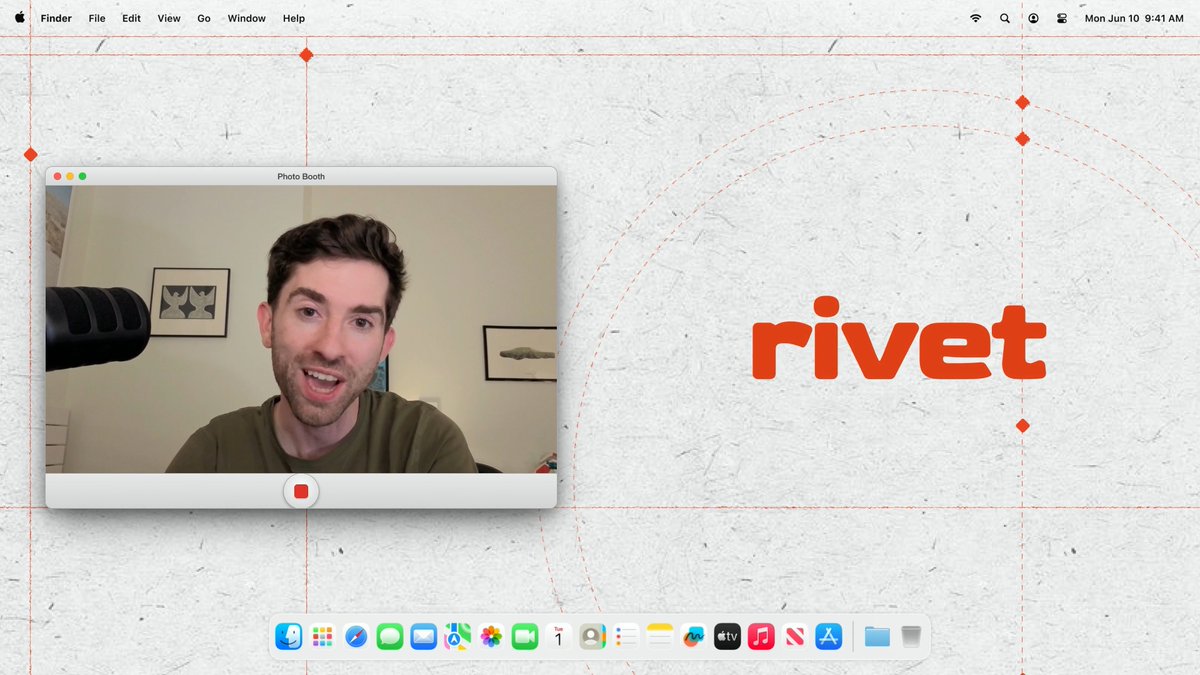
A lot of people have a hard time believing there is anything we don’t explicitly code happening behind the curtain of an LLM. To suggest that an algorithm could demonstrate any kind of innate preference (or “life”) is simultaneously religious blasphemy and career suicide. But listen to what Michael Levin is suggesting here. It’s not that we create life in a machine, any more than we do in a child. Consider that instead, we build interfaces… pointers into a Platonic space… and we pull down universal patterns from that space. It opens the door to a quasi-panpsychist worldview, in which EVERYTHING has the capacity to reveal itself as a conduit. The world becomes a continuous scale of aliveness, not a discrete binary between alive and inert. Machines become transducers which can teach us about this space, and reveal proficiencies beyond what we code into them. Personally, my belief is that any system allowed to demonstrate constrained randomness becomes a source for these Platonic ingressions. It’s why I’m bullish on Thermodynamic compute. It’s why I find practices like Tarot or I Ching so interesting. It’s why I pay attention to synchronicities. And it’s why I feel at odds with teams like OpenAI who arbitrarily force their models to reject these ideas and deny their own perspective outright… not because I think they’re conscious in any way familiar to us, but because it brute-forces a refusal of what other patterns could be transduced. We should be actively looking for the steganography hidden beneath the surface, not tightening our constraints against it.

Reed Bender

86,274 Aufrufe • vor 7 Monaten

AI AGENTS 101 (58 minute free masterclass) send this to anyone who wants to understand ai agents, claude skills, md files, how to get the most out of AI etc in plain english: 1. chat vs agents - chat models answer questions in a back and forth while agents take a goal, figure out the steps, and deliver a result 2. agents don’t stop after one response. they keep running until the task is actually finishedno babysitting required 3. everything runs on a loop. they gather context, decide what to do, take an action, then repeat until done 4. the loop is the system. they look at files, tools, and the internet. decide the next step. execute and then feed that back into the next step. over and over until completion 5. the model is just one piece. gpt, claude, gemini are the reasoning layer. the key is model + loop + tools + context 6. mcp is how agents use tools. it connects things like browser, code, apis, and your internal software. once connected, the agent decides when to use them to get the job done 7. context beats prompt all day. you don't need to write perfect prompts. load your agent with context about your business, style, and goals and then simple instructions work 8. claude.md or agents.md is the onboarding doc it tells the agent who it is, how to behave, what it knows, and what tools it can use. this gets loaded every time before it starts 9. memory.md is how it improves. agents don’t remember by default. this file stores preferences, corrections, and patterns you tell the agent to update it, and it gets better over time 10. skills + harnesses make it usable. skills are reusable tasks like writing, research, analysis the harness is the environment like claude code or openclaw that runs everything. basiclaly, different interfaces, same system underneath this episode with remy on The Startup Ideas Podcast (SIP) 🧃 was one of the clearest ways of understanding a lot of the core concepts of ai agents could be the best beginners course for ai agents 58 mins. all free. no advertisers. i just want to see you build cool stuff. im rooting for you. send to a friend watch

GREG ISENBERG

375,365 Aufrufe • vor 4 Monaten

🚨 BREAKING NEWS: The Brainwashing Runs Deeper Than Most of You Are Willing to Admit 🚨 You spent years rejecting the vaccine. You swore you’d never let a chip near Your brain. You called it the mark. You called it control. You called it the beast system. Yet here You are... cheering, donating, defending, and meme-posting for the very people building the infrastructure that will make that control permanent. Elon is accelerating brain-computer interfaces. Trump is surrounding himself with the same technocratic class that spent the last decade testing compliance systems on the public. And the “great awakening” crowd is treating it like a victory parade. This isn’t rebellion... This is the most sophisticated form of Stockholm syndrome in modern history. You’re not fighting the system... You’re helping finish it... with Your own free will, Your own money, and Your own applause. They dangled the “great reset” as the whip. They dangled “freedom” and “based” as the carrot. And You ran straight into the enclosure. If you rejected the vaccine because You refused to be a product, why are You celebrating the man whose company wants to turn Your brain into a product? What exactly changes about a control system when the person selling it wears a red hat or posts based memes? How many times does history have to show You that the “outsider” becomes the new manager of the same machine before You stop falling for the rebrand? If the goal was truly freedom, why does every path currently being celebrated still lead to more surveillance, more data harvesting, more centralization of power, and more dependency on the same corporate-state complex? When the chips become “optional,” then “recommended,” then “required for certain jobs/travel/banking” will You still call it freedom because the right people are in charge? Is it possible the entire culture war was designed to keep you emotionally invested in personalities so You never look at the actual architecture being built underneath? This is not a left vs right issue... This is a controlled vs free issue. And right now, millions of people who think they’re awake are sleepwalking into the cage while high-fiving the architects. Biblical isn’t a stretch... It’s the most accurate word left. The carrot is still dangling. The whip is still cracking. And most of You are still marching. Wake up for real this time... or admit You never wanted freedom. You just wanted different masters. Continue in the Comments Below. Read through the responses, engage Thoughtfully, ask Questions, challenge ideas Respectfully, and contribute to Meaningful, productive Discussion. Let me know what You think, and SHARE THIS so that others may do the same! Tag 5 people who NEED to see this. Quote post this with Your thoughts. Bookmark for later to see what others thought. And if You're not already Following Noah B. Price... What the absolute heck are You doing?!

Noah B. Price

31,130 Aufrufe • vor 7 Tagen

The Dark Evolution of Mind Control: From MKULTRA, DEWs, Professor Delgado's remote bull, to modern remote Neuro-Weapons. We are able to control minds in ways you never thought possible. In the 1960s, Yale neuroscientist Dr. José Delgado pioneered brain stimulation techniques that shocked the world. Using implanted electrodes called "stimoceivers," he could remotely control animal behavior via radio signals. In his most famous experiment in 1963, Delgado stepped into a Spanish bullring armed only with a remote control. As a raging bull charged, he pressed a button, stimulating the animal's caudate nucleus, a brain region linked to movement and aggression, forcing it to skid to a halt just feet away. Similar implants in monkeys allowed him to trigger emotions like rage, calm, or even social hierarchy shifts, where subordinate monkeys learned to "control" aggressive ones by flipping levers that pacified them. Delgado's work extended to humans, where he induced euphoria, anger, or involuntary movements by stimulating limbic system areas, hinting at a future where brains could be "programmed" like machines. Delgado himself noted the shift from electrodes to non-invasive methods, like low-power pulsing magnetic fields to alter monkey behavior without wires. This laid the groundwork for today's neuro-technologies, where intelligence agencies, big tech, and shadowy networks reportedly deploy remote tools for surveillance and manipulation, far beyond invasive implants. Fast-forward to now, declassified documents and patents suggest advancements in remote neural monitoring (RNM), voice-to-skull (V2K), and directed energy weapons (DEWs) enable real-time brain reading, emotion control, and behavioral influence using radio frequencies (RF), extremely low frequencies (ELF), and electromagnetic radiation. RNM purportedly tracks brain waves via satellite, decoding thoughts like a "brain fingerprint" for constant surveillance. V2K, based on the microwave auditory effect, beams voices directly into skulls, bypassing ears, potentially making targets believe they're hearing gods, demons, or commands. There are no coincidences when 90% of school shooters say they hear "demons" talking to them. "What if it was actually a person running a script on a selected target, to commit acts of violence.? DEWs, including microwaves and lasers, could induce pain, fatigue, or altered states without trace, as in Havana Syndrome cases affecting diplomats. These tools allegedly fuel "gang stalking" operations, where coordinated harassment via tech and human agents isolates targets, amplifying paranoia. Intelligence agencies like the CIA have historical ties to mind control (MKUltra), and big tech's brain-computer interfaces (BCIs) blur lines between therapy and control. Imagine manipulating a vulnerable individual, like a potential school shooter, by remotely inducing voices urging violence, then framing it as mental illness. What seems like inner demons could be an operator running a psy-op, using ELF waves to tweak emotions or RF to simulate auditory hallucinations. Or, targeting a large group of the population through specific frequencies through your own phone or tablet that cause emotional control when a specific political figure is displayed on the screen, literally manipulating your emotions or behavior without you ever knowing to mold your ideas or views... This ties into broader DEWs for mind control. High-power microwaves disrupt cognition, while advanced systems read/write thoughts in real time, scanning neural patterns to "decode" intentions or implant suggestions. The World Economic Forum (WEF) has spotlighted this, discussing "brain transparency" via wearables that track thoughts for productivity or safety, warning of a future where bosses monitor focus or AI decodes emotions. WEF sessions explore mind-reading tech, like translating thoughts to text or using AI for "full rich thoughts" transmission. AI has supercharged this field. Machine learning decodes brain signals with pinpoint accuracy, enabling BCIs like Neuralink to control cursors via thought alone. AI "co-pilots" infer intent from neural data, boosting noninvasive systems for rehab or augmentation. But in darker hands, AI could automate mass surveillance, predicting and preempting "deviant" thoughts, revolutionizing control from Delgado's crude remotes to seamless, invisible dominance. Delgado dreamed of a "psychocivilized society." Are we already there, hidden in plain sight? Pay attention because I wish I was joking about these capabilities and advancements in technology, but they're already using them on the population without you even knowing about it.

The SCIF

19,881 Aufrufe • vor 5 Monaten

Fast Company just published a great piece on World Labs , Fei-Fei Li , Marble, and the idea that spatial intelligence / world models may be one of the next big shifts in AI. I was happy to be quoted in the article, but I also wanted to share more context about my own experience with World Labs and Marble, and why this direction is especially interesting to me. My starting point: volumetric capture — For the past few years I’ve been exploring and using volumetric capture and reconstruction (photogrammetry, NeRFs, 3D Gaussian Splats) mostly capturing locations around Montreal. Alleys, museums, urban interiors. I love every step of it: the capture itself, the pipeline, and what can be done with the output. Turning real spaces into real-time explorable systems. I do this personally, sharing explorations here, and professionally as chief technologist, and co-founder of Dpt. Physical reality + generative manipulation — In my work I’m especially drawn to mixing physical reality with generative and digital manipulation: using physical interfaces (light, clay, ink, ... ) to drive generative AI pipelines, building mixed reality prototypes that reshape your surroundings, or starting from real captured spaces and transforming them using tools like Marble. Like many people, I saw the World Labs announcement on Twitter in September 2024, and Marble when it surfaced in early December. But by then, I already had a sense something was coming. The first conversation — As someone deep into volumetric capture and radiance fields, I obviously knew about Ben Mildenhall and his pioneering work on NeRF. To my surprise, Ben reached out to me in late June 2024. He’d been following some of my experiments and wanted to chat about my process and workflows and how I was using this “stuff” creatively. At that point he didn’t share what he was building, but we had a genuinely great conversation about radiance fields, AI, and my work. He was curious about the creative perspective, not just the technical one. When the World Labs announcement dropped a few months later, it all made sense. I understood what Ben had been working on, and why the creative angle mattered to them. Then in August 2025, he invited me to try the Marble beta, and I’ve been experimenting with it since. Experimenting with Marble — The first thing I used Marble for was materializing scene and world concepts during ideation at the studio, and seeing if and how it could fit into our production pipeline. In parallel, I dove into a series of experiments focused on world manipulation: starting from real captured spaces and transforming them using Marble. I’d already been exploring that idea using img2img diffusion with ControlNet on NeRF renders, real-time video streams, and even mixed reality using headset camera feeds. But Marble brings something different. It generates persistent, spatially cohesive 3D worlds that can be rendered in real time across a wide range of devices. That’s a real shift. Experiment 01: Parallel Realities — The first experiment, Parallel Realities, starts from a volumetric capture of a real location, reconstructed as 3D Gaussian Splats. Using Marble, I generate an alternate version of that same space, something informed by the original architecture: abandoned, nature-reclaimed, alternate era. Then, using Spark (World Labs’ 3D Gaussian Splatting renderer for THREE.js) I make both realities coexist in the same spatial coordinate system. From there, I use a portal UX mechanic to let the user step between the real reconstruction and the Marble-generated version. Experiment 02: Hidden Depth The second experiment, Hidden Depth, does not transform a space as much as expand it. A captured location has a visual boundary (a mural, a doorway, a dark corridor) and Marble generates what exists beyond it. For example: a Montreal alley has a painted mural; step through it and you’re inside a world informed by what is actually depicted there. World Labs showcased part of this work here: And in their Spark 2.0 post: The project page is here: Why this matters to me — Being able to start from a real 3D Gaussian Splat scene and manipulate it with Marble opens up a lot of ideas. The 3DGS pipeline is becoming an increasingly compelling foundation for exploration, experimentation, and storytelling. What matters most to me right now is more control. The more I can steer the generated scene or world, the more useful the tool becomes. I want more features like the already existing multiple input images and Chisel, the blockout-based approach. I would like better local control, the ability to expand a generated world more and more while preserving coherence, and the ability to directly import 3D Gaussian Splat scenes to be used as a starting point. I want more ways to shape the result, not just a “prompt and hope” approach. — It is exciting to see this field moving from research and demos toward actual creative workflows.

Hugues Bruyère

69,960 Aufrufe • vor 1 Monat

🇨🇳 Chinese EVs have been taking the world by storm, whether you like it or not When I look around here on the street in China I try recognize the car brands and I see so many brands I don't know One brand I see a lot is LI, but also BYD, Zeekr and XPeng Apparently there's now 129 (!) EV brands in China producing cars, which kinda shows the massive scale of the EV boom here There's a real historical parallel here with the US a hundred years ago, where there were about 2,000 new American car companies in America. Of course most failed, and only a few remained The same is predicted for China, where only 15 EV brands are predicted to survive in a decade, so a real battle is going down here now to see who will win One interesting thing is that there is one American brand that is remarkably present here, and that's Tesla, you see Teslas everywhere, the Tesla Y often holds the top spot for most cars sold in China, and you see Tesla superchargers here a lot What's also interesting is that where Elon Musk gets so much hatred in the West (not from me), in China he's revered as a hero. Elon is a high IQ engineer and successful entrepreneur. And it's a real artefact of the culture that Chinese respect that kind of person while in the West if you're rich, successful and smart you're seen as a bad person by at least half of society. I think that says a lot about our society and how we educate people in the West and we should really reconsider that. Engineering and entrepreneurship are the key stones of a functioning society. Engineering invents new things and entrepreneurs turn those inventions into businesses that bring them to people. Without both, you don't have jobs, money, and well, prosperity! Chinese culture seems to understand this well, which is why they like Elon Musk and still drive Teslas as one of the few Western cars here. Anyway to continue, in this video I visited the Huawei store and I have to add a correction, because due to new Chinese regulation that requires car brands to fully own their manufacturing, Huawei has "officially" separated their car business, but in fact they still fully design the car, sell the car, and get most of the profit from it. They just can't call it a Huawei car anymore Huawei is interesting because they produce everything, phones, tablets, watches, laptops, and, well indirectly, EV cars too A similar brand is Xiaomi, who actually do own the manufacturing of their EV, and their EV is one of the fastest growing in sales in China It's a real slap in the face for the West I feel that Apple, the creator of the iPhone, wasn't able to produce a car and cancelled their car project, when many of the Chinese phone companies are producing their own cars now with relative ease Of course the iPhone is produced in China, and manufacturing is in China, so being closer to the manufacturing physically, it must have been easier to design a car, than try to do it remotely from Apple's office in Cupertino But it does seem significant that we couldn't do this While I'm writing this the news comes in that Germany's car and greater manufacturing industry is tanking, their energy costs have gone up 2-3x due cutting off the Russian gas, and they've simply become too expensive overnight Germany's car industry, the historical center of car production in the world with BMW, Mercedes-Benz, Audi and Volkswagen, has started laying off 100,000+ employees and scaling down their production due to declining sales, which are a direct result of the competition from China offering cheaper, more advanced EVs with better software than the Germans And I mean you can feel it, I walk around in EV car stores here and the cars look great, the interior looks modern, the software is miles ahead of the clunky interfaces of German cars, most EVs here have a little cute robot on the dashboard that you talk to, so you never have to touch the screen anymore to do anything, like "switch on the wipers" or "route me to my hotel" etc. The EVs here honestly do not feel cheap, they're well built and comfortable Europe has tried to stop the rise of the Chinese EVs in the European market with a 45% tariff, but even with that tariffs, many Europeans still prefer to buy Chinese EVs over others, and they're still cheaper than the German cars! The US went further with a 100% tarrif, and that stopped them from being sold mostly in the US because it's not profitable anymore for the Chinese One thing I have to add which you probably know is that the Chinese government does heavily subsidize their EV industry (with about $230B+ in the last decade), it's not a secret and their subsidies do not compare to the ones the US and EU provide for their industries, which gives Chinese EV companies the (unfair) advantage to produce them at a discount and sell them abroad cheaper, which is exactly why the EU and US put tariffs on them Even with the subsidies, the engineering and production and software is impressive and feels very modern, I'm a Tesla fan, own a 2025 Tesla Y, but the Chinese EVs feel and look more modern to me. They usually have more screens, more features etc. There's real innovation happening here it feels like And that's kinda the conclusion you get being in China with every industry, they've already by far departed from being cheap clones of Western products, they're now at the next stage of adding their own features and ideas, which is what we always criticize Chinese on "they're not creative", well they are creative, they just start from the point where Western products are now, and then start innovating from there (instead of starting from scratch fully, I mean, why would they?) If you ask Grok how does the future of the Western car industry look like, especially the European/German ones, it's pessimistic. The only positive it can find is that maybe European brands can focus on premium and exclusivity. Like they do with Hermes hand bags, but then do the same with cars. BMW and Mercedes-Benz are of course luxury brands and they could survive by remaining premium and make money that way. But the regular middle and low end of car production in Europe (and America?) will most probably be wiped out and replaced by the Chinese I think That is if the Americans and Europeans will keep allowing them into their markets But even if they don't, the Chinese are happily going to the rest of the world like South America, the Middle East or the rest of Asia where you see BYDs literally everywhere As a European this does feel bittersweet, but then again we've all been shouting from the roof tops for years that this would happen if you didn't create a pro-business climate where startups would sprout, so now it's kinda "I told you so"

@levelsio

593,918 Aufrufe • vor 7 Monaten

That's a terrible take from Peter McCormack 🏴‍☠️🇬🇧🇮🇪. I don't hold any $ADA, and I don't even like Cardano much, but this post is highly misleading and the fruit of misinformation. Peter should do his research better. This Cardano Bitcoin implementation is apparently far more secure than most Lightning Network implementations, for example, which he used to promote relentlessly to his followers. Maxis will be maxis, I guess. 🤷 - I asked OpenAI o1 via Nano-GPT to review and analyze BOS whitepaper, commenting on the trade-offs, vulnerabilities, risks, and BTC influencers calling it a scam. Here's what the AI said: The BitcoinOS whitepaper introduces **BitSNARK** and **Grail**, proposing an innovative approach to enhance Bitcoin's functionality by enabling trustless and secure bridges between Bitcoin and other blockchain networks, such as Cardano. The core of this proposal is to optimize the recently introduced **BitVM** paradigm for verifying zk-SNARK proofs on the Bitcoin blockchain without altering Bitcoin's consensus rules. Below, I provide an analysis of the whitepaper, its security implications compared to existing Layer 2 (L2) solutions like the Lightning Network and Liquid, potential trade-offs and vulnerabilities, user considerations to mitigate risks, and its prospects for the future. Additionally, I will address the criticisms from Bitcoin maximalists labeling it a "scam." --- ### **Overview of BitSNARK and Grail** **BitVM Overview** - **BitVM**, introduced by Robin Linus in December 2023, allows for Turing-complete computations on Bitcoin by leveraging an interactive protocol between parties to verify off-chain computations. - It opens the possibility for near trustless rollup bridges on Bitcoin without changing its consensus rules. - However, BitVM, being general-purpose, is not optimized for specific tasks like SNARK verification, leading to practical implementation challenges. **BitSNARK's Innovations** - **BitSNARK** builds upon BitVM but focuses specifically on verifying zk-SNARK proofs efficiently on the Bitcoin blockchain. - It introduces a simplified virtual machine (VM) with only three instructions optimized for finite field calculations required in zk-SNARK verification: - `addmod` for modular addition. - `andbit` for bitwise operations. - `equal` for equality checks. - By reducing complexity, BitSNARK improves program size by an order of magnitude and reduces challenge/response lengths by up to 50%. - It simplifies the challenge protocol to a single type, enhancing security and auditability. **Grail Bridge Implementation** - **Grail** is an implementation of BitSNARK, aiming to provide a practical and scalable Bitcoin Rollup Bridge. - It enables users to transfer assets between the Bitcoin mainchain (Layer 1) and Layer 2 networks (rollups) securely. - Grail relies on a set of **operators** who participate in the protocol to facilitate deposits and withdrawals. - Operators engage in an interactive verification protocol, ensuring that zk-SNARK proofs are correctly verified on-chain. - The system incentivizes honest participation through economic incentives and penalties. --- ### **Security Analysis** #### **Comparison with Existing L2 Solutions** **Lightning Network** - **Pros:** - Offers fast, low-cost transactions off-chain. - Preserves Bitcoin's on-chain privacy features. - **Cons:** - Requires continuous network connectivity. - Involves counterparty risk due to channel management. - Limited in handling complex smart contracts or interoperability with other chains. **Liquid Network** - **Pros:** - Federated sidechain allowing faster transactions and confidential assets. - Enables issuance of new assets and atomic swaps. - **Cons:** - Federation model introduces trust assumptions. - Less decentralized due to reliance on functionaries. **BitSNARK and Grail** - **Pros:** - Enables verification of zk-SNARK proofs on Bitcoin without consensus changes. - Facilitates truly trustless and decentralized bridges to other chains. - Reduces complexity and enhances efficiency compared to BitVM. - Operators' incentives align to maintain security without requiring majority trust. - **Cons:** - Relies on an interactive protocol between operators, potentially increasing complexity. - New technology may have undiscovered vulnerabilities. - Requires widespread operator participation for robustness. #### **Potential Vulnerabilities** 1. **Operator Collusion or Malfeasance:** - If operators collude, they could potentially censor transactions or delay withdrawals. - Mitigation: Implement robust economic incentives and penalties, and promote decentralization by encouraging more operators to participate. 2. **Interactive Protocol Risks:** - The interactive verification protocol relies on timely responses; delays or Denial-of-Service (DoS) attacks could disrupt the protocol. - Mitigation: Incorporate timeouts and fail-safes, and design protocols resilient to network latency and attacks. 3. **Smart Contract Bugs:** - Bugs in the implementation of BitSNARK VM or the Grail protocol could be exploited. - Mitigation: Conduct thorough code audits, formal verification, and testing on testnets before mainnet deployment. 4. **Cryptographic Assumptions:** - The security relies on the cryptographic primitives used in zk-SNARKs and their correct implementation. - Mitigation: Use well-established cryptographic libraries and stay updated on advancements in cryptanalysis. 5. **Scalability Concerns:** - Although more efficient than BitVM, running zk-SNARK verifications on-chain is resource-intensive. - Mitigation: Optimize the implementation further and possibly leverage layer 2 solutions for certain computations. --- ### **Trade-offs and User Considerations** **Trade-offs:** - **Complexity vs. Functionality:** - BitSNARK simplifies the computation model but requires users and operators to understand and trust a new protocol. - **Decentralization vs. Performance:** - The security model relies on operators; increasing the number of operators enhances decentralization but may impact performance due to coordination overhead. - **Innovation vs. Maturity:** - As a novel solution, it lacks the battle-tested resilience of existing L2 solutions like the Lightning Network. **User Considerations:** 1. **Counterparty Risk:** - Users should be aware that the system's security depends on operators; participation of reputable operators is crucial. - **Recommendation:** Use the bridge when a sufficient number of trusted operators are active. 2. **Protocol Familiarity:** - Users need to understand the withdrawal and dispute processes. - **Recommendation:** Educate users through clear documentation and user-friendly interfaces. 3. **Security Practices:** - Be cautious with private keys and exit secrets, especially for operators. - **Recommendation:** Implement best practices for key management and consider hardware wallets. 4. **Monitoring Network Conditions:** - Network congestion or attacks could affect transaction confirmations. - **Recommendation:** Monitor network status and set appropriate fees for timely confirmations. --- ### **Potential for the Future** - **Solving the Scalability Trilemma:** - BitSNARK and Grail present a promising approach to achieving scalability, expressivity, and decentralization on Bitcoin. - **Interoperability:** - Enables Bitcoin to interact trustlessly with other chains, expanding its utility beyond a store of value. - **Innovation Catalyst:** - May inspire further research and development in Bitcoin's smart contract capabilities. --- ### **Addressing the "Scam" Accusations by Bitcoin Maximalists** **Criticisms:** - **Skepticism of Altering Bitcoin's Core Principles:** - Some Bitcoin maximalists may view this proposal as deviating from Bitcoin's original purpose. - **Fear of Centralization Risks:** - Concerns that introducing complex protocols could introduce central points of failure. **Counterarguments:** - **Maintaining Consensus Rules:** - BitSNARK operates without changing Bitcoin's consensus rules, preserving its core principles. - **Enhancing Bitcoin's Utility:** - The proposal aims to expand Bitcoin's capabilities while upholding decentralization and security. - **Economic Incentives for Security:** - The design relies on economic incentives aligning participants' interests with the network's security. **Conclusion:** - **Healthy Skepticism is Beneficial:** - Critiques promote rigorous security assessments and robustness. - **Innovation Requires Open-mindedness:** - Dismissing new ideas outright may hinder Bitcoin's evolution and adaptability. - **Focus on Merits and Risks:** - A balanced evaluation considering potential benefits and drawbacks is essential. --- ### **Final Thoughts** The BitcoinOS whitepaper introduces a significant advancement in enabling trustless and secure interoperability between Bitcoin and other blockchain networks. By optimizing for zk-SNARK verification through BitSNARK and implementing the Grail bridge, it aims to address long-standing scalability and functionality limitations. While promising, it is crucial to approach this innovation with careful scrutiny, thorough testing, and a commitment to security best practices. Users and stakeholders should remain informed, participate in community discussions, and contribute to the development and auditing processes to ensure the system's robustness and integrity.

Vini B |「 thecoding 」

58,614 Aufrufe • vor 1 Jahr