Загрузка видео...

Не удалось загрузить видео

На главную

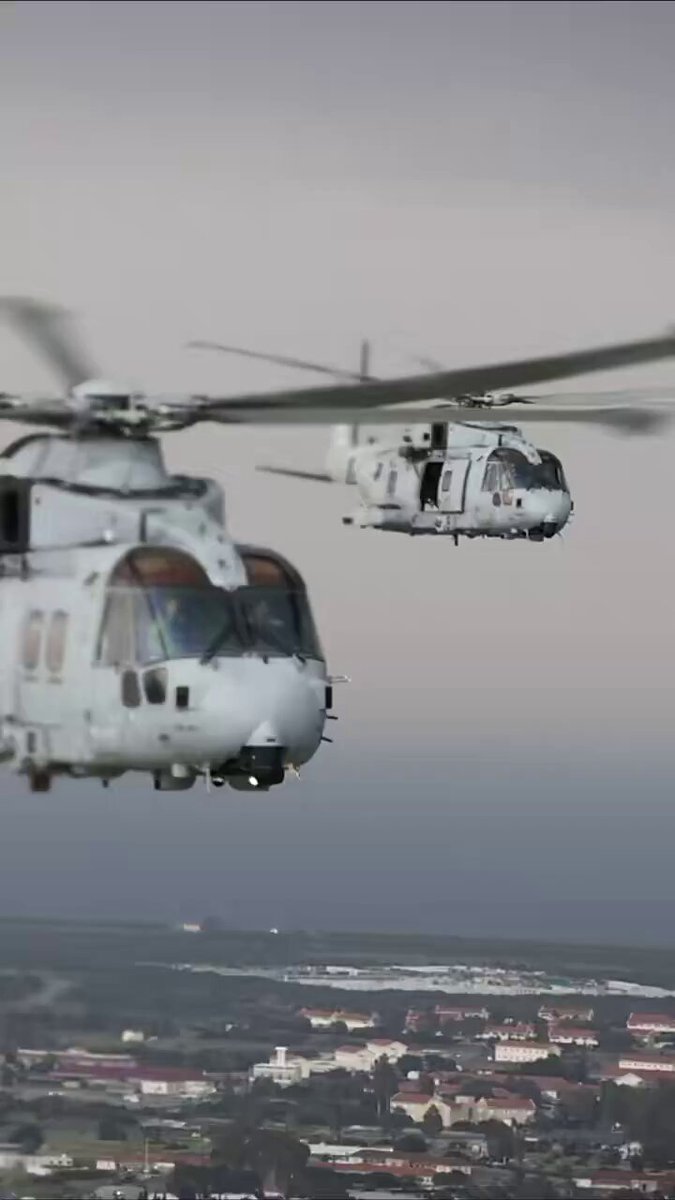
🚨If a global war started tomorrow these five countries would shape the battlefield. The United States leads with unmatched air dominance, 13,000 aircraft, 11 carriers and bases across more than 70 countries. Russia ranks second with the world’s largest nuclear stockpile of 5,500 warheads plus powerful missile and air...

237,713 просмотров • 6 месяцев назад •via X (Twitter)

Комментарии: 0

Нет доступных комментариев

Здесь появятся комментарии из оригинального поста

Похожие видео

🚨🇨🇳🇺🇸PENTAGON IN PANIC MODE: CHINA WILL MATCH U.S. NAVAL POWER BY THE 2030s America is showing off its huge navy in the Iran war — with 20 warships, 3 aircraft carriers, and over 100 daily strikes from far away. But China is watching — and saying: "That's exactly how NOT to do it." Beijing is following the same global strength, but smarter. 🔸 The US Navy is the only fleet today that can sustain months-long, high-intensity operations thousands of km from home bases — China is rapidly closing that gap. 🔸 China is expanding its fleet with new aircraft carriers, helicopter carriers, and large landing ships specifically designed for operations far beyond Taiwan. 🔸 By the early 2030s, China will be ready for complex missions like supporting friendly countries with sea and air forces — according to expert Sidharth Kaushal of the Royal United Services Institute (RUSI.) 🔸 Key challenges remain: the “first island chain” (Japan-Taiwan-Philippines) blocks easy access to the open ocean, only one overseas base in Djibouti, and a remaining lag in quiet nuclear-powered attack submarines. 🔸 China is investing in big manned warships as essential command centers for drones, lasers, railguns, and energy weapons — plus they handle real-world diplomatic tasks like boarding ships to control sea routes 🔸 Instead of copying the US model, China is carefully analyzing its weaknesses: vulnerable carriers, heavy reliance on complex supply lines, and the steep political price of endless global missions. 🔸 This is shaping a smarter alternative strategy — prioritizing strong regional dominance supported by advanced tech, drone swarms, and asymmetric tools rather than pure worldwide power projection. Do you think China will have a powerful global naval presence by 2030?

NewRulesGeopolitics

17,795 просмотров • 5 месяцев назад

JUST IN: 🇬🇧🇷🇺 Russian Think Tank RISS Warns Putin, Britain Is Far More Powerful Than Moscow Thinks Britain may be smaller than Russia, but underestimating the UK would be a serious strategic mistake. 🇬🇧 4 Vanguard class nuclear submarines form the backbone of Britain’s deterrent, armed with Trident II D5 SLBMs. Each has 16 missile tubes, while Britain’s nuclear stockpile is estimated at around 225 warheads. The biggest advantage is survivability. A British SSBN operating covertly at sea is extremely difficult to locate and destroy, giving London a credible second strike capability. And Britain is adding another layer: ✈️ 12 F-35A Lightning II stealth fighters are being acquired for NATO’s nuclear mission, with a long term ambition of 138 F-35s across the programme. Meanwhile, Britain is replacing the Vanguard fleet with 4 Dreadnought class SSBNs, ensuring its nuclear deterrent continues for decades. Beyond nuclear weapons, Britain fields F-35B, Typhoon, Astute class attack submarines, aircraft carriers, advanced destroyers and frigates, alongside world class intelligence and surveillance capabilities. 🇬🇧 Britain doesn't need Russia’s enormous arsenal. It needs enough survivable capability to guarantee one thing: A first strike against Britain could never prevent devastating retaliation. Russia may have far greater military mass, but Britain still packs a nuclear punch Moscow cannot afford to underestimate. 👀

War Radar

120,079 просмотров • 1 месяц назад

🇷🇺☢️🇺🇦 Concern inside Russia’s own establishment over the possibility that Vladimir Putin could resort to a tactical nuclear weapon is reportedly growing, as the Kremlin searches for ways to change the trajectory of the war. According to Bloomberg, an increasing number of Russian officials and people familiar with discussions inside the Kremlin believe the possibility of Putin considering tactical nuclear use can no longer be completely dismissed. The concern reflects the enormous military and political stakes Moscow now faces in Ukraine and the growing uncertainty surrounding how far the Kremlin could escalate if conventional options fail to deliver its objectives. Russia’s key international partners are also deeply opposed to such a scenario. China and India have warned Moscow against nuclear escalation, with Beijing repeatedly communicating that Russia should not even consider employing nuclear weapons against Ukraine. China has continued publicly emphasizing its opposition to nuclear use and escalation. The political consequences for Moscow would be enormous. Crossing the nuclear threshold would risk destroying much of the diplomatic space Russia still retains with countries such as China and India, while radically escalating its confrontation with Ukraine and the West. That helps explain why pressure from Beijing and New Delhi matters: for Putin, nuclear escalation would not simply represent another military step, but potentially a fundamental rupture with partners Russia increasingly depends upon.

NSTRIKE

57,243 просмотров • 1 месяц назад