Video yükleniyor...

Video Yüklenemedi

Ana Sayfaya Dön

"If you just compound and stack day after day after day and give it your best, great things will happen. That's been the story of my life and the story of this business." Garrett Lord. Founder & CEO of Handshake. At a Christmas party in December 2024, Garrett met...

330,468 görüntüleme • 2 ay önce •via X (Twitter)

0 Yorum

Yorum bulunmuyor

Orijinal gönderinin yorumları burada görünecek

Benzer Videolar

Zero to $50M in 4 months. $100M+ in 12 months. That's the story of how Handshake discovered they were sitting on AI's most valuable resource: 20 million students and experts. For a decade, Garrett Lord built a career network for students and PhDs. A great business, growing well. Then AI happened. Last Christmas, Garrett realized his network of 500,000 PhDs and 3 million master's is exactly what frontier AI labs desperately needed to train their models. He flew around the country during the holidays, talked to lab leaders, and launched a new business inside his existing company. Eight months in, they now work with all 7 major frontier AI labs and have become one of the fastest-growing businesses in Silicon Valley history. In our conversation, Garrett shares: 🔸 How Handshake found this opportunity 🔸 Why AI models need human experts (e.g. physics PhDs) to improve 🔸 What this “data labeling” actually involves 🔸 Inside the actual work: what a biology PhD does for 8 hours that makes GPT-5 smarter 🔸 The playbook for building a startup inside a startup: separate teams, separate offices, separate everything 🔸 Why the shift from “generalist” to “expert” data labeling created a once-in-a-lifetime business opportunity 🔸 Why AI won’t eliminate entry-level jobs—it’s creating “Iron Man suits” that make junior employees 10x more productive Listen now 👇 • YouTube: • Spotify: • Apple: Thank you to our wonderful sponsors for supporting the podcast: 🏆 CodeRabbit — Cut code review time and bugs in half. Instantly: 🏆 Orkes — The enterprise platform for reliable applications and agentic workflows: 🏆 Anthropic — The AI for problem solvers and enterprise:

Lenny Rachitsky

197,252 görüntüleme • 1 yıl önce

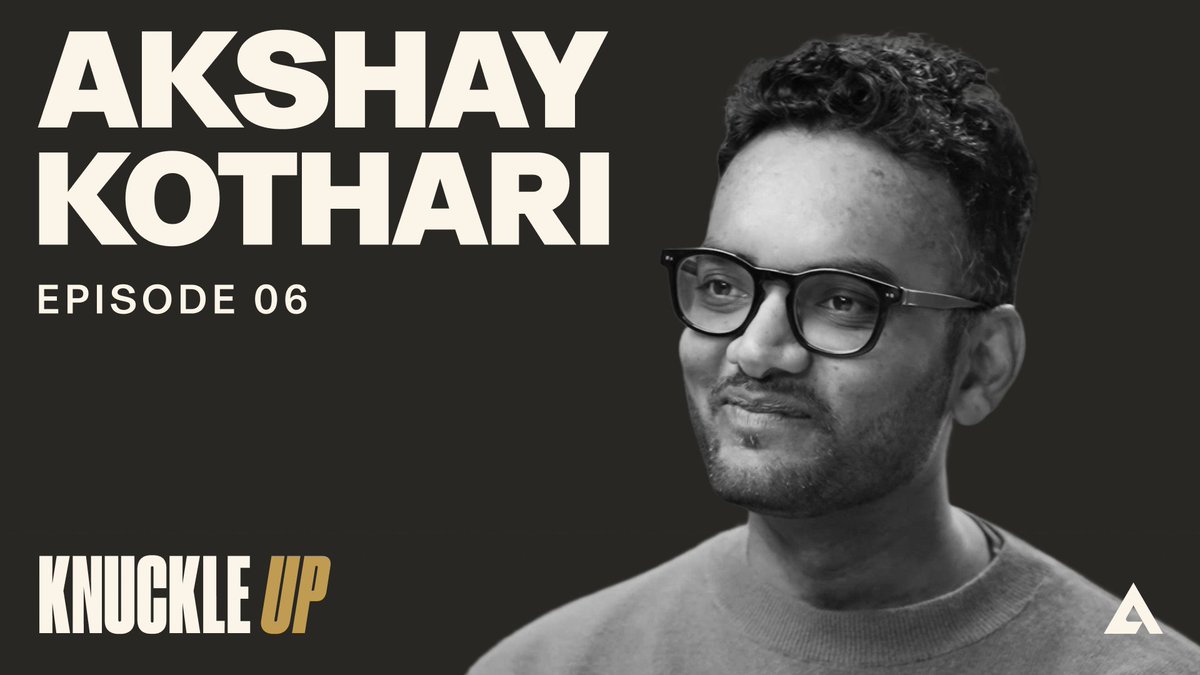
"We were go-karting and doing quite well. Now we've moved to Formula 1, and we're in the middle of the pack. We have a shot at the podium but we have to rewire for the race we're in." Akshay Kothari (Akshay Kothari). Cofounder and COO of Notion. Three years from now, most pre-AI companies will be gone. Notion will be one of the few standing stronger than before. This episode is a field study in how they're pulling it off. Knuckle Up ↓ 00:00 Intro 01:27 What were Notion's core founding principles? 06:20 Which early cultural principles scaled, and which broke? 08:22 How did Notion hire its first employees, and where did they come from? 11:48 How does hiring work now that the founders can't meet everyone? 14:35 Why does Akshay, as COO, prefer to have zero direct reports? 19:05 How do Ivan, Simon, and Akshay divide the work? 21:07 Does Notion's intentionality ever conflict with speed? 25:25 What should other founders steal from Notion's culture? 28:11 When did AI become a reason to rethink the whole product? 30:44 Why were the early AI years a "swamp of despair"? 36:05 How do you push AI across a huge product without losing the user? 39:25 Does Notion buy its AI DNA or build it? 40:44 Should Notion be afraid of OpenAI, Anthropic, and fast copycats? 46:58 What's hardest about the reinvention, and what does "meet the LLM" mean? 52:42 Is Notion AI-native in every function yet? 54:36 Are Notion's engineers still writing code, and how has engineering changed? 1:01:07 Once building is cheap, what's the new bottleneck? 1:02:39 How is AI reshaping sales, marketing, and support? 1:09:07 How many agents run inside Notion, and who builds them? 1:11:28 How has recruiting changed for the AI era? 1:13:48 What still worries Akshay about Notion's future? 1:15:22 Quickfire: admired founders, books, overrated AI advice, and Akshay’s superpower 1:19:42 What should a $50M pre-AI company do in the next 90 days?

Nakul Mandan

205,031 görüntüleme • 3 ay önce

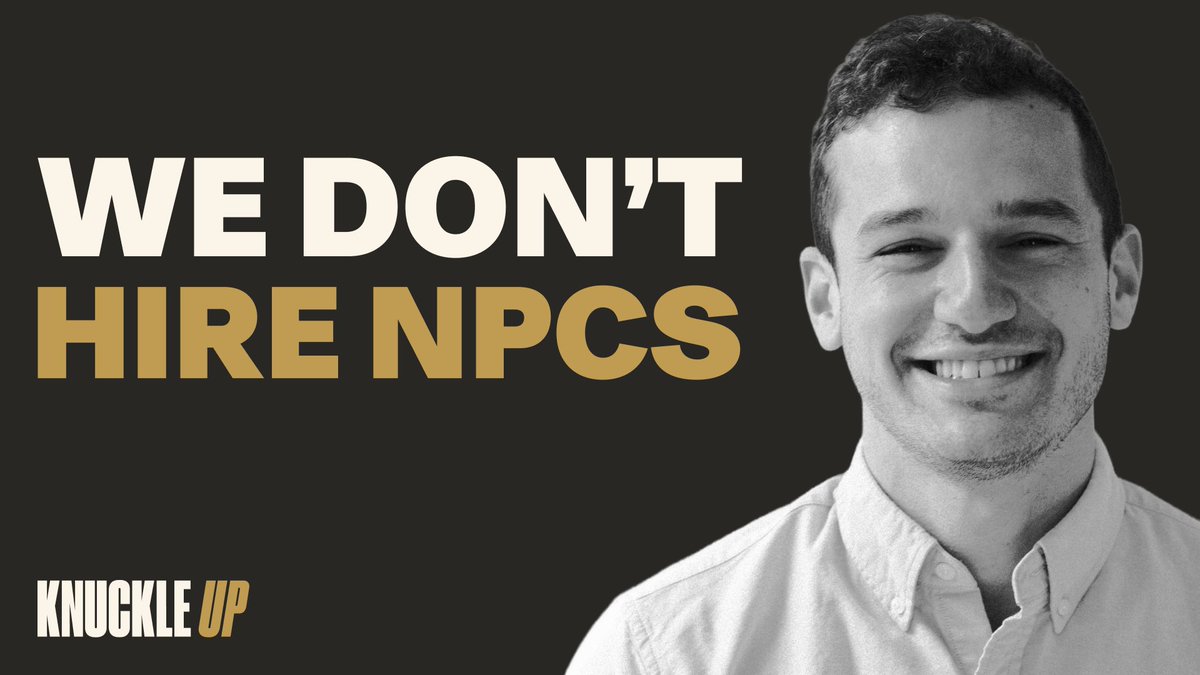
“We really try to avoid non-player characters (when recruiting) - people who just go through life as if they’re on a stream and they have no agency over themselves.” Will Bryk. Co-founder and CEO of Exa. The founder who listens to the Mission Impossible soundtrack every morning, and finds more inspiration in fictional superheroes than real-life ones, on how he’s building the company powering the internet of agents. Knuckle Up ↓ In this conversation with Will: 00:00 Who is Will Bryk? 01:49 Why do agents need a different search engine than humans? 02:53 How can an independent search company survive the big labs? 07:33 What does the internet look like when agents do the searching? 10:19 How did writing a book on the history of civilization lead to Exa? 15:39 Why does Exa hire first-principles thinkers, not rebels? 18:05 What is a “non-playable character,” and why does Exa screen for it? 19:49 How does Exa win engineers against the labs’ packages? 21:30 Why does Will kill process “before it lays eggs”? 26:27 Does the “bitter lesson” apply to humans? 29:52 What breaks when a company outgrows a single room? 34:47 Are there 100x and 1000x engineers now, not just 10x? 37:32 Why should nothing at Exa ever take a month to ship? 45:30 Where does Will’s drive actually come from? 48:28 Why are Will’s role models fictional, not real? 51:05 What does “We’ll figure it out” mean at Exa? 54:05 Why do Will’s best thoughts happen at 2:00 AM? 57:47 Quickfire: red flags, young founder myths, and Will’s mission impossible

Nakul Mandan

91,362 görüntüleme • 1 ay önce

I asked Dan Martell to walk me through every level of making money with AI. He gave me the most simple, practical advice I've ever heard on this subject. Level 1 - Making $0 - $100k Level 2 - Making $1m - $10m Level 3 - Building a $10m++ enterprise. 0:00 Only 5% of the World Has Ever Paid for AI 0:46 The Easiest Thing to Sell With AI Right Now 1:56 The Marcus and Sophie Framework 4:24 Theory of Constraints (Right Problem to Solve) 5:33 What Is the Number One Business Constraint 7:13 How to Leave Your Job and Go All In 8:27 Business Is Simple Find a Problem and Solve It 9:08 Stop Getting Ready to Get Ready 9:33 The Sarah Story One Text and $10K 9:53 Pull Up Your Phone and Message Your Contacts 11:05 Dan's Son Gets His First Client at $800/Month 12:41 Best Employee vs. Best Employer 13:59 What Other Services Can You Sell With AI 14:44 Sales Is Not Talking It's Asking 17:01 What to Do When You Hate Your Business 18:40 Pain and Pleasure Are the Only Two Motivators 19:13 They Haven't Made It a Must Yet 20:29 Make It a Must Not a Nice to Have 21:06 The Jen Story and the Gasping Moment 22:17 How to Find Your First 10 to 15 Clients 28:38 The Personal Brand Play 33:06 Vision Is What AI Cannot Do 34:55 Hard for Computers Easy for Humans 36:13 Level 2 Making Your First Million With AI 37:18 The Replacement Ladder Framework 37:39 Admin First Then Delivery Then Marketing 39:09 Why Marketing Is the Biggest AI Category 39:32 Why You Should Keep Sales for Yourself 40:00 Level 5 Leadership and AI Agents 41:41 What a Fully AI Systems Business Looks Like 43:13 The Gym Owner With Three Locations 46:16 Shutting Down the Company for Two Days 46:37 Teaching the Whole Team to Code in Claude 49:28 Wayne the 62 Year Old Who Made $12K a Month 52:38 I Only Share What Actually Works 53:21 Whisper Flow and Talking to Your AI 56:41 Claude Chat Claude Coworker and Claude Code 57:57 The Claude Browser Extension 58:49 Claude Code Is Not Just for Developers 1:00:06 How to Migrate Your AI Memory Across Tools 1:01:08 Level 3 $1M to $10M and the Brand Play 1:02:05 Nobody Buys AI They Buy Trust 1:03:25 Brand Is Association and Association Is Trust 1:05:12 A Million Followers Is $10M in Activated Revenue 1:07:03 How to Keep AI From Becoming Slop 1:07:42 Human in the Loop 1:08:16 The 10 80 10 Rule and Why AI Is Now the 80 1:10:01 The Team FIRED Themselves 1:11:45 Dan's Free AI Curriculum for Your Team

Grant

168,385 görüntüleme • 3 ay önce

tylercowen is bullish on AI education — here's why. 00:00 -- Preview 00:24 -- President Carlos Carvalho's AI-generated intro 03:21 -- Cowen reacts to UATX's campus 04:38 -- The AI revolution is here. Who will lose the most? 06:05 -- AI lawyers 07:17 -- Don't underestimate this 10:41 -- Changes to the "upper upper middle class" 12:38 -- How to be successful 13:43 -- The rise of managerial empires 14:02 -- When will we have the first billion dollar company with one employee? 16:05 -- 10-20 year forecast 16:19 -- Why education is so behind 17:01 -- Should you be bullish on UATX? 18:36 -- Should you still read Homer? 21:50 -- Write to think 25:01 -- Meet more people 25:42 -- How to get hired 26:54 -- Is AI your best mentor? 38:17 -- How to curb cheating 39:02 -- The new life of the mind 42:34 -- Q&A: Will there be more status associated with real education or AI education? 45:50 -- Q&A: Why do tech-savvy students need to practice using AI? 47:56 -- Q&A: Do LLMs atrophy your mind? 49:29 -- Q&A: How do you avoid AI-dependency? 51:05 -- Q&A: Isn't this vision lonely and isolating? 53:06 -- Q&A: Do students need teachers? 55:36 -- Q&A: What are the four most important courses for undergrads? 57:49 -- Q&A: Which AI company will win the AI race in the next five years and why? 59:22 -- Q&A: Can AI teach religion? 01:01:32 -- Q&A: Will AI narrow or widen our world? 01:04:37 -- Q&A: What makes us human? 01:05:42 -- Q&A: What is art? 01:08:33 -- Q&A: It's easy to catch cheaters

University of Austin (UATX)

27,770 görüntüleme • 8 ay önce

This AI can read emotions better than you can. It was created by Hume (Hume AI) an AI research lab developing models that can read your face and your voice with uncanny accuracy. Their hope is that models that can read your emotions will help create AI that optimizes for human well-being. I sat down with Alan Cowen (Alan Cowen), the co-founder and CEO of Hume to talk about how all of this works: the science of emotion, AI that optimizes for human well-being, and more. Before starting Hume, Alan helped set up Google’s research into affective computing and got a Ph.D. in computational psychology from Berkeley. He's one of the bright lights in AI, and this was an incredible conversation. We get into: - What an emotion actually is - Why traditional psychological theories of emotion are inadequate - How Hume is able to model human emotions - How Hume's API enables developers to build empathetic voice interfaces - Applications of the model in customer service, gaming, and therapy - Why Hume is designed to optimize for human well-being instead of engagement - The ethical concerns around creating an AI that can interpret human emotions - The future of psychology as a science This is a must-watch for anyone interested in the science of emotion and the future of human-AI interactions. Watch! --- Timestamps: I tell Hume’s empathetic AI model a secret: 00:00:00 Introduction: 00:01:13 What traditional psychology tells us about emotions: 00:10:17 Alan’s radical approach to studying human emotion: 00:13:46 Methods that Hume’s AI model uses to understand emotion: 00:16:46 How the model accounts for individual differences: 00:21:08 My pet theory on why it’s been hard to make progress in psychology: 00:27:19 The ways in which Alan thinks Hume can be used: 00:38:12 How Alan is thinking about the API v. consumer product question: 00:41:22

Dan Shipper 📧

45,941 görüntüleme • 2 yıl önce

"I've tried to make it so that the pressure goes down as success goes up. If you're more successful, why are you more stressed about it?" - immad. Immad Akhund. Founder and CEO of Mercury. $650M annualized revenue. $5.2B valuation. 300K customers. Immad has achieved all of this on his own terms: He's anti-996. Remote-first when rest of Silicon Valley has bounced back to fully in-person. Hires for curiosity and low ego. Optimized to be a founder for life. Knuckle Up ↓ 00:00 Who is Immad Akhund? 01:53 Is culture just the founder's personality externalized? 07:53 Is 996 actually less productive? 13:14 Why is Mercury still remote-first when Silicon Valley went back? 15:52 How did Immad hire Mercury's first ten people? 20:33 What is Mercury's famous “curiosity interview”? 25:06 How do you hold the hiring bar at 1,200 people? 28:48 What does Immad’s day-to-day look like? 34:10 How do you know when an exec is no longer right for the job? 37:32 Why does Mercury run on small, autonomous product teams? 40:27 What breaks when a company runs purely on metrics? 47:03 How is AI changing Mercury? 54:09 What does becoming a chartered bank actually change? 56:19 How did the SVB collapse end up helping Mercury? 1:03:40 What does psyche management look like 20 years in? 1:11:19 What does it mean to be at the founder “bonus levels”? 1:15:21 Quickfire: overrated traits, AI blind spots, and being proven wrong 1:17:52 What would Immad tell his 25-year-old self?

Nakul Mandan

581,542 görüntüleme • 3 ay önce

Gavin Baker and a16z's David George on the state of the AI boom: The future doesn't have to be winner-take-all. Labs, open-source, applications, and the clouds can all capture value. Demand for intelligence is still dramatically underestimated. Today's power users number in the millions and will grow to hundreds of millions. Gavin and David argue a compute shortage is a more real risk than an AI bubble, and building through it is an opportunity to reindustrialize America. In this episode, they get into why compute investments pay back so fast, what the data center backlash gets wrong, the case for putting compute in orbit, why enterprises will run several models at once, and how Nvidia ended up at the center of the entire supply chain. 00:00 Intro 01:06 The bear case Gavin couldn't find 05:50 Why a lab would cut its own revenue 75% 08:05 What LPs get wrong about a crash 10:50 Microsoft slowed its capex and regrets it 14:33 The engineers spending 100x the median 17:35 Why 23-year-olds use AI better than Gavin 21:45 How much copper 500M AI users need 23:00 Stop promising to cure cancer 26:00 America's richest county is full of data centers 30:48 Who gets priced out of compute 33:05 The age of Elon and Jensen 34:25 Orbital data centers 44:40 Asteroid mining 48:12 Why Microsoft doesn't need a frontier model 54:02 Who becomes the abstraction layer 55:40 Everyone wanted a deity, Cursor wanted a product 1:00:25 Never take shots at Jensen 1:07:40 What happens when the chip doesn't work 1:12:10 What chip deals reveal about customer demand YouTube: Gavin Baker David George

a16z

1,956,190 görüntüleme • 23 gün önce

Sequoia founder Don Valentine: “The art of storytelling is incredibly important” “The art of storytelling is incredibly important. And many—maybe even most of the entrepreneurs who come to talk to us can’t tell the story. Learning to tell a story is incredibly important because that’s how the money works. The money flows as a function of the stories.” The founder of Sequoia founder explains that the story is how you explain what you want to do, how long it’s going to take, who the competition is, and how much money you need. a16z cofounder Ben Horowitz shared a similar view in a 2014 Forbes interview: “Storytelling is the most underrated skill… Companies that don’t have a clearly articulated story don’t have a clear and well thought-out strategy. The company story is the company strategy.” He continues: “The story must explain at a fundamental level why you exist. Why does the world need your company? Why do we need to be doing what we’re doing and why is it important?… You can have a great product, but a compelling story puts the company into motion. If you don’t have a great story it’s hard to get people motivated to join you, to work on the product, and to get people to invest in the product.” This is the job of the founder and CEO: “The CEO must be the keeper of the story. The CEO is responsible for getting the story right, that it’s up to date, compelling, and can move the hearts of men and women. That’s the fundamental responsibility of the chief executive… The mistake people make is thinking the story is just about marketing. No, the story is the strategy. If you make your story better you make the strategy better.” Video source: Stanford Graduate School of Business (2010)

Startup Archive

258,577 görüntüleme • 1 yıl önce

I sat down with Nicolas Sharp, founder of Attio, to talk in depth about how his company is disrupting the $80 billion CRM market. Attio has raised $116m, is 4x'ing ARR and is one of the fastest growing companies in Europe. We talk about: - Why Attio went against all conventional wisdom and spent years 3 years building the product before launching - Why Attio doesn’t hire ‘Software Engineers’ and who they hire instead. - How Attio chose investors who would back a long-term bet against multi-billion $ incumbents - How Attio is building CRM from first principles for the AI era - Who should you avoid hiring at all costs, and who should you hire for your startup And so much more. If you’re interested in learning about the story of how Nick built Attio into the incredible company it is today and is disrupting one of the most important software categories, you’re going to want to see this. Enjoy // Timestamps 00:00 Intro 00:39 Why Attio spent 3 years building their product before launch 5:05 The Power of Building Systems, Not a Box of Features 9:05 How to know when it’s time to launch 13:30 Nick’s Playbook For a Killer Product Launch 18:09 How To Go From an Investor to a Founder 23:05 How Failure Led to Attio's Big Break 28:07 Why startups need to hire "Hidden Gems," 34:05 Fundraising 49:36 Why Attio Invests In Inexperienced Talent 55:07 The Case For Not Hiring Software Engineers (& Who You Should Hire Instead) 1:02:46 The 8 Persona Hiring Framework 1:09:05 How Attio doesn’t use OKR's 1:27:11 Where does Nick's Ambition and Grit come from? 1:36:59 How Attio is Building CRM from First Principles for the AI era 1:45:29 How to Successfully Market In A Crowded Industry 1:51:10 Breaking Down Attio’s Viral Marketing Strategies 2:02:15 The Change That Had The Biggest Impact on Customer Conversion 2:05:04 Why Attio created A “Reverse Trial” 2:10:16 Why Nick is building from London, not Silicon Valley 2:22:48 The 10-Year Vision for Attio

Wouter Teunissen

26,472 görüntüleme • 1 yıl önce