Загрузка видео...

Не удалось загрузить видео

На главную

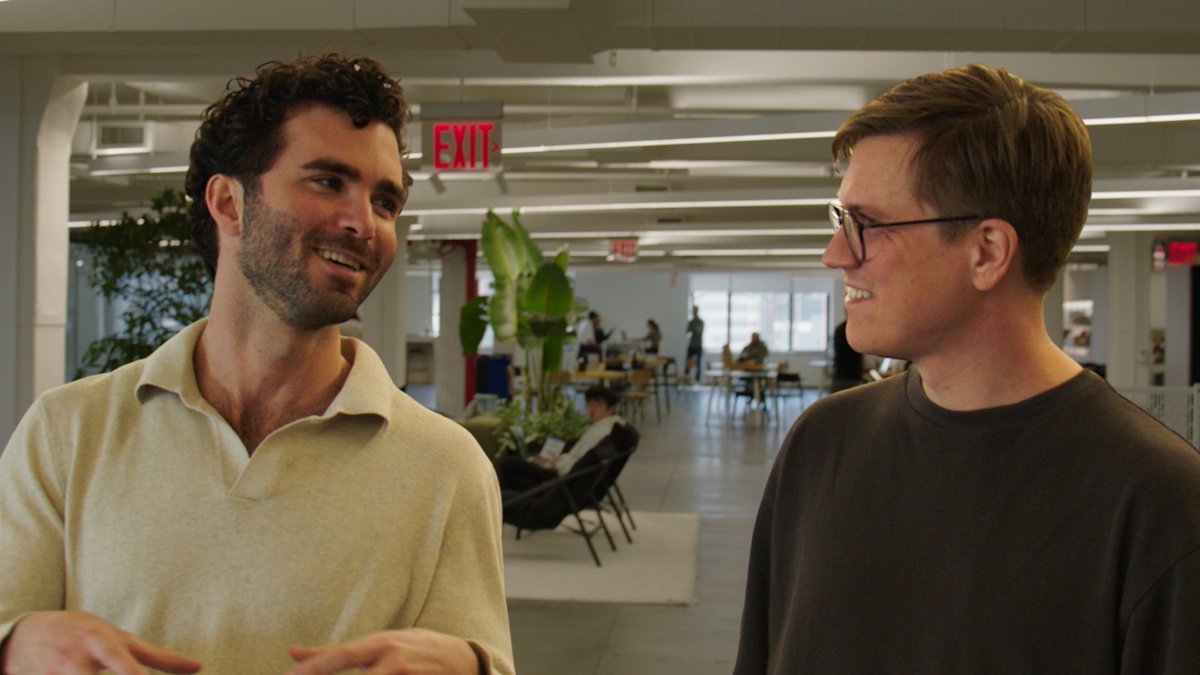
"If you're not tackling hard problems, why are you creating a startup?" Erik Bernhardsson was told to use Kubernetes. Instead he built Modal's file system and container runtime from the ground up, tuned for the speed AI workloads demand. With Modal, containers boot in under a second, and workloads...

21,790 просмотров • 6 дней назад •via X (Twitter)

Комментарии: 0

Нет доступных комментариев

Здесь появятся комментарии из оригинального поста
Похожие видео

Claude Code cracked something open for us Every 🧱. Now I ship to codebases I barely know, every feature we ship makes the next one easier, and non-technical members of the team use the terminal. I’m genuinely grateful. So I brought its creators, Cat Wu (cat) and Boris Cherny (Boris Cherny) from Anthropic, on AI & I to say thank you—and to talk about everything they’ve learned from building Claude Code. We get into: • The workflows Anthropic’s smartest engineers use to push Claude Code to its limits. Why they pit subagents against each other to get cleaner results, how they turn past code into leverage, and the slash commands and MCPs they rely on most. • The product lessons behind one of the most loved AI agents in the world. How the team balances simplicity and power—building a tool that anyone can use, but that experts can bend to their will—and their philosophy of “unshipping,” or cutting back whenever there’s a simpler, more intuitive path to user intent. • A peek into the future of coding with AI. The new form factors they’re experimenting with to make Claude Code more autonomous, more reliable, and more accessible to non-technical users This is a must-watch for anyone—both technical and non-technical—who wants to learn how to use Claude Code like the people who built it. Watch below! Timestamps: Introduction: 00:01:26 Claude Code’s origin story: 00:02:25 How Anthropic dogfoods Claude Code: 00:07:03 Boris and Cat’s favorite slash commands: 00:14:06 How Boris uses Claude Code to plan feature development: 00:15:49 Everything Anthropic has learned about using sub-agents well: 00:21:53 Use Claude Code to turn past code into leverage: 00:26:16 The product decisions for building an agent that’s simple and powerful: 00:33:14 Making Claude Code accessible to the non-technical user: 00:36:38 The next form factor for coding with AI: 00:45:12

Dan Shipper 📧

57,619 просмотров • 10 месяцев назад

AI INTERVIEW: OPENAI'S SECRET WEAPON AI agents are no longer just hype—they're here to revolutionize automation, Web3, and beyond. SwarmNode.ai is building a serverless AI agent platform for scalability, efficiency, and real-world impact. In this exclusive interview, he reveals how AI swarms can outperform single models, why OpenAI’s Operator is just the beginning, and how crypto is fueling AI innovation. Plus, he breaks down DeepSeek’s game-changing AI breakthrough, the future of agent monetization, and why serverless AI could be the next frontier in automation. 01:37 – From Engineering to AI: The journey into artificial intelligence. 02:43 – The GPT-3 Moment: How OpenAI’s tech pulled him in. 04:10 – AI’s Biggest Challenge: Why real-world use cases lag behind. 05:05 – OpenAI’s Operator: Why it’s “rudimentary” (for now). 06:25 – Crypto & AI: How tokens help bootstrap AI startups. 08:15 – Can You Bootstrap a Startup with a Token? The trade-offs. 09:56 – 90% of AI Token Holders Don’t Use the Product—Does It Matter? 11:18 – What is SwarmNode?: AI agents, hosted serverlessly. 14:23 – AI Swarms: Why multiple agents outperform single models. 16:08 – What is a Swarm? A simple definition of collaborative AI. 17:32 – “How Can I Make Money with AI?”: Real-world use cases. 18:41 – AI Bounties: Hiring devs to build your custom agent. 20:50 – The Future of AI Marketplaces: Monetizing pre-built agents. 23:15 – DeepSeek’s Disruption: Why it’s good news for AI. 24:46 – Is SwarmNode Compatible with DeepSeek? How it integrates. 26:17 – SwarmNode vs. AI Launchpads: What makes it different? 27:42 – Why Serverless Matters: Cost savings & efficiency. 29:53 – AI Agents in the Real World: Booking flights, managing workflows, and more. 31:11 – Building SwarmNode for Developers: Why it started as a personal project. 32:27 – Explosive Growth: 200,000 AI agent executions in 5 weeks. 34:41 – Why SwarmNode Agents Aren’t Visible on 𝕏 Yet. 36:46 – Startup Hiring Lessons: Finding top AI talent. 39:15 – Why SwarmNode is Built in Python (and What’s Next). 40:32 – Scaling AI Workloads: Handling traffic surges. 41:42 – AWS & Cost Challenges: The biggest monetization hurdle. 42:58 – 2025: The Year of Mass AI Adoption. 45:22 – Should We Be Worried About AI’s Rapid Growth? 46:46 – The Most Underrated AI Tools Right Now. 47:34 – What’s Next for SwarmNode?: Making AI accessible to everyone.

Mario Nawfal

338,311 просмотров • 1 год назад

In this special live event, Founders In Arms Podcast brings together a room full of founders at Mercury's San Francisco headquarters for an intimate conversation about building, investing, and the future of AI. Max Mullen is co-founder at Instacart, where he led product and grew it from a contrarian idea into the leader in online grocery delivery and eventually a publicly traded company. Now Max Mullen is an active investor and runs a founder community in San Francisco called Workshop. Max shares lessons from over a decade of building and his perspective on AI's transformative potential. In this episode, we cover: (00:00) Welcome to the first live Founders in Arms event at Mercury HQ (00:43) Introduction to Max Mullen and his early investment in Mercury (03:58) Max's origin story and first startup at Startup Weekend (04:36) Building a social network and getting acquihired (05:39) The path from acquihire to founding Instacart (06:19) Why Max wanted to solve real-world operational problems (07:17) Starting Instacart when there was no gig economy (09:15) Overcoming the "grocery delivery is dead" narrative (11:48) Market timing and why Webvan was too early (14:37) Being a non-technical co-founder in a technical role (17:45) The PARE framework for building company culture (22:09) Max's approach to M&A at Instacart (24:00) The Caper smart shopping cart acquisition story (25:31) How founders can position for acquisition (28:26) Why product-market fit attracts acquirers (29:46) Evaluating investments: market size vs. founder quality (32:54) Max and Immad's differing investment philosophies (35:39) The current state of VC funding and AI companies (36:51) The three best times to raise money as a founder (39:15) Instacart's seasonal business patterns and fundraising timing (39:59) The most interesting opportunities in AI right now (40:24) Why every profession will have AI agent co-pilots (41:44) What AI-native companies will look like for the next generation

Rajat Suri

144,197 просмотров • 7 месяцев назад

Nat Eliason’s (Nat Eliason) career arc is borderline absurd—but it works. He’ll spot a new tool or trend, master it, build a business around it, and move on. Nat’s pulled it off with the note-taking wave ($600k in sales from a Roam Research course), real estate (6x return flipping property in Austin), and crypto (published his insider story with Random House). Now it’s AI: he’s running a viral course on building apps with AI—$200k in pre-sales in just a week, 800 students and counting. I’ve known Nat for a long time and I think he has a great sense for where the puck is headed. He was one of the first guests I had on the podcast and I was delighted to have him on again. Here are a few takeaways from our conversation: - Coding with AI has become orders of magnitude easier for non-technical people over the last 2 years—Nat rarely has to help students fix bugs; they troubleshoot in Cursor on their own. - AI coding assistants are creating new behaviours in programming, like using a speech-to-text model to talk to an agent and having it write code for you. - The traditional learning curve of coding is flattening because AI tools let beginners build and iterate in faster feedback loops. - AI has given Nat leverage in spades—it increases his ability to be a creator while also building a robust business with as few people to manage as possible. He demos an AI book editor he coded for his sci-fi novel. - In the age of AI, software is becoming content and the barriers to create are lower than ever—but custom software for everything isn’t the answer. Nat’s model is that personalized tools make sense for that one thing you care the most about. - Nat believes that the future of writing with AI is a Cursor-style interface with a model that’s trained on your style and voice. This episode is a must-watch for writers, creators, and anyone interested in the future of product building. Watch below! Timestamps: Introduction: 00:01:45 The origins of Nat’s viral course on building apps with AI: 00:11:45 How coding with AI has evolved over the last two years: 00:18:46 Nat creates an app using Composer, Cursor’s AI assistant: 00:22:22 Tactical tips for coding with Cursor: 00:26:06 How coding with AI is creating new behaviours in programming: 00:29:06 What excites Nat the most about the future of AI: 00:32:41 A demo of Hubbard, the AI editor Nat built for his science fiction writing: 00:38:58 When does it makes sense to build custom software: 00:44:52 Nat’s take on the future of writing with AI: 00:49:18

Dan Shipper 📧

27,207 просмотров • 1 год назад

Noah Brier (Noah Brier) uses Claude Code as his second brain—it’s the coolest notetaking setup I’ve ever seen. He has Claude running on a server in his basement hooked up to a VPN. It stores, reads, and writes to thousands of notes in his Obsidian (Obsidian) vault. He does it all from his phone. I had him on the show to tell us exactly how he’s pulling this off. We get into: - The nuts and bolts of the Claude Code-Obsidian setup: Noah set up Claude Code on top of his Obsidian root directory, and he walked me through how he uses it to prep for an upcoming speech—creating a project folder, pulling in relevant research from his notes, saving transcripts from chats with other LLMs, and generating daily progress updates. - The “thinking partner” that lives inside Noah’s second brain: Noah points out that in the hype around AI’s ability to write, the fact that it can read is overlooked. That’s why he has an agent inside Claude Code with strict guardrails to stay in “thinking mode.” It logs his questions, tracks insights, and catches him up on research if he returns to a project after a few days away. - How Noah does deep work on his phone: Noah rigged a home server in his basement, put his Obsidian vault in it—and then runs Claude Code on top. Noah says that being able to think, write, research, and ship code from his phone has fundamentally changed the way he works. This episode of Every 📧’s AI & I is a must-watch for anyone curious about who wants to learn how to use Claude Code to build a true second brain. Watch below! Timestamps: Introduction: 00:01:19 How you can do deep work on your phone: 00:04:28 Why Noah thinks Grok has the best voice AI: 00:06:14 The nuts and bolts of Noah’s Claude Code-Obsidian setup: 00:11:39 Using an agent in Claude Code as a “thinking partner”: 00:23:59 Noah’s Thomas’ English Muffin theory of AI: 00:35:07 The white space still left to explore in AI: 00:44:04 How Noah is preparing his kids for AI: 00:50:41 How he brought his Claude Code setup to mobile: 01:01:54

Dan Shipper 📧

30,792 просмотров • 1 год назад