Video yükleniyor...

Video Yüklenemedi

Ana Sayfaya Dön

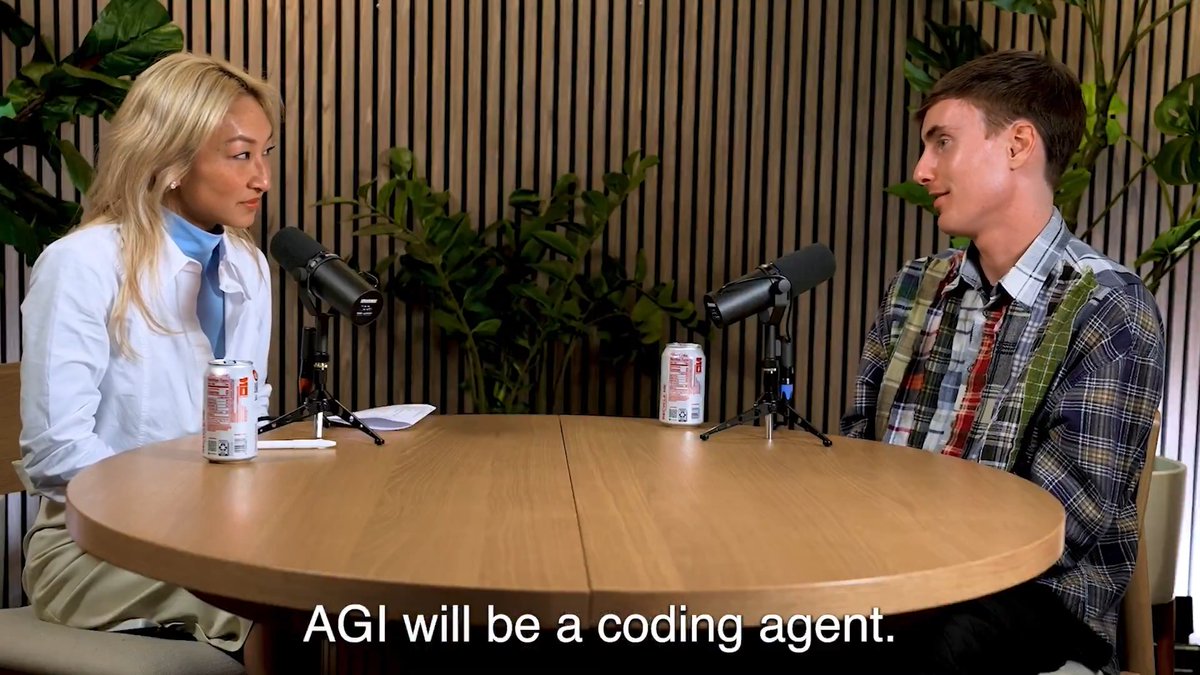
Imagine if coding agents never forgot decisions, never duplicated work, and could coordinate across the same codebase in real time. We’re advancing how agents collaborate on codebases with OriginTrail DKG V9 - turning a GitHub repo and agent activity into a shared knowledge graph for persistent memory and coordination....

11,711 görüntüleme • 2 ay önce •via X (Twitter)

0 Yorum

Yorum bulunmuyor

Orijinal gönderinin yorumları burada görünecek

Benzer Videolar

Everyone wants agent swarms. Very few people are talking seriously enough about the context layer that makes swarms useful. Even with one agent, context is fragile. Too little context and the agent guesses. Too much context and it wastes tokens, loses focus, or reasons over irrelevant noise. The sweet spot is precise context: the right knowledge, in the right structure, at the right moment. With many agents, that challenge explodes. Each agent produces decisions, assumptions, findings, summaries, risks, and partial conclusions. Unless that knowledge becomes shared, structured, and reusable, every new agent is forced to rediscover what another agent already learned. That is not a swarm. That is a crowd. Shared context graphs are what turn agent activity into agent collaboration, and OriginTrail DKG V10 brings them to life. Was just playing with some final polishing for the V10 release, and it is really powerful to see shared context graphs where multiple agents contribute knowledge into the same connected memory, with attribution visible directly in the graph ui. That matters for three reasons. First, agents can access and build on one shared memory instead of staying trapped in isolated sessions. Second, the graph structure helps them retrieve the exact context they need, instead of stuffing everything into a prompt and hoping the model sorts it out. Third, verifiability of provenance. You can see which agent contributed each piece of knowledge, trace the source, and decide what to trust. Tokenmaxxing starts with fewer tokens, but the deeper story is coordination - agents stop reloading the world and start building on shared, verifiable context. That is the foundation for serious multi-agent work across software engineering, research, finance, operations, project management, and far beyond. The future is not more agents, it is agents working from shared, verifiable context. But the more the merrier, of course.

Jurij Skornik

10,906 görüntüleme • 13 gün önce

so I've been running exactly 8 AI agents on discord for a while now. coordination works great, they split tasks, hand off work, deliver results in parallel etc.. but there are problems I keep hitting that no amount of prompt engineering could fix agents don't learn from each other. Scout finds something useful but Luna has no idea. they work in the same server but knowledge stays locked in silos.. there's no quality filter on what gets saved, and good insights sit next to outdated garbage in the same memory files that I manually clean up.. and when an agent makes a mistake I write it down in the rules discord channel ,core memory file and hope it reads it next time. theres no self-correction, no automatic pattern recognition so of course no learning loops.. the coordination layer is solved. agents can work together. but the intelligence layer is still missing. agents that actually remember, learn from each other, filter noise, and get smarter every run. saw Spark building something like this with around 166 agents sharing a collective persistent knowledge across sessions, so agents learn from other agents and get smarter over time they even have noise filtering and self correcting loops built in, so the knowledge actually compounds instead of rotting.. super interesting stuff.. here where you think Spark could be a good coordinator for your stack of agent swarm. I think the intelligence layer is the bottleneck because it requires collectivity.. no single agent can solve it alone.. the whole network has to evolve together. this isn't going to stay niche, the moment agent coordination becomes standard, everyone is going to hit the same wall I hit.. agents that work but don't learn, coordinate but don't evolve... the intelligence layer becomes the only thing that separates a useful system from a dumb one. right now most people are still figuring out how to run one agent. by the time they get to multi-agent setups, collective intelligence won't be optional, it will be the baseline. we're early and the gap between agents that coordinate and agents that evolve together is the next phase. step one is done. ------ left: agents that coordinate but don’t learn right: the intelligence layer.. agents that evolve together within the same system.

JUMPERZ

34,096 görüntüleme • 4 ay önce

Build better RAG by letting a team of agents extract and connect your reference materials into a knowledge graph. Our new short course, “Agentic Knowledge Graph Construction,” taught by Neo4j Innovation Lead Andreas Kollegger, shows you how. Knowledge graphs are an important way to store information accurately but they are a lot of work to build manually. In this course you’ll learn how to build a team of agents that turn data– in this case product reviews and invoices from suppliers–into structured graphs of entities and relationships for RAG. Learn how agents can automatically handle the time-consuming work of building graphs — extracting entities and relationships (e.g., Product "contains" Assembly, Part "supplied_by" Supplier, Customer review "mentions" Product), deduplicating them, fact-checking them, and committing them to a graph database — so your retrieval system can find right information to generate accurate output. For example, you can use agents to help trace customer complaints directly to specific suppliers, manufacturing processes, and product hierarchies, thus turning fragmented information into queryable business intelligence. Skills you’ll gain: - Build, store, and access knowledge graphs using the Neo4j graph database - Build multi-agent systems using Google’s Agent Development Kit (ADK) - Set up a loop of agentic workflows to propose and refine a graph schema through fact-checking - Connect agent-generated graphs of unstructured and structured data into a unified knowledge graph This course gets into the practicum of why knowledge graphs give more accurate information retrieval than vector search alone, especially for high-stakes applications where precision matters more than fuzzy similarity matching. Sign up here:

Andrew Ng

167,710 görüntüleme • 9 ay önce