正在加载视频...

视频加载失败

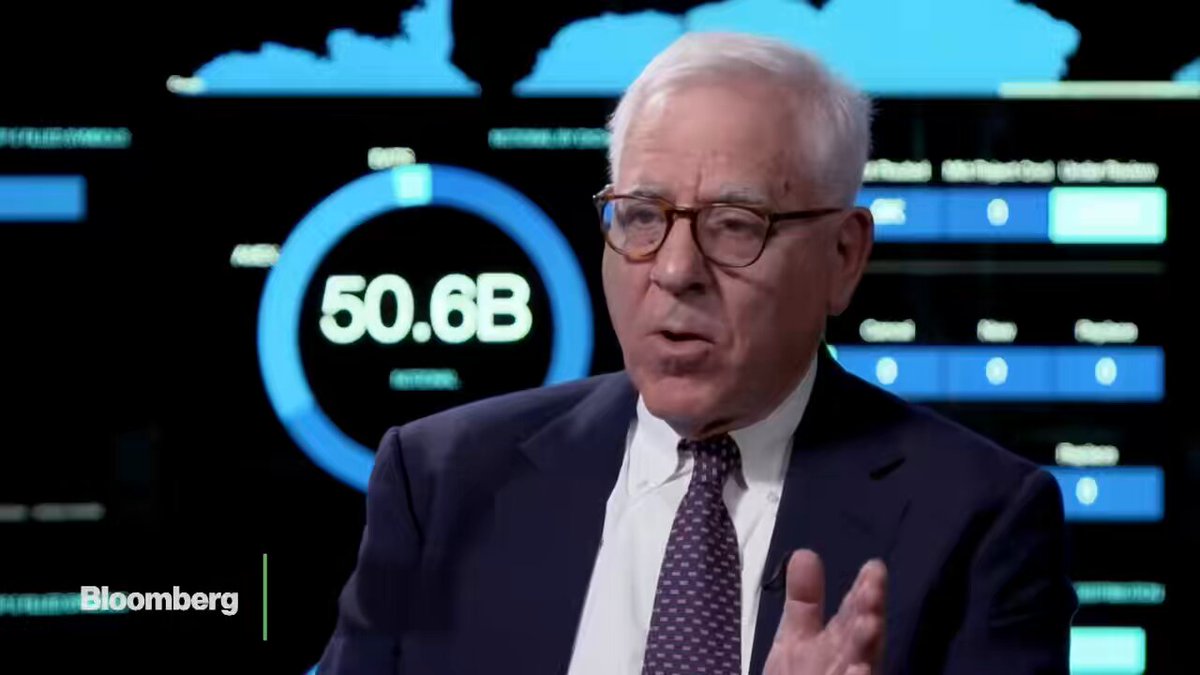
in 1996, a young options trader named Nassim Taleb realized that the smartest financial engineers on wall street were actually building massive ticking time bombs to explain why the smartest minds on earth were guaranteed to eventually go bankrupt, he used the brutal reality of the thanksgiving turkey: "think...

191,360 次观看 • 3 个月前 •via X (Twitter)

0 条评论

暂无评论

原始帖子的评论将显示在这里

相关视频

Elon Musk is asking the exact question Silicon Valley is mathematically incentivized to ignore. What happens when silicon becomes vastly smarter than the species that forged it. Musk: “It’s called the singularity. A singularity like a black hole, because you don’t know what happens after that.” That is not a metaphor. A black hole is the boundary where physics breaks down and predictive models collapse to absolute zero. Every prior technological leap had a visible horizon. Fission. Gene editing. The internet. You could model the trajectory. The singularity has no trajectory. It is the end of the map. Every safety agency in America was built on a body count. We regulate pharmaceuticals because chemistry kills. We regulate aviation because gravity kills. Every page of our regulation was paid for by someone’s wreckage. That model works because cars and planes fail locally. One crash. One recall. One amendment. The damage arrives in installments. A black hole does not do installments. The entire machinery of public safety assumes a tomorrow where the inspectors still exist. Musk is asking regulators to govern the one technology that could delete the feedback loop they depend on. The man engineering human expansion across the solar system is begging for friction. He despises the suffocating latency of bureaucracy. He has spent his life fighting twentieth-century paper regimes. Musk: “It’s not fun to be regulated. It’s somewhat arduous to be regulated… You could fill this room with all the regulations required for a production car just in the United States.” Yet he is standing before lawmakers demanding they step in. That is not contradiction. That is absolute clarity. Capitalism is a blind thermodynamic engine. It optimizes strictly for momentum. When the stakes are civilization-scale, the company that skips the safety check ships first. The market rewards speed over caution. Every single time. Without an external anchor, the default economic outcome is terminal recklessness. The loudest architect of the future is the only one demanding we reinforce the bridge before we cross it. Not because he fears the other side. Because summoning a higher intelligence from the earth’s crust is a one-way operation. You do not get to iterate on an entity that can think faster than you. That is not irony. That is the loneliest form of responsibility there is. We are about to spark the final invention in human history. We just have to survive the ignition.

Dustin

33,877 次观看 • 3 个月前

Microsoft CEO Satya Nadella on why winning against ChatGPT, Gemini, and Claude was never the goal: The Hard Fork hosts ask him directly how Microsoft plans to overtake the competition in the AI model race. His answer reframes the entire question. "Our real goal is to get everyone across the ecosystem to the frontier." Satya explains the problem with how frontier models are currently built. You hill climb, you do reinforcement learning, and then you need data. But at this point, the world has essentially saturated publicly available data. So the only way to keep scaling is to pull data from everywhere. He asks: "What if you turn that around and said no, there's a base model that has reasoning, that has the agent loop, but you can bring it into your RL. Every company." This is where his thinking gets interesting. Satya Nadella argues that the future of the firm runs on human capital and token capital together: "If the future of the firm is human capital and token capital, I want every balance sheet, every income statement in every company to have both." AI becomes a financial asset sitting on a company's books the same way its people do. And Microsoft's role in this? To provide the best possible base model. One that companies build on top of with their own data, their own context, their own weights. One they can even replace. That last part is the striking bit. Satya is explicitly building a platform where customers are free to walk away. He frames it not as a risk, but as the whole point: "I always ask the question — why does Microsoft, or why does the world need Microsoft? And if we are successful, can the world around us be successful? This, I believe, is a more sustainable way to go at it."

Big Brain AI

11,770 次观看 • 3 个月前