Loading video...

Video Failed to Load

Go Home

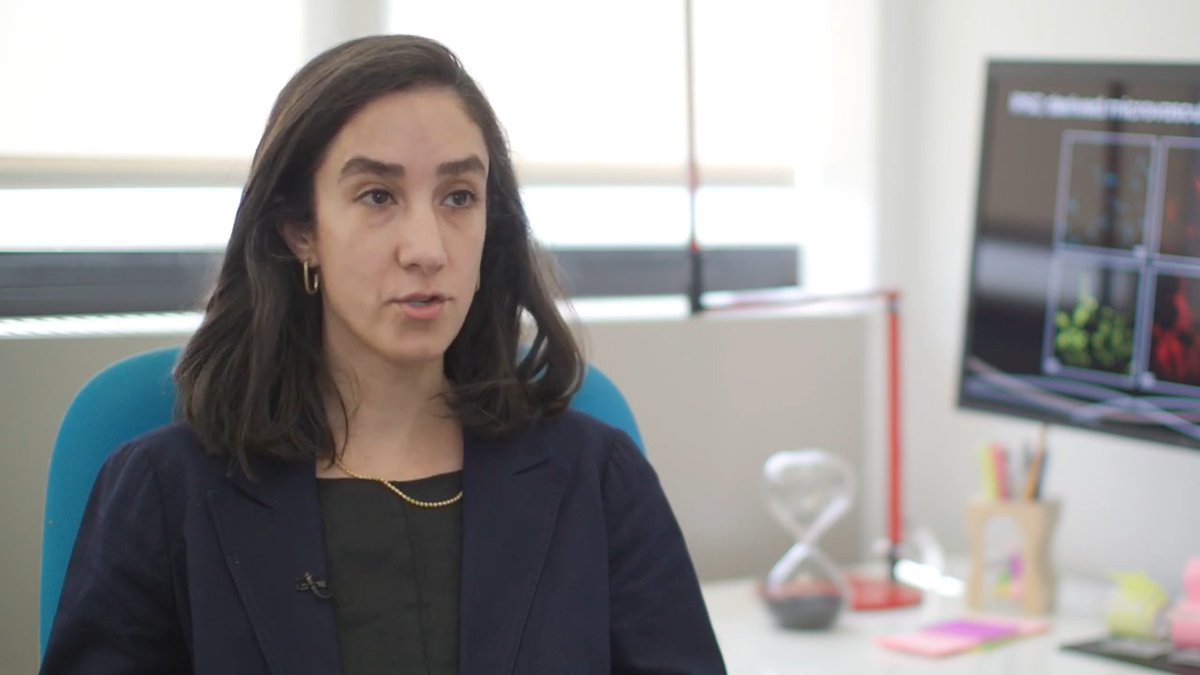
In 2025, Precision Neuroscience received its first FDA clearance, enabling expanded clinical programs with U.S. medical centers. More than 70 patients have been implanted, providing system-level validation across materials, devices, hardware, software, and ML.

852,264 views • 5 months ago •via X (Twitter)

0 Comments

No comments available

Comments from the original post will appear here

Related Videos

🎉 The best way to start the week is to find out that our MedSAM is finally published today in Nature Communications! **Segment anything in medical images** Paper: arXiv: Data & Code: MedSAM is the first promotable foundation model for medical image segmentation. **Highlights**: ⭐ Before its formal publication, we have received 220 citations and 1400+ GitHub stars 🙏🙏❤️‍🔥❤️‍🔥❤️‍🔥 📊 We curated a large-scale medical image dataset with 1,570,263 image-mask pairs, covering 10 imaging modalities and over 30 cancer types. 🚀 Built on top of SAM (AI at Meta ) with transfer learning, we have significantly enhanced its segmentation performance of medical images. 📈 Comprehensive evaluations of 86 internal validation tasks and 60 external validation tasks demonstrate its better accuracy and robustness than modality-wise specialist models. **What is Next? --- Clinical Translation!!** 🍕Our next goal is to make the model deployable on laptops (CPUs) or other edge devices without reliance on GPUs. We have distilled a lightweight model, LiteMedSAM, offering a speed boost of 10x while maintaining accuracy. Plus, we have integrated it into the 3D Slicer plugin, providing an efficient tool for medical image segmentation. 🌐 To further promote developments in this field, we organize a competition on #CVPR2026: Segment Anything in Medical Images on Laptop! An out-of-the-box baseline has been released to reduce the entry barriers. Welcome to join us to push the boundary further: 🙏 Massive thanks to MetaAI AI at Meta for their open-source project SAM and many reviewers/users for their invaluable feedback. A huge shoutout to my postdoc Jun Ma (JunMa) for his leadership on this project!! UHN AI Hub Vector Institute Peter Munk Cardiac Centre AI Department of Laboratory Medicine & Pathobiology U of T Department of Computer Science University of Toronto University Health Network Brad Wouters 🇨🇦 Barry Rubin MD, PhD, FRCSC Shaf Keshavjee

Bo Wang

140,208 views • 2 years ago

Prince Harry and Meghan Markle visited Palestinian medical evacuees in Jordan on February 25, 2026, as thousands of critically ill children remain trapped in Gaza’s shattered health system. According to the World Health Organization, approximately 4,000 children are currently on urgent medical evacuation waitlists. They are part of more than 18,500 patients overall who need specialized care for war-related trauma, cancer, kidney failure, and other chronic conditions. Since the ceasefire, WHO has facilitated the evacuation of just over 740 patients, including 432 children, as of Monday. Aid agencies warn that at current rates, it could take more than four years to clear the backlog. The scale of injury is staggering. At least 44,500 children have been reported injured since October 2023, including more than 11,000 with life-changing injuries requiring long-term rehabilitation. The UK announced a publicly funded evacuation mission in July 2025 and Prime Minister Keir Starmer said severely ill children from Gaza would receive treatment in NHS hospitals. The first group of 51 children arrived in September 2025 and the government has indicated a maximum of 300 may be admitted. But evacuations remain slow. A UN spokesperson said the holdup is largely bureaucratic, citing limited checkpoint/crossing access and the need for more countries to accept patients. “Egypt and other countries in the region, I know Jordan and others have taken people in, but we need more Member States to take in more people. WHO continues to call for rebuilding Gaza’s health system, reopening medical referrals to the West Bank, including East Jerusalem, expanding acceptance of patients abroad, and ensuring children can return home after treatment. Video includes a question from Gabriel Elizondo.

Drop Site

20,847 views • 5 months ago

The Board of REACT19 regrets to inform our community of the sudden cancellation of this week’s meeting of the Advisory Committee on Immunization Practices (ACIP) at the CDC. The meeting was cancelled following a federal court ruling that blocked recent vaccine policy changes and invalidated the current ACIP advisory panel while legal challenges move forward. For many in our community, this meeting represented a long-awaited opportunity. After more than five years of waiting, patients and families had prepared impact statements in hopes that the urgent need for clinical recognition, research, and care for those suffering from serious post-vaccination conditions would finally be discussed. For those living with these conditions, this cancellation is deeply painful. It means more waiting, more uncertainty, and more time without the clinical guidance needed to help physicians recognize, diagnose, and treat patients who have been suffering for years. Our hearts are with every member of this community who had hoped their voice would finally be heard this week. However, even in this difficult moment, important progress continues. On March 18, REACT19 will still be part of a historic step forward at the CDC. A proposal for a new ICD-10 diagnostic code related to post-COVID-19 vaccination conditions will be presented, opening a public comment period and moving the medical system closer to formally recognizing these patients. Diagnostic codes are more than administrative tools. They are a critical foundation for clinical recognition, medical education, research, insurance coverage, and ultimately the development of treatments. Establishing an ICD-10 code would represent an important step toward building the clinical infrastructure needed to care for patients who have too often been left without answers. While the cancellation of the ACIP meeting is a heartbreaking setback for our community, the work to achieve medical recognition and appropriate care continues. If the U.S. Department of Health and Human Services prevails in its appeal, the ACIP process may resume. In the meantime, REACT19 remains committed to ensuring that the voices of patients are heard and that progress toward recognition, research, and care does not stop. To every patient and family who has shared their story and stood with us through years of uncertainty: we see you, we hear you, and we will continue advocating for the care and recognition you deserve. — Board of Directors REACT19

React19 - Official

33,312 views • 4 months ago

Humacyte is proud to announce that the FDA has granted full approval for Symvess™, a first-in-class, universally implantable, bioengineered human vessel for extremity vascular trauma replacement and repair. This approval is a significant milestone in regenerative medicine, offering a new treatment option for patients with severe arterial injuries. Congratulations to our incredible team and partners who made this possible! Learn more at See the Prescribing Information, including Boxed Warning: INDICATION SYMVESS is an acellular tissue engineered vessel indicated for use in adults as a vascular conduit for extremity arterial injury when urgent revascularization is needed to avoid imminent limb loss, and autologous vein graft is not feasible. IMPORTANT SAFETY INFORMATION BOXED WARNING: GRAFT FAILURE -Loss of SYMVESS integrity due to mid-graft rupture or anastomotic failure can result in life threatening hemorrhage. CONTRAINDICATIONS DO NOT use SYMVESS in patients who have a medical condition that would preclude long-term antiplatelet therapy (such as aspirin or clopidogrel) after resolution of acute injuries. WARNINGS & PRECAUTIONS -Graft Rupture: Vascular graft rupture has occurred in patients treated with SYMVESS. Advise patients that arterial bleeding can be life-threatening and to seek emergent medical evaluation for any signs or symptoms of graft rupture such as bleeding, pain and swelling in the extremity, or signs of extremity ischemia. Follow appropriate procedures for handling and administering SYMVESS. -Anastomotic Failure: Anastomotic failure has occurred in patients treated with SYMVESS. In clinical studies of SYMVESS, anastomotic failure occurred within the first 36 days post-implantation. Monitor patients for signs of anastomotic failure such as pain and swelling at the surgical site, decreasing hemoglobin or other signs and symptoms of bleeding. Advise patients to seek urgent medical evaluation if they have any signs or symptoms that may be indicative of anastomotic failure such as bleeding, swelling or worsening pain at the surgical site or changes in color of overlying skin. Follow appropriate procedures for handling and administering SYMVESS. -Thrombosis: Thrombosis has occurred in patients treated with SYMVESS. In clinical trials of SYMVESS, patients received antiplatelet therapy following implantation of SYMVESS to reduce the risk of thrombosis. The risk of thrombosis may increase in patients who discontinue antiplatelet therapy. Anti-platelet therapy is recommended following treatment with SYMVESS. -Transmission of Infectious Diseases: SYMVESS is manufactured using cells and reagents that may transmit infectious diseases or infectious agents. The cells used in the manufacture of SYMVESS are derived from a donor who met the donor eligibility requirements for transmissible infectious diseases. Animal-derived reagents are tested for animal viruses, bacteria, fungi, and mycoplasma before use, but this does not eliminate the risk of transmitting these or other transmissible infectious diseases and disease agents. No transmissible agent infections have been reported during clinical testing. ADVERSE REACTIONS The most common adverse reactions (≥3%) were thrombosis, fever, pain, anastomotic stenosis, rupture or anastomotic failure, and infection. USE IN SPECIFIC POPULATIONS Pediatric Use: The safety and effectiveness of SYMVESS in pediatric patients (0 to 17 years old) have not been established. Geriatric Use: Two patients out of the 54 Extremity Group implanted with SYMVESS as a conduit in Study 1 were aged ≥65 years. The number of patients aged ≥65 years was not sufficient to determine whether they responded differently than younger patients to SYMVESS. #Humacyte #FDAApproval #RegenerativeMedicine #Innovation #Biotech #Firstinclass $HUMA

Humacyte

27,584 views • 1 year ago