Video yükleniyor...

Video Yüklenemedi

Ana Sayfaya Dön

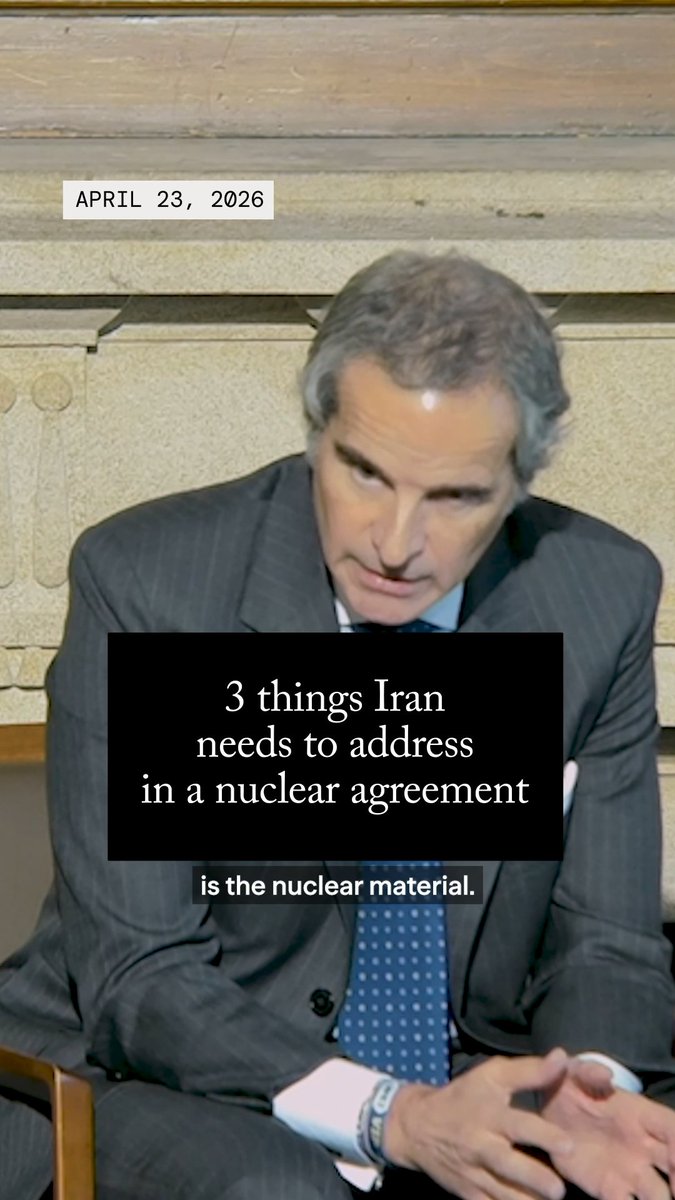
In a press conference today, the IAEA director-general is asked about whether Agency's description in its comprehensive report of #Iran having an "undeclared structured nuclear programme...until the early 2000s" meant there was an undeclared structured nuclear *weapons* program then and later there were less coordinated individual efforts that could...

10,422 görüntüleme • 1 yıl önce •via X (Twitter)

2 Yorum

Mike profil fotoğrafı
Mike1 yıl önce

There is a deference between putting words inside someone’s mouth and asking for professional opinion

football123456 profil fotoğrafı
football1234561 yıl önce

20 years later they’re still days away from a weapon and will be until you war mongers blow iran up just when the regime is falling apart on its own…

Benzer Videolar

🎥 Will Iran Abandon Nuclear Restraint? For decades, Iran has refrained from developing nuclear weapons—not because it lacked the technical capacity, but because of a deliberate political and religious decision. A fatwa from the Supreme Leader declared nuclear arms forbidden under Islam. But after the U.S. and Israel bombed three Iranian nuclear sites this weekend—sites under regular IAEA inspection—that restraint is now under serious strain. “There are people in Iran asking that question right now,” Dr. Foad Izadi told Drop Site’. The question: What’s the point of cooperation? Izadi noted that two nuclear-armed states just launched an unprovoked attack on a non-nuclear country, without credible evidence of a weapons program. He pointed to the U.S. intelligence community’s own March report, which states: ➤ Iran does not have a nuclear weapon. ➤ Iran does not have a nuclear weapons program. ➤ Iranian leaders have not made a decision to pursue one. Even IAEA Director General Rafael Grossi, Izadi said, has consistently affirmed: “We have never found a nuclear weapons program in Iran.” Yet, Iran was bombed anyway. Izadi explained that the IAEA report cited by Western governments referenced materials from 20 to 30 years ago—files Iran believed were closed under the 2015 nuclear deal. Tehran now suspects Mossad may have planted radioactive traces to fabricate suspicion and justify military strikes. “There’s a lot of confusion and disinformation,” he said. But for many Iranians, the conclusion is simple: Iran upheld its obligations—and was attacked regardless. That, Izadi points out, is forcing a national reckoning with the logic of nuclear restraint. (Apologies for the poor audio quality. We’ll share a subtitled version of the clip below) jeremy scahill | فواد ایزدی Foad Izadi

Drop Site

25,482 görüntüleme • 1 yıl önce