正在加载视频...

视频加载失败

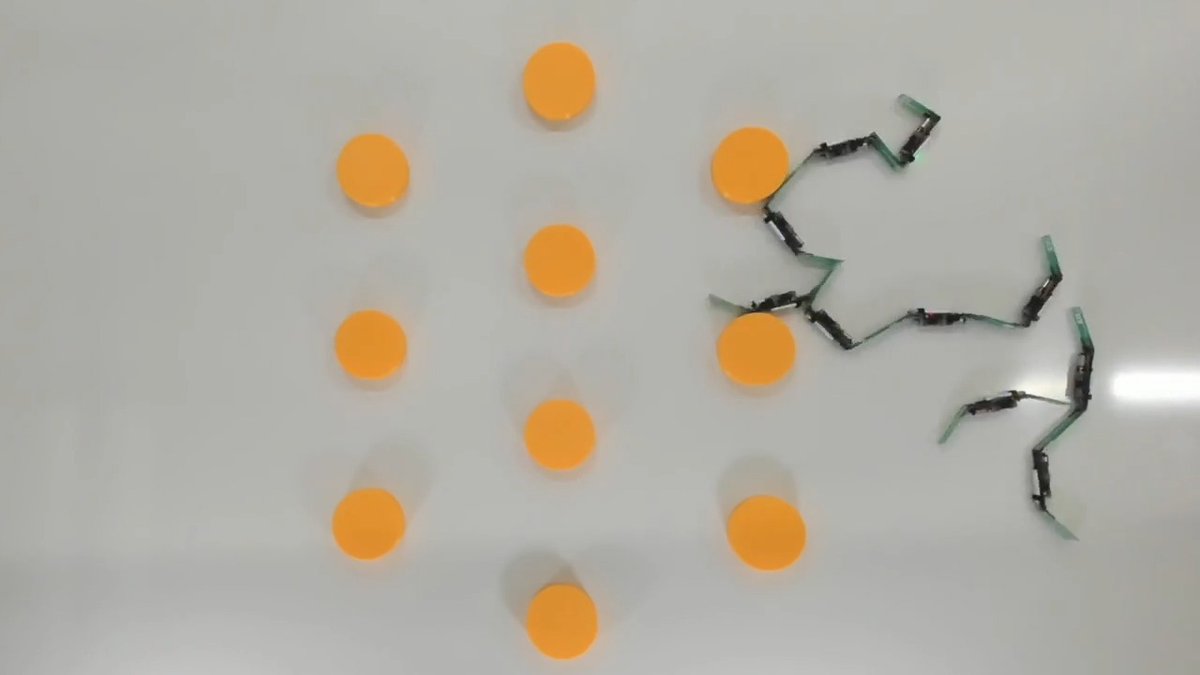
Inside an art museum in China ancient philosophy meets mechanical engineering in motion This remarkable kinetic sculpture is inspired by Mohist mechanical concepts developed more than 2,000 years ago in ancient China. Associated with thinkers such as Mozi and later Mohist engineers, these ideas explored how gears, levers, pulleys,...

29,268 次观看 • 2 个月前 •via X (Twitter)

0 条评论

暂无评论

原始帖子的评论将显示在这里

相关视频

Mumbai, Maharashtra: Researcher Syed Shamir Hussain presented documents and artifacts related to the Trishul of Lord Shiva and the Vajra of Lord Indra, described as ancient symbols associated with Sanatan Dharma. These artifacts are reportedly around 10,000 years old and were discovered during excavations in the Philippines. If these findings are validated through rigorous archaeological and scientific study, they could suggest that symbols and ideas connected to Sanatan Dharma existed and possibly spread far beyond the Indian subcontinent thousands of years ago. For a long time, civilizations such as Ancient Egypt (around 3100 BCE, roughly 5,000 years old) and Mesopotamia (around 3500 BCE, about 5,500 years old) have been widely considered among the oldest known civilizations. However, if discoveries linked to Sanatan Dharma date back 8,000–10,000 years or more, it would indicate that these traditions were already well developed thousands of years before many other recorded civilizations fully emerged. Many researchers also argue that the ancient history of the Indian subcontinent has not yet been explored or documented as extensively as it should be. Continued research, excavations, and scientific analysis may reveal that early societies connected with Sanatan traditions had already developed knowledge in areas such as metallurgy, symbolism, art, philosophy, and organized social systems at a very early stage in human history.

VictorVon Solanki

39,821 次观看 • 4 个月前

Fighter jet pilot demonstrates centripetal force, a concept that Isaac Newton discovered between 1676 and 1677. However, the concept of centripetal force was not actually discovered in a single event or by a single individual but rather evolved over time through the works of multiple scientists and thinkers. Here is a brief history of the development of our understanding of centripetal force: Ancient Greece: The ancient Greeks, particularly philosophers such as Aristotle and later Archimedes, made observations and formulated theories about the motion of objects. However, they did not have a clear understanding of centripetal force as a distinct concept. Islamic Scholars: During the Islamic Golden Age, scholars such as Ibn Sina (Avicenna) and Ibn Bajjah (Avempace) made significant contributions to the understanding of motion. They discussed the idea of impetus, a precursor to the concept of centripetal force. Johannes Kepler: In the 17th century, Johannes Kepler, a German astronomer and mathematician, formulated his laws of planetary motion. Kepler's laws described the motion of planets around the sun and the concept of elliptical orbits. Although Kepler did not explicitly mention centripetal force, his work laid the foundation for later developments. Isaac Newton: In the late 17th century, Sir Isaac Newton, an English physicist and mathematician, published his groundbreaking work, "Mathematical Principles of Natural Philosophy" (also known as the Principia). In this work, Newton presented his laws of motion and the universal law of gravitation. Newton's laws, particularly the second law of motion, provided a mathematical understanding of centripetal force. He demonstrated that an object moving in a curved path experiences an inward force acting towards the center of the curve, which is now known as centripetal force. Further Developments: Following Newton's work, subsequent scientists, such as Jean le Rond d'Alembert and Daniel Bernoulli, expanded on the understanding of centripetal force in the context of mechanics and fluid dynamics. It's important to note that the discovery and understanding of centripetal force were gradual processes that involved the contributions of numerous individuals over centuries. The concept became firmly established with the development of Newtonian physics and its laws of motion.

Historic Vids

11,803,690 次观看 • 3 年前

Show these videos to most Westerners and they could never believe this exists in China 🤯 China has some of the best restaurants in the world. International and local chefs are constantly coming up with new concepts, unique menus, and creative decorations 🥘 While China’s economy isn’t as strong as before, deflation has kept food prices down and every night in the city I go out and see restaurants filled with people 🍲 Most people think China is cut off from the outside world. Instead when you visit China you’ll see China is learning and becoming more modern and international 🌎 There are now more high end coffee shops in Shanghai than NYC and London combined. Bakeries filled with artisan breads and pastries are all over China now showing foreign tastes have been developed on mass scale in China ☕️ China is opening up. Dozens of EU countries can now travel to China visa free. Yesterday New Zealand was added to the list. Foreigner visits to China is up 305% in Q1 2024, when measures from the same period last year ✈️ More foreigners are coming to China and it’s a great thing. The world needs to learn more about China. This country is simply amazing and truly changing the future of the world 🇨🇳 Come here to see a nation who is embracing their commitments to producing clean energy. It’s simply incredible how much of the auto industry is now dominated by EVs 🚗 Visiting China is taking a step in the future. Such an absolute pleasure to be back in the country for an extended stay 😃

Cyrus Janssen

26,957 次观看 • 2 年前

Vimanas are described in ancient Indian texts as highly advanced aerial craft, capable of vertical ascent, sustained hovering, and interplanetary travel. Far from primitive myth, these vehicles are depicted as engineered machines—metallic, luminous, and powered by forces unknown to modern science. In epics such as the Mahabharata, vimanas are used by god-like beings in warfare, reconnaissance, and long-distance travel, demonstrating flight capabilities that rival or exceed modern aerospace technology. These accounts describe craft that emitted intense light, thunderous vibrations, and devastating energy-based weapons, suggesting the use of advanced propulsion systems and directed-energy technology. Rather than symbolic chariots of imagination, some researchers propose that these descriptions may represent ancient eyewitness accounts of technologically superior beings—often associated with the Anunnaki—who possessed knowledge of gravity control, advanced materials, and cosmic navigation. From this perspective, vimanas may not be mythological at all, but remnants of suppressed or lost technological knowledge, preserved through symbolic language after civilizations collapsed. The so-called “gods” of antiquity may have been advanced non-human or off-world intelligences whose technology was later deified, misunderstood, or deliberately encoded into sacred texts to survive the passage of time. What remains is a tantalizing blueprint of an ancient, forgotten age—one in which humanity may have once shared the skies with beings far more advanced than we are today. Join Billy Carson on the next 4bidden Tour. LINK IN COMMENTS.

Billy Carson II

88,041 次观看 • 7 个月前

🚨 SCIENTISTS JUST FOUND AN ANCIENT OCEAN FLOOR WRAPPED AROUND EARTH’S CORE. Using seismic waves recorded by stations buried in Antarctic ice, researchers have created the highest-resolution map yet of the boundary between Earth’s mantle and outer core nearly 3,000 km beneath our feet. They discovered thin but widespread patches of dense material that dramatically slow down seismic waves. The most likely explanation: these are fragments of ancient oceanic crust that sank into the deep mantle long ago and have been moved around by convection currents for hundreds of millions of years. In some places, these structures rise up to five times higher than Mount Everest. Why this matters: • It reveals that Earth’s deep interior is far more complex and dynamic than we thought • These patches likely influence how heat flows from the core into the mantle, which affects mantle convection and volcanic activity • They may also play a role in the behavior of Earth’s magnetic field, which is generated in the outer core • Understanding this boundary helps us better model how our planet has evolved over billions of years The deeper implication: We usually think of the deep Earth as relatively simple layers. This research shows that the core-mantle boundary is more like a rugged, geologically active landscape with ancient “mountains” made of recycled ocean floor. It’s a powerful reminder that Earth is a single, interconnected system what happens at the surface (like plate tectonics) can eventually end up reshaping the deepest parts of our planet, and vice versa. We’re still only beginning to map the true complexity hidden beneath our feet. How do you think discovering ancient ocean crust at the core-mantle boundary changes the way we should think about Earth’s internal dynamics? Follow for more frontier Earth science and discoveries about our planet’s hidden interior.

TheNewPhysics

37,534 次观看 • 1 个月前

Facial reconstruction of a Merethic Era Atmoran from Saarthal Founded by Ysgramor, Saarthal was the first city of the Atmorans, who would later be known as Nords. After their arrival, the Atmorans lived peacefully with the local Falmer. However, fearing that the Atmoran expansion would surpass their own, the Falmer destroyed the city, and only Ysgramor and his two sons escaped the carnage. The destruction of the city was later avenged when Ysgramor returned with his famed warriors, the Five Hundred Companions. Several expeditions have been carried out by archaeologists from the College of Winterhold to study the ancient ruins of Saarthal. During these excavations, several cranial series were uncovered. Anthropologists from the College of Winterhold have noted increased hypermorphy in the ancient Atmorans relative to their modern Nord descendants, including larger brow ridges, much larger teeth, very wide bigonial and bicondylar widths, wider and taller faces, a more archaic low orbital shape, more defined upper facial relief, slightly wider nasal apertures, and slightly weaker chin protrusion. The skulls were predominantly dolichocephalic and very thick, but interestingly had relatively small mastoid processes. Later morphogenetic processes, including admixture with the Mer, and environmental factors such as a more agriculture-based lifestyle, played a role in the gracilization of the Atmorans. Among modern cranial series, the Nords of the Pale, Winterhold, and northern Eastmarch cluster closest to the Atmorans of Saarthal, along with some cranial series from Colovia. The reconstructed man, about 40 years old, stood around 190 cm tall and was massively built. He was found in the lower layers of Saarthal along with some Ancient Nord gear, including a full set of ancient Nord armor, an ancient Nord sword and an ancient Nord amulet with a One-Handed enchantment. Postcranial data shows magicka-related trauma, which was likely the cause of his demise.

Ancestral Whispers

181,381 次观看 • 4 个月前

How the 🆅🅴🅽🆃🆁🅸🅲🅻🅴 contracts.. . . . 💗Another great thing I picked up from Cardiothoracic surgery was understanding how the ventricles contract. The ventricle Is such a complex structure that we are learning more and more about. One thing that has helped us understand this complex structure is strain imaging and 3D echocardiography. We have learned that the ventricle contracts in 4 ways: contraction (radial) motion but it also has a twisting (torsional and circumferential) and shortening (longitudinal) motion. . . . 👐🏽The surgeon I always work with often described the hearts motion as “wringing of a towel.” This can be seen in the video above. The understanding of the multiple different motions of the heart has allowed us to better understand intrinsic myocardial disease and pick up disease earlier in its process allowing us to add disease modifying agents to slow and sometimes reverse the negative remodeling of the heart. . . . 💓So next time you think of your heart pumping don’t think of it in one motion (squeeze) but rather a Towel being wrung of water. The heart is such an amazing organ and we are just now really beginning to understand it’s truly complex physiology! . . . Have a great day! . . . . #Medicalschool #medschool #cardiologia #doctors #cardiotwitter #meded #EKG #Medstudent #cardiology #internalmedicine #patient #hospital #radiology #physiology #paschool #foamed #echo #physicalexam #anatomy #scrubs #surgery #pastudent #nursingstudent #nursing #PA #DO #Echocardiogram #MD #USMLE

Jay Mohan, D.O., FACC, FSCAI, FASE, RPVI

37,150 次观看 • 2 年前

🕊️ The Faravahar: An Ancient Persian Symbol with a Powerful Meaning High on the stone walls of Persepolis, the ancient capital of Persia, you can see a mysterious winged symbol carved into the rock. This symbol is called the Faravahar (or Farohar), and it is one of the most important signs of Zoroastrianism, one of the world’s oldest religions. At first look, the Faravahar may seem like a royal emblem or a symbol of power. But its meaning goes much deeper than that. The design comes from very old Middle Eastern traditions. Long before Persia, kings used winged sun symbols on seals to show divine protection and authority. Over time, the Persians gave this image a new meaning. In Zoroastrian belief, the Faravahar came to represent the human soul, its choices, and its journey through life. Every part of the symbol has a message: 🪽 The wings stand for growth, progress, and rising toward good thoughts and actions. 🧍 The human figure in the center reminds us that humans have free will and must choose between right and wrong. 🔄 The circular shape shows the ongoing journey of life and the balance between the spiritual and the physical world. In ancient Persia, the Faravahar was not just art on a wall. It showed faith, identity, and legitimacy. It reminded rulers and people alike that power should be guided by wisdom, truth, and moral responsibility. Even today, the Faravahar invites curiosity. Is it a symbol of God? A guide for the soul? Or a sign of royal authority? Perhaps it is all of these at once. What is clear is this: the Faravahar is a timeless symbol that shows how deeply spiritual belief and leadership were connected in ancient Persia—and how those ideas still speak to us today. ✨

Unearthed 🏺

12,740 次观看 • 6 个月前

Facial reconstruction of an 8,500-year-old man from Karelia The hunter-gatherers of Karelia belonged to the EHG cluster - a mixture of ANE and WHG. Their Y-DNA lineages were diverse, including Q, J, and R1a, as were their mtDNA lineages. These included ANE- and WHG-associated haplogroups such as U5, U4, U2e and R1b, but also C, an East Eurasian mtDNA lineage. Morphologically, they were equally diverse, encompassing an ancient Northern European type with Cro-Magnon features, an ancient Baltic European type with Cro-Magnon features, and an ancient Paleo-Mоngоloid type with Cro-Magnon features. This specimen was described by the anthropologist Mikhail Gerasimov as follows: This skull possesses a significant number of archaic features characteristic of typical Cro-Magnons. It is probably closest to the Predomost skull. However, alongside these archaic features, a number of others not characteristic of the Cro-Magnon type emerge: a relatively high vault, a thin outline of the cheekbones, and a general gradation of the facial region - all of these are no longer Cro-Magnon traits. However, the combination of all these features allows us to characterize it as an Archaic European, and physiognomically, this type is most closely related to the Baltic type: an upturned nose, a small prochilia of the mouth, and a weakly projecting chin - all of this corresponds to the Baltic type. We do not think it likely that it was specifically at this time that the Baltic anthropological type began to develop in this area. But later, having undergone a complex path of epochal change, having become considerably more gracile, it yielded the modern Baltic type, in which, however, it is not difficult to discern the features of the ancient Oleni Ostrov man. A detailed reconstruction gives a clear picture of a man with a pear-shaped face, a large upturned nose, a sloping forehead, and deep-set eyes. Even today, among the northern Pomors, one can sometimes encounter precisely this type of ancient Baltic man. He had a large cranial length of 188 mm, small cranial width of 136 mm, and a massive cheek width of 151 mm.

Ancestral Whispers

30,930 次观看 • 7 个月前