Загрузка видео...

Не удалось загрузить видео

На главную

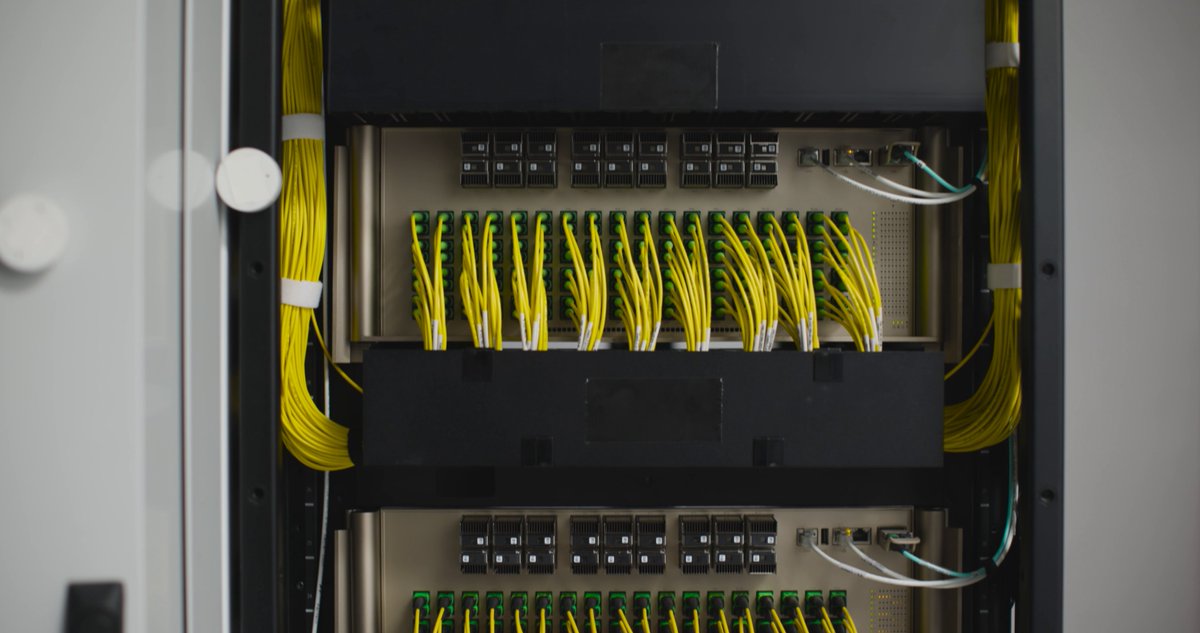
Intel's advanced packaging business has "billions of dollars" in commitments. But what if a capability few are watching is the real story? Intel has a strong optics process. Combined with EMIB, could they build a major advantage in co-packaged optics (CPO)?

98,983 просмотров • 9 дней назад •via X (Twitter)

Комментарии: 0

Нет доступных комментариев

Здесь появятся комментарии из оригинального поста

Похожие видео

Dylan Patel believes $NVDA will not use CPO even with Feynman “We’re very bullish on copper and non-CPO optics. We're kinda bearish CPO. $APH is going to perform much better over the next few years than previously expected.” Full quote: “The spending associated with AI chips is currently at or below 10%, but when we move to CPO, networking will grow even further, to 20% or 30%. We are seeing a huge uplift in networking content. CPO is a massive step-function change for the industry, and everyone recognizes it now, but people are getting a little too exuberant. In my view, it is not coming in 2027. It will really arrive toward the end of 2028, with 2029 being the real ramp for scale-up CPO. There have been a lot of manufacturing problems. If we could deploy it today at a good cost, everyone would do it. However, it is really hard. The manufacturing volumes and yields are not there, and the chips are not fully designed for it yet. It is a very complex and difficult technology to ramp, so people are going to stay with copper for as long as they can. That means Rubin is all copper, and Feynman, the next-generation Nvidia GPU after Rubin and Rubin Ultra, is still copper. We are not even shipping Rubin yet. We have a few generations of chips before we get to CPO on the GPU. CPO on switches is coming earlier than on GPUs or AI ASICs. Even without CPO, as cluster sizes get bigger, you need more optics, active electrical cables, and similar components per GPU. We have seen a major shift in the dynamics. On Monday, we released a note for our institutional research subscribers stating that, over the medium term, we are actually very bullish on copper and non-CPO optics, while being slightly bearish on CPO. This is due to delays in downstream chips, such as Feynman not fully utilizing CPO. Copper companies like Amphenol, which make backplane connectors and cables, are going to perform much better over the next few years than previously expected because CPO is being delayed. Ultimately, integrating optics is much more expensive than sending signals electrically. However, electrical signals cannot travel very far without adding repeaters or optics. There is a trade-off continuum, and while CPO will happen, it is currently being pushed out.”

Daniel Romero

117,323 просмотров • 1 месяц назад

Lip-Bu Tan with Jim Cramer on Mad Money Key Updates: 18A Execution Intel’s 18A yield is improving around 7–8% per month, which Tan described as the industry-standard scale-up rate. Defect-density targets were also reached ahead of year-end, supporting confidence in Panther Lake volume shipments. Foundry Customer Momentum Tan said outside customers are now knocking on Intel’s door after seeing the progress on 18A yield and defect density. He also said Intel has multiple customers engaged on 14A, with a 0.5 PDK already available. 14A Roadmap For 14A, Intel is targeting risk production in 2028 and volume production in 2029, putting it on an equal timeline with TSMC. EMIB / Advanced Packaging EMIB (which he called the best) and advanced packaging may be much bigger than expected …potentially billions, not just hundreds of millions. Some customers are even prepaying to help Intel secure tight supply-chain materials. Customer Demand Demand is accelerating too. Tan said one customer wanted to triple its forecast, but Intel needs a few quarters to catch up. Government Support Tan also said he updates President Trump and Howard Lutnick from time to time, and credited their support for understanding the strategic importance of U.S.-based semiconductor R&D, manufacturing, and capacity. Bottom line: The market can argue over candles. But the actual Intel story is execution, customers, packaging demand, and U.S. strategic backing all moving in the same direction. We don’t own enough $INTC

A2THEZ

34,809 просмотров • 3 месяцев назад