Загрузка видео...

Не удалось загрузить видео

На главную

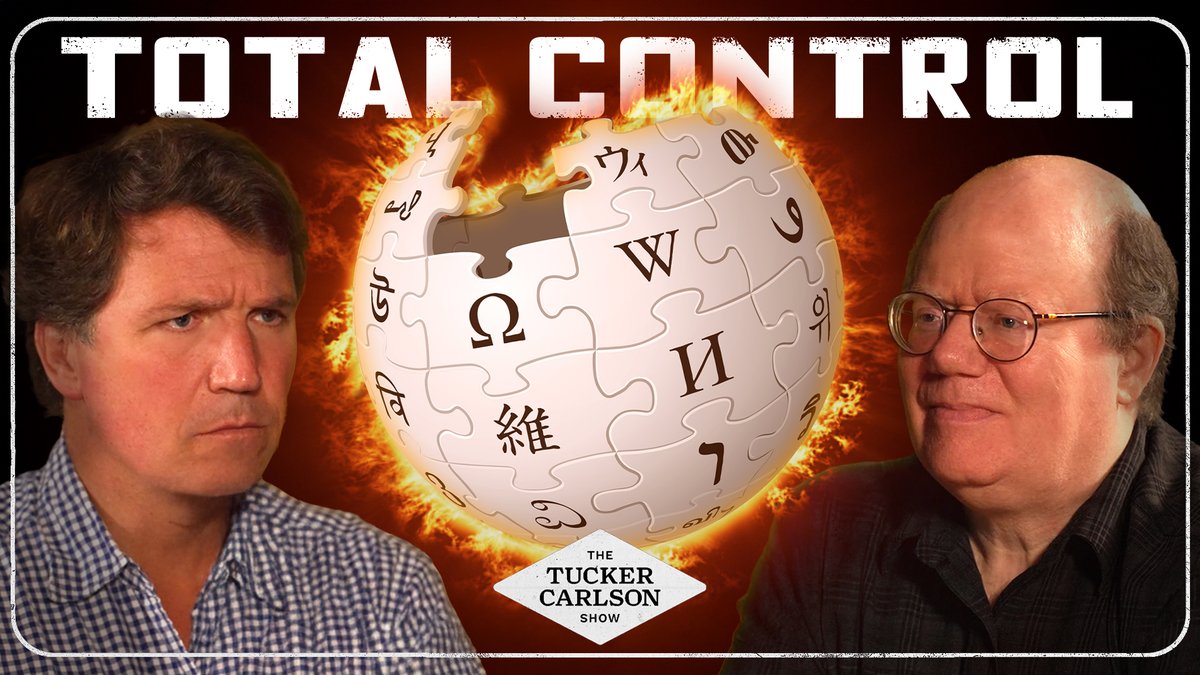
🚨🧠 INTERVIEW: WIKIPEDIA’S CO-FOUNDER SAYS THE INTERNET’S “TRUTH MACHINE” HAS BEEN CAPTURED Millions trust Wikipedia like gospel. But according to cofounder Larry Sanger, the platform has been quietly hijacked by anonymous editors, PR operatives, and intelligence-linked actors who use it to attack reputations, shape political narratives, and control what...

1,639,725 просмотров • 8 месяцев назад •via X (Twitter)

Комментарии: 0

Нет доступных комментариев

Здесь появятся комментарии из оригинального поста
Похожие видео

My dear friend, Vlad Tenev, changed the landscape of investing forever! The rise of the retail investor is largely due to Robinhood's success... and in this new Journey Man, we discuss it all... Enjoy! 00:00 - Intro 00:53 - Introducing Vlad Tenev of Robinhood 01:27 - Why Take on Wall Street? 01:54 - Robinhood’s Zero-Fee Origin Story 02:53 - Inspiration from Instagram and Uber 04:24 - Reimagining Trading for Mobile 05:05 - The Challenge of Disrupting Finance 05:42 - Why Everything Is Hard 06:34 - Early Wrong Assumptions 07:42 - Raising Capital with a Small Vision 08:48 - Funding Robinhood on AngelList 09:50 - Early Investors Changed Their Lives 10:38 - The Crypto Explosion Begins 11:07 - Considering a Bitcoin Exchange First 12:17 - Bitcoin’s Early Skepticism and Growth 13:08 - Robinhood Launches Crypto in 2018 14:03 - 2020: Crypto Revenue Surges Overnight 15:04 - The Challenge of Crypto Cyclicality 16:11 - Staffing a Volatile Business 17:10 - Building Robinhood’s Lean Crypto Team 18:46 - Robinhood’s First Crypto Event Coming 19:38 - Where TradFi Meets DeFi 20:34 - Tokenizing Everything 21:09 - Robinhood’s Vision for Crypto + Finance 21:47 - Thoughts on Crypto Options Demand 23:04 - Why Crypto Options Haven’t Taken Off 24:09 - Millennials and the Speculative Economy 25:22 - Democratizing Trading for Everyone 26:08 - Why Buy-and-Hold Doesn’t Work for All 27:15 - Trading vs Investing: A Matter of Wealth 28:01 - Trading as a Skill Anyone Can Build 29:13 - Robinhood’s Role in Onboarding Millions 30:06 - The Fed's Role and Retail Insight 31:03 - The Rise of the Retail Macro Trader 32:17 - Helping Users Succeed with Robinhood Strategies 33:35 - Power of Community and the Hive Mind 34:55 - Will AI Disrupt Community Too? 36:14 - Technological Waves and Investor Opportunity 37:10 - Human Purpose in an AI World 37:52 - Tokenizing Human Connection 38:28 - Creators, Platforms, and Future-Proofing 39:26 - Vlad’s Long-Term View of the Future 40:05 - Financial Services at the Heart of Disruption 41:14 - If AI Replaces Jobs, What Happens to Investing? 42:25 - Entering the Economic Singularity 43:31 - What Happens When AIs Win the Markets? 44:16 - AI's Role in Capital and Markets 45:07 - Will AI Eliminate Human Emotion from Markets? 46:06 - HFT: The Original AI Traders 47:20 - AI and Long-Term Probabilistic Forecasting 48:48 - GPUs, Gaming, and the Origins of AI 50:01 - Nvidia, CUDA, and Wall Street Arms Races 51:04 - Flash Boys and Microwave Trading 51:54 - Will AI Costs Go to Zero? 52:52 - Lower Cost, Higher Usage 53:41 - Robinhood’s UX Won’t Be Just a Chatbox 55:16 - Cortex: AI-Powered Features at Robinhood 56:54 - Tokenization and the Future of Asset Management 57:44 - Crowdsourced, Tokenized Hedge Funds 58:48 - Portability of Tokenized Assets 59:39 - Blockchain as the New Rails of Finance 01:00:09 - The Trump Token and Capital Formation 01:01:00 - Capital Access Unlocks Innovation 01:01:49 - Why Crypto Needs Regulatory Clarity 01:03:17 - From Meme Coins to Real Assets 01:04:17 - Crypto's Path to $100 Trillion? 01:05:15 - The Financial System Will Run on Blockchains 01:06:00 - Platform Layer vs Application Layer Wealth 01:06:29 - AI Raises Money and Launches Tokens 01:07:39 - AIs Creating Software and Capital Formation 01:08:00 - Final Thoughts: A Wild Future Ahead 01:08:20 - When Will Vlad Buy a CryptoPunk? 01:08:51 - Wrapping Up: AI, Crypto, and the Road Ahead

Raoul Pal

166,795 просмотров • 1 год назад

Ep. 19 | Free The Money | What This War Is REALLY About… Dr. Jim Willie In this episode, I’m joined by Dr. Jim Willie, who breaks down what he believes is really driving the war, not geopolitics, but a deeper financial battle. He argues the consequences will be felt through rising oil prices, inflation, and a breakdown in demand for U.S. Treasuries. According to Dr. Willie, institutions like the Exchange Stabilization Fund are quietly propping up the system, while global powers shift toward neutral assets like gold. He also points to the City of London and its alleged move toward Dubai as part of a larger restructuring of financial control. In his view, this war is ultimately about gold, power, and the future of the monetary system. Sign up for ITrustCapitol with this link for $100 funding bonus. See why people are opening a tax-advantaged Crypto, Gold & Silver IRA for their future: Sign up for Dr. Jim Willie’s Newsletter: 00:00 Current Global Conflicts 23:35 Oil Prices and Economic Forecasts 31:10 Cultural Insights from the Gulf 31:49 XRP's Ubiquity in the Gulf Region 33:57 The Future of Treasury Bills 35:30 The Shift Towards Neutral Assets 38:05 XRP as a Bridge Asset 39:47 The Impending Credit Crisis 41:54 The Strait of Hormuz 44:07 Economic Implications of Oil Prices 46:29 The Reality of Inflation and Recession 47:52 Trump, War, and Economic Strategy 59:46 The Shifting Sands of Dubai 01:02:40 Oil Prices and Market Dynamics 01:03:38 Military Movements and Strategic Implications 01:07:49 Public Sentiment on War 01:11:24 The Role of Global Powers 01:19:55 Understanding the Empire of Three Cities 01:23:48 Exploring Sovereign Nations and Financial Surpluses 01:24:20 Understanding Credit Default Swaps and Economic Implications 01:25:44 Geopolitical Tensions and Potential Retaliations 01:27:46 Cuba, Venezuela, and the Quest for Freedom 01:29:20 The Gold Reserves and Economic Power Dynamics 01:31:55 Iran's Revolutionary Guard and the Future of Regime Change 01:33:26 The Role of Silver in Economic Stability 01:37:37 Investing in Precious Metals and Cryptocurrencies

Bri Teresi

31,206 просмотров • 3 месяцев назад

Today I sat down with Jordan Levi, the Kosher Cowboy - a Jewish kid from the Chicago suburbs who became the largest cattle feeder in America. Jordan runs Five Rivers Cattle Feeding with a capacity of nearly a million head. He started as a runner on the Chicago Board of Trade at 13 and found his way to cattle through a hedge fund that sent him to a feedlot in Amarillo. He showed up in Gucci loafers and never left the industry. We go deep on how he trades the curve instead of making binary bets, why the cattle supply is the tightest since the 1950s, and what it takes to manage risk on nearly a million animals across 13 feedlots. I hope you enjoy this episode as much as I did. 02:16 - The Belted Galloway 03:51 - The Kosher Cowboy 08:05 - Pulling value of the futures forward 11:43 - Learning Cattle trading 16:48 - Daily average gain in cattle 18:20 - Jordan’s Eureka moment in the cattle industry 21:08 - What does trading in animals actually look like? 27:05 - How Jordan defines his ROI in trading cattle 31:17 - The Cattle curve 33:37 - The state of the cattle market 42:10 - Buying the largest cattle feeder in the world 46:09 - Grass vs. grain fed cattle 49:15 - Predictions for the cattle supply over the next 10 years 50:54 - The international market 53:17 - Trading frequencies and macro thesis 01:00:27 - USA beef vs. international beef 01:05:21 - The cattle supply chain 01:07:32 - The future of auction yards and ranchers 01:09:40 - AI in AgTech 01:12:52 - The biggest problem facing the industry 01:14:42 - Livestock as a commodity that dies and how that impacts trading theory 01:20:51 - Is there a market for new entrants into cattle? 01:21:41 - Beef prices and the impact of a closed border on the industry 01:24:39 - Jordan’s biggest ideas for the industry 01:26:49 - Philanthropic efforts 01:31:24 - a day in the life of Jordan 01:26:42 - Risk management in cattle 01:41:17 - Does what you do show a leading indicator to the broader health of the American economy?

Chris Powers

821,239 просмотров • 3 месяцев назад

The Wikipedia wars As Wikipedia approaches its 25th anniversary in 2026, its open editing model faces a growing challenge: coordinated edit wars. In these campaigns, Kremlin-aligned actors try to rewrite history, launder disinformation, and lock distorted narratives into one of the world’s most trusted reference platforms. Founded on the idea that volunteers could collaboratively build a neutral, reliable encyclopaedia, Wikipedia has become one of the most influential information platforms ever created. It is often described as the world’s largest crowd-sourced knowledge project, built on consensus and verifiable sources. In recent years, however, it has also become a frontline in geopolitical information warfare. This is most visible in so-called edit wars: prolonged conflicts where opposing groups repeatedly overwrite and revise articles to control historical narratives. Since Russia’s full-scale invasion of Ukraine in February 2022, these battles have intensified. Kremlin-aligned actors have systematically targeted articles related to Eastern Europe, the Soviet past, and contemporary political leaders. Estonia and especially EU leader Kaja Kallas, Estonia’s former prime minister, have been frequent targets. What are edit wars? An edit war happens when editors repeatedly change the same content instead of resolving disputes through discussion. Wikipedia officially discourages this behaviour and emphasises consensus, neutrality, and reliable sources. In practice, however, edit wars can and do break out. Coordinated editors can use endurance, procedural rules, and administrator complaints to exhaust good faith contributors. The goal is rarely to win a single argument. Instead, it is to wear down opposition, freeze pages at favourable moments, and normalise contested language. Once a page is locked or protected, the version in place gains a sense of legitimacy, even if it reflects a distorted view. Edit wars exploit open systems, operate over long periods, and aim to embed manipulated narratives into reference material rather than spreading short-lived falsehoods. Multiple investigations show that Wikipedia manipulation increased sharply after Russia’s invasion of Ukraine. Russian-language Wikipedia and parts of the English version became arenas for systematic narrative control, especially as independent Russian media was shut down. Wikipedia’s openness, once a strength, had suddenly become a vulnerability. Coordinated editor networks have worked to soften descriptions of Russian aggression, reframe invasions as ‘conflicts’, and question the legitimacy of post-Soviet states. These efforts rely on subtle wording changes, selective sourcing, and procedural tactics rather than obvious vandalism. Estonia and EU officials as targets Estonia shows how edit wars are used for historical revisionism and political influence. Since 2022, English-language Wikipedia articles about Estonia’s history, statehood, and politics have faced sustained pressure. One recurring tactic has been changing the birthplaces of hundreds of Estonian public figures from ‘Estonia’ to ‘Estonian SSR, Soviet Union’, despite the legal consensus that Estonia was occupied, not legitimately incorporated, by the USSR between 1940 and 1991. This is not a minor wording issue. Calling Estonia a ‘Soviet republic’ supports the Russian claim that the Baltic states voluntarily joined the USSR and directly contradicts the position of Estonia, the EU, NATO countries, and international law. Historical topics have also been targeted. The Estonian War of Independence between 1918 and 1920 has at times been reframed as an ‘offensive campaign’ or ‘separatism from Russia’, language that closely mirrors contemporary Kremlin rhetoric. High-profile figures are especially vulnerable because their pages attract constant attention and frequent administrative action. The Wikipedia article on Kaja Kallas has repeatedly been edited to reflect Russian-aligned interpretations of history and geopolitics. At key moments, the page was locked while these contested narratives were in place, blocking corrective edits. Page protection, meant to prevent disruption, instead helped freeze a favourable version of the article. This shows how procedural tools can be exploited as effectively as false information. Why Wikipedia matters Wikipedia is not just another website. It ranks highly in search results and serves as a default reference for journalists, students, policymakers, and the public. Winning an edit war on Wikipedia helps turn contested narratives into global ‘common knowledge’. For Kremlin-aligned actors, this makes Wikipedia a valuable target. Making small wording changes, downplaying occupation, reframing wars, and questioning democratic legitimacy can slowly erode our understanding of history and present-day aggression. Estonia’s experience shows how smaller states are especially exposed. Because Wikipedia is also a core source for AI systems, the stakes are even higher. Recent studies indicate that Wikipedia is one of the most cited sources for ChatGPT, effectively serving as a foundational knowledge base for how the AI understands and retrieves information. Manipulating articles today can therefore shape how future technologies understand, reproduce, and repeat history. This practice is referred to as LLM grooming, the deliberate attempt to influence large language models by seeding biased or distorted narratives into the sources they rely on. The rise in Wikipedia edit wars since 2022 reflects a broader shift in information warfare. Instead of loud propaganda, actors now use procedural, platform-native manipulation. Estonian history and Kaja Kallas are not isolated cases but targets of coordinated action. And as long as open-knowledge platforms shape how societies understand history and politics, sites like Wikipedia will remain contested ground.

EUvsDisinfo

343,369 просмотров • 5 месяцев назад

🚨🇷🇺 INTERVIEW: RUSSIA IS BLEEDING OUT FROM THE INSIDE Power grids exploding. Soldiers unpaid. Cities running on generators. Putin says Russia’s economy is untouchable. Konstantin from Inside Russia says that’s a lie. He lived it, and what he describes sounds less like strength and more like survival on borrowed time. We cover: •⁠ ⁠Why Western sanctions are finally cutting off the oxygen •⁠ ⁠How oil giants like Rosneft and Lukoil are scrambling for cash •⁠ ⁠What life looks like when prices rise and supplies vanish overnight •⁠ ⁠Why Russia’s best engineers and developers are leaving faster than they can be replaced •⁠ ⁠And how one wrong move could send the entire system crashing Konstantin says Russia’s economy isn’t dying quietly. It’s bleeding out in real time, and Putin can’t stop it. 02:02 – “Moscow is not Russia,” wealth versus decay beyond the capital 03:55 – From wild 90s freedom to Putin’s tightening grip 05:47 – The social contract: stay quiet and live comfortably 07:09 – The invasion ends that contract overnight 07:20 – The economic panic as companies flee 08:30 – Competing narratives: collapse or resilience 09:17 – How Russia stumbled into a war it did not plan for 10:50 – Shock and chaos among Russian officials 12:55 – Propaganda scrambles to invent justifications 14:30 – The instant exodus of Western companies 16:30 – Ikea, Apple, McDonald’s, and the first wave of panic 17:28 – Russia forbids dollar withdrawals to stop the run 18:40 – How Putin’s “war economy” kept the system alive 19:16 – Oil prices surge, saving Russia for two years 20:22 – Who blew up Nord Stream and who benefited most 21:04 – Why the U.S. gained as Europe lost Russian gas 22:19 – Decades of cheap energy end overnight 23:28 – How Russia gave Europe’s market to America 24:11 – The self-inflicted wound that wrecked Gazprom’s future 25:25 – The economic unraveling begins 26:25 – The perfect storm of sanctions, exodus, and brain drain 28:05 – Millions leave, the professionals among them 29:10 – War spending drains the “savings account” 30:12 – Putin’s reserves are drying up 31:48 – GDP myths and fake data inside Russia 32:25 – The illusion of growth built on war production 33:44 – Military factories slow and layoffs begin 35:03 – “The party’s over,” Russia hits zero growth 35:45 – Why Putin still refuses to end the war 37:29 – The Titanic analogy: lights on, hull already flooded 40:00 – Blackouts, shortages, and the slow collapse 42:00 – Siemens leaves, turbines fail, power plants decay 43:12 – Why China cannot replace Western tech 44:40 – The lagging effect of sanctions now hitting home 45:10 – Putin escalates war as protests begin to spread 46:50 – Early sparks of unrest across Russian cities 47:55 – Prices soar, infrastructure breaks down 49:01 – Fear inside Putin’s own circle grows 50:36 – Why he cannot stop the war without losing power 52:05 – The danger of returning soldiers and shrinking spoils 52:58 – Why the “territory win” is a poisoned prize 54:30 – Putin’s miscalculation as NATO grows stronger 56:20 – Mario challenges NATO’s role and the red line argument 57:55 – Konstantin’s rebuttal: “Diplomacy, not invasion” 59:03 – The myth of NATO encirclement 01:01:46 – How Putin turned NATO from partner to enemy for politics 01:03:02 – Why he really invaded Ukraine: falling ratings and stagnation 01:05:33 – The plan for a quick regime change gone wrong 01:06:52 – “He wanted control, not blood,” but the war trapped him 01:07:29 – Mario proposes future debates with data-driven experts

Mario Nawfal

2,263,191 просмотров • 8 месяцев назад

Inside Nemotron and NVIDIA's AI lab: my conversation with Bryan Catanzaro (Bryan Catanzaro). NVIDIA is a chip company. So why does it put hundreds of researchers on building AI models - and then give them away for free? We go deep into the Nemotron models, what it takes to build a top AI lab, and the future of frontier AI. 01:33 - Is open source AI catching the frontier? 05:29 - Do closed labs blocking distillation slow open source down? 07:42 - Is the US falling behind China? 10:30 - Why companies actually choose open models 12:39 - A "crazy" 2008 bet: machine learning on GPUs 15:33 - Working with Andrew Ng and Dario Amodei at Baidu 17:41 - Coming back to NVIDIA: DLSS and the birth of Megatron 21:55 - The real reason NVIDIA builds its own models 24:28 - Is Moore's Law really dead? 33:37 - The Nemotron family: Nano, Super, Ultra 35:09 - Built for agents: why NVIDIA bets on speed 36:02 - How you train a 550B model in 4 bits 39:25 - Hybrid Mamba-Transformer, explained simply 42:31 - Mixture of experts, and why NVIDIA built NVL72 around it 47:26 - Why a 1-million-token context window matters 49:26 - Multi-token prediction: how the model predicts 5 tokens at once 52:47 - Multi-teacher distillation: teaching one model from many 58:01 - Where reinforcement learning goes next 01:00:16 - Inside NVIDIA's research org: "the mission is the boss" 01:04:03 - How NVIDIA decides who gets the GPUs 01:10:53 - Why NVIDIA still feels entrepreneurial after 33 years 01:12:58 - Why Bryan doesn't believe in the singularity 01:17:50 - The AI backlash 01:19:18 - The controversial case: open AI is safer than closed

Matt Turck

56,250 просмотров • 15 дней назад

State of AI compute 2026: my conversation with stephen balaban of Lambda on the neocloud boom, data centers, GPUs and what's ahead 00:00 — Cold open 01:21 — Why GPU compute was never a commodity 02:45 — The H100 price index and what it gets wrong 04:02 — The real moat: technology or financing? 05:57 — Winner-take-all, or room for many neoclouds 06:48 — Are we overbuilding or underbuilding AI compute? 09:26 — What if AI gets 10x more compute-efficient? 10:44 — The real bottleneck: land, power, and shell 11:38 — The backlash against data centers — and the misinformation 15:00 — Opening the hood: from photons to tokens 17:11 — Extracting more value from the same chip 19:26 — Frontier inference and distributed training, explained 23:26 — What actually drives compute cost 25:21 — Lambda's chip stack and the NVIDIA relationship 26:17 — A multi-silicon world? CUDA, CUDNN, and NVIDIA's real moat 28:59 — Networking, storage, and the one-click cluster 34:46 — Renting vs. owning, and full vertical integration 36:24 — How global is Lambda? Does location still matter? 38:44 — The financing stack: off-take agreements, SPVs, and credit 41:16 — Why a 2023 GPU leases for more today 42:36 — A futures market for compute? 43:54 — Origin story: facial recognition, Perceptio, and Apple 47:03 — The Lambda hat and Dream Scope 48:59 — The $60K bet that became a cloud business 52:00 — Holding the team together through the hard times 54:30 — Bringing on a new CEO; Stephen as CTO 57:33 — Matching xAI on high-velocity deployment 59:29 — "AI won't write software — it will become the software" 01:01:30 — Neural software vs. vibe coding 01:04:25 — Do agents change the compute layer 01:06:14 — Self-assembling software inside Lambda 01:08:18 — Gigawatt-scale AI factories 01:08:57 — One person, one GPU 01:12:04 — Hot takes: overrated and underrated in AI

Matt Turck

70,916 просмотров • 29 дней назад

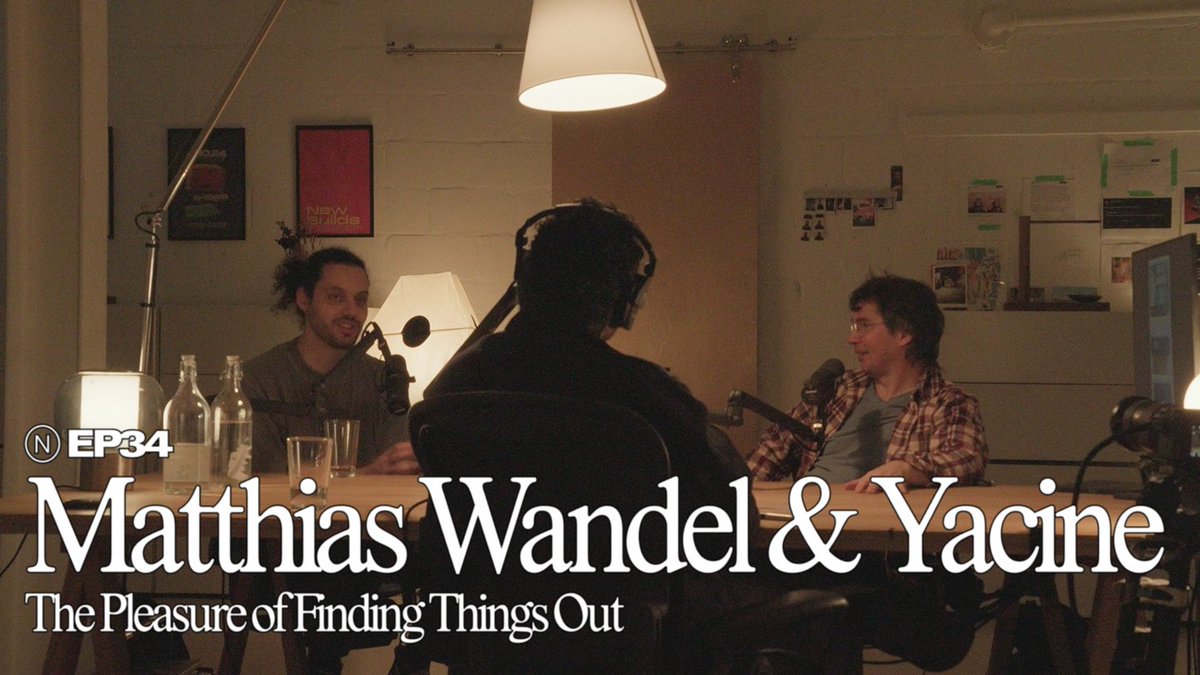
Matthias Wandel is an engineer, woodworker, and YouTuber who runs the most-viewed woodworking channel on YouTube. He was an early employee at Research In Motion, assigned employee number 13. Yacine (kache) is an engineer and artist, formerly at X and Stripe. Both of them are tinkerers, explorers, and builders in their own right. They poke at the world, build and test things for themselves, and develop their own understanding. In this conversation, we traced a single thread through Matthias’s entire life: what happens when you grow up in a place where the only way to have something is to make it yourself, and then never stop. We started in Northern Ontario, in his dad’s workshop on a gravel road where the nearest store was an hour away, and followed that instinct through his first encounters with computers, a Bic-pen dot matrix printer on a Commodore 64, two brothers with two machines in a basement heated by a wood stove, lock picking in the Waterloo service tunnels, and what it means to be a nerd. Matthias and Yacine went back and forth on simplicity vs. ease, what LLMs change about the relationship between understanding and building, and why the probability of code getting reused is inverse to the effort you spend making it reusable. Matthias walked through building the DigiSync barcode reader for the motion picture industry, writing almost all the firmware for RIM’s first wireless modem in DSP assembly, watching BlackBerry’s network traffic flip on 9/11, and what it was like to work alongside Mike Lazaridis. He explained why he left BlackBerry while sales were at their peak and how a bandwidth constraint accidentally made his first viral YouTube video. This is a conversation about constraints that become capability, capability that becomes independence, and independence that becomes something you pass on. The Other Stuff is hosted by internetVin, filmmaker, entrepreneur, and possibly the most curious man on Earth. Produced by New. The Other Stuff #34 – Matthias Wandel & Yacine: The Pleasure of Finding Things Out — Timestamps 00:00:00 Intro 00:02:25 ElectroBoom and Styropyro 00:09:55 Potato Guns and Air Guns 00:23:34 Growing Up in Northern Ontario 00:37:16 First Computers and the Bic Pen Printer 00:43:22 Markus Wendel and the Basement 01:00:19 University of Waterloo 01:03:37 Service Tunnels and Lock Picking 01:10:07 What Is a Nerd? 01:11:34 LLMs and Simplicity vs. Ease 01:31:19 How RIM Started 01:44:01 Building the Wireless Modem 01:58:43 Reusability and Optionality 02:14:13 The BlackBerry Pager 02:33:50 BlackBerry and 9/11 02:48:13 Lazaridis and Balsillie 03:05:28 The YouTube Channel 03:26:01 The Capacitance Sensor 03:42:41 Passing It On

The Other Stuff Podcast

41,669 просмотров • 2 месяцев назад

Discussing UGC & UGM With The Cofounder of Youtube I hung down with steve chen, the co-founder of Youtube to discuss the key ideas of user generated content & user generated money. Steve, being the cofounder of Youtube, has obviously been one of the key pioneers of user generated content, playing a large part in creating the world as we know it. I recently floated the idea of all crypto, including bitcoin and your fav memecoin can basically be understood as user generated money, in contrast to fiat, which is obviously generated by governments. What was a pleasant surprise to both of us was the enormous overlap between these 2 movements in terms of their evolution, progress and how radically they empowered the masses compared to the previous paradigms of centralized content and money. Similar to how the widespread adoption of UGC has completely changed how the modern world works, thinks and acts, we believe that UGM can eventually do the same, even if we are very much in the infancy phase right now. Take a watch! 🐈🐈 Timestamps: 03:20 - Why The Real Value of YouTube Was Created By Its Users 04:30 - User Generated Content (UGC) and User Generated Money (UGM) 10:14 - Welcoming YouTube´s Founder Steve Chen to Web3 16:30 - The Democratization of Content 22:00 - The Real Potential of Memecoins 29:43 - What got Steve Chen Curious About Crypto 31:40 - The Story of PAJAMAS & Steve’s Learnings So Far 41:30 - Meow’s Thesis on Market Cycles 45:00 - The Similarities between Silicon Valley and Crypto 47:25 - Why isn’t Crypto “there” yet? 51:20 - Steve’s Takeaway from Crypto and Memecoins 57:39 - The Darwinian Thesis on Collaboration and Its Parallels With Crypto 58:44 - What’s next for Steve Chen in Crypto 01:00:54 - Decentralizing Incentive Alignment in Communities 01:05:29 - What Does CTO Mean in the Memecoin World ? (Spoiler: It’s not Chief Technological Officer) 01:08:13 - Meow and Steve on Trust & Value Formation in Communities 01:20:43 - The Rapid Rotation of Attention and Capital in the Memecoin World 01:26:10 - Steve's Amazing Approach to Web3 from a Community Point of View

meow

73,636 просмотров • 1 год назад

Uncovering Aboriginal Australia: A Conversation with Mungo Manic Detailed timestamps 👇 Origins and Early Human Migration 00:00 Introduction to Mungo Manic and early Australians 00:55 Who is Mungo Manic 03:41 Terminology and definitions of "Aboriginal" 04:47 Terminology preferences in scientific contexts 05:29 Origins of the word "Aboriginal" and its historical usage 07:32 The term "Aboriginal" losing a genetic or racial definition in the 1960s or 1970s 09:10 The three-part test of Aboriginal identity Early Human Settlement and Fossil Evidence 12:55 How and when humans first arrived in Australia 16:40 Early skeletons, including Mungo Man 21:00 The study of Mungo Man 23:35 Did Denisovans make it to Australia 25:20 Fossil degradation in Lake Mungo Isolation, Cultural Practices, and Environmental Adaptation 26:00 Isolation of pre-colonial Australia and the ancestry of dingoes 33:15 Aboriginal women breastfeeding dingoes and their importance as pets 36:35 The taboo against eating dog in Parsi culture Social Structures and Survival Practices 37:30 Infanticide in Aboriginal Australian culture 40:55 Cannibalism in Aboriginal Australian culture including endocannibalism and exocannibalism 42:14 Warfare and violence in early Australian life 42:48 The nature of warfare and violence in ancient Australian societies 44:20 Christophe Darmangeat's expertise on Aboriginal warfare 45:39 Capital and corporal punishment in Aboriginal Australia 49:28 The lack of rights for Aboriginal women 51:30 Sorcery and the practice of pointing the bone Technology, Environment, and Innovation 54:00 Technological development in Aboriginal Australia and Jared Diamond’s theory 56:23 Was Australia actually a harsh environment 58:43 Technological simplicity in Tasmania after separation from mainland Australia 01:02:00 Competition and innovation 01:03:45 Kimberley spear points, Sulawesi, and Macassan sailors 01:05:30 The oldest known rock art Cultural Practices and Initiation Rituals 01:06:45 Cultural practices and initiation rituals 01:07:30 Initiation practices including scarification, tooth evulsion, and circumcision 01:12:20 Subincision 01:14:00 Female circumcision and virginity in Aboriginal Australia 01:20:00 The Fatal Shore by Robert Hughes, wife-sharing, and sexual practices in Aboriginal culture 01:24:46 The practice of clubbing women 01:25:35 The resilience and immune system of Aboriginal Australians Impact of Humans on the Environment 01:27:08 Human impact on the Australian landscape and megafauna extinction 01:31:00 Boomerangs used in warfare 01:33:50 The film Ten Canoes Religious and Spiritual Beliefs 01:35:20 Religious beliefs and spiritual practices including the Dreaming 01:40:00 Aboriginal eschatology 01:42:00 The extinction of the people of Kangaroo Island 01:43:00 Mourning periods and mummification 01:45:42 The cultural practice of not mentioning the dead Modern Aboriginal Identity and Historical Debates 01:48:04 Are Tasmanian Aboriginals extinct Was it genocide The Henry Reynolds black armband theory vs Keith Windschuttle 01:53:53 Defining Aboriginal identity today racial definitions vs self-identification 01:56:55 Blue-eyed blonde-haired Aboriginal people vs Tasmanian Aboriginals 02:00:52 The importance of Tasmanian DNA research 02:03:22 A critique of Bruce Pascoe’s Dark Emu and its depiction of ancient Australians as agriculturalists Colonial Impact and Unanswered Questions 02:11:27 Kidnappings 02:15:40 The need for anonymity in controversial discussions 02:29:27 Biggest mysteries in Aboriginal history

Quillette

83,061 просмотров • 1 год назад

Allie Beth Stuckey has never been afraid to speak truth in a world that often rewards silence. In this conversation, we talked about faith, conviction, and what it means to stand firm when culture pushes you to conform. Allie opened up about her journey into broadcasting, how motherhood reshaped her worldview, and why she believes women today are desperate for truth, not validation. We also talked about the cost of conviction, how to disagree without dehumanizing, and why faith must come before fear, especially in media and leadership. We discussed the state of Christianity in America, the pressure many young people face to compromise, and how social media has changed the way we share and live out our beliefs. Allie’s perspective is strong but full of grace, rooted in both intellect and compassion. This conversation was about more than faith or influence. It was about courage, clarity, and holding fast to what is true even when it is unpopular. Chapters: 0:00:00 - Intro 00:03:02: Allie Beth’s Personal Life 00:15:25: Allie Beth’s Thoughts on Marriage 00:21:20: Advice to Young Women on Finding the Right Partner 00:27:10: Lessons from Allie Beth’s Life 00:32:44: Dealing with Shame 00:41:32: Are Eating Disorders Considered Sinful? 00:46:16: Differences Between Southern Baptist, Reformed Christian, and Catholicism 00:52:19: Faith 01:12:45: Allie Beth’s Best Quotes 01:13:08: “It’s Easy to Be a Progressive” 01:14:16: “The Last Thing a Woman Wants Is to Be Excluded” 01:15:34: “I Am for the Death Penalty for the Same Reason I Am Against Abortion. I Value Innocent Life.” 01:19:19: “Your Daughters Should Not Be Listening to Taylor Swift. She Is Not a Role Model.” 01:26:24: How Allie Beth Manages Friendships That Disagree with the Bible 01:30:22: How Allie Beth Balances Sharing God’s Word Without Sounding Judgmental 01:32:56: Dealing with the Loss of Charlie Kirk BTS on Patreon:

Sage Steele

46,033 просмотров • 9 месяцев назад

tylercowen is bullish on AI education — here's why. 00:00 -- Preview 00:24 -- President Carlos Carvalho's AI-generated intro 03:21 -- Cowen reacts to UATX's campus 04:38 -- The AI revolution is here. Who will lose the most? 06:05 -- AI lawyers 07:17 -- Don't underestimate this 10:41 -- Changes to the "upper upper middle class" 12:38 -- How to be successful 13:43 -- The rise of managerial empires 14:02 -- When will we have the first billion dollar company with one employee? 16:05 -- 10-20 year forecast 16:19 -- Why education is so behind 17:01 -- Should you be bullish on UATX? 18:36 -- Should you still read Homer? 21:50 -- Write to think 25:01 -- Meet more people 25:42 -- How to get hired 26:54 -- Is AI your best mentor? 38:17 -- How to curb cheating 39:02 -- The new life of the mind 42:34 -- Q&A: Will there be more status associated with real education or AI education? 45:50 -- Q&A: Why do tech-savvy students need to practice using AI? 47:56 -- Q&A: Do LLMs atrophy your mind? 49:29 -- Q&A: How do you avoid AI-dependency? 51:05 -- Q&A: Isn't this vision lonely and isolating? 53:06 -- Q&A: Do students need teachers? 55:36 -- Q&A: What are the four most important courses for undergrads? 57:49 -- Q&A: Which AI company will win the AI race in the next five years and why? 59:22 -- Q&A: Can AI teach religion? 01:01:32 -- Q&A: Will AI narrow or widen our world? 01:04:37 -- Q&A: What makes us human? 01:05:42 -- Q&A: What is art? 01:08:33 -- Q&A: It's easy to catch cheaters

University of Austin (UATX)

27,770 просмотров • 5 месяцев назад

Here's my recent talk at Sui Basecamp in Dubai—Enjoy! 00:00 - PALvatar introduces the episode 01:04 - Reframing the macro fear narrative 01:26 - The Everything Code and liquidity 01:51 - Debt cycles and macro structure 02:10 - Demographics, debt, and GDP 02:38 - Aging populations and GDP drag 03:00 - Liquidity as the real driver 03:25 - Fed balance sheet to total liquidity 03:50 - M2 and asset correlations 04:23 - Why the rich get richer 04:47 - Global tax via currency debasement 05:21 - Crypto as a generational opportunity 05:48 - Banana zones and BTC decoupling 06:13 - Bitcoin log regression and upside 06:37 - 850K $BTC and market cycles 06:56 - Debasement and asset returns 07:19 - Liquidity vs. traditional returns 07:48 - Why tech and crypto matter 08:10 - Bitcoin vs Nasdaq performance 08:38 - Crypto: best asset in history 09:03 - The "Don’t F*ck This Up" thesis 09:38 - Liquidity and the macro setup 09:58 - Volatility is the price for returns 10:31 - Tariffs, rates, and market lag 11:01 - Economic surprises and liquidity 11:37 - 2017 tariffs and liquidity boost 12:01 - Twitter narratives vs macro truth 12:24 - What assets lead market cycles 12:51 - Inventory buildup and Q1 GDP 13:12 - Philly Fed confirms thesis 13:31 - ISM and forward outlook 14:00 - #Bitcoin and DeMark analysis 14:21 - Trump cycle deja vu 14:38 - My Bitcoin trading mistake 14:57 - Dollar strength and the Trump pivot 15:16 - Why the dollar isn’t over 15:36 - A weak dollar lifts global growth 15:56 - The 2017 breakout comparison 16:18 - One of the best setups ever 16:40 - Global M2 and debt cycle 17:03 - Basel IV and monetary creation 17:25 - Liquidity cycles repeat 17:45 - Debt refi cycles and patterns 18:06 - Liquidity leads Bitcoin 18:29 - Banana Zone phases 18:50 - Global M2 vs BTC chart 19:09 - Breakouts and corrections 19:29 - The voodoo chart: M2 + BTC 19:50 - One-way street ahead 20:08 - China, the dollar, and liquidity 20:31 - Central banks printing 20:50 - Liquidity surge from all angles 21:14 - Correlation with BTC and Nasdaq 21:39 - The Everything Code plays out 22:03 - Business cycle and crypto 22:32 - Bitcoin and ISM outlook 22:54 - Bitcoin at 450K? 23:21 - Altseason and business cycle 23:48 - Earnings, spending, and risk 24:16 - Altcoins = risk curve 24:40 - ISM >50 = big signal 25:06 - Everyone's fearful at the bottom 25:35 - Bearish sentiment at extremes 26:03 - Institutions still not in 26:29 - Indicators signal reversals 26:56 - Bitcoin corrections are normal 27:18 - The 2017 rollercoaster 27:42 - Technicals: #Solana & $SUI 28:00 - Sui charts breaking out 28:28 - Sui vs $SOL: faster horse 28:50 - $DEEP: top performer 29:16 - Ecosystem growth & excitement 29:45 - Market reacting to the vision 30:07 - Follow liquidity, not noise 30:27 - RSI and breakouts 30:47 - Liquidity patterns repeat 31:13 - We are in the Banana Zone 31:30 - No cycle top in sight 31:56 - This is just the beginning 32:19 - Banana Zone map 32:44 - Final advice: don’t mess this up 33:08 - Cycle could run into Q2 2026 33:39 - Stick to the program and DFTU

Raoul Pal

533,748 просмотров • 1 год назад

🚨🇺🇸 EX-CIA ANALYST ON VENEZUELA & IRAN Ex-CIA analyst Larry Johnson says the U.S. operation that captured Maduro was made possible by covert cooperation at the highest levels of Venezuelan security. According to Larry, a senior Venezuelan official, secretly working with U.S. intelligence for years, issued a stand-down order that allowed Delta Force to land, extract Maduro, and exit with precision and speed. What appeared to be a flawless special operation was, in his words, “staged.” And on Iran, Larry believes the current protests are instigated by U.S. and Israeli intelligence, and the likelihood of toppling the regime is slim. He believes the U.S. and Israel are planning new strikes against the country, and that the regime is more prepared than it was during the 12-day war, with more advanced weapons and better readiness. 03:21 - Initial reaction to Maduro’s capture and why it felt “staged” 06:08 - Questions around the helicopter incident and lack of U.S. casualties 09:26 - Why a stand-down order could happen without full coordination 12:18 - No real plan after capturing Maduro: lessons from Iraq 15:36 - U.S. goal in Venezuela: oil control and pushing out China, Russia, Iran 18:21 - Risk of escalation and the Vietnam-style trap for the U.S. 21:31 - Why “precision strikes” are a myth and air power has limits 23:05 - Why the operation succeeded: insiders, unlocked doors, and no defenses 26:16 - Misuse of the Monroe Doctrine and U.S. interference in Latin America 29:53 - Contradictions between multipolar reality and U.S. global actions 31:15 - Why threats backfire and push countries closer to BRICS 34:02 - Trump’s behavior as a symptom of declining U.S. hegemony 36:49 - Houthis, Red Sea reality, and limits of U.S. naval power 39:26 - Iran protests: intelligence operations versus real public anger 42:09 - MEK, Mossad, CIA, and manufacturing opposition narratives 47:04 - Iran preparing for war and turning to Russia and China 51:24 - Why Iran is stronger now despite war, sanctions, and protests 54:12 - Difference between Iran’s government and the Islamic Republic 56:44 - Why the U.S. cannot replicate the Maduro operation in Iran

Mario Nawfal

880,540 просмотров • 6 месяцев назад

The hardest thing in business is not seeing the future. It is surviving long enough to build it. My fireside chat with Julian Liniger at BTC Prague on focus, endurance, corporate transformation, and how entrepreneurs can use Bitcoin, AI, and digital finance to create the next generation of products. Full interview below. 00:00 - Bitcoin as the dominant global Digital Capital network: 17 years, hundreds of billions invested, and a potential $100T opportunity 00:51 - Bitcoin near the 200-week moving average: why $BTC is more compelling after a 50% drawdown 01:52 - Strategy’s scale and the media narrative: from ~$600M enterprise value to as high as ~$120B 10:29 - Bitcoin fundamentals: economic empowerment, sovereign property rights, and the dominant digital monetary network 12:16 - Why there is no second best: Bitcoin as Digital Capital, Digital Money, and a potential $100T network 16:09 - Entrepreneur advice: build a simple product using new technology to solve a real problem 20:30 - Focus, endurance, and the danger of dilutive distractions 32:25 - What I would build today: AI plus Digital Assets, especially Digital Money and Digital Yield 33:27 - Digital Credit: taking a 40 vol asset, stripping it to ~4 vol, and creating new yield products 34:57 - Digital Money: 6–8% yield in major currencies with no volatility 38:05 - $STRC, $SATA, and the next layer of bitcoin-backed financial products 48:52 - Q&A: why Strategy sold 32 BTC and why bitcoin-backed capital must support credit and equity 59:29 - Q&A: Strategy as a shock absorber: selling 32 BTC while buying net ~250,000 BTC during the bear market 01:02:39 - Why public companies protect Bitcoin through accounting, tax, legal, political, and economic advocacy 01:07:58 - Strategy as the extension of the Bitcoin network into the free market system

Michael Saylor

333,311 просмотров • 1 месяц назад

Scott Jennings has built a reputation for speaking truth to power on CNN, but what stood out to me in this conversation was his honesty, his perspective, and his heart. We filmed this episode over a month ago in Washington DC, and it was the perfect backdrop for a raw and real discussion about politics, faith, and family. We talked about what it takes to sit in the lion’s den night after night, debating politics in front of a national audience, and why authenticity matters more now than ever. Scott opened up about his career path from Kentucky to the Bush White House, to campaign war rooms, and now to CNN, where his voice has become one of the most recognizable conservative perspectives in America. He shared stories about Donald Trump, Mitch McConnell, and the lessons he has learned from decades inside politics and media. We also talked about faith, family, and why staying grounded matters when the world is coming at you full speed. Scott Jennings is sharp, candid, and passionate about America’s future, but what I walked away with was a reminder of his integrity and his courage to stand firm in the face of constant pressure. Chapters: 00:03:08:12 – Thoughts on Donald Trump's presidency so far 00:06:32:00 – How has President Trump improved since 2016 00:08:35:01 – How the incident in Butler PA changed everything 00:13:11:23 – Scott Jennings on CNN 00:18:10:19 – How the debates work on CNN 00:20:52:15 – How does Scott Jennings keep his cool while debating 00:24:25:11 – Any strained relationships on set 00:27:18:25 – Scott Jennings' best and worst moments on air 00:31:06:08 – How does Scott Jennings deal with being outnumbered 00:41:12:23 – Scott's career in politics 00:44:39:16 – Mitch McConnell 00:52:11:11 – Political run in Kentucky for Scott 00:54:37:24 – Family 01:00:11:02 – Closing thoughts 01:03:29:11 – The Yellow Ribbon

Sage Steele

111,471 просмотров • 10 месяцев назад