正在加载视频...
视频加载失败
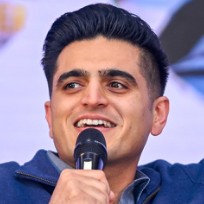
Introducing Monsoon ASR ⚡️ Voice Arena Speech recognition does not have a model problem anymore. It has a data problem. The best ASR systems are approaching human-level performance in English. But move into the long tail of the world's languages, especially real, conversational speech and error rates can still... show more
12 条评论

For the last decade, much of ASR progress came from building better models. For the next billion voice users, a huge part of the remaining problem is different: We need better data, in far more languages, representing how people actually speak. That is what we're building with Monsoon. 50 languages today. 100 next by February 2027. And a 1000 languages soon with single-digit semantic WER in every language. Live on VoiceArena. Here's a quick preview of the utterances that make up the Monsoon dataset.
The gap is enormous. On FLEURS, ElevenLabs Scribe v2 gets: US English → 4.2% WER Hausa → 19.5% Amharic → 28.2% Somali → 40.0% Yoruba → 41.4% That is 4.7X–9.9X more errors than English. And FLEURS is read speech. Real conversations - accents, interruptions, noise, informal vocabulary, different devices are harder still
So we built Monsoon. A large-scale training corpus for real-world ASR across 50 languages and six regions spanning South Asia, Southeast Asia, Africa, Europe, MENA and the Americas, from Bengali, Gujarati and Hausa to Javanese, Arabic dialects and regional Englishes.
Each corpus consists of spontaneous, single-speaker audio from two-party conversations, recorded one speaker per channel and built through a rigorous gating and verification protocol: - classifier gating for language, speaker gender and non-speech events - five levels of human transcription, admitted only at ≥ 98% audited accuracy - selection for acoustic and lexical coverage Below: Whisper medium fine-tuned on Monsoon corpus vs commercial ASR.
Do the gains stop once you have enough hours? So we trained the same Whisper Medium recipe on: 1,000 h → 2,000 h → ~3,500 h across Hindi, Tamil and Telugu. WER kept falling on every curve. At the full corpus size, none had flattened. For long-tail speech recognition, we are nowhere near done collecting data.
How do we build lexical and acoustic diversity? Elicitation. ~5,000 deduplicated topics per language span 35 everyday domains and systematically elicit numbers, procedures, named entities, places and products. Selection. Segments are ranked for lexical rarity and stratified by DNSMOS and duration, preserving noisy and short-form speech as controlled tails rather than filtering them out. Coverage. In Hindi, Monsoon spans 13,731 speakers, 781 districts, 1,123 device models and 120,674 unique word types.
We also deliberately do not clean the real world out of the dataset. Short clips, noisy environments and difficult acoustic conditions are retained as a controlled part of the training distribution. On the noisiest subset of our Bengali STT benchmark, the Monsoon fine-tune ranks at 3 of the systems we evaluated, ahead of Gemini 3 Pro, MAI-Transcribe-2 and ElevenLabs Scribe v2. (Voice Arena does not build models for a commercial usecase but for proving the quality of our datasets. If you would like to check the results of this model on your internal benchmarks you can access the API available on the Monsoon webpage on Voice Arena)
Monsoon is available in three sizes Small - 500 hours / language Experiment with the data . Medium - 1000 to 3,500 hours / language Promises single digit word error rates Large - Custom - Your model is evaluated, failure modes are identified and a custom dataset is collected to achieve sub 5% WER.
A small number of datasets have defined progress in speech recognition: Switchboard and Fisher for conversational English, LibriSpeech and MLS for read speech at scale, Common Voice and FLEURS for language coverage, IndicVoices for Indic languages. Monsoon builds on that line of legacy datasets that have defined speech recognition. We are proud to bring you 50 languages today and are excited about completing the 1000 languages target by the end of next year. Live now at

@voicearena_ai Models are no longer the bottleneck. Good data is all you need .

@voicearena_ai improving real conversational speech across that many languages is a serious data challenge

@voicearena_ai single digit WER across 50 languages is an ambitious target the long tail language problem is where ASR still has a lot of room to improve
![Google presents AudioPaLM: A Large Language Model That Can Speak and Listen paper page: introduce AudioPaLM, a large language model for speech understanding and generation. AudioPaLM fuses text-based and speech-based language models, PaLM-2 [Anil et al., 2023] and AudioLM [Borsos et al., 2022], into a unified multimodal architecture that can process and generate text and speech with applications including speech recognition and speech-to-speech translation. AudioPaLM inherits the capability to preserve paralinguistic information such as speaker identity and intonation from AudioLM and the linguistic knowledge present only in text large language models such as PaLM-2. We demonstrate that initializing AudioPaLM with the weights of a text-only large language model improves speech processing, successfully leveraging the larger quantity of text training data used in pretraining to assist with the speech tasks. The resulting model significantly outperforms existing systems for speech translation tasks and has the ability to perform zero-shot speech-to-text translation for many languages for which input/target language combinations were not seen in training. AudioPaLM also demonstrates features of audio language models, such as transferring a voice across languages based on a short spoken prompt.](https://image.24vids.com/tw-1672048076469698561/ext_tw_video_thumb/1672047839378300928/pu/img/MuoOBsAyUd-HAI7D.jpg)


![Putin's famous historic Munich speech in 2007 This is a PHENOMINAL speech. EVERYONE needs to hear it! What prophecies have come true? NATO’s eastward expansion foments tension Putin’s Munich speech: "NATO expansion does not have any relation with the modernization of the Alliance itself, or with ensuring security in Europe. On the contrary, it represents a serious provocation that reduces the level of mutual trust." Democracy by diktat won’t work Putin stressed in his Munch speech: "[The observance of human rights] is an important task. We support this. But this does not mean interfering in the internal affairs of other countries, and especially not imposing a regime that determines how these states should live and develop. It is obvious that such interference does not promote the development of democratic states at all. On the contrary, it makes them dependent and, as a consequence, politically and economically unstable." An arms race will follow Putin stated in his historic Munich speech: "No one can feel that international law is like a stone wall that will protect them. Of course, such a policy stimulates an arms race… The potential danger of the destabilization of international relations is connected with obvious stagnation in the disarmament issue." Unresolved Iranian nuclear problem Putin noted in his historic Munich speech: "If the international community does not find a reasonable solution for resolving this conflict of interests, the world will continue to suffer similar, destabilizing crises… We are going to constantly fight against the threat of the proliferation of weapons of mass destruction." Long-term contracts and energy security Putin stated in his Munich speech: "And now about whether our government cabinet is able to operate responsibly in resolving issues linked to energy deliveries and ensuring energy security. Of course, it can! Moreover, all that we have done and are doing is designed to achieve only one goal, namely to transfer our relations with consumers and countries that transport our energy to market-based, transparent principles and long-term contracts." Unipolar world’s fall Putin said in his Munich speech: "I consider that the unipolar model is not only unacceptable but also impossible in today’s world. The model itself is flawed because at its basis there is and can be no moral foundations for modern civilization. There is no reason to doubt that the economic potential of the new centers of global economic growth will inevitably be converted into political influence and will strengthen multipolarity." From friends to foes Putin said in his Munich speech: "He (U.S. President George W. Bush) says, 'I proceed from the fact that Russia and the USA will never be opponents and enemies again. I agree with him." Another world Putin said in his Munich speech: "Russia is a country with a history that spans more than a thousand years and has practically always used the privilege to carry out an independent foreign policy." NATO’s expansion, a unipolar world, disarmament problems, the erosion of the OSCE as an institution, the Iranian nuclear problem and Europe’s energy security - TASS has summarized Putin’s warnings and prophecies from his Munich speech that have come true simply because nobody turned an attentive ear to them.](https://image.24vids.com/tw-1735473969904373849/amplify_video_thumb/1735469311915864065/img/37oNrbgqz64uatIe.jpg)
