正在加载视频...

视频加载失败

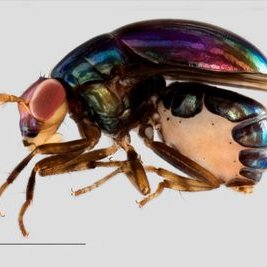
Introducing the Entomoscope! 🦟🔬 DIY microscope for getting detailed images of tiny insects in ethanol. Do this: 1️⃣ 3D-print the case 2️⃣ Order parts online 3️⃣ Assemble 4️⃣ Begin imaging! 📸Perfect for entomologists keen on training AI! #DIYMicroscopy🐜
52,145 次观看 • 2 年前 •via X (Twitter)

10 条评论

Thorben Danke 的头像
Thorben Danke2 年前

wow, that’s great!!!

Dr. Carly Tribull 的头像
Dr. Carly Tribull2 年前

Hmm, how does one go about getting other people to 3-D print them stuff.

CVG 的头像
CVG2 年前

👏👏👏

Simone Bacilieri 的头像
Simone Bacilieri2 年前

@Bertonemyia @CesarFavacho

Munxa 的头像
Munxa2 年前

I would love one but worried that I cannot afford it... What does it cost to import it to Zimbabwe??

Rudolf Meier @rudolf-meier.bsky.soci 的头像
Rudolf Meier @rudolf-meier.bsky.soci2 年前

That's difficult to answer because in some countries, the main cost will be tarrifs.

Dr. Jennifer Hill 的头像
Dr. Jennifer Hill2 年前

Would this be effective for tiny aquatic crustaceans too such as amphipods and isopods? If so I would love it!

Rudolf Meier @rudolf-meier.bsky.soci 的头像
Rudolf Meier @rudolf-meier.bsky.soci2 年前

Would be good to know how small. The system is modular and you buy your own lenses. As long as there is a suitable lens, it should be fine.

Maidzaman 的头像
Maidzaman2 年前

Seems something very interesting... Would love to make one...

JanWillem㋛︎ 的头像
JanWillem㋛︎2 年前

I bought liters of ethanol, but no insects at all in there.

相关视频

Apple developed a process to 3D print the titanium case for its Watch at scale (Ultra 3, Series 11). It uses 50% the raw material compared to old models and made interesting calls on material sciences / manufacturing: 1️⃣ Take 100% recycled raw titanium powder. 2️⃣ Atomizes the powder to 50 microns in diameter and “fine-tune oxygen content to decrease the qualities of titanium that become explosive when exposed to heat”. 3️⃣ A 3D printing machine with 6 lasers simultaneously prints a layer and repeats the process 900x (takes 20 hours). 4️⃣ “Once the printers are done working, an operator vacuums excess powder off the build plate in a process called rough depowdering. Because the builds are printed to the near-final shape for all of the interlocks needed on the enclosure, powder can still sit in the nooks and crannies of the cases. An ultrasonic shaker ensures this remaining powder is removed during the fine depowdering phase.” 5️⃣ A thin electrified wire separates each case in a process called singulation (liquid coolant is sprayed so the wire isn’t too hot). 6️⃣ Final step is an automated optical inspection system that measures each case to make sure dimensions and cosmetics look right. A major unlock from the 3D printing process is to improve the Watch’s waterproof-ness. The inner surface of this case allows better bonding between plastic and metal to protect the antennae in cellular models. Overall, it’s expected to save on 400 metric tons of raw titanium (as compared to previous generations). *** Full read here:

Trung Phan

158,048 次观看 • 8 个月前