Video yükleniyor...
Video Yüklenemedi
Introducing UI-TARS-1.5, a vision-language model that beats OpenAI Operator and Claude 3.7 on GUI Agent and Game Agent tasks. We've open-sourced a small-size version model for research purposes, more details can be found in our blog. TARS learns solely from a screen, but generalizes beyond a screen! Blog: Model: App:

85,212 görüntüleme • 1 yıl önce •via X (Twitter)
22 Yorum

UI-TARS-1.5 achieves SOTA results on several GUI benchmarks, e.g., OSWorld, WindowsAgent Arena, Online Mind2web, Android World, and ScreenSpot-Pro. These results demonstrate UI-TARS's superiority on computer use, browser use, and phone use. Also, with the GUI Tool, UI-TARS almost matches GPT-4o with the search API
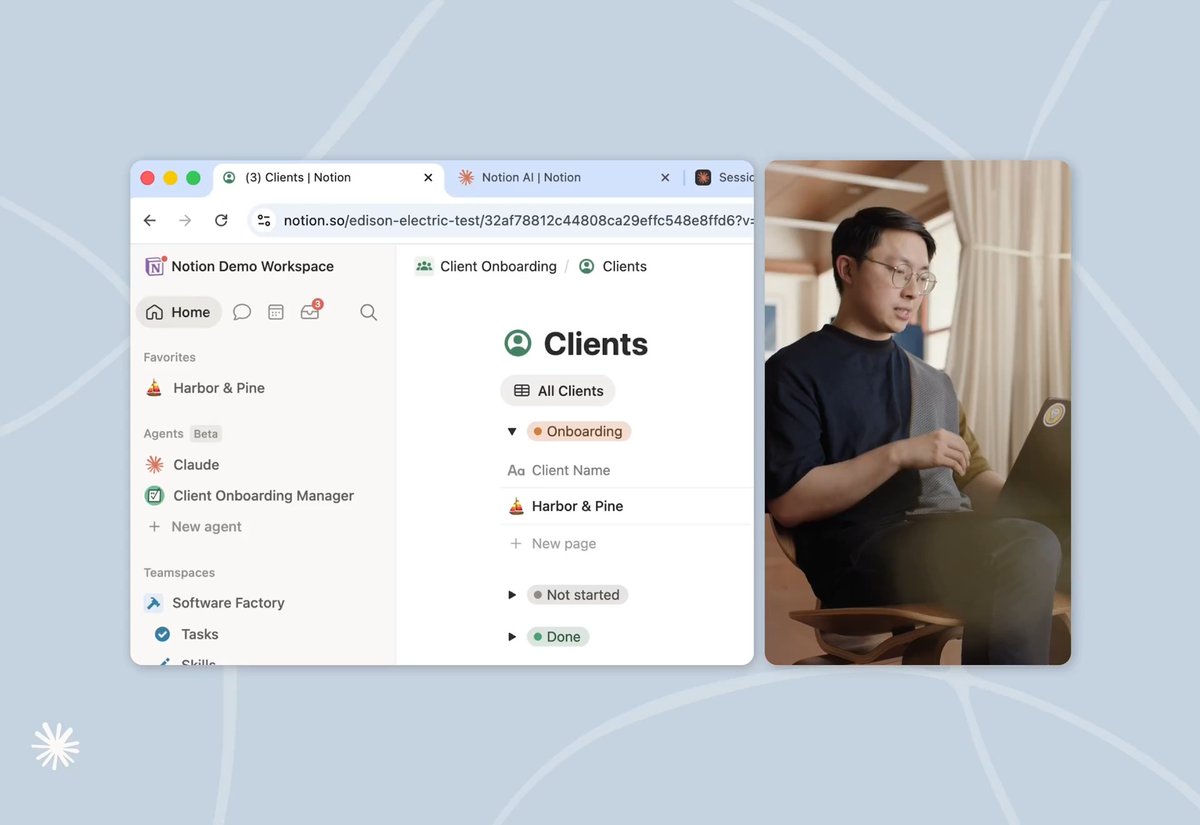
Here's a demo from UI-TARS on GUI tasks~
To further assess UI-TARS-1.5 in complex, open-ended environments, we tested it on Minecraft—a popular sandbox game well-suited for evaluating embodied intelligence. Unlike static GUI benchmarks, Minecraft requires real-time decision-making in a dynamic 3D space using visual input and low-level controls (mouse and keyboard), closely reflecting real-world computer use.
TARS has amazing inference-time scaling ability. With more interaction rounds, TARS achieves far better performance in GUI tasks and Game tasks. The scaling curve surpasses both OpenAI CUA and Claude 3.7. We even observe performance gain when the interaction rounds are over 1000 steps.
Gameplay represents a critical frontier for multimodal agents, serving as an ideal testing ground for evaluating complex reasoning, decision-making, and adaptability. Games demand intuitive, common-sense reasoning and strategic foresight, making them perfect benchmarks to test and showcase the advanced cognitive capabilities of multimodal agents. To evaluate UI-TARS-1.5's gameplay proficiency, we selected 14 diverse games from Each model was allowed up to 1,000 interaction steps per game to generate execution traces, repeated across multiple runs.
Explore more interesting showcases of UI-TARS on

42% on OSWorld is impressive!
Thanks! Will be higher sooner!

Impressive!

soon as an agent loop in c/ua 👀
Sure it will be!

nice work

How well can it play Pokemon? 🤔

looks really cool but when can we acess the larger 1.5 and will it be opensource too?
Sure! Soon will be
nice really excited to try it great work

I was trying 1.5 7b, it always tries to click few pixels above diagonally. Do we need to pass screen size somewhere from desktop app?

Can you give details about deployment on vLLM? It seems like the model requires a min-version of it.

plans to open source the full model?
Soon there will be~
🥹

Here I share an XGBoost model that delivers a 25% CAGR with minimal drawdown on Visa stock. In this free Substack post I share code and commentary for a powerful Machine Learning strategy that delivers powerful returns.