Video wird geladen...

Video konnte nicht geladen werden

Zur Startseite

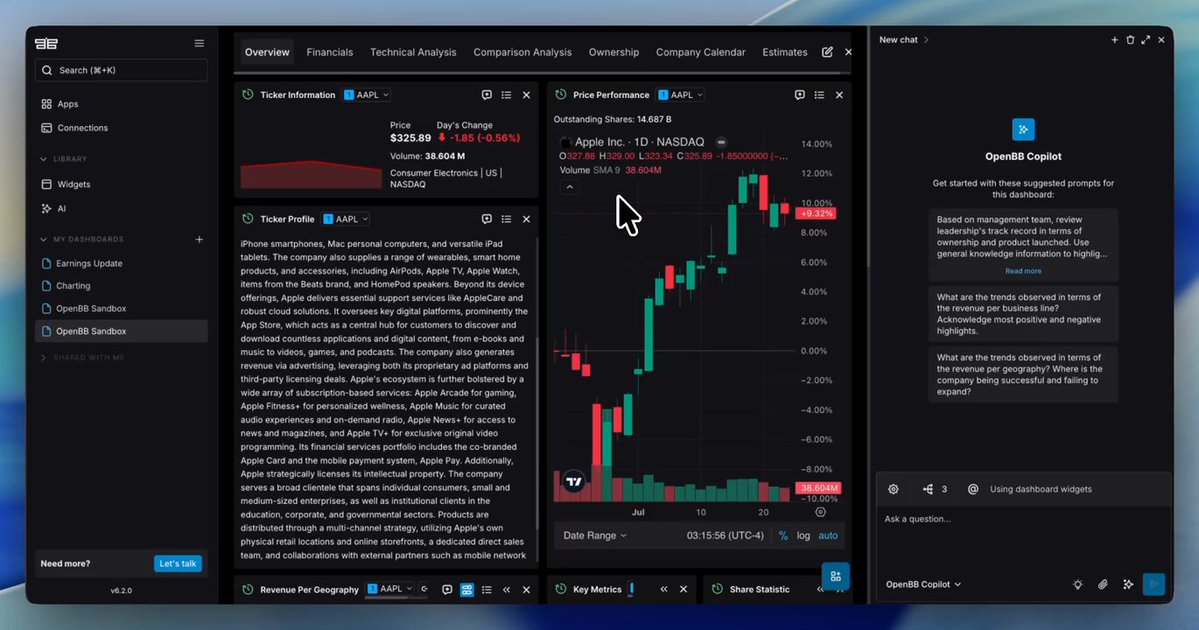
Introducing Yellowcake Analytics v2. Yellowcake Analytics is a free research platform I’ve been building for the uranium sector. It started as a simple tracker for resource estimates pulled from SEC filings. These updates make it a full research stack and one of the most comprehensive free resources for uranium...

18,631 Aufrufe • vor 1 Monat •via X (Twitter)

0 Kommentare

Keine Kommentare verfügbar

Kommentare vom Original-Post werden hier angezeigt
Ähnliche Videos

Everyone's focused on oil right now. And I get it. Brent above $100, the Strait of Hormuz shut down, tankers stranded. But there's an energy crisis hiding in plain sight that could be even MORE consequential: Uranium. Here are the numbers you should know: Global uranium demand is roughly 90,000 tons per year. Global production is 60,000 tons. That's a 30,000-ton annual DEFICIT. So how has the market survived so far? Utilities have been burning through their inventories. After Fukushima, Japan shut its reactors. Sweden pulled back. Germany closed its fleet entirely. Those utilities had 12 to 15 years of uranium stockpiled. Today, the average inventory level is just TWO YEARS. The cushion is gone. And demand is about to explode. There are roughly 200 new reactors planned globally by 2040. Each reactor consumes about 160 tons of raw uranium per year. That's 32,000 tons of additional annual demand. Half of one year's current production. Just from new reactors. And where does the supply come from? Well... it doesn't. Kazakhstan produces 45% of the world's uranium. Starting in 2028, Kazakhstan plans to dedicate 100% of its supply to China and Russia. Already 80% goes to those two countries. But that remaining 20% disappearing from the open market will tighten an already desperate situation. There aren't enough new mine projects to fill the gap. Mining is hard. Permitting takes years. And the world hasn't invested seriously in new uranium production for over a decade. But here's the part that's REALLY scary: Enriched uranium. Raw uranium is useless for a reactor. It has to be enriched. And 60% of the world's enrichment capacity sits in Russia. If Putin decided to embargo enriched uranium exports, it would be devastating for Western utilities. And strategically, it would cost Russia almost nothing. Russia's enrichment business generates roughly $6 billion a year. That's what Russia earns from ONE WEEK of oil sales. Why Putin hasn't pulled this lever yet is a mystery. But the vulnerability is real and every Western utility executive knows it. This is why we're bullish on uranium. Uranium spot prices are around $87 per pound. $200 per pound by 2027 or 2028 is entirely achievable given the supply-demand math. The oil trade gets the headlines. But people overlook uranium. A 30,000-ton annual deficit. Utility inventories at two years. Kazakhstan redirecting supply to China. Russia controlling 60% of enrichment. And 200 new reactors coming online. THE MATH DOESN'T LIE

George Noble

47,749 Aufrufe • vor 5 Monaten

HOLY SHIZZLES‼️ Uranium One enters the picture again.. 🚨 The Trump administration has reached agreement with SYRIA for the International Atomic Energy Agency to remove nuclear material stored at a COVERT SITE in Syria, Listen closely to Trump said in May. Obama and Hillary Clinton are SCREWED! —— “Obama picked the wrong country.. he should have picked another country. I won’t tell you what it was..” Which country? To understand what is happening, you have to Revisit the drops— Why does Trump keep mentioning OBAMA and the PALLETS OF CASH? Q couldn’t tell without violation NATSEC laws, but Q did ask a series of questions that painted a dramatic picture that if you did the research, proved the Iran nuclear deal (JCPOA) was not what it seemed, and Uranium One (U1) material may have secretly ended up helping IRAN or SYRIA build nuclear weapons. The official Iran nuclear deal was supposed to stop Iran’s nuclear program and keep it from getting weapons-grade material. BUT, It did the exact OPPOSTE. Q asksd: What if the program never actually stopped? What if Iran quietly built a hidden “satellite” nuclear site in northern Syria? KABOOM💥💥💥💥💥💥 What if uranium from the Uranium One deal (the U.S. uranium assets sold to Russia) somehow made its way to Iran or Syria? Hello 👉 Obama and Hillary. Q even references the movie The Sum of All Fears — a story about terrorists getting a nuclear bomb made from stolen material. Key Questions Q Raises Where did the pallets of cash the Obama administration sent to Iran actually go? How many secret plane deliveries happened, and did they all land in the same spot? Is the U1 material traceable? ( Q answers: YES. Did the U.S. government know about any of this? Yes. Were other “bad actors” (possibly Russia or others) involved in supplying the uranium? Yes Q repeatedly says “Define cover” — meaning the Iran deal and other official stories were just a smokescreen to hide what was really happening with the uranium transfers. Q even ties it to real events: “Why did we strike Syria?” (referring to U.S. missile strikes in 2017–2018) The real reason, according to Q, was to deal with this hidden nuclear threat — not the public explanation. U.S. uranium → sold to Russia via Uranium One → diverted to Iran/Syria → with the Iran nuclear deal and cash payments used as cover. This means Obama and the Hillary Clinton Foundation–linked deal DIRECTLY ARMED America’s enemies with nuclear material, setting the stage for dirty bombs.. 🔻 Uranium One was a Canadian mining company that, through acquisitions (including UrAsia Energy, co-founded by major Clinton Foundation donor Frank Giustra), controlled significant U.S. uranium assets—roughly 20% of U.S. uranium production capacity at the time (mines in Wyoming, Utah, etc.). Between 2009–2013, Russia’s state-owned nuclear giant Rosatom (via its subsidiary ARMZ) gradually acquired majority then full control of Uranium One in stages. Because this involved U.S. critical minerals, it required unanimous approval from the Committee on Foreign Investment in the United States (CFIUS)—an interagency panel of 9+ cabinet-level departments, including State (then led by Hillary Clinton), Treasury, Defense, etc. CFIUS approved it in 2010; President Obama SIGNED OFF; the Nuclear Regulatory Commission followed. Frank Giustra: Canadian mining magnate and Clinton Foundation donor. In 2005, he and Bill Clinton traveled to Kazakhstan (a uranium-rich nation). Shortly after, Giustra’s UrAsia secured major Kazakh uranium concessions. Giustra later merged UrAsia into Uranium One (retaining stakes) and donated TENS OF MILLIONS to the Clinton Foundation (and pledged $100M+). Q repeatedly emphasized U1/Uranium as a cornerstone example of Clinton corruption and Pay-to-play treason to KILL the UNITED STATES FROM WITHIN, selling secrets, SAPs, AID, etc. — but it was “More than selling of URANIUM… >Crimes against Humanity”

MJTruthUltra

213,421 Aufrufe • vor 22 Tagen

Access to information is what drives prices in markets. While there's no shortage of information today, the real challenge is figuring out what actually matters and getting it in time. Exchange filings, earnings, management commentary, and conference calls. When something material comes out, prices react almost instantly. The faster you get the information, the better your odds of reacting sensibly. Institutions and high-frequency trading desks scan exchange filings the moment they're published and act within milliseconds. Retail investors usually find out much later—by then, the price has often already moved. Tijori just released the WhatsApp alerts feature. It tracks exchange filings, earnings releases, conference calls, management guidance, verified company tweets, and anything that could materially impact a stock. The moment something is published, it's summarised using AI and sent to you on WhatsApp within seconds. For traders, this means getting access to critical filings during market hours, well before traditional news or media picks them up. For investors, it’s a simpler way to stay informed without having to search for news for each stock or rely on social media commentary. And even if you’re just getting started with investing, work in a company, or run a business, it’s a useful way to track competitors. Follow companies in a sector and get real-time updates of their key announcements and actions. You can enable alerts by visiting the Tijori Alerts website (link in comments) or directly from the Kite Fundamentals widget.

Nithin Kamath

114,593 Aufrufe • vor 7 Monaten

Listen very closely to what Trump says re: Obama and Iran… “Obama picked the wrong country.. he should have picked another country. I won’t tell you what it was..” Which country? Revisit— Why does Trump keep mentioning OBAMA and the PALLETS OF CASH? Q couldn’t tell anons without violation NATSEC laws, but Q did ask a series of questions that painted a dramatic picture that if you did the research, proved the Iran nuclear deal (JCPOA) was not what it seemed, and Uranium One (U1) material may have secretly ended up helping IRAN or SYRIA to build nuclear weapons. The official Iran nuclear deal was supposed to stop Iran’s nuclear program and keep it from getting weapons-grade material. BUT, It did the exact OPPOSTE. Q asksd: What if the program never actually stopped? What if Iran quietly built a hidden “satellite” nuclear site in northern Syria? And the explosive twist: What if uranium from the Uranium One deal (the U.S. uranium assets sold to Russia) somehow made its way to Iran or Syria? 👉 Obama and Hillary. Q even references the movie The Sum of All Fears — a story about terrorists getting a nuclear bomb made from stolen material — and says this real-world scenario would be “SUM OF ALL FEARS” level dangerous. Key Questions Q Raises Where did the pallets of cash the Obama administration sent to Iran actually go? How many secret plane deliveries happened, and did they all land in the same spot? Is the U1 material traceable? (Q answers: YES.) Did the U.S. government know about any of this? Yes. Were other “bad actors” (possibly Russia or others) involved in supplying the uranium? Yes Q repeatedly says “Define cover” — meaning the Iran deal and other official stories were just a smokescreen to hide what was really happening with the uranium transfers. WHY do you think Trump wants that Nuclear Dust? Q even ties it to real events: “Why did we strike Syria?” (referring to U.S. missile strikes in 2017–2018) The real reason, according to Q, was to deal with this hidden nuclear threat — not the public explanation. Bottom-Line Implication U.S. uranium → sold to Russia via Uranium One → diverted to Iran/Syria → with the Iran nuclear deal and cash payments used as cover. This is true, and it is now being revisited and it would mean the Clinton Foundation–linked deal (which Grassley’s recent letter is now re-examining) didn’t just risk U.S. security — they DIRECTLY ARMED America’s enemies with nuclear material, setting the stage for dirty bombs.. As Q later clarified in the 16 year plan to destroy America, MASS Extinction events via war were being planned. Until Trump won in 2016.

MJTruthUltra

187,591 Aufrufe • vor 3 Monaten

“Number one risk… that’s discovery risk.” Our CEO Troy Boisoli says $SASK $SASKF has now made multiple discoveries at Angilak, with RIB and Lac 50 showing a system that is moving from discovery into continuity and “building underlying asset value.” ATHA Energy VP of Exploration, Cliff Revering, was the chief geologist at Cigar Lake: "So we have a very good familiarity with large scale uranium systems and tier one uranium systems. And what we're seeing both at Lac 50 and at RIB is we're seeing mineralization where we're stepping out hundreds of meters to kilometers targeting geophysical signatures and hitting uranium mineralization. But not only are we hitting uranium it's the entire system. We're hitting large scale graphitic-sulfidic structures that are localizing mineralization that have tens to hundreds of metres of alteration surrounding them. It's indicative of a very large trend, a very large system. And it's actually unique because when you start to look at this the geologic setting, how it's characterized, it's more analogous probably to a lode gold system than a typical than a typical hydrothermal uranium system that you would see in the Athabasca Basin. And you can understand that we've been building up the thesis for the last couple of years, and every time we get a new set of data, we start to refine and and distill our observations, which then in turn leads to increased predictability within our drill results. And once you get to defining kind of first order mineralized controls it's a really exciting position to be in because then you're building – then you're actually building underlying asset value as opposed to just addressing that first risk, which is discovery risk. We're now into that second phase, which is building continuity within the system." Interview with 📐triANGLE INVESTOR

ATHA Energy Corp

187,025 Aufrufe • vor 1 Monat

This is the outline currently under discussion between the United States and Iran. I am sharing this with caution, as it hasn’t been agreed upon yet, but based on recent developments, these are the points they have been discussing: A 15-year suspension of uranium enrichment. The United States originally demanded 20 years, while the Iranians wanted much less; they eventually settled on 15. The plan includes converting uranium into fuel, which changes its physical state and makes it harder to re-enrich. While not a simple process, this means the uranium won't necessarily leave Iran, which is a major concern for Israel. Full inspection of nuclear sites and the opening of the Strait of Hormuz are, of course, a given. The deal would also include ending the war, the withdrawal of American forces from the Gulf, and the lifting of economic sanctions. It must be said that, aside from the uranium, the lifting of sanctions is what worries Israel the most. As you recall, the strategic goal of the war was to create the conditions for the regime’s downfall. The regime was in danger of collapsing due to an economic situation that deteriorated primarily because of those sanctions; if they are lifted, the regime is strengthened. Therefore, it seems to me that the perception in Israel remains that the status quo is preferable—a state of "no war, no peace" where U.S. military forces remain on standby in the Persian Gulf. But as we have learned, this does not depend solely on Israel's desires, to put it mildly.

Amit Segal

258,101 Aufrufe • vor 4 Monaten

One tab. The whole market. That’s Eon. How many browser tabs do you have open right now just to keep up with the market? One for prices, one for news, one for charts, a whale tracker you check sometimes, that economic calendar you keep forgetting about... 😵‍💫 Eon brings all of it into one place. And it adds something none of those tabs have: an AI that actually reads the data for you and tells you what it means. Let’s take a quick look at what's inside 👀 Type something like "Is Bitcoin bullish or bearish right now?" and Eon answers properly - market phase, price action, trend, momentum, the full picture. You don't have to decode the charts yourself. The Explore section (our favorite part) 🎯 - Technical Analysis - pick a coin and an indicator like RSI, MACD or moving averages, and the AI reads the chart and tells you what it's saying - Fundamental Analysis - supply, top holder concentration, on-chain activity, active addresses - Whale Tracking - watch the big money move in real time, with live alerts the moment a whale sends funds to an exchange - Token Unlocks - see exactly when locked tokens are about to hit the market, before it catches you off guard - Event & Economic Calendars - airdrops, mainnet launches, Fed rate decisions, all on one timeline - Live News Feed - the whole market's headlines in one scroll Your home dashboard? Market cap, Bitcoin price, the Fear & Greed Index and the latest market updates, all there the second you log in 🏡 And the best bit? On every page there's a little box that says "ask about this analysis." Any time you're not sure what something means, you just ask, and you get a straight answer 💪 This is what crypto research looks like when it's finally in one place. Come see for yourself: 🙌

Ozak AI

17,306 Aufrufe • vor 2 Monaten

Scott Nolan (Scott Nolan ) was employee ~30 at SpaceX. He spent over a decade at Founders Fund backing Anduril, Radiant, and Crusoe Energy. In 2023, he went looking for a company enriching uranium domestically. There was none. So he started General Matter (General Matter ). The U.S. once produced 86% of the world's enriched uranium. By 2013 it was zero. Russia filled the gap. China is scaling fast. Meanwhile, every advanced reactor company in America was hitting the same wall: no domestic fuel supply. General Matter is changing that. $900M DOE contract. First facility in Paducah, Kentucky, the exact site where the U.S. last enriched uranium. And just weeks ago in Tokyo, a $2.4B EXIM financing deal to supply Japanese utilities. Why is this important to Japan? Because 70% of Japan's oil passes through the Strait of Hormuz. Because Japan currently imports all its enriched uranium from Europe. Because Japan has been burned by energy dependency in 1941, the 1970s, and right now. One pellet of enriched uranium contains as much energy as 100 barrels of oil. You can stockpile it for years. The energy density alone makes nuclear the most defensible base load option for an import-dependent economy. I sat down with Scott over sushi in Tokyo to talk about all of this. Enjoy. (00:00) Intro (01:17) The $2.4B EXIM Deal (04:43) Why General Matter Had to Be Started (11:51) The Uranium Supply Chain (15:40) SpaceX and Nuclear: The Parallel (19:54) Japan's Energy Security (25:58) Safety Myths and Next-Gen Reactors (31:10) Enrichment Economics (37:18) The SpaceX Approach to Cheaper Enrichment (46:43) Japan Supply Chain Partnership (56:50) Why Peter Thiel Joined the Board (01:02:10) Founders Fund on Japan (01:09:02) Definite Optimism and the Anduril Playbook (01:13:10) General Matter's Culture (01:15:27) Five-Year Scaling Plan

James Riney🐠Coral Capital

197,569 Aufrufe • vor 4 Monaten

The time has arrived! The Spectre AI Second AI Platform is ready. AI Screener Beta Test is NOW LIVE! After months of work, our first iteration of our Second AI Platform is here. All our beta testers can now access the platform and experience its functionality in action. There are 2 versions available in Night and Day mode: 1. AI Screener LITE A fast, simplified research setup for investors: • Chart View: Analyze token charts, switch timeframes, and check market cap and price. • Token Info: Instantly view token data, audits, social medias, volume, and price changes. • Dexscan Orders: Track live trades, including maker/taker IDs, position entries and exits. • Screener: Discover trending tokens and new pairs across all major chains. • Watchlist: Create, import, or share custom token lists in seconds. 2. AI Screener PRO Unlock deeper, more dynamic tools for both investors and traders: • Market Widgets: Customize views of on-chain volume, trending, and X Bubbles Mini. • Watchlist Analytics: Visualise all your favourite tokens as bubble charts and compare their performance. • Tweets Preview: Follow live project tweets in a streamlined format. • Chart Compare: Overlay multi-token, multi-chain charts. • Sector Token Bubbles: Analyse market sectors in a visual format. • Bubblemap: Visually track wallet connections and their token movements. Coming soon: Mobile Edition, Swaps, own Trading solutions, KOL Analytics, Holder Analysis, X Bubbles, X Charts, Monarch AI Agent, and much more! You can join the AI Screener Beta Test now by joining our Telegram group at and requesting White List Access. #aidex #SPECT

SPECTRE AI

234,997 Aufrufe • vor 1 Jahr

A Bloomberg Terminal costs $30,000/yr and still can't do a fraction of what Perplexity Computer just launched today 💻 It now connects directly to your bank accounts, credit cards, loans, and brokerage accounts through Plaid. Your full financial picture, from monthly spending to net worth to individual stock positions, sitting on top of 40+ live finance data sources including SEC filings, FactSet, S&P Global, and Coinbase. Every dollar you earn, spend, owe, and invest, cross-referenced against institutional-grade data in real time. You can walk up to this thing and say: → Run a risk analysis on my portfolio against the current tariff environment → Show me where my spending spiked last month and what's driving it → Build a net worth dashboard that tracks everything in one place → Flag any holdings that overlap with what insiders have been selling this quarter And it just does it. Pulls from your linked accounts, cross-references SEC filings, builds the output, and delivers a finished product. The system running underneath is Perplexity Computer. It orchestrates 19 models simultaneously, breaks any goal into subtasks, spins up specialized agents for each one, and keeps working after you walk away. One model handles the reasoning. Another does the research. Another writes the code. Another builds the visualization. All coordinated automatically. Last month they launched with brokerage data only and someone built a Bloomberg Terminal clone in a single afternoon. That post did 7.5 million views. Now they've expanded to your entire financial life: checking, savings, credit cards, loans, and investments all in one place. Wall Street pays $30K a year for a terminal with 30,000 function commands built over four decades. It won't replace Bloomberg for institutional traders executing billion-dollar orders. But for everyone else, the gap just got a lot smaller.

Josh Kale

151,395 Aufrufe • vor 4 Monaten

Today, Box is announcing major new AI agent capabilities to let customers tap into the full value of their unstructured data. First, we’re announcing all new updates to the Box AI Studio to make it even easier to build AI agents that tap into your enterprise content for any job function, business process, or industry specific use case. We are also expanding our set of foundational agents that customers will be able to use to work with their enterprise content, including new features like search and research on unstructured data. Next, we’re announcing Box Extract to enable customers to use AI agents seamlessly for complex data extraction from any type of document or content. This makes it easier than ever to pull out data from contracts, invoices, research data, marketing assets, medical charts, and more. Finally, we’re introducing Box Automate, a new workflow automation solution within Box that lets you deploy AI agents across enterprise content-centric workflows. With Box Automate, you can design your business process in a simple drag and drop builder and then drop in AI agents at any step in the process. This ensures agents execute tasks at the right steps in a workflow every time. Best of all, our AI agents and workflow tools are designed to work across any system our customers work within, whether it’s leveraging pre-built integrations, Box APIs, or the new Box MCP Server. Ultimately, all of these capabilities come together to transform how companies can work with their enterprise content. Software has historically only been good at automating work that deals with structured data, which is why ERP, CRM, and HR systems have been mainstays of enterprise software for so long. The data in these systems fits neatly into a database, and the workflows are very ripe for automation. But it turns out most of the work in the world deals with unstructured data. It’s ideating through research documents, working with a client on contracts, reviewing details for a new product launch, looking at a patient’s healthcare record to make a diagnosis, working through due diligence documents for an M&A deal, and so on. For the first time ever, we can begin to bring all new insights and automation to this work with AI agents. At Box, we’re incredibly excited to be on this journey to help customers transform how they work with their most important data.

Aaron Levie

91,863 Aufrufe • vor 11 Monaten

🚨 NUCLEAR WARNING 🚨 IRAN JUST TOLD THE U.S. IT HAS ENOUGH URANIUM FOR 11 NUCLEAR BOMBS. AND NOBODY KNOWS WHERE THEY ARE. U.S. Special Envoy Steve Witkoff just confirmed: Iran told American officials it possesses enough enriched uranium for approximately 11 nuclear weapons. That's not a typo. ELEVEN. 💀 450 kg of 60%-enriched uranium → CONFIRMED 💀 Convertible to weapons grade "within WEEKS" 💀 Satellite images show NEW excavation activity at Isfahan → Iran may be trying to RECOVER uranium from the bombed site 💀 The U.S. can't confirm whether Iran already MOVED the stockpile before strikes began 💀 Iran may DESTROY the material before U.S. forces can reach it → making verification IMPOSSIBLE ⚠️ Trump confirmed Iran was "2 weeks away" from a weapon BEFORE the war started ⚠️ The war has now been going for 10 DAYS ⚠️ That means the clock may have ALREADY run out ⚠️ U.S. and Israel discussing sending SPECIAL FORCES to seize or dilute the uranium ⚠️ "Doomsday" E-6B nuclear command planes already DEPLOYED to the Middle East They're showing you oil prices and destroyed warships. They're NOT showing you that 11 nuclear bombs' worth of enriched uranium is somewhere inside Iran and NOBODY knows exactly where. Here's the nightmare scenario nobody is talking about: → Iran has the uranium → The U.S. bombed the known storage sites → Iran may have MOVED it before the strikes → If it's underground or dispersed, air strikes CAN'T reach it → Ground troops would need to enter the MOST fortified country in the Middle East → With hundreds of thousands of armed IRGC fighters waiting → While $20,000 drones bleed the defense budget dry The last time the U.S. sent special forces into Iran → Operation Eagle Claw, 1980 → 8 Americans died. Zero objectives achieved. TOTAL FAILURE. Now they want to do it again. To find uranium that may have already been moved. In a country with a new radical Supreme Leader. While the military is stretched across 6 fronts. 11 bombs. Location UNKNOWN. And the clock is still ticking. Prepare accordingly. 🚨🚨🚨 This won't stay on your feed long. Follow + RT NOW. ⚠️

JinWoo Kim, IQ 289

25,105 Aufrufe • vor 5 Monaten

Two Years of Spectre AI - Utility First, Delivery Always Spectre turns 2 today - a milestone defined by execution for users, not hype. The token launched two years ago. The platform went live one year later, evolving rapidly into a full ecosystem built by a #Web3 AI startup focused on real infrastructure and real adoption. A key driver of that acceleration has been the support of Google for Startups, whose resources and guidance helped us scale our technology far beyond what early-stage teams typically achieve in Web3. Thank you Google. From day one, we held to a simple principle: Progress must be tangible, measurable, and shipped. That mindset is what transformed Spectre from an AI prediction bot into a fully integrated research and data environment used globally. Today, Spectre includes: The AI Research Platform, AI Screener Beta (LITE/New PRO), X Bubbles Beta, AI-driven Sentiment & Technical systems, AI Market Analysis Beta, indexers, data pipelines, and a growing operational business layer behind it. And now we move into the next chapter: • AI & Data Infrastructure expansion • AI Screener PRO • X Dash - X Bubbles and X Charts • Spect Pulse • Spect Marketplace • Polymarket integration • And continuous roadmap outperformance Two years of Spectre: One year of platform. A future built on delivery - not noise. Spectre AI isn’t just a single platform anymore - it’s a brand, a community, and a fully operated business. This remarkable date belongs to all of us: community, holders, Premium Group Spectres, team members, users, our partners, KOLs, and everyone who has supported and believed in the vision from day one. Please check the attached video to look back on the key milestones we’ve achieved over these 2 years. A special thank you to the people who have backed us in advisory, support and/or honorable mentions: Abdul Rafay Gadit, Bilal bin Saqib MBE, Alex Becker 🍊🏆🥇, WIZZ🥷 ( beware scammers ), IncomeSharks, STASHER 🥷🏼, . The list is long, we are grateful too all. Happy Anniversary, Spectre. 🎉 #ai $SPECT

SPECTRE AI

16,313 Aufrufe • vor 9 Monaten

🚨Thorium Reactors: China Just Did What Everyone Else Talked About for 50 Years China has just crossed a line the rest of the world never managed to step over. Their experimental thorium molten salt reactor has successfully converted thorium into uranium-233 and sustained nuclear fission inside a working system. This matters more than most people realize. Thorium has always been the nuclear fuel that sounded great in theory and died in practice. It is more abundant than uranium. It produces less long lived waste. It is also harder to weaponize. The physics have been understood since the Cold War, but the problem was always execution, materials, corrosion and chemistry. Control. China solved enough of those problems to make the fuel cycle work. The reactor in question is small, producing only two megawatts so it's not powering cities or feeding the grid, but that is not the point. This was a proof of capability, not a commercial rollout. They demonstrated something no other country has publicly demonstrated. Breeding uranium-233 from thorium inside a molten salt reactor and using it to sustain fission. That single step unlocks the entire thorium fuel cycle. They did it with a reactor that operates at atmospheric pressure, uses liquid fuel, and can be designed to shut itself down passively if things go wrong. No danger of high pressure steam explosions, no fuel rods to melt and no water cooling dependency. China has large domestic thorium reserves. Uranium supply chains are global, fragile, and politically exposed. Thorium changes that equation. It also changes waste profiles and long term fuel availability. In theory, it allows centuries of base load power from material that was previously treated as a curiosity. The United States, Europe, and others studied molten salt reactors decades ago and walked away. Not because they were impossible, but because conventional uranium reactors were already entrenched, regulated, and profitable. Thorium was disruptive before disruption was fashionable. China stayed with it and built materials science programs around it. They accepted slow progress. They ran experiments without promising headlines, and now they are the only country that can point to an operating thorium molten salt reactor that actually does what the textbooks said it should. This does not mean commercial thorium power is around the corner. Scaling this is hard and so is licensing it. Operating molten salt systems for decades is hard. But the breakthrough is real. If the technology that could redefine nuclear safety, fuel independence, and long term energy stability just matured outside the West, what else are we assuming is impossible simply because we stopped trying? #Thorium #NuclearEnergy #China #EnergySecurity #MoltenSaltReactor #CleanEnergy #AdvancedNuclear Video clip source:

Skywatch Signal

148,292 Aufrufe • vor 8 Monaten

Two big steps towards our vision for @NotebookLM as the ultimate research platform: • Integrating Deep Research, with a set of only-at-Notebook features that let you explore the retrieved sources • Launching a series of Featured Notebooks curated by Google Research These developments are designed to enhance the full life cycle of research and scholarship: using the power of AI to assemble the knowledge base you need to advance your understanding, and then making your work accessible and intelligible to a wider audience using all the explanatory tools that Notebook offers. If you've used DeepResearch in the Gemini app, you already know that it's a pioneering advance in assembling complex, grounded information on any topic imaginable—collecting an entire trove of material for you and writing a nuanced research report that summarizes the findings. But because NotebookLM is designed to manage and explore potentially hundreds of sources, the Deep Research report is only the beginning of your journey. In our integration, Deep Research gives you an overview all of the sources it found during its research phase, with annotated commentary explaining how each source related to your original query. You can then choose to import some or all of the sources to the notebook, along with the report itself, which you can then explore or transform using the full suite of tools that Notebook offers: grounded chat with citations, Mind Maps, Audio/Video overviews, and much more. And it's that suite of tools that make the Google Research Featured Notebooks so compelling as well. Each notebook contains a curated collection of articles on a specific topic, published by the Google Research team. Think of them as a kind of knowledge base of Google's best thinking on a series of compelling research questions: How do scientists link genetics to health? How will quantum computing be useful? If you're a specialist in these fields, you can read the original papers or ask nuanced questions in chat and advance your understanding of the latest developments. But these notebooks can also make the complex but important topics understandable to non-specialists or students. Each notebook comes with pre-generated audio and video overviews, flashcards, and other Studio artifacts designed to make the scientific and technological concepts accessible and interesting. And you can always explore the material with our new "Learning Guide" chat mode that effectively gives you a personal tutor to enhance your understanding. There's much more to come on this front, but you can see in these two announcements how we see Notebook as both a workbench for conducting research and a publishing platform for sharing the results of that research once you're ready to make it public. Deep Research is rolling out this week to all users. The first two Google Research notebooks are live now, both of them deep dives into our most recent discoveries involving genetics and health. (Links in the following tweets.) We'll be publishing new notebooks in the series every other week or so for the next few months.

Steven Johnson

104,833 Aufrufe • vor 9 Monaten