Video yükleniyor...

Video Yüklenemedi

Ana Sayfaya Dön

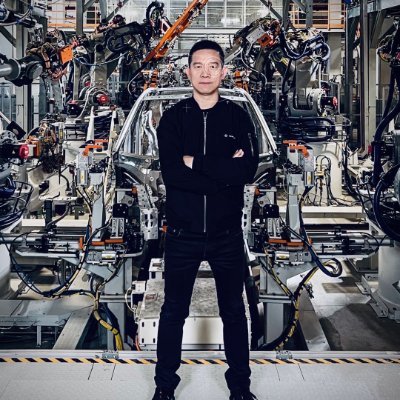
Investor Weekly Report 066 $FFAI FF Launches "Built in USA" Acceleration Program; FCC Policy Creates New Opportunities as July Robot Sales Reach Another Record High ① FCC Policy Creates New Opportunities for FF; Company Launches "Built in USA" Acceleration Program ② July Robot Sales Reach Another Record High, Accelerating...

223,799 görüntüleme • 9 gün önce •via X (Twitter)

0 Yorum

Yorum bulunmuyor

Orijinal gönderinin yorumları burada görünecek

Benzer Videolar

🔥 JUST IN: Open-source robotics dataset from 100% real-world scenarios! 🤯 Chinese robotics company AGIBOT just released AGIBOT WORLD 2026, an open-source dataset systematically covering key embodied AI research directions. Built entirely from real-world environments: commercial spaces, and homes. Collected using AGIBOT G2 robots in free-form collection mode, providing structured, accurately annotated, high-quality data. Digital twin technology creates 1:1 scale replicas in simulation matching the real environments. Both real-world and simulation data are open-sourced. The AGIBOT G2 platform collects multiple data types simultaneously: RGB(D) cameras, tactile sensors, force sensors, LiDAR, IMU, and full-body joint states. Whole-body control coordinates arms, waist, and hands for complex tasks. First-person teleoperation lets operators control the robot from its perspective. The tasks covered are fine-grained manipulation, ultra-long-horizon tasks, spatial navigation, dual-arm coordination, and multi-agent/human-robot collaboration. The dataset includes error-recovery trajectories with annotations. Most datasets only show successful demonstrations. AGIBOT includes failures and how the robot recovers, teaching models how to handle mistakes. After collection, data is tested through policy training and real-robot deployment to ensure quality. Then processed through industrial quality control with multiple screening and cleaning rounds. Making it open-source accelerates embodied AI research by giving researchers access to high-quality real-world robot data at scale. 🇨🇳 Learn more here: ~~ ♻️ Join the weekly robotics newsletter, and never miss any news →

Lukas Ziegler

40,583 görüntüleme • 4 ay önce

China's humanoid robotics market is on fire. With orders expected to top 30,000 units this year—a tenfold jump from 2024's total of less than 3,000—2025 is officially shaping up to be the "Year of Mass Production." This surge, driven by an expansion into new sectors like industrial manufacturing, logistics, and elder care, is reflected in a wave of new deals across the industry. Here's a look at some of the key commercial progress: Astribot: A 1,000-unit order for industrial and logistics deployment over two years. TianTai Robotics: Signed a major 10,000-unit order for caregiving robots. Noetix Robotics : Received over 2,000 intent orders in one month, valued at over 100 million yuan, with a focus on education and commercial performances. AgiBot: Expects to ship thousands of units this year and tens of thousands in 2026. Unitree Robotics: Has orders for thousands of units and is one of the most visible products in the industry. UBTech: Aims to deliver 500 industrial humanoids in 2025, with educational robot orders already exceeding 300 units. Robot Era: Delivered over 300 units by July 2025 with 500 more on hand. TLIBOT: Has around 1,000 intent orders. Galbot: Secured orders for its supermarket security robot, Galbot, in 100 stores. AI² Robotics: Has nearly 500 orders for its general-purpose robots for industrial and public service scenarios. But here’s the crucial reality check. While the order boom is exciting, it doesn't automatically translate to fulfilled deliveries. Many companies lack the production capacity to keep up. A significant portion of these are "intent orders" or framework agreements, not guaranteed sales. Furthermore, the market is heavily B2B-focused, with consumer demand representing only about 5% of sales. Some orders are even symbolic, for public relations or strategic purposes. This “order frenzy” is a starting point, not the finish line. The true test for China's humanoid robot industry isn't who can secure the biggest order, but who can consistently deliver on it and build a stable market for the future.

RoboHub🤖

199,146 görüntüleme • 11 ay önce

🚨 BREAKING: Indian robotics company Unbox Robotics raises $28M Series B! Unbox Robotics just closed a $28 million Series B led by ICICI Venture and Redstart Labs (Infoedge), with participation from F-Prime, 3one4 Capital, Navam Capital, Force Ventures LLP, and other existing investors. The Pune-based company builds modular robotic systems for warehouse and logistics operations. Their platform combines proprietary swarm-intelligence software with modular 3D robotic sortation hardware, allowing large fleets of robots to coordinate dynamically and scale throughput with minimal fixed infrastructure. The funding will be used to strengthen leadership and engineering teams, accelerate new product development, and expand market presence across India and select international markets. The company also created meaningful liquidity for employees through its ESOP program as part of the transaction. Unbox Robotics has built a growing customer base across Europe, the United States, and India, supporting global e-commerce, retail, and third-party logistics operators. The supply chain robotics market is heating up. With labor shortages, rising fulfillment costs, and demand for faster delivery, companies like Unbox that can deploy modular, software-driven robotic systems are in the right place at the right time. P.S. India producing robotics companies that compete globally in warehouse automation is a sign of how the robotics ecosystem is maturing beyond just the U.S., Europe, and China. 🇮🇳 ~~ ♻️ Join the weekly robotics newsletter, and never miss any news →

Lukas Ziegler

87,907 görüntüleme • 6 ay önce

China unveils humanoid robot worker with brain that runs 275 trillion ops/sec | Jijo Malayil, Interesting Engineering In tests, SUYUAN used vision and joint control to sort and move crates of various sizes, greatly improving warehouse productivity. Chinese manufacturing firm Shanghai Electric has unveiled its first self-developed industrial humanoid robot, “SUYUAN,” marking a major milestone in its robotics journey. Debuting at the World Artificial Intelligence Conference (WAIC 2025) on July 26 in Shanghai, SUYUAN boasts 38 degrees of freedom and 275 TOPS of on-device computing power, enabling precise operations and fluid movements. According to the firm, designed for diverse industrial use, the robot showcases Shanghai Electric’s end-to-end capabilities—from core tech to integrated solutions—and reinforces its commitment to next-gen industrial automation through a full industry chain strategy. At WAIC 2025, Shanghai Electric also unveiled a new joint venture with Johnson Electric for next-gen humanoid robotics and showcased its “LINGKE” dual-arm robot. Recently, Hangzhou-based Unitree Robotics launched the R1 humanoid with 26 joints for $5,900, showcasing athletic feats like cartwheels, running, and quick recovery. Smart factory assistant Shanghai Electric claims SUYUAN, equipped with 38 degrees of freedom (DoF) and a powerful 275 TOPS on-device computing processor, delivers fluid, human-like movements and high-precision operations across various industrial scenarios. Its advanced articulation and real-time processing capabilities make it highly adaptable, enabling smooth execution of complex tasks in dynamic work environments. SUYUAN, who weighs 110 pounds (50 kilograms) and is 5 feet 6 inches (167 cm) tall, was designed to have human-like proportions. Its 38-DoF articulation offers dexterity, allowing for both wide-range motion and sensitive manipulation. With a single arm, the robot can lift objects up to 4.4 pounds (2 kilograms) in weight and carry a total payload of up to 22 pounds (10 kilograms). With a walking pace of 3.1 miles per hour (5 km/h), SUYUAN is ideal for environments including assembly lines, warehousing, and logistics, according to a statement. To navigate complex industrial settings, SUYUAN combines LiDAR and binocular vision for self-guided mobility. Its 275-TOPS AI processor enables rapid data analysis and integration with large language models, allowing it to understand tasks in natural language and handle objects adaptively, reports Fox 44 News. In pilot demonstrations, the robot successfully identified, picked, and relocated crates of varying sizes using advanced computer vision and coordinated joint control—delivering measurable gains in warehouse efficiency. The company claims that SUYUAN’s launch represents a major turning point in Shanghai Electric’s foray into humanoid robotics and strengthens its vertically integrated approach to industrial automation solutions. Intelligent task handling Shanghai Electric also demonstrated its most recent developments in intelligent manufacturing at WAIC 2025, introducing a new joint venture with Johnson Electric centered on next-generation humanoid robotics and showcasing the “LINGKE” dual-arm robot. With its high-precision operations, adaptive teamwork, and closed-loop data capabilities, the LINGKE robot demonstrated live talents in handling complicated production jobs. LINGKE is made to do more than just replace human labor; it uses compliant force control and bimanual coordination to relieve workers of high-intensity, repetitive jobs. According to the company, the robot enhances operational efficiency by up to five times. Its core strength lies in a Data-Model-Deployment closed-loop system that starts with operational data, followed by data cleansing, model training, live deployment, and feedback-driven optimization—enabling autonomous learning and workflow improvement. Also at the event, Shanghai Electric and Johnson Electric introduced advanced hardware modules for humanoid robots, including rotary joints, linear joints, and dexterous finger joints. These components are designed to support smooth, precise, and quiet motion performance across robotics systems, reports Stock Titan. The joint venture announced two strategic agreements: a first-unit supply deal with the National and Local Co-Built Humanoid Robotics Innovation Center (Qinglong Project) and a cooperation memorandum with Fourier Robotics. Read more:

Owen Gregorian

51,638 görüntüleme • 1 yıl önce