Загрузка видео...

Не удалось загрузить видео

На главную

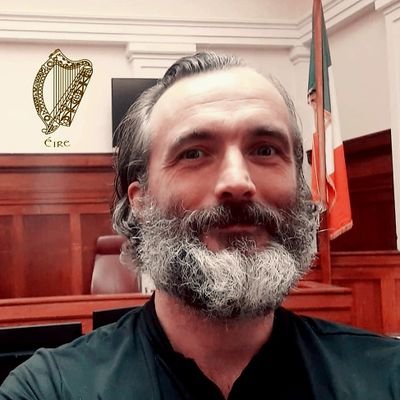
IPAS DEVELOPMENTS ARE UNCONSTITUTIONAL UNDER STATUTORY INSTRUMENT 376/2023 On the 21st of January 2021, Jack Chambers, then Minister of State, unlawfully reduced the quorum of Dáil Éireann from twenty members down to five, outside what the Constitution allows. This unconstitutional alteration undermined the integrity of all subsequent legislative acts...

24,676 просмотров • 11 месяцев назад •via X (Twitter)

Комментарии: 0

Нет доступных комментариев

Здесь появятся комментарии из оригинального поста

Похожие видео

The Constitution of Ireland begins not with government, but with the Nation—with the People themselves. That is not symbolism. That is authority. It is from the People that all power flows, and it is by our collective will that we established the Constitution as the supreme law of this State. Within it, we gave ourselves courts—not as instruments of control, but as guardians of liberty. Under Article 34, we vested those courts with a solemn duty: to protect and vindicate our personal rights. Those personal rights are not abstract ideas. They are expressly recognised and protected across the Constitution—beginning in Article 40, and extending through Articles 41, 42, 42A, 43, and 44. Together, they safeguard what it means to live freely and with dignity in Ireland: our personal liberty, our families, our children, our right to educate according to conscience, our private property, and our freedom of religion. These rights do not exist at the pleasure of the State. They do not depend on policy, preference, or administrative convenience. They are fundamental, and they are inalienable. What we are witnessing at this moment is something profoundly serious. A member of the Government—holding office as a Minister of State, an office that exists only by statute—has purported, through a statutory instrument, to prevent the People of Ireland from exercising their constitutional rights in their own courts. That cannot stand. No statutory instrument can override the Constitution. No minister, junior or otherwise, can suspend fundamental rights. No act of secondary legislation can lawfully obstruct access to the courts where those rights are vindicated. To suggest otherwise is not merely mistaken—it is constitutionally impossible. The courts do not belong to the executive. They do not belong to departments. They belong to the People, because the Constitution says so. And so, this is where the line is drawn. The Constitution is not optional. Fundamental rights are not negotiable. Access to justice is not a privilege to be rationed. Tomorrow, the law will be laid plainly before the Minister for Justice—not in defiance, but in fidelity to the Constitution; not in anger, but in duty to the People; not for personal grievance, but for the protection of all. Because if fundamental rights can be restrained today, they can be extinguished tomorrow. And if we do not stand now, we leave our children standing alone later. This is not about power. It is about principle. It is about ensuring that the Constitution lives—not on paper, but in practice. And it is about the furtherance of our fundamental rights, so that we may protect ourselves, our families, our children, the way we educate our children, our private property, and our religion—today, and for generations to come. #NoFeeOnGuarantee

Patrick McGreal

11,354 просмотров • 8 месяцев назад

The carnyx is an ancient musical instrument that best-known to have been used by the Celts during the Iron Age. Between 300 BC and 200 AD, the carnyx was used in many parts of Europe. In the ancient literary records, the carnyx is most commonly depicted as an instrument that accompanied Celtic warriors when they went into battle. Apart from literary sources, references to the carnyx have also been found on pieces of art and coins. Lastly, remains of this musical instrument have occasionally been found during archaeological excavations. The carnyx may be described as a type of war trumpet. This instrument was a valveless horn that was made of beaten bronze, and can be easily recognized due to its ſ-shape. Another distinct feature of the carnyx is its bell, which often depicts the head of some animal. Such animals include boars, dragons, serpents, birds and wolves. The bells of the carnyx were fashioned after these animals so as to strike fear into enemy warriors. Additionally, some bells were made with joints at the jaws, which would cause the animal’s head to move when the instrument was blown, thus adding to the psychological effect it had on the enemy. Whilst the sight of the carnyx struck fear into the hearts of the enemy, it was the sound of it, which has been described as lugubrious and harsh, that probably had a greater impact on enemy morale. It may be pointed out that it is unlikely that we will ever know how their carnyces had sounded. Nevertheless, it is possible to recreate this instrument, given that some of them have been found during archaeological excavations, and perhaps achieve a slightly better understanding of how this instrument worked. One example of a carnyx that has survived is the Deskford Carnyx, which was discovered in Deskford in Banffshire, Scotland. Only the head of this instrument was found, and it has been speculated that it had been buried as a votive offering to the gods. Although this instrument did not survive in its entirety, it provided enough information for a replica to be made. In order to recreate the rest of the carnyx, parallels, most notably artistic depictions from elsewhere in Europe were consulted. As a result, it is possible for us to hear the kind of sound a carnyx may have emitted when it was played. Nevertheless, the Deskford Carnyx is only one example of such an instrument. Prior to 2004, the remains of only five carynces were known. These instruments were found in Scotland, France, Germany, Switzerland and Romania respectively. In November 2004, a deposit of seven carynces was unearthed at Tintignac, a Gallo-Roman site at Tintignac in the Corrèze region of southern France. One of these carnyces had a bell in the shape of a serpent’s head with huge ears. A recreation of this carnyx was also made, and the sound produced by this instrument was quite different from that of the Deskford Carnyx. Thus, it has been shown that there were different types of carnyces in existence. Additionally, the carnyx from Tintignac also forced experts to re-evaluate the way that this instrument was played. Prior to its discovery, it was thought that the carnyx was held vertically, as depicted in some pieces of ancient art. The carnyx from Tintignac, however, had a completely straight tube, as opposed to other carnyces which had a slight bend at the mouth end of the tube. This meant that the carnyx from Tintignac was most likely played more or less horizontally, rather than vertically. This has led to the speculation that the carnyx, though traditionally associated with warfare, may have had a ritualistic function, and had been used for other occasions, such as feasts, funerals and weddings, as well. #archaeohistories

Archaeo - Histories

13,852 просмотров • 8 месяцев назад

Our attention has been drawn to public remarks by the Controller of Budget suggesting that certain public funds fall outside any framework of oversight and accountability. This characterisation is inaccurate and requires clarification. The mandate of the Office of the Controller of Budget is defined by Article 228 of the Constitution and the Controller of Budget Act, 2016. Under Article 228(4), the office authorises withdrawals from public funds under Articles 204, 206 and 207 — the Equalisation Fund, the Consolidated Fund and County Revenue Funds — and, under the Act, from any other public fund that an Act of Parliament expressly places under its approval. In every case, Article 228(5) requires only that she confirm the withdrawal is authorised by law. The funds referred to in the interview were established by their own legislation, each with defined mechanisms for management, withdrawal and audit. They remain fully subject to the oversight of the Auditor-General and Parliament. To suggest that money lawfully appropriated and administered under an Act of Parliament is beyond scrutiny is to misstate both the law and the facts. The Controller of Budget is an independent constitutional office, and Government respects that independence. Independence, however, is exercised through the constitutional and statutory instruments provided — reports to Parliament and lawful approval of withdrawals — not through public commentary that mischaracterises the legal framework. Where any office holder believes their mandate should be widened, the proper avenue is the legislative process. Government notes that amendments to the Public Finance Management Act to expand oversight of funds and levies outside existing budget channels are already before Parliament, and it welcomes that debate on its merits

Hon. Aden Duale, EGH

187,286 просмотров • 1 день назад

Sri Amit Shah Ji Having worked with you for sometime in Central Govt, I can vouchsafe that out of all the top leaders in the Central Govt you are the most Hindu-minded. I have publicly congratulated you for your bold actions on Article 370 & CAA. Yet, in the last 9+ years of BJP rule in the Centre, public celebration of Hindu festivals are being banned and criminalised directly or by resorting to various subterfuges including through court orders. What kind of #Hindutva is this Sir, that your Governments at Centre and in States violate with impunity Article 25 of Constitution which gives fundamental right of freedom to profess and practice religion by public celebration of Hindu festivals by banning them on the specious ground of public order? Is that action of denial of fundamental right of Hindus on that spurious ground, not an admission of the utter failure and incompetence of your BJP Central and State Governments to maintain public order? By continuous denial of rights of Hindus for years to publicly celebrate their festivals, are your Central and State Governments not normalising their criminal negligence and utter incompetence in not upholding the Constitution? If this is not breakdown of constitutional governance, then what else could it be? On the contrary, your BJP Central and State Governments facilitate blocking of even public roads, highways, railway tracks etc for public celebration of Muslim festivals. What kind of secularism is this that the Central and State Governments deny majority Hindus the right to publicly celebrate their festivals while providing all sorts of facilities to so called minority Muslims to even block roads and public places to celebrate their festivals? It is time for the RSS and BJP to introspect about their virulently anti-Hindu stances and actions which have surpassed the actions of all other parties in the past 9+ years.

M. Nageswara Rao IPS (Retired)

16,989 просмотров • 3 лет назад

THE CONVERSATION BEGINS HERE: What does the law provide about demonstrations? 1. Article 37 of the Constitution provides that every person has the right to PEACEBLY and UNARMED to assemble, to demonstrate, to picket, and to present petitions to public authorities. 2. The right to assemble demonstrate, picket and present petitions to public authorities is hence exercisable under Article 37 of the Constitution under two conditional precedents which must be met: PEACEBLY and UNARMED. Have the maandamano we have witnessed being done PEACEBLY and by UNARMED persons? 3. Suffice it to note that the right to assemble, demonstrate and to picket is not an absolute right. 4. Article 24 of the Constitution provides that the right to assemble, demonstrate and to picket is one of the rights that can be limited vide legislation to ensure that the enjoyment of rights and fundamental freedoms by any individuals does not prejudice the rights and freedoms of others. Have the maandamano not taken away the right to property of Kenyans with the mass destruction not only of private property but public property? 5. Article 259(1)(b) of the Constitution provides that the Constitution shall be interpreted in a manner that advances the rule of law, and the human rights and fundamental freedoms in the Bill of rights. To what extent do the maandamano fall within the defined parameters of the Constitution in particular the Bill of Rights? Is looting, destruction of property, anarchy and hooliganism the definition of demonstrations? Certainly not. These are purely criminal acts that have no constitutional basis! The conversation should begin here.

Hon. Aden Duale, EGH

101,334 просмотров • 3 лет назад