Video yükleniyor...

Video Yüklenemedi

Ana Sayfaya Dön

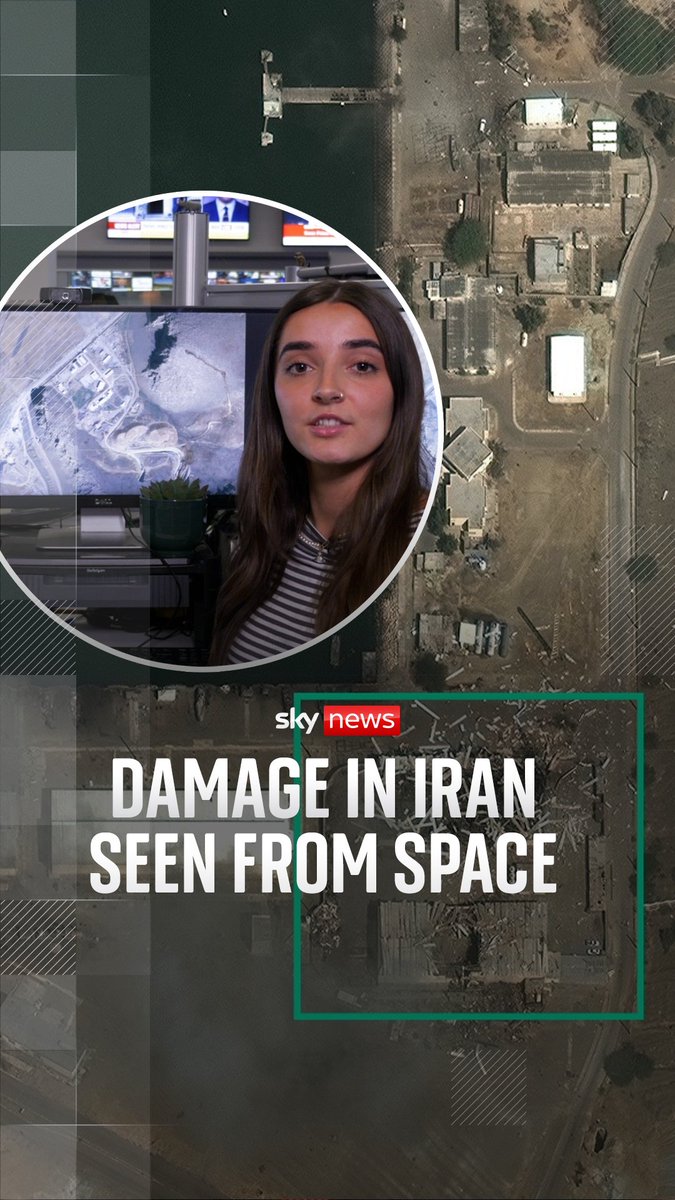
Iran Before and After The published satellite images by Maxar have provided the clearest visual record of the consequences of Israeli strikes on key facilities of the Iranian nuclear program. The images clearly show damage to entrances, hangar ceilings, ventilation shafts, ground-based power and auxiliary structures. However, there are...

12,105 görüntüleme • 1 yıl önce •via X (Twitter)

0 Yorum

Yorum bulunmuyor

Orijinal gönderinin yorumları burada görünecek

Benzer Videolar

🇺🇸🇮🇷🇮🇱 Satellite images of Iran's missile bases, which continue to be subjected to airstrikes - Missile base south of Isfahan. A photo dated March 3 shows traces of strikes around two tunnel entrances. It's unclear whether they collapsed as a result of the strikes. - Missile base in Qazvin. The photo shows destroyed buildings on the surface and two destroyed vehicles. - Missile base north of Kermanshah. All buildings on the surface were destroyed, and the tunnel entrances were damaged. Traces of strikes are also visible on the road, but it's unclear what was the target. - Missile base south of Tabriz. Recently built radar domes and auxiliary buildings were destroyed, and the tunnel entrances were damaged. Numerous craters are also visible along the roads. - Missile base in Dezful. Buildings on the surface were destroyed as a result of strikes. - Missile base in Bid Kaneh. The tunnel entrances were subjected to strikes with anti-bunker munitions. The checkpoint and auxiliary buildings were destroyed. Scattered craters indicate strikes on launchers. - An updated photo of the missile base north of Isfahan. The destruction of launchers, likely leaving the underground part of the base, continues. The photo shows traces of fuel spills from at least two destroyed launchers. - An updated photo of the missile base in Khorramabad, which was subjected to repeated strikes. This time, it seems that the tunnel entrances were the target. It's unclear whether anti-bunker munitions were used, but after the repeated strikes, the entrances suffered serious damage. Traces of a strike on one launcher were also found. - Missile base in Yazd. The targets of the strikes were the tunnel entrances. Auxiliary buildings were destroyed. Craters along the road indicate attempts to strike the launchers, but it's hard to say whether they were successful. - Missile base in Lorestan. Traces of strikes on the tunnels are visible, and most of the auxiliary buildings were destroyed or suffered significant damage. Traces of strikes are visible on the roads - likely in an attempt to hit the launchers.

Lord Bebo

75,808 görüntüleme • 5 ay önce

‼️‼️ #BREAKING 🛰️ 🇮🇷 Satellite images of Iran’s underground missile bases have been released, showing continuous airstrikes carried out with bunker-penetrating bombs. As a result, while during the first two days of the war the Iranian regime was launching hundreds of ballistic missiles, that number has now dropped to only several dozen per day, sometimes not exceeding 15–18 launches. 🎯 Geography of the strikes: ▪️ Missile base south of Isfahan: Satellite imagery dated March 3 shows strike marks at two tunnel entrances. The damage was likely caused by GBU-31 BLU-109 one-ton bunker-penetrating bombs, which appear to have pierced the ground and collapsed internal tunnel exits. ▪️ Missile base in Kashan: Images show destroyed surface buildings and two destroyed vehicles. ▪️ Missile base north of Kermanshah: All surface structures are destroyed, and the tunnel entrances were likely damaged. A strike mark is visible on a nearby road, though the intended target is unclear. ▪️ Missile base south of Tabriz: The radar station domes and auxiliary structures of a recently built facility have been destroyed, while tunnel entrances are damaged. Numerous explosion craters are also visible along nearby roads. ▪️ Missile base in Dezful: Airstrikes destroyed surface infrastructure and buildings. ▪️ Missile base in Bid Kaneh: Tunnel entrances were struck with bunker-penetrating munitions. The checkpoint and support buildings have been destroyed. Scattered craters indicate strikes against missile launchers. ▪️ Updated imagery from the base north of Isfahan: Strikes continue against launch systems likely emerging from underground facilities. Fuel spill traces are visible from at least two destroyed launchers. ▪️ Updated imagery of the Khorgu missile base after repeated strikes: Tunnel entrances appear to have been the primary target. It remains unclear whether bunker-penetrating weapons were used, but the entrances suffered significant damage. Evidence also shows one destroyed launcher. ▪️ Missile base in Yazd: Strikes targeted tunnel entrances, while support buildings were destroyed. Craters along nearby roads indicate attempts to destroy mobile launchers, though their effectiveness is uncertain. ▪️ Missile base in Lar: Strike marks are visible on tunnel entrances, while most auxiliary buildings are destroyed or heavily damaged. Additional strike marks on nearby roads suggest attacks on missile launch systems.

NSTRIKE

12,562 görüntüleme • 5 ay önce

Air Force strikes in Iran tonight: 40 fighter jets attacked dozens of military targets with more than 100 munitions The IDF attacked a non-active nuclear reactor in the Arak region of Iran. During the night, 40 Air Force fighter jets, under precise intelligence guidance from the Intelligence Department, attacked dozens of military targets in Tehran and other areas throughout Iran with more than 100 munitions. As part of the wave of attacks and as part of the IDF's extensive operations to damage the Iranian regime's nuclear weapons program, the nuclear reactor in the Arak region of Iran was attacked, including the structure that seals the reactor, which is a main component in plutonium production. Construction of the reactor began in 1997 but was not completed due to the intervention of the international community. The reactor is designed to produce high-yield plutonium, which would enable the acquisition of nuclear weapons. In light of various agreements, in recent years the Iranian regime has promoted the conversion of the reactor to one with a low plutonium production potential, which would not allow the acquisition of nuclear weapons. The regime deliberately ordered that it not complete the conversion, which would have prevented its use as a nuclear weapon, in order to create pressure on the West. The attack was carried out against the component intended for producing plutonium, thus preventing its ability to be reused to produce nuclear weapons.

Mossad Commentary

318,153 görüntüleme • 1 yıl önce

The IDF has Launched a Preemptive Strike Against Iran's Nuclear Program, Israeli military spokesperson Effie Defrin: For years, the Iranian regime has been waging a direct and indirect campaign of terror against the State of Israel, by funding and directing terrorist activities via its proxies across the Middle East, while advancing toward obtaining a nuclear weapon. The Iranian regime is at the head of the axis responsible for all terrorist attacks against the State of Israel since the beginning of the "Swords of Iron" War, including by arming and funding the Hamas terror organization which was responsible for the October 7th Massacre. During the "Swords of Iron" War, Iran even directly attacked Israel twice, firing hundreds of missiles toward the State of Israel. The Iranian regime has proclaimed that its objective is to destroy the State of Israel. Senior officials in the Iranian regime have publicly declared their intent to destroy Israel, and are operating to achieve this together with their proxies in the Middle East. Today, Iran is closer than ever to obtaining a nuclear weapon. Weapons of mass destruction in the hands of the Iranian regime are an existential threat to the State of Israel and a significant threat to the wider world. The State of Israel will not allow a regime whose objective is to destroy the State of Israel to obtain weapons of mass destruction. The IDF has conducted a process of preparations for a campaign on the frontline and on the home front. The resilience of Israel's citizens will be an important factor of the campaign. The IDF is ready to continue to act as required. The State of Israel has the obligation to act in defense of its citizens and will continue to do so everywhere it is required to do so, as we have done in the past.

Joe Truzman

15,336 görüntüleme • 1 yıl önce