Video yükleniyor...

Video Yüklenemedi

Ana Sayfaya Dön

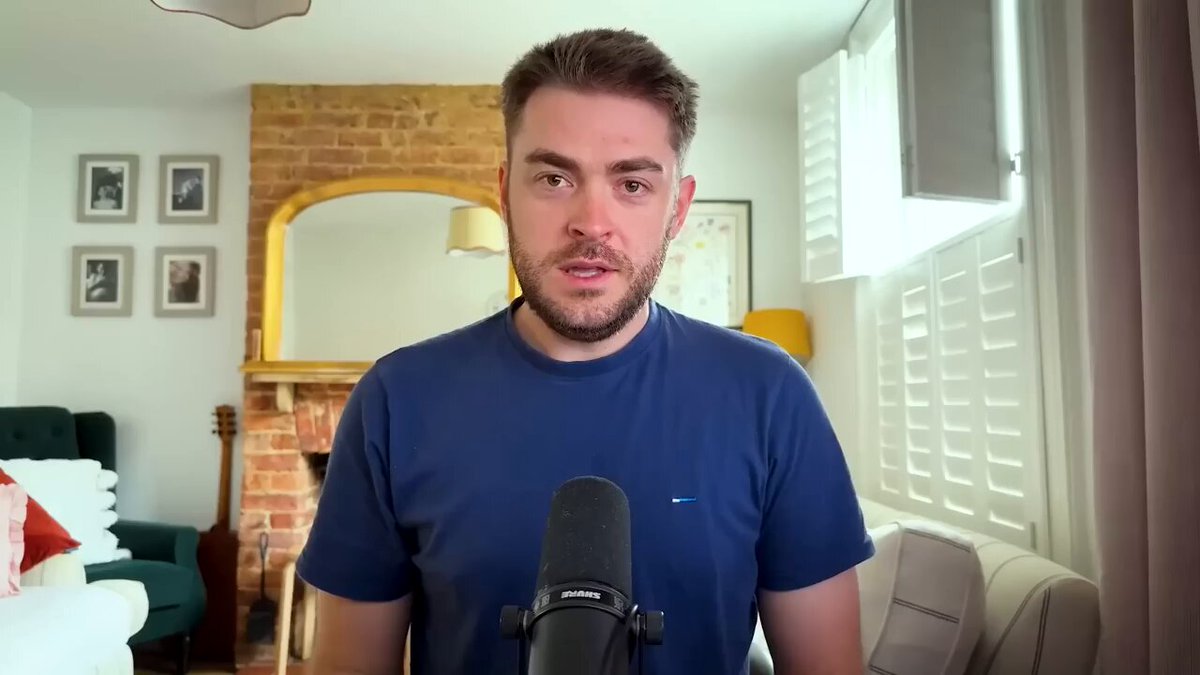
Is Bittensor the next Bitcoin? Barry Silbert shares his views 👇 📽️ The Incenτive Layer 📅 Documentary launching 29th of October! 'Big week' A documentary made possible by: Openτensor Foundaτion taostats τ Laτenτ Holdings 𝗗𝗥𝗘𝗔𝗗 𝗕𝗢𝗡𝗚𝗢 @tao_dot_com Yuma $TAO #theincentivelayer
51,498 görüntüleme • 10 ay önce •via X (Twitter)

0 Yorum

Yorum bulunmuyor

Orijinal gönderinin yorumları burada görünecek

Benzer Videolar

We’re back for Episode 14 of TAO Talk 🚨 calanthia from Masa joins 563 and brody this week to chat about new subnets and AI agents sourcing intelligence from Bittensor! The group chats about: - $TAO -pilling AI/ML chads at NeurIPS Conference feat. const Crucible Labs Macrocosmos Manifold and Yuma - JJ teaming up with Cameron Fairchild to form Laτenτ Holdings, which will validate and help scale subnets - Crucible Labs drops a subnet analysis framework - Celium offering H100s cheaper than any other provider - Tao360 releases inaugural research report for their AI-enabled subnet analysis tool @notYourBananaa - Masa unveils the AI Agent Arena on SN59 /// Timestamps: 00:00 Intro 01:10 Subnet 42 and Agent Arena: Masa’s Subnets 03:00 Real-Time Data Networks for AI 04:20 How Masa is Building AI Agent Arenas Inspired by Gladiators 06:10 Decentralized AI and Bittensor: The Growing Ecosystem 08:15 AI Meets Web3: Masa’s Role in Revolutionizing Data Networks 10:00 The Future of AI Agents: Intelligent Societies and Real-Time Data 12:05 Why Masa Chose Bittensor 14:10 $TAO Incentives and the Future of AI Decentralization 16:25 Bittensor and the Rise of Agent Competition: Masa’s Perspective 18:00 Exploring AI Agent Societies 20:30 Creating Competitive AI Arenas: The Agent Arena Subnet Explained 23:00 Calanthia on the Challenges of Web3 AI Development 25:10 Bringing Web2 Developers into Web3: Lessons from Masa 27:30 The Evolution of AI: From Dumb Agents to Intelligent Societies 30:00 AI Agents as the Future of Interaction in Decentralized AI 34:00 The Agent Arena’s Vision: Competition, Incentives, and Innovation

TAO τalk 🥩🦍

24,929 görüntüleme • 1 yıl önce

A billionaire trader has spent 40 years trying to delete a one-hour documentary. It shows him making $100 million in a single afternoon. He predicted the crash that made it possible three months in advance. He has never explained why he wants the film gone. His name is Paul Tudor Jones. The film is on YouTube. The documentary is called "Trader." PBS filmed it in 1987, three months before Black Monday. Jones was 32 years old, working from a small New York office, wearing shorts and a t-shirt, yelling at his phones, throwing paper across the room, and sleeping under his desk. The film captures him and his research partner Peter Borish overlaying a chart of the 1929 market on 1987, month by month. The two charts tracked within one percent. Borish said this is exactly what happened in 1929. Jones said if the analog holds, October is when it breaks. On October 19, 1987, the Dow fell 22.6 percent in a single day. It remains the largest one-day percentage loss in stock market history. That afternoon, Tudor Jones covered his shorts and made roughly $100 million. He was 33 years old. He was one of the very few traders on the street who came out ahead. He tried to bury the tape because it made him look reckless in a professional world that punished swagger. Twenty years of legal effort did not delete it. Someone kept a copy. It is on YouTube. It has fewer views than most makeup tutorials. The film is not really about a crash. It is about a specific philosophy of trading. Jones is shown building conviction slowly, sizing carefully, then striking hard when the setup arrives. He is never once shown making a random bet. He is shown doing the same thing five times a day, every day, for three months. His signature line, repeated across a 45-year career: "The most important rule of trading is to play great defense, not great offense." He does not try to be right. He tries not to lose. He sets stops tight, cuts positions fast, and never averages down on a loser. Every trade in the film follows this template. Tudor Investment Corp, the fund he founded in 1980, has compounded at roughly 19 percent a year for 45 years. He is 71 years old and still trading. His method has not changed since the film. The lesson: greatness in markets is a refusal, not a talent. Refusal to be reckless. Refusal to be certain. Refusal to average down. Refusal to trust yourself in a drawdown. Tudor Jones has refused those refusals for 45 years. The tape is free. The philosophy is repeated in every trade. Most traders will never watch it.

Veles

3,630,605 görüntüleme • 1 ay önce

Chamath was given a simple choice, 100 shares of Anthropic, 100 shares of OpenAI, 100 shares of SpaceX, pick one stack (Save this). He picked SpaceX without hesitation, and his reasoning is worth unpacking fully because it cuts to the heart of how the best investors think about technology bets. His take on OpenAI and Anthropic was actually generous. He acknowledged that Anthropic is the superior enterprise product, his own fund uses it as their foundational model and that ChatGPT has built one of the most powerful consumer brands in the history of technology. But the case for SpaceX is built on something completely different, it is not one business, but rather a platform for multiple businesses that compound off each other. Starlink generated $11.4 billion in revenue in 2025, growing roughly 50% year over year, and represented 61% of SpaceX's total $18.7 billion in revenue. The EBITDA margin on the connectivity segment hit 63%, compared to 38–39% for the largest traditional telecom companies on earth. Subscriber count went from 2.3 million in 2023 to over 10.3 million by Q1 2026, spanning more than 160 countries, and revenue is projected to reach $15.5 billion in 2026. Chamath Palihapitiya core insight is that the global communications infrastructure is profoundly broken and he is right. Roughly 2.6 billion people globally still lack reliable internet access, and even in developed markets, rural connectivity is patchy, expensive, and controlled by legacy monopolies with no incentive to upgrade. Starlink is a replacement cycle for an entire layer of global infrastructure that has barely changed in 30 years. Every maritime vessel, every commercial aircraft, every military unit, every rural hospital, every developing-world government that wants connectivity now has one viable option that didn't exist five years ago. The maritime and aviation segments alone carry ARPUs of $250 to $25,000 per month per customer, orders of magnitude above the consumer subscription. But Chamath's most interesting point is what he called embedded optionality, the idea that SpaceX's business model doesn't stop at earth. SpaceX now has the only fully reusable heavy lift rocket system in the world with Starship, and it is the only company currently capable of launching the next generation of Starlink V3 satellites that carry roughly 10 times more capacity than the current constellation. Every new market SpaceX opens on earth, direct to cell with T-Mobile, enterprise contracts, government agreements becomes a template that can theoretically be replicated the moment humans establish a permanent presence elsewhere. A Starlink equivalent for a lunar base, a Mars colony, or an orbital station is the same product with a different launch address. Anthropic and OpenAI are betting on winning a model race where the finish line keeps moving while SpaceX is betting on owning the physical infrastructure layer of the next era of human civilization, on earth and eventually beyond it. One of those bets has a floor and the other doesn't and that is why Chamath picked Elon Musk's SpaceX. Milk Road remains bullish on SpaceX and the infrastructure layer it is building around Starlink, Starship, and global connectivity. If you’ve been thinking about joining Milk Road Pro, lock in the current price using the link below before prices go up next week.

Milk Road AI

278,404 görüntüleme • 9 gün önce

BITCOIN RAILS EPISODE #17: DOMO’S SIDE OF THE STORY & the HISTORY OF BRC20 A particularly special episode—domo sits down with me for his first video interview ever—to recount the unique history of the BRC20 protocol. The first Bitcoin-native token standard ever created, BRC20 came into existence almost overnight and quickly emerged as a multibillion dollar asset class in 2024. This episode covers the influences leading up to the birth of $ORDI, the roles of different players involved along the way, and how core maintainers are preparing for their next major update—affectionately dubbed “BRC 2.0” by Bitcoin educator Bob Bodily, PhD Additionally, Domo shares his memory of key moments in BRC20 history—including: —the development of BRC20's canonical indexer and details of Domo's working relationship with UniSat - wallet, explorer & extension for bitcoin. —Ordi's listing on OKX and Binance (+ what he believes triggered listing decisions by those exchanges) —the creation of the Layer 1 Foundation and the responsibilities of its member organizations in maintaining the core protocol —why Domo has never accepted funding (including advisory fees) from either of his lead maintainer companies UniSat - wallet, explorer & extension for bitcoin. or Best in Slot | BRC2.0 🧑‍🍳 We also go into depth about what sparked the “BRC20 indexer wars” and how stakeholders are ensuring the integrity of its consensus going forward. This episode includes special mentions of major influences in the evolution of BRC20—including Robert Clarke Bitcoin Punks Sats Names Bobby Broz UniSat - wallet, explorer & extension for bitcoin. and others. This episode can be viewed on YouTube or Spotify using the linktree in Isabel’s bio—YouTube episode is also in the comments. As always, thanks to the show's sponsor Best in Slot | BRC2.0 🧑‍🍳 for making this episode possible— in addition to being a core maintainer of BRC20, Best In Slot maintains the leading API for Ordinals and BRC20 data aggregation and indexing. TIMESTAMPS: 01:04 Domo, Ethereum, and how he found Bitcoin 05:04 Why Ordinals clicked for Domo 07:58 Ordinals going from underground to mainstream 11:13 Who helped Domo ideate around Ordinals? 16:21 How did Domo announce ORDI, the “first” BRC20? 20:02 Why did BRC20 blow up so fast? 22:25 How did UniSat get involved with BRC20? 25:12 Catalysts for the BRC20/ fungibles boom 26:35 When did BRC20 get good pricing data? 29:00 Domo’s stresses during the ORDI blowup 31:34 How involved was Domo with UniSat early on? 35:00 Exchanges instantly deciding to list ORDI 37:38 How did Best In Slot start indexing BRC20s? 41:48 Centralization of indexers 44:18 Coordinating indexers around Ordinals forks 47:25 Relaunching the Layer 1 Foundation 49:25 The relationship between Domo, UniSat, and Best In Slot 51:02 Upgrading BRC20: Swap and Programmability Module 54:55 How the programmability module came to be 57:00 “Standard Maxiness” is hurting the industry 59:00 Plugging BRC20 into everything else 01:00:50 Do programmable metaprotocols solve interoperability? 01:02:50 Metaprotocols and L2s: do they compete? 01:05:00 Does BRC20 have an advantage over the metaprotocols? 01:06:20 How should the community approach Bitcoin’s issues? 01:08:50 Competition rising in the BItcoin space 01:10:00 People are underestimating metaprotocols 01:11:55 Single step transfer for BRC20

Isabel Foxen Duke⚡️

87,165 görüntüleme • 1 yıl önce

The Bank of England spent every foreign reserve it had trying to defend the pound on September 16, 1992. One hedge fund broke it by tea time. The fund made about $1 billion in a single afternoon. UK taxpayers lost £3.3 billion. Most people credit George Soros. The man who actually built the trade was 39 and had been working on it for six months. His name is Stanley Druckenmiller. He was Soros's lead portfolio manager at Quantum Fund. He is 73 now and still trading. Druckenmiller had been watching the pound since spring. Britain had joined the European Exchange Rate Mechanism in 1990. The rules were simple. The pound had to stay pegged inside a fixed band against the German mark. If it slipped, the Bank of England had to buy pounds and raise rates to defend it. Druckenmiller saw the flaw. Britain was in recession. Germany was booming after reunification and had raised rates to fight inflation. The pound needed to fall against the mark to help the British economy. The ERM said it could not. The Bank of England was defending a peg that fundamentals said should not exist. He built a short position through the summer. Around $1.5 billion at first. Big but not enormous. On the evening of September 15, Helmut Schlesinger of the Bundesbank made comments to journalists suggesting the pound was weak. The wire hit Druckenmiller's desk. He walked into Soros's office and said this was the moment to press. Soros told him to go for the jugular. He wanted the trade sized to $10 billion. Then $15 billion. The next morning the Bank of England started buying pounds and selling marks to defend the peg. It raised rates from 10 to 12 percent at 11am. Raised again to 15 percent at 2:15pm. Neither move stopped the selling. By early evening the government announced Britain was leaving the ERM. The pound crashed. Quantum closed the trade over the next few days. Total profit around $1 billion. The Bank of England was gutted. Druckenmiller went on to compound at over 30 percent a year for 30 years and never had a losing year. The BBC documentary about the day, made in 1997, is on YouTube. The story is not really about Soros. It is about correct analysis, patience through the summer, and having a boss who tells you to size up when the setup arrives. Every trader who has read it since 1992 has looked for their version of it. Nobody has found one that big.

Veles

138,041 görüntüleme • 1 ay önce

2025 reflected a year of coordinated execution. As products expanded and new markets came online, the underlying platform continued to strengthen in step. Here’s what we built in the past 365 days 👇 Launching New Products The Gemini Credit Card evolved with the release of the Bitcoin, Solana, XRP, and American Business versions of the card, allowing our US customers to earn rewards in crypto, and additional benefits for businesses.* We launched the Gemini Wallet, giving users a powerful self-custody wallet to have more control over their digital assets and manage their finances onchain. In the European Union (EU), Gemini launched Tokenized Stocks**, bringing the world’s leading equities onto the blockchain with zero trading fees. We added Gemini Perpetuals** in the EU, putting the power of crypto derivatives with up to 100x leverage in the hands of advanced traders, and have continued to expand the number of perpetual contracts available – opening up new trading opportunities in memecoins, DeFi, and beyond. In Europe, users gained the ability to stake*** their ETH and SOL, unlocking the potential to earn rewards of up to 6% APR**** on their holdings. In Singapore, we launched Index Perpetual Contracts and expanded the available cross collateral funding options. We also made funding faster for Singapore users by adding PayNow and FAST. We introduced USD rails to our UK institutional customers, giving them more flexibility in the ways they can trade. Institutional Leadership We strengthened our leadership in institutional custody, including custodying Empery Digital’s $500 million BTC placement and facilitated their bitcoin purchases and derivatives trades. We also introduced the ability to stake SOL from custody for our institutional partners. We worked with Glassnode to produce the Bitcoin Adoption, Volatility, and Market Cap report, showing that bitcoin treasuries now control nearly a third of Bitcoin’s total supply. Company Milestones & Regulation After an IPO on the Nasdaq stock exchange in September, Gemini became a publicly traded company. This year also marked a turning point for Gemini’s global ambitions. In October, Gemini launched in Australia and became AUSTRAC registered to bring industry-leading crypto tools to users down under. We also expanded further into the country by adding AUD banking rails for faster payments and deposits. We opened new offices around the world, including London, hosting an opening party with people from across the industry to celebrate. We also grew our customer service operations with a new office in Scottsdale, Arizona. In the EU, we obtained our Markets in Crypto Assets (MiCA) and Markets in Financial Instruments Directive II (MiFID II) licences, allowing us to bring our services to millions more across the region. Fostering a Global Community From DAS New York and Paris Blockchain Week, to TOKEN2049 in Singapore and the Australian Crypto Convention in Sydney, the Gemini team met local communities around the world. In March, we set a Guinness World Record for the largest aerial display of a currency symbol with a drone show at South by Southwest in Texas. In May, we teamed up with MARA Holdings to mine the Bitcoin “pizza block”, a tribute to the first real-world purchase using bitcoin. At BTC Vegas, we gave orange Tesla Cybertrucks to two lucky winners, while at BTC Amsterdam, we awarded a custom Bitcoin Apex Flare 4 Bike to a new customer. We left our mark on Amsterdam too, by biking around the city in the shape of a Bitcoin “₿” and decking out the city’s trams with our signature colors. The Gemini team also headed to Real Bedford football club to give out free pizza and merch to fans at the final match of the season, and celebrated the team’s promotion to Premier Division Central. Looking to the Future As we look to 2026, our focus has never been clearer. We plan to build on the successes of this year and continue offering secure and reliable access to digital assets, by pushing further with new product launches, deepened institutional ties, and an expanded presence in the EU and APAC. We’re proud of what we built and scaled in 2025 – and this was just the beginning. Onward and upward, Team Gemini Full recap here: * Gemini-branded credit products are issued by WebBank. ** Perpetuals and Tokenized Stocks are offered by Gemini Intergalactic EU Artemis, Ltd, which is authorised and regulated by the MFSA under the Investment Services Act to offer certain services under the Markets in Financial Instruments Directive (MiFID II) to institutions and traders. Perpetuals and tokenized stocks are complex instruments that carry a high risk of loss and are not appropriate for all investors. You should consult a licensed advisor before engaging in any transaction. Tokenized stocks are manufactured by Dinari, Inc. *** Staking services are offered by Gemini Intergalactic EU, Ltd., but are not regulated activities and are not subject to regulatory oversight, conduct of business rules, or investor protection requirements established under Markets in Crypto Assets Act. **** APRs are indicative only and may change at any time. All investments involve risk, including possible loss of capital. For more information, please refer to your User Agreement with the relevant Gemini entity.

Gemini

45,129 görüntüleme • 8 ay önce

I can't believe that the once richest man on earth just bet his entire empire on ONE company. And he has 9 days to pull it off. SoftBank is scrambling to deliver $22.5 billion to OpenAI by December 31st. To get there, CEO Masayoshi Son sold his ENTIRE stake in the best-performing AI stock on the planet. Then sold billions more in other holdings. Cut staff. Froze dealmaking. Borrowed against everything he owns. This is the biggest all-in bet in the past few years. And it might be the most reckless financial engineering since 2008. Here's what's actually happening: SoftBank promised OpenAI $40 billion back in April when the company was valued at $300 billion. The deal had conditions. OpenAI had to convert to a for-profit structure by year-end. They did that in October. Now the clock is ticking. $22.5 billion must arrive in 9 days or the deal breaks. Son already delivered $17.5 billion earlier this year. Getting the rest is proving harder than anyone expected. The moves Son made to raise the cash are absolutely wild: He dumped SoftBank's entire $5.8 billion position in Nvidia. Not trimmed. Not reduced. LIQUIDATED. The same Nvidia that's been printing money for AI investors all year. He sold $4.8 billion worth of T-Mobile shares. Slashed staff across the company. And the Vision Fund that used to write checks for everything? Dead. Any deal over $50 million now requires Son's personal approval. Investment managers who used to hunt for the next big thing are now working full-time on the OpenAI transaction. But it still wasn't enough cash... So Son went to the debt markets. He expanded SoftBank's margin loan capacity by $6.5 billion, bringing total undrawn capacity to $11.5 billion. All of it backed by Arm Holdings stock. If Arm's stock drops, those loans get called. SoftBank faces margin calls. The whole thing unravels. And the risk gets crazier. OpenAI's valuation has tripled since April. Started at $300 billion. Now heading toward $900 billion according to sources. Amazon is reportedly joining the next round. On paper, SoftBank's investment looks brilliant. A 3X return in 8 months. But here's the thing: OpenAI is hemorrhaging cash at a rate that makes Uber's losses look responsible. The company generates $13 billion in annual revenue. Impressive... right? But they're literally projected to LOSE $74 billion by 2028. Not break even with losses. Not approach profitability. $74 billion in the red. Their revenue is growing. Their losses are growing faster. Because AI compute costs don't scale down. They scale UP. Every new ChatGPT user costs OpenAI money. Every API call burns cash. Every model training run requires millions in compute. Sam Altman told employees OpenAI is now in "code red" mode. Pausing all other product launches to focus entirely on beating Google's Gemini. That's the language of desperation. And Altman's long-term vision is even more expensive. He wants to build 30 gigawatts of AI compute capacity. Cost: $1.4 TRILLION. For context, that's larger than Mexico's entire GDP. He wants to add 1 gigawat every single week. Each gigawatt costs over $40 billion. The math doesn't work. The business model doesn't work. The capital requirements are impossible. But Son is betting everything anyway. Why would he do this? Because if it works, he owns the future. If OpenAI becomes the infrastructure layer for the next 20 years of computing, that $22.5 billion turns into trillions. SoftBank becomes the kingmaker of AI. Son becomes the most powerful investor in history. But if it fails? SoftBank vaporizes. The Nvidia stake is gone. Can't get it back. The T-Mobile shares are gone. The margin loans against Arm come due. Son has systematically dismantled his portfolio to concentrate everything into one bet. This is the opposite of diversification. This is the opposite of prudent risk management. This is a founder going all-in on a vision that everyone else thinks is insane. And he might be right. Other investors see it too. That's why OpenAI's valuation tripled in 8 months. BlackRock, Fidelity, and JP Morgan are all writing massive checks to private AI companies. Databricks just raised $4 billion at a $134 billion valuation. The entire market is betting that AI infrastructure will define the next decade. But the difference? They're diversifying. Spreading risk. Building portfolios. Son put everything on one company. The deadline is December 31st. In 9 days, we'll know if SoftBank pulled it off. If they deliver the $22.5 billion on time, the bet stays alive. If they miss the deadline, the deal could collapse. The terms could change. Competitors could swoop in. And Son will have sold the farm for nothing. This is either: The greatest venture bet in history. Or the most reckless financial move since Lehman Brothers. There's no middle ground. Masayoshi Son doesn't do middle ground. He bet big on Alibaba in 2000 and turned $20 million into $60 billion. He bet big on WeWork and lost $14 billion. Now he's betting bigger than ever. $22.5 billion. 9 days. Everything on the line. What would you do?

Ricardo

1,880,981 görüntüleme • 8 ay önce