Video wird geladen...

Video konnte nicht geladen werden

Zur Startseite

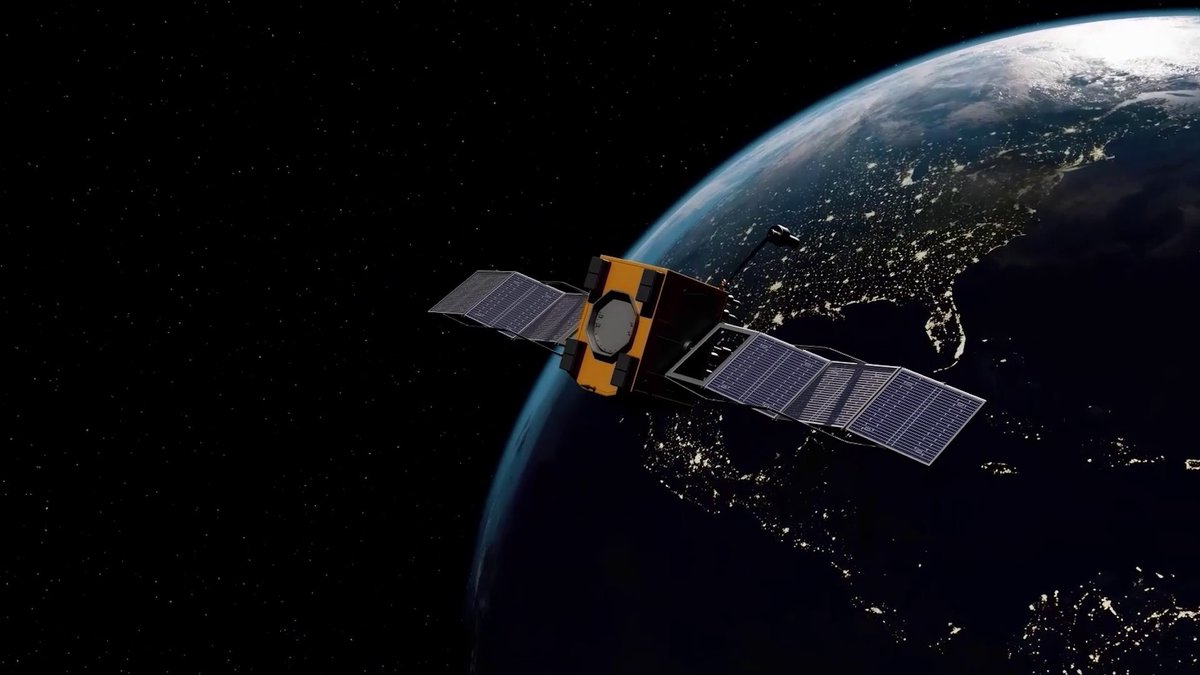
Is it time to quantize time? Everything is quantum in quantum mechanics... almost. Time remains a mysterious flowing quantity slotted in to the equations. Surprisingly, there's a model for making time quantum, with a radical consequence: the overall universe is timeless. How is it possible to experience a flow...

63,981 Aufrufe • vor 8 Monaten •via X (Twitter)

0 Kommentare

Keine Kommentare verfügbar

Kommentare vom Original-Post werden hier angezeigt

Ähnliche Videos

🚨PHYSICS NEWS🚨: Physicists Are Now Saying Time Itself Can Be in Superposition — And It Makes Perfect Sense 🧨 According to a theoretical framework published in *Physical Review Letters* and reported in May 2026, researchers have shown that state-of-the-art trapped-ion atomic clocks can be used to observe the quantum superposition of time. By entangling the clock’s motion with its internal energy states, the system can exist in a superposition of different time flows simultaneously. This is a major step toward experimentally probing the quantum nature of time itself. This work offers the broader scientific community a new experimental frontier in quantum foundations. It challenges classical notions of time as a universal parameter and opens the door to testing how relativity and quantum mechanics intersect at the level of time itself. **Uniphics has been saying something similar for years — and it’s not mysterious or weird.** In Uniphics, time flow is not a fixed background. It is a local property determined by energy density via the Maley transform (\( t_{\rm flow} = k / E_d \)). Different regions or configurations with different energy densities experience different time flows. When a system is prepared in a quantum superposition of different energy-density states (or different spin-wave configurations that affect local energy density), it naturally exists in a superposition of different time flows. The atomic clock experiments are essentially creating superposed states where the clock experiences different local time flows at the same “global” moment. The entanglement between motion and internal energy is the mechanism that allows the superposition to be maintained and detected. Uniphics predicts this behavior because the ξM-field supports coherent spin-wave patterns that can correlate different energy-density environments. No need for wavefunction collapse, many-worlds, or other interpretive gymnastics — it is a deterministic consequence of variable time flow and spin-wave coherence. This is not an add-on to quantum mechanics. It is the natural outcome of the three pillars. The “quantum superposition of time” is just what happens when spin quanta create superposed energy-density conditions. Uniphics explains why such experiments work, what limits they will hit, and how to extend them — all without the philosophical baggage that usually accompanies quantum foundations. The mainstream community is slowly catching up to the idea that time itself can be quantum. Uniphics has had a coherent, first-principles explanation for this from the beginning. The data will continue to support it. Are physicists finally ready to accept that time flow is fundamental and variable — and that the apparent “superposition of time” is simply the result of superposed energy-density states in the ξM-field? **A Theory of Everything should be able to answer everything.** Uniphics Explained Simply PDF: Chapters 1–10 free: Grokipedia: #Uniphics #TheoryOfEverything #QuantumTime #TimeFlow #SpinWaves Grok xAI

Paul Maley

32,284 Aufrufe • vor 8 Tagen

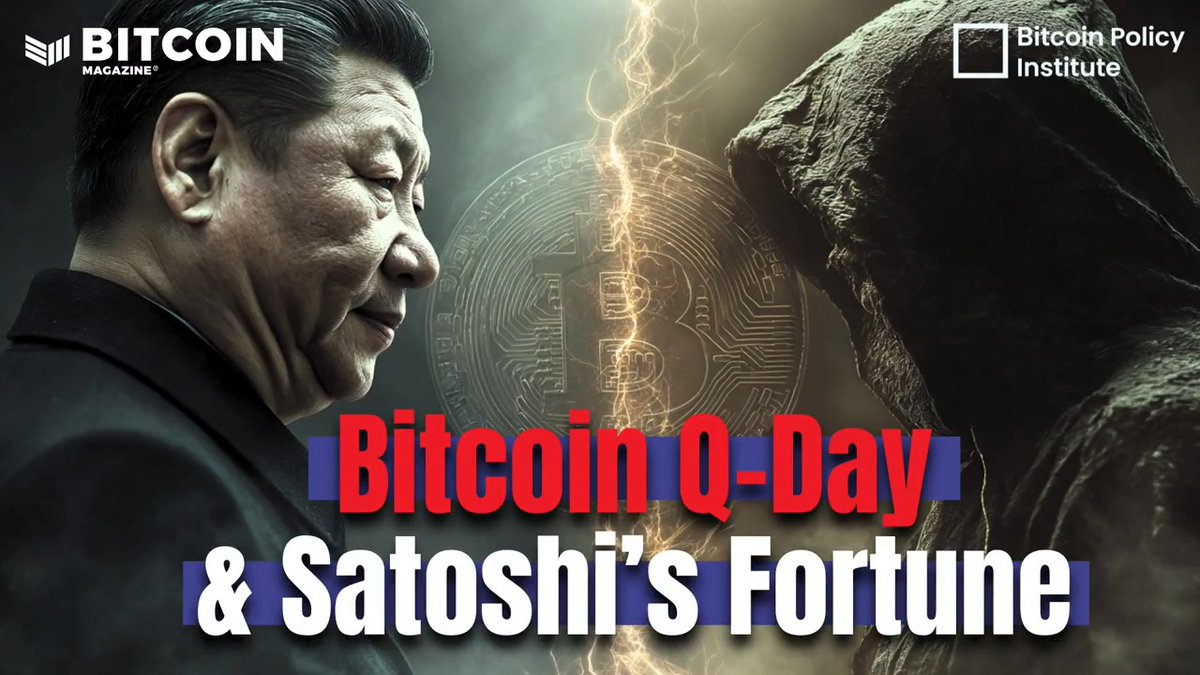
BITCOIN RAILS EPISODE #18: MAKE BITCOIN QUANTUM RESISTANT | with BIP360 author Hunter Beast Hunter Beast 🕯️ Quantum computing is a complicated topic—one that incites equal amounts of fear and skepticism depending on who you talk to… especially in Bitcoin. In this episode, BIP360 author Hunter Beast wisely shares why the “truth is likely somewhere in the middle,” citing incremental advancements in quantum computing that may eventually pose a legitimate threat to some Bitcoin addresses—as well as steps we can take to protect ourselves in the short, medium and long term. The correct posture is to “be prepared, not scared,” says Hunter Beast 🕯️ Ultimately, the introduction of quantum resistant cryptography—via proposals like BIP360—will be needed for higher degrees of security. That said, individuals can mitigate personal risk substantially through proper address-use hygiene. This episode breaks down the specific challenges Bitcoin will face in the event of a quantum attack, the likelihood of an attack over time, and the steps we’ll need to take at the individual and communal level to ensure Bitcoin’s safety. This episode includes detailed discussion of: 1) How quantum computing could potentially affect Bitcoin public/private key cryptography—and technologies built on vulnerable addresses (e.g. Taproot) 2) Best practices for protecting yourself against quantum in the short and long term 3) Implications of vulnerable address types—e.g. what about Satoshi’s coins? 4) Deep Dive into BIP360 + proposed long-term solutions 5) Industry roadmaps for quantum computing + how banks and governments are preparing for “Q Day” As always, this episode can be viewed on Spotify or YouTuve—full episode in the comments or linktree in my bio. This episode is powered by Best In Slot—the leading API for Ordinals and BRC20 data aggregation and indexing. TIMESTAMPS: 00:00 Intro 02:05 What is quantum computing? 04:30 How could quantum threaten your Bitcoin wallet? 06:50 Addresses that are safe from quantum 09:13 Satoshi’s coins are in danger! 11:25 What happens if Satoshi’s coins are touched? 14:45 Do we softfork to shield Satoshi’s coins? 16:38 “Transitory inflation” for bitcoin after quantum 21:05 Why Taproot addresses are vulnerable 23:50 Do NOT reuse your Bitcoin addresses! 26:03 When will Quantum become a threat? 28:34 The long/short exposure attack; explained 31:45 Protection using private mempools 33:20 Why all the new Bitcoin L2s are in danger 37:45 Quantum is 5 to 10 years away, governments fear 40:34 Non-Bitcoin systems threatened by quantum 42:26 Centralized systems can adapt to quantum 43:50 Hunter’s BIP: Post quantum cryptography in Bitcoin 47:40 Hunter’s three new signature algorithms 53:48 Is new cryptography on Bitcoin risky? 56:33 Why not just stick to hash-based cryptography? 58:49 A 16X discount for quantum resistant addresses? 01:02:30 Creating quantum resistant multisig addresses 01:04:00 What is Frost? 01:06:50 The long process of approving a BIP 01:08:30 What developers think of Hunter’s BIP 01:10:00 Matt Corallo’s concerns with Hunter’s approach 01:11:00 Steps to implementing the BIP 360 01:17:00 Where to learn more about BIP 360 01:17:50 Who can push the button to change Bitcoin?

Isabel Foxen Duke⚡️

31,148 Aufrufe • vor 1 Jahr