Loading video...

Video Failed to Load

Go Home

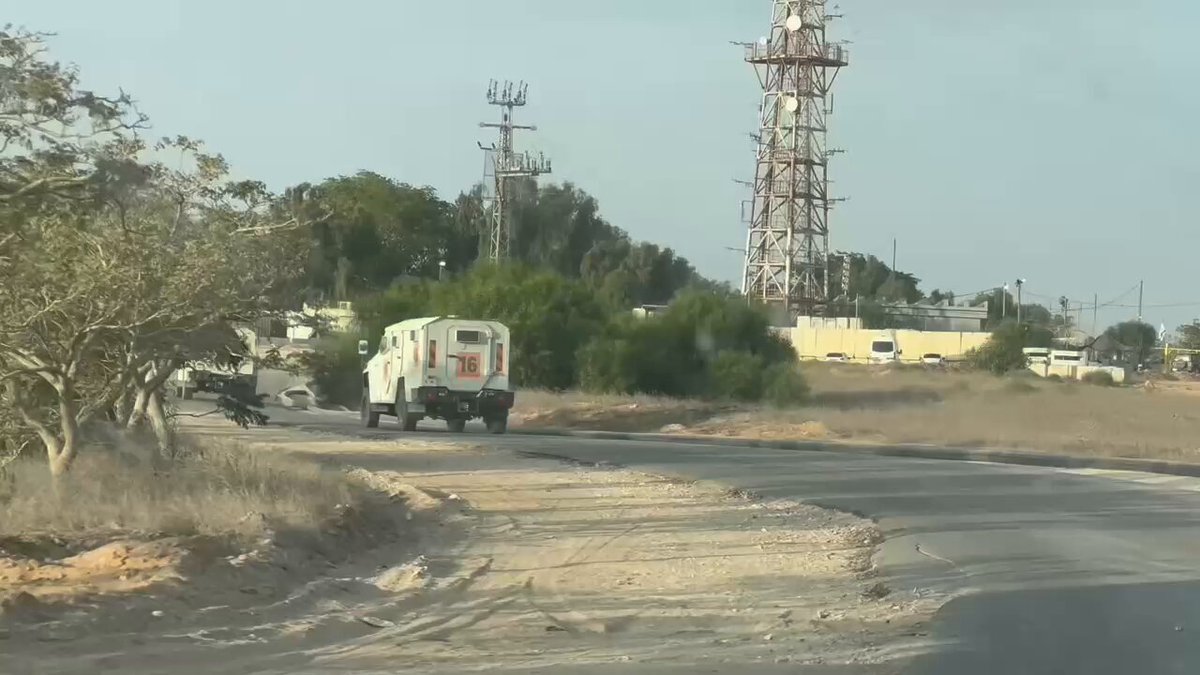
🚨🇮🇱🇵🇸 ISRAEL OFFICIALLY SUSPENDS 37 HUMANITARIAN GROUPS FROM GAZA INCLUDING DOCTORS WITHOUT BORDERS, OXFAM, AND CARE The humanitarian lifeline for Gaza is being severed at the knot. The Israeli government has officially confirmed the suspension of 37 humanitarian organizations, including global heavyweights like Doctors Without Borders, Oxfam, CARE, and...

50,110 views • 7 months ago •via X (Twitter)

0 Comments

No comments available

Comments from the original post will appear here

Related Videos

👇 Why Israel Banned UNRWA in Gaza: The humanitarian aid that is piling up in Gaza highlights the immense challenges of distributing it efficiently to those in need. UNRWA is no longer authorized to manage this aid; instead, coordination must now occur through alternative channels. While millions in Gaza face hunger and medical shortages, the disruption of aid delivery is rooted not only in the war but also in Israel’s January 2025 decision to ban UNRWA from operating in Gaza. This measure was not taken lightly—it was the result of decades of problems associated with the agency, culminating in its direct involvement with terror. Israel’s decision stemmed from concrete accusations that UNRWA employees aided Hamas in the October 7 massacre, with evidence emerging that agency staff participated in or facilitated the attack. For Israel, this confirmed a long-held suspicion: UNRWA was not a neutral humanitarian body but one entangled with terrorist organizations. The laws passed in October 2024—and enforced by January 2025—formally banned the agency from Israeli-controlled areas, including Gaza and East Jerusalem. At the same time, Israel prohibited official contact with UNRWA, severing ties altogether. But UNRWA’s problems run deeper than October 7. For decades, it has been more than an aid agency—it has been the primary body in charge of Palestinian education. In Gaza, UNRWA schools taught generations of children using textbooks filled with incitement against Israel and the Jews, glorifying violence while denying the legitimacy of Israel’s existence. This has perpetuated a culture of hatred, radicalized youth, and prepared the ideological ground for endless conflict. Instead of fostering coexistence, UNRWA entrenched division and despair. The humanitarian consequences of the ban are significant, but they must be weighed against the damage UNRWA itself has inflicted on Palestinians. In March 2025, Israel halted all UNRWA-mediated aid into Gaza. Warehouses filled with food and medicine sat unused while Gazans went hungry. To mitigate this, Israel and the United States established the Gaza Humanitarian Foundation (GHF), a new mechanism to distribute aid under military supervision. Yet its reach is still limited, covering only a fraction of Gaza’s 2.3 million people. Even these limited operations were repeatedly sabotaged by Hamas and other armed militants, who opened fire at aid distribution points—often killing the very Gazans who had gathered in desperation to receive food and medicine. By targeting humanitarian convoys and civilians alike, these groups deepened the crisis they claimed to resist. The ban also reflects a broader regional reality. While aid is desperately needed in Gaza, millions across Lebanon, Syria, and even within Israel are also in dire need of food and medicine. Israel has argued that channeling aid through UNRWA was not only unsafe but counterproductive, as it enabled Hamas to divert supplies and maintain its war footing. By cutting UNRWA out, Israel seeks to ensure that humanitarian assistance reaches civilians without simultaneously strengthening the very group that triggered the war. The implications of the ban are profound. On one hand, it disrupted aid flows, creating immediate hardship. On the other hand, it severed a decades-long cycle in which UNRWA’s presence sustained dependency, fueled anti-Israel propaganda, and gave Hamas cover to operate under the guise of humanitarianism. For Israel, the ban was both a security necessity and a moral reckoning: a recognition that the suffering of Gazans will never end so long as an organization complicit in terror, indoctrination, and political manipulation controls their future. #freegazafromhamas #Gaza #Israel #UNRWA

Rawan Osman روان عثمان

22,688 views • 1 year ago

⚡️🇮🇱BREAKING: Hebrew media reports Israel’s new plan under the guise of “Humanitarian Zone and Aid” —“The Plan to Expand the War”: ➤ The cabinet will approve the plan tomorrow. ➤ Tens of thousands of reservists will be recruited. ➤ The Israeli army will evacuate humanitarian zones —It will take control of areas and remain in them. [Note: There are no “humanitarian or safe zones” currently in Gaza]. ➤ If Hamas does not release hostages — The humanitarian zone will be reduced. ➤ The Israeli army will build monitoring camps where aid will be distributed. ➤The entry of aid will be limited. ➤ The Israeli army will not distribute the aid itself—the aid will be managed by an American contractor company. According to the Times of Israel: Israel plans to overhaul humanitarian aid distribution in Gaza to prevent Hamas from diverting supplies. The new system involves international organizations and private security contractors distributing food boxes directly to Gazan families at Israeli-controlled zones in southern Gaza. Each family will send a representative to collect aid, which will be inspected before distribution. The israeli army will not directly distribute the aid but will oversee the process. The plan is part of a broader strategy to resume aid deliveries after a two-and-a-half-month freeze, addressing concerns about potential starvation among the Palestinian population. Source: Kann Hebrew., Times of Israel.

Suppressed News.

112,704 views • 1 year ago

The food crisis in the Gaza Strip is worsening, with the World Central Kitchen shutting down some of its community kitchens. Throughout the ongoing genocide, these kitchens, along with local initiatives, became the only reliable source of food for hundreds of thousands of people. Now only three WCK kitchens remain, together serving about 200,000 hot meals a day – down from more than 1.5 million until recently. Since October 2023, Israel has restricted the entry of food into Gaza while systematically destroying the local infrastructure needed to produce and distribute it. The result has been severe shortages, forcing hundreds of thousands of people into near-total dependence on humanitarian aid. According to the Palestinian Ministry of Health, by October 2025, 455 people, including 151 children, had died from starvation and malnutrition. For many families, these community kitchens were the only way to secure a single meal a day. Now, even that fragile lifeline is disappearing. In March 2025, Israel imposed a total siege on Gaza for more than two months, blocking the entry of humanitarian aid. It later imposed additional restrictions on the work of humanitarian organizations, prompting dozens of aid agencies to warn that they would be unable to continue operating. As a result, in May 2026, the World Central Kitchen began scaling back its operations. The ongoing hunger crisis in Gaza is the result of deliberate Israeli policy. Humanitarian aid, dependent on Israel's changing decisions and interests, cannot replace a functioning system for producing and distributing food. As long as Israel continues to restrict the entry of food, destroy essential infrastructure, and obstruct humanitarian organizations, millions of people will remain trapped in a reality of hunger, deprivation, and dependence. Read the full article >>

B'Tselem בצלם بتسيلم

38,245 views • 1 month ago

#Kobani #Kurds #Rojava #Syria Urgent Statement Addressed to the United Nations Regarding the Siege Imposed on the City of Kobani (Human Rights Organization in Syria Human Rights Organization in the Euphrates) Our organization follows with grave concern the serious humanitarian developments resulting from the siege imposed on the city of Kobani and its countryside for several days. This siege places the lives of approximately half a million civilians at direct risk amid harsh living conditions that are deteriorating day by day. The complete cutoff of water, electricity, and fuel, combined with the total lack of basic humanitarian aid—including food, medicine, infant formula, and heating supplies—has led to a sharp decline in the humanitarian situation. Furthermore, the Kurdish Red Crescent has reported fatalities among children due to extreme cold and the lack of medical care, serving as a dangerous indicator of an impending large-scale humanitarian catastrophe if immediate intervention is not undertaken. The continuation of this siege constitutes a clear violation of International Humanitarian Law, particularly the obligations related to the protection of civilians and ensuring unhindered access to aid, in accordance with the Geneva Conventions and customary rules binding on all parties. Accordingly, we issue this urgent appeal to: The United Nations, the Office for the Coordination of Humanitarian Affairs (OCHA), the International Committee of the Red Cross (ICRC), and all relevant international bodies to: Take immediate action to lift the siege on the city of Kobani and its countryside. Open safe humanitarian corridors to ensure the protection of civilians and the evacuation of the most vulnerable cases. Deliver urgent humanitarian aid—including food, medicine, fuel, and heating materials—without any delay. Secure access for international relief teams to assess needs and provide an emergency response. Pressure all parties to ensure respect for International Humanitarian Law and prevent the imposition of any form of collective punishment on civilians. We emphasize that the protection of civilians is a legal and moral responsibility of the international community. Any delay in intervention will exacerbate the suffering of the population and result in avoidable loss of life. We demand urgent action before the current crisis turns into an uncontainable humanitarian disaster. Human Rights Organization in Syria Human Rights Organization in the Euphrates, January 24, 2026

Bedel Boseli

22,322 views • 7 months ago