Загрузка видео...

Не удалось загрузить видео

На главную

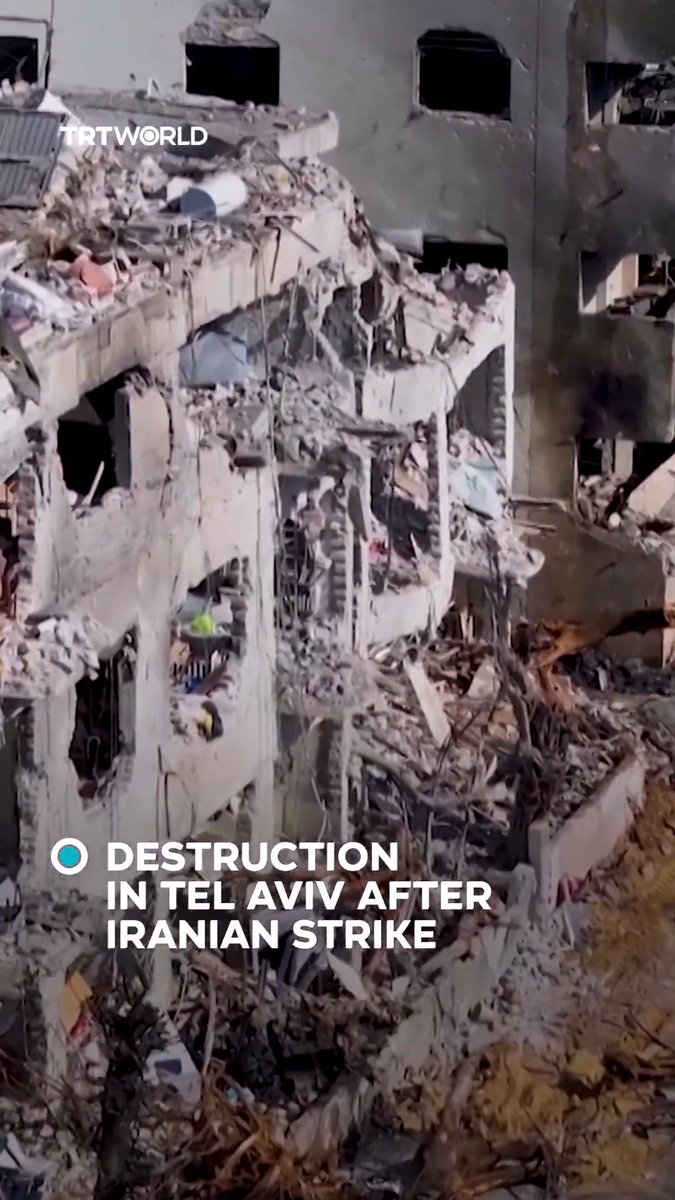
🚨🇮🇱🇮🇷 Israel’s missile shield might be elite, but Iran is testing the one thing every air defense hates: volume. The real danger is not one perfect missile, it's wave after wave of cheaper drones and ballistic missiles forcing Israel to burn through insanely expensive interceptors. That's what makes this...

532,439 просмотров • 5 месяцев назад •via X (Twitter)

Комментарии: 0

Нет доступных комментариев

Здесь появятся комментарии из оригинального поста

Похожие видео

🚨America Just Changed the Economics of War… With Light For years Iran built a strategy around one brutal equation. Launch thousands of cheap drones. Force the defender to burn through million-dollar interceptors. Bleed the defense dry. It was simple math. A Shahed drone costs roughly $30,000. Stopping it with traditional missile defenses can cost hundreds of thousands… sometimes over a million dollars per intercept. Repeat that attack a thousand times and suddenly the defender is spending billions just to stay alive. Iran understood this. They designed an entire doctrine around it. Flood the sky with cheap weapons. Overwhelm air defenses. Make defense more expensive than offense. But something just changed. The United States Navy has now deployed HELIOS, a directed-energy weapon mounted on an American destroyer operating near Iran. HELIOS is not a missile. It is a laser. And it runs on something every warship already produces… Electricity. No missile to reload. No magazine to empty. No resupply ship needed. As long as the ship’s generators are producing power, the weapon keeps firing. That means the cost of stopping a drone is no longer measured in missiles. It is measured in electricity. In practical terms… Destroying a $30,000 drone can now cost less than the power bill of a large apartment building. That single change breaks the entire economic foundation of drone saturation warfare. For years Iran invested in the strategy that made Shahed drones valuable. Cheap. Numerous. Disposable. But if directed-energy weapons like HELIOS can burn drones out of the sky at near-zero cost… The math flips. Suddenly the attacker is spending money… while the defender spends almost nothing. CENTCOM has already released footage showing HELIOS mounted on a U.S. Navy destroyer in waters near Iran. Earlier tests confirmed the system successfully destroyed multiple drones during live trials. Now the system is deployed where hundreds of Iranian drones and missiles have been passing through the same airspace. This is not a laboratory experiment anymore. This is a real battlefield. And the world is about to find out whether the future of missile defense is not another interceptor… But a beam of light. Because when America decides to change the physics of war… It usually succeeds. #SilentMajoritySpeaks #AStoneGroove

A Gene Robinson

790,404 просмотров • 5 месяцев назад

🚨🇷🇺🚀 Russia is accelerating ballistic missile production as Ukraine faces a growing shortage of air defense interceptors. The widening imbalance threatens to increase pressure on Ukrainian cities in the months ahead. According to Ukrainian military intelligence, Russia is currently producing around 120 ballistic missiles per month, including Iskander-M and Kh-47M2 Kinzhal missiles, in addition to 20-25 Zircon hypersonic cruise missiles. Moscow is also reportedly expanding its arsenal with KN-23 ballistic missiles supplied by North Korea. The assessment suggests that the Kremlin is increasingly betting on a strategy of attrition, seeking to intensify large-scale missile strikes while Ukraine waits for additional Western air defense interceptors, the development of its own anti-ballistic systems, and the serial production of domestically manufactured ballistic missiles. According to the report, many Ukrainian Patriot launchers are currently without interceptor missiles, with both PAC-2 and PAC-3 launch canisters reportedly standing empty. As a result, Russia’s growing ballistic missile arsenal is expected to remain one of the most serious threats to Kyiv and other Ukrainian cities, as well as to the country’s critical infrastructure, in the coming months. The combination of rising Russian missile production and limited interceptor availability is shaping one of the most critical challenges for Ukraine’s air defense as the war enters a new phase of long-range strikes. See the latest updates with us: NSTRIKE

NSTRIKE

17,630 просмотров • 18 дней назад