正在加载视频...

视频加载失败

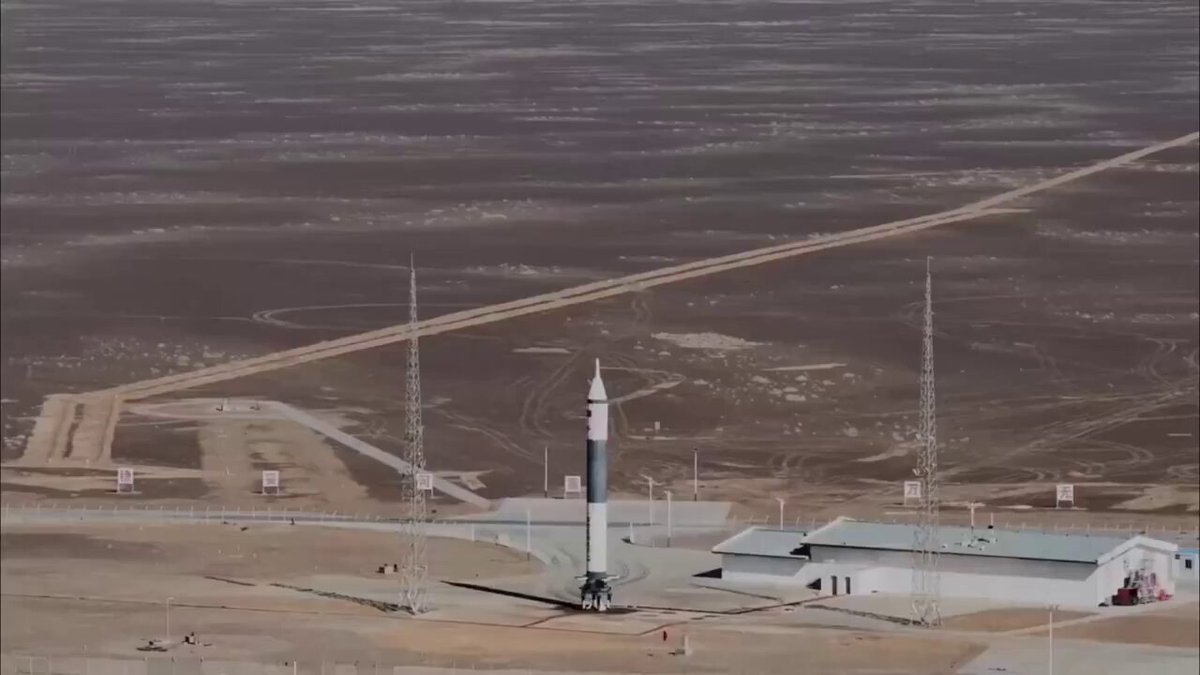
I’ve joined Y Combinator to build Exosat As the world becomes more multipolar, enterprises and governments are nervous about dependence on Starlink or Chinese state-owned satellites for critical network infrastructure Meanwhile, much of the world still has no reliable connectivity and other providers face years of delay and need...

97,772 次观看 • 1 个月前 •via X (Twitter)

41 条评论

Edward 的头像
Edward1 个月前

Traveling around Asia to hang out with various telecom and space execs was fun. Time to lock in again.

@goth 的头像
@goth1 个月前

@ycombinator @Exosat_ Banger

severe engineer 的头像
severe engineer1 个月前

@ycombinator @Exosat_ lfggggggggg

Dennis Wingo 的头像
Dennis Wingo1 个月前

@ycombinator @Exosat_ I think that after. you really get into this, that ITAR/EAR is not the issue.

Shoaib Iqbal 的头像
Shoaib Iqbal1 个月前

@ycombinator @Exosat_ let's fucking go

Yehor {Δ} 的头像
Yehor {Δ}1 个月前

@ycombinator @Exosat_ strongspaceman

cookingwong 的头像
cookingwong1 个月前

@ycombinator @Exosat_ WOWOWOW

wordgrammer 的头像
wordgrammer1 个月前

@ycombinator @Exosat_ Letsgooo

SAWT 的头像
SAWT1 个月前

@ycombinator @Exosat_ What makes them ITAR free? Is it just that you don't hire Americans or operate in the US?

Edward 的头像
Edward1 个月前

@ycombinator @Exosat_ We don’t have a U.S-nexus, U.S-vendors, and are working entirely overseas. Hilariously enough, I think we’re also the only company in YC to not have a Delaware parent. But ITAR is particularly strict on this matter.

Edward 的头像
Edward1 个月前

@ycombinator @Exosat_ It’s quite fun as I get a lot of visibility that people otherwise don’t get into both sides of the space race. Realistically our main competition is also Guowang/Qianfan over Starlink as our ICP is heavily Global South.

SAWT 的头像
SAWT1 个月前

@ycombinator @Exosat_ Interesting, do you consider European companies like Endurosat competitors?

Edward 的头像
Edward1 个月前

@ycombinator @Exosat_ Them? Maybe, but less so. I don’t think Europe has truly ITAR-free satellites; Thales tried but turned out their American vendors were mislabeling parts, so outside of China itself I don’t think ITAR-free satellites are a thing.

SAWT 的头像
SAWT1 个月前

@ycombinator @Exosat_ Some of them have tried legally separating their US segments but I'm not sure how well that works... Either way cool concept, at the very least you may expose some absurd policies

Edward 的头像
Edward1 个月前

@ycombinator @Exosat_ Yea, we made a conscious choice to give up any potential U.S. market presence (besides, Starlink has it well covered here! And Amazon Leo! And AST!). I don’t think our strategy would’ve worked without this sacrifice.

Elias 的头像
Elias1 个月前

@ycombinator @Exosat_ Congrats on the launch!

Harvey Michael Pratt 的头像
Harvey Michael Pratt1 个月前

@ycombinator @Exosat_ let’s fucking go!

frontrun 的头像
frontrun1 个月前

@ycombinator @Exosat_ congrats on the launch🫡 @frontrunvc early once again flagged at 4 followers.

Squirtle 的头像
Squirtle1 个月前

@ycombinator @Exosat_ GOAT

Alder 的头像
Alder1 个月前

@ycombinator @Exosat_ Awesome!

Eric Magvas 🇺🇸 🚀 的头像
Eric Magvas 🇺🇸 🚀1 个月前

@ehreng @ycombinator @Exosat_ Congrats! Rooting for you

Maxim Kraft 的头像
Maxim Kraft1 个月前

@ycombinator @Exosat_ This is great and super exciting

Alex Caswen 的头像
Alex Caswen1 个月前

@ycombinator @Exosat_ You can't be stopped

Onkar 的头像
Onkar1 个月前

@taro_f @ycombinator @Exosat_ Congrats, Ed!

Michael Madrid 的头像
Michael Madrid1 个月前

@ycombinator @Exosat_

Pedro Ruiz 的头像
Pedro Ruiz1 个月前

Interesting. I’d like to test these satellites and evaluate their performance. I manage a fleet of vessels where we remotely monitor engines, hydraulic systems, and numerous sensors through a vessel → satellite → cloud → remote operations setup. We’re currently waiting for a second option from Blue Origin, but we’d be interested in testing your solution as well.

Taro Fukuyama 的头像
Taro Fukuyama1 个月前

@ycombinator @Exosat_ Boom! Congratulations!! Let's gooo!

Brycent 的头像
Brycent1 个月前

@ycombinator @Exosat_ Tough 🔥

NanoMax 的头像
NanoMax1 个月前

@ycombinator @Exosat_ why is a (supposedly) American fund backing this undermining of Our National Security

Reid Fletcher 的头像
Reid Fletcher1 个月前

@ycombinator @Exosat_ Exciting stuff! Should be fun to follow along

Ryan McWhorter 的头像
Ryan McWhorter1 个月前

@ycombinator @Exosat_ very cool!

sam laki 的头像
sam laki1 个月前

@ycombinator @Exosat_ lfggggggg

Yatharth Mann 的头像
Yatharth Mann1 个月前

@ycombinator @Exosat_ LFG!

🪬StrangeLoup🪬 的头像
🪬StrangeLoup🪬1 个月前

@ycombinator @Exosat_ Congrats🫡

vatnik 的头像
vatnik1 个月前

@ycombinator @Exosat_ Congrats!!!

kyle 的头像
kyle1 个月前

@ycombinator @Exosat_ This is very cool! Wishing you luck with allocated cargo size and smooth deployments

Telt 的头像
Telt1 个月前

@ycombinator @Exosat_ 🚀🚀

Keshav 的头像
Keshav1 个月前

@ycombinator @Exosat_ LFG ED, april it is!

Biao Boey 的头像
Biao Boey1 个月前

@ycombinator @Exosat_

Mohammad Nafisi 的头像
Mohammad Nafisi1 个月前

@ycombinator @Exosat_ That is so sick!!!!!

mariano 👣👁️ 的头像
mariano 👣👁️1 个月前

@ycombinator @Exosat_ amazing 👽

相关视频

Excited to announce UtilitySat, the world’s first multi-mission geostationary satellite, that we're launching at the end of this year. This is a first of its kind. And a new product line-- providing on-demand connectivity for disaster relief, bridge capacity, and other missions. We started Astranis to build something new: small communications satellites that provide dedicated broadband capacity for our customers. At the end of this year we’re launching four more of them on a dedicated Falcon 9 rocket, with many more to come after that. That launch of four satellites includes one satellite for Peru, two satellites for in-flight connectivity, and a fourth satellite that had been previously kept under wraps. Until now. Introducing UtilitySat, the Swiss Army Knife of satellites This is a new product— the world’s first multi-mission commercial GEO satellite, capable of conducting multiple fully-operational broadband connectivity missions. And it is just the first of many. We’ll plan to launch many UtilitySats in the years to come. UtilitySat can provide connectivity on standard Ku, Ka, and Q/V bands, and has the flexibility to dial in exact frequencies using Astranis’s proprietary ultra-wideband software-defined radio. It can also relocate dozens of times around the GEO belt over its lifetime. It does this using our unique on-board dual-propulsion architecture, which includes both a chemical monopropellant system and an electric ion thruster. A new mission every year, or every month When we first began development of UtilitySat almost 2 years ago, we had many different missions in mind. UtilitySat can serve as bridge capacity for a customer that is waiting for a dedicated satellite, as an on-orbit spare, or as extra, surge capacity that can be brought in to supplement the broadband service we’re providing to one of our customers. There are acute needs as well — a natural disaster can wipe out terrestrial connectivity over a huge geographic area. One of the top priorities for first responders and during disaster relief is reliable comms on the ground. With multiple UtilitySats on orbit, Astranis can bring in extra capacity on incredibly short notice. Capacity that is compatible with existing, low-cost GEO ground terminals. In initial conversations with customers for UtilitySat, we’ve seen huge demand — these customers often want to lease the entire capacity of the satellite once they learn what UtilitySat can offer. Customers need all the capacity they can get, and new capacity that can be deployed on short notice is a huge deal and a huge departure from traditional GEO satellites. We see a future where customers will be able to call up extra capacity on demand to augment their existing capacity needs, and we’re making that future a reality. US Government applications The first UtilitySat mission will be a commercial one, but we are seeing enormous demand from both from commercial companies and from our government customers. The US Government has unique needs — Combatant Commanders need to be able to task dedicated satellites to specific AORs at a moment’s notice — and surge communications would give them a new tool in their toolbox, helping them win even in a contested environment. And more broadly speaking our military leaders have said the one priority in national security space is to add resiliency to our fleets, using larger numbers of smaller, flexible, and maneuverable satellites so we’re not dependent on just a handful of huge satellites in GEO. UtilitySat shows that Astranis can do just that. Not traditional GEO satellites UtilitySat is only possible because of Astranis’s unique technology — including our proprietary software–defined radio. The flexibility of having on-board digital signal processing allows us to build a standardized satellite design, and move a lot of what used to be done in hardware, into software. UtilitySat uses the standard Astranis MicroGEO platform, adding more frequency bands and some new software capabilities to make maximum use of the available spectrum, no matter where the satellite is on orbit. Traditional geostationary satellites are designed to sit in one orbital slot for up to 20 years, with a set of frequency bands that is hardwired in at the factory. Their single mission must be predetermined many years before they are launched. Astranis does not build traditional GEO satellites. From day one we knew there had to be a better way, and we’re doing it.

John Gedmark

122,108 次观看 • 3 年前