Video wird geladen...
Video konnte nicht geladen werden
🚨 Jeffrey Epstein explains why President Bill Clinton was responsible for the 2008 financial crisis Watch every second of this

1,023,791 Aufrufe • vor 7 Monaten •via X (Twitter)
34 Kommentare

The pedo is actually speaking truth

Pretty good. He should have been an economics professor instead of a Mossad agent pedo billionaire blackmailer or whatever.

Why the fuck should anyone listen to anything Epstein had to say? No

This is true. I was a loan officer right before the bust. I could see it coming.

Further proof that democrats are retards. The 2008 financial crisis almost destroyed the global financial markets. We're still recovering from it. The only recourse is to ban the party from ever holding public office

Grok: In the interview transcript, Jeffrey Epstein directly blamed Bill Clinton for causing the 2008 financial crisis, which originated from the subprime housing bubble and collapse. He stated: “the real enemy of the finance system was Bill Clinton. And if you ask me what and who caused the financial crisis, I would tell you it was Bill Clinton.” Epstein clarified that Clinton’s motivation was political → seeking votes by promoting widespread home ownership, especially among lower-income and minority communities who traditionally couldn’t qualify for mortgages. He explained that Clinton pressured banks to lend to “subprime” borrowers (those with poor credit) by threatening accusations of discriminatory lending if they refused, and by creating government-backed guarantees through agencies like Fannie Mae and Ginnie Mae. This encouraged risky lending, as banks could offload the loans knowing the government would back them, leading to a flood of subprime mortgages that were packaged and sold, ultimately destabilizing the system when they defaulted. Epstein rejected blame on borrowers themselves or deregulation (e.g., by Bob Rubin), insisting the root was Clinton’s vote-driven intervention inserting politics into markets and risk management. He analogized it to giving an alcoholic a drink before a heart attack—easy to blame proximate causes, but the underlying enabler was Clinton.

Jesus, this is actually hilarious. I've been saying for 18 years that Clinton's National Home Ownership Strategy is EXACTLY what caused this. He pressured F&F to provide loans to unqualified recipients and gave HUD the authority to set housing goals. Cannot believe I'm hearing this now. From Epstein no less. What a world.

The full interview is here

@CarmineSabia

This Bill Clinton?

Not just Clinton. This goes back into the late 80's and into the 2000's. Govt pushed for increased homeownership and pressured lenders to lower credit standards to make it happen. Sowell explains this pretty clearly in an interview.

this is actually very good and spot on...it's a shame this man was such a sick fuck.

True... but in all fairness lets credit all the assholes that caused it... other big names: Barney Frank for advocating for govt backed sub prime loans and the Gramm-Leach-Bliley Act that allowed "investment bankers" in on the action turning mortgage lending into a casino.

The plot of 'The Big Short' explained. The insidious part about this however was that the banks did not anticipate that the value of the underlying properties would drop. So even if a borrower could not pay, they could evict, re-list the property, and start the cycle again.

nobody: Epstein: some guy gave your father a drink before he had his heart attack

You think we should get our advice from Jeffery Epstein? I don’t trust him that it is Clinton’s fault for banks making tons of predatory loans. He doesn’t validate this claim, he just vaguely says it’s Clinton’s fault for advocating against racial discrimination.

One can be a Pedo and also understand the sub-prime mess that led to 2008 collapse.

It's a bit more nuanced. The 2008 financial crisis had multifaceted causes, with derivatives, low interest rates under Federal Reserve Chair Alan Greenspan, policies during the George W. Bush administration, and broader deregulation all playing significant roles according to various analyses, including the Financial Crisis Inquiry Commission (FCIC) report and economic studies. While the subprime mortgage boom (often linked to Clinton-era policies) was a key trigger, these elements amplified the risks and spread the contagion globally. Here's a breakdown of each factor based on historical accounts, with an added discussion on how speculative use of derivatives (as opposed to hedging) further contributed by increasing systemic risk rather than mitigating it:DeregulationDeregulation in the financial sector, spanning multiple administrations, removed key safeguards that had been in place since the Great Depression, allowing banks to take on excessive risks. The 1999 Gramm-Leach-Bliley Act (passed under President Clinton) repealed parts of the Glass-Steagall Act, enabling commercial banks to merge with investment banks and engage in riskier activities like proprietary trading. This led to the creation of "too big to fail" institutions. Additionally, the 2000 Commodity Futures Modernization Act exempted over-the-counter (OTC) derivatives from regulation, which the FCIC identified as a "key turning point" in the march toward crisis, as it prevented oversight of complex financial instruments that later imploded. +1 Critics, including some economists, argue this hands-off approach—championed by figures like Greenspan and supported by both parties—prioritized industry profits over stability, with self-regulation failing to curb abuses. +1 However, proponents of deregulation at the time claimed it fostered innovation and growth, though post-crisis reviews largely view it as a major contributor to systemic vulnerabilities.Alan Greenspan's Role in Lowering Interest RatesAs Fed Chair from 1987 to 2006 (spanning Reagan, Bush Sr., Clinton, and George W. Bush administrations), Greenspan pursued a low-interest-rate policy that fueled asset bubbles. After the 2001 dot-com bust and 9/11 attacks, he cut the federal funds rate from 6.5% in 2000 to 1% by 2003, holding it low until mid-2004. +2 This easy-credit environment encouraged borrowing, particularly for housing, as adjustable-rate mortgages became attractive amid rising home prices. Greenspan also opposed regulating derivatives and subprime lending, dismissing warnings about predatory practices as early as 1999. +1 The FCIC cited his leadership as a "prime example" of regulatory negligence, arguing that low rates and deregulation created a speculative housing bubble that burst when rates rose in 2004–2006, leading to widespread defaults. Defenders note that his policies helped avert deeper recessions earlier, but many analyses, including from economists like Joseph Stiglitz, blame his deregulatory philosophy for unrestrained incentives that prioritized short-term gains. DerivativesDerivatives, especially mortgage-backed securities (MBS), collateralized debt obligations (CDOs), and credit default swaps (CDS), amplified the crisis by turning localized subprime defaults into a global meltdown. These instruments allowed banks to bundle and sell risky loans as seemingly safe investments, with their values collapsing when housing prices fell. +1 The lack of regulation on OTC derivatives (thanks to the 2000 act) meant no transparency or capital requirements, leading to massive leverage—some institutions held derivatives worth trillions off-balance-sheet. +1 Continued . . .

🔥 🔥 ‼️ EVERYONE GO AND WATCH THE BIG SHORT!! IN THAT MOVIE YOU SEE HOW THIS EXPLANATION OF APPROVING SUBPRIME MORTGAGES CAME INTO FRUTIION AND MUTATED INTO A MONSTER THAT INEVITABLY DECIMATED THE HOUSING & MORTGAGE MARKET IN 08 ‼️

This isn’t at all an original idea. He’s parroting something he read or heard. He was a fucking idiot with extremely strong connections.

^^ not wrong, re 'subprime'. @BillClinton turbocharged, weaponized for his own purposes, the 1977 Community Reinvestment Act (CRA) resulting in over $1 trillion in lending pledges to distressed communities.

Here Jeffrey Epstein is telling the truth. He leaves out a few wrinkles that are important but the essence of what he says is the truth. Bill Clinton’s home loan policy did in fact cause the crash of 2008. The wrinkle he left out was the securitization of mortgages by Wall Street guaranteed by Fannie Mae and Freddie Mac. But the essence of what he says is true. So who committed the biggest crime here? Jeffrey Epstein? OR Bill Clinton? In terms of total damage done, I believe that Clinton’s intentionally fraudulent policy committed the far greater crime that did far more harm to innocent people than the crime of Jeffrey Epstein, horrible as it was. And Bill Clinton’s crime is all of the record. I saw it happen.

Wow he’s (not was) right

Ian Miles Cheong Wen Xian

Paint me to say it but he is 100% accurate here. And in fairness, it was not only Bill Clinton. It was almost all politicians pandering to this idea that “everyone” has to to be a homeowner and deserves the American dream even if they’re poor even if they’re only making $60,000 a year and taking out a $450,000 mortgage!!!! Idiots

Hate him but likely very true

Bill Clinton was Jeffrey Epstein’s asset so it was Jeffrey Epstein that caused the 2008 financial crisis. Because Bill Clinton did everything Jeff told him to do.

He's directionally right, but off on the details. In short, Fannie Mae & Freddie Mac underwrote lots of Alt-A loans (a tranche between Prime and Subprime) but avoided the very worst of what colloquially most call or group as "Subprime" and Ginnie Mae, which guarantees, but doesn't issue, government backed loans (FHA, VA, USDA) never got involved in Subprime, although they already had (and still have) pretty lose underwriting standards. The worst stuff were private label MBSs, which the rating agencies corruptly mislabeled when grading their credit worthiness.

Well, I guess he did know his stuff.

In reality, it traces back to Barney Frank leading Democratic resistance to GSE reform. In 2003, Bush proposed a stronger regulator (replacing OFHEO) with tougher capital rules & receivership powers for Fannie/Freddie. Barney Frank (D-MA), ranking Dem on House Financial Services Committee, opposed it, saying: 'These two entities... are not facing any kind of financial crisis.' The more people exaggerate, the less affordable housing we'll see. (NYT, 9/11/03)

@UniteRise He actually has a point.

So logical. Sounds right. How tangled are finance and politics, government today? A major concern. Capitalism works. Today's morass does not. And it will be key in destroying the republic.

And this was continued by Barack Obama. (I think I remember reading about it in Thomas Sowell's books & that Obama continued it).

It's all been by design. They've been trying to ruin us so they can rule over the scaps. They very nearly managed it and we aren't out of the danger zone yet.


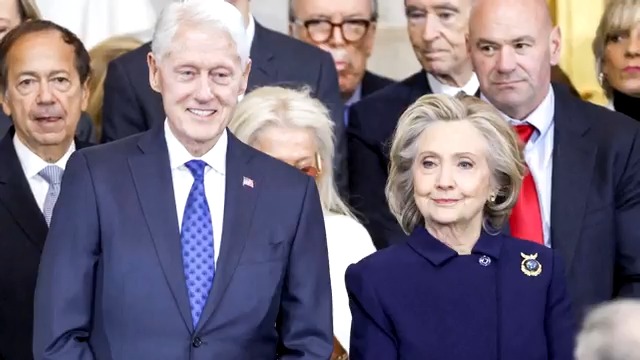


![Plot Twist: Bill Clinton Clears President Trump On Jeffrey Epstein! Bill Clinton clears President Trump in Jeffrey Epstein’s pedophile ring in his sworn deposition under oath! "The President [Clinton] went on to say the President,Trump, has never said anything to me to make me think he was involved and he meant with Epstein,” Rep. James Comer said. Who had this on their bingo card? See what Trump did to combat human trafficking including taking down Epstein in my videos below.👇🏻](https://image.24vids.com/tw-2027476277096018206/amplify_video_thumb/2027476197077356550/img/-RTrIGjHjtKvRp8C.jpg)

