正在加载视频...

视频加载失败

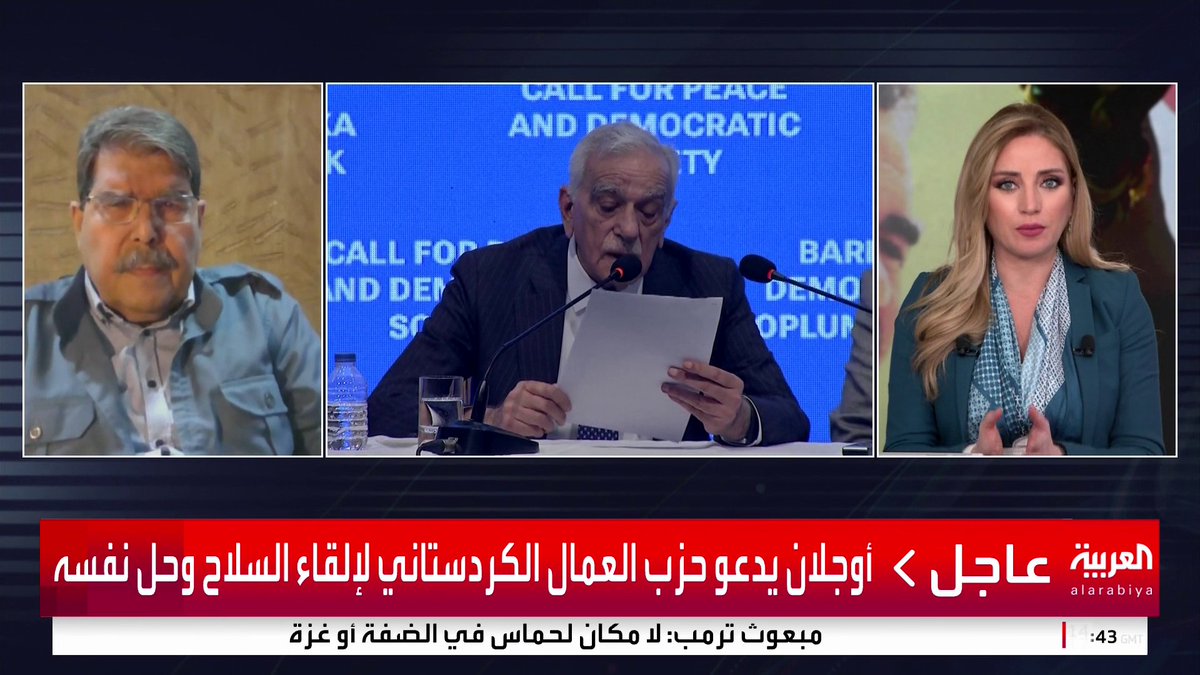
Journalist Yahya Bostan: The Syrian PKK cannot integrate into Damascus by demanding autonomy. If the Syrian PKK had complied with the March 10 agreement, it would be in a much stronger position. Either they will lay down their arms and comply with the fourteen-point agreement, or they will disappear...

25,599 次观看 • 6 个月前 •via X (Twitter)

0 条评论

暂无评论

原始帖子的评论将显示在这里

相关视频

Some history: The Democratic Union Party (PYD), founded in 2003 as the Syrian arm of the Kurdistan Workers’ Party (PKK), emerged in defiance of Ba’athist laws prohibiting political parties. Syrian intelligence, perceiving the PYD as a thinly veiled extension of the PKK under local leadership, not only tolerated but actively bolstered its operations. This tacit support aligned with the Assad regime’s strategic interests. In a 2015 interview, Bashar al-Assad openly acknowledged arming the PYD, declaring: “The Kurds are fighting alongside the Syrian army… We sent them armaments because they are Syrian citizens, and they want to fight terrorism.” This statement belies a complex history of manipulation. The PKK’s roots in Syria run deep, cultivated by a regime that simultaneously oppressed its Kurdish population while channeling their grievances into a controllable outlet. By funneling Kurdish recruits into the PKK, Damascus aimed to stifle local nationalist aspirations. Estimates suggest that as many as 10,000 Syrian Kurds swelled the PKK’s ranks over the decades. The Assad government further enabled the group’s activities, granting it operational freedom—including offices in Damascus and training camps in Lebanon’s Beqaa Valley, an area under Syrian hegemony. According to the Washington Institute, over one-third of PKK fighters hail from Syria, underscoring the group’s entrenched presence. In 2012, the PKK tightened its grip on Syrian Kurdistan, establishing the People’s Council of Western Kurdistan and the Movement for a Democratic Society (TEV-DEM). These entities, touted as grassroots governance structures, function as little more than PYD fronts—cogs in a calculated machine designed to obscure the PKK’s overarching control. The facade of autonomy serves a broader agenda: to entrench PKK dominance under the guise of local empowerment. Even U.S. policymakers concede the blurred lines between the PYD, its armed wing the People’s Protection Units (YPG), and the PKK. The distinction, they admit, is largely semantic. Yet, wary of the political fallout from openly backing a group tied to the PKK—designated a terrorist organization by the U.S. and NATO—the Pentagon engineered a rebrand. Enter the Syrian Democratic Forces (SDF), a coalition unveiled in 2015 that conveniently cloaks the PKK’s identity beneath a veneer of inclusivity. This sleight of hand, critics argue, is a deliberate deception to sanitize an unpalatable alliance.

𝐌𝐢𝐜𝐡𝐚𝐞𝐥 𝐀𝐫𝐢𝐳𝐚𝐧𝐭𝐢

22,838 次观看 • 1 年前