Video wird geladen...

Video konnte nicht geladen werden

Zur Startseite

JUCO Highlights Mixtape- TE/ath, 6’3” 230 lbs playmaker @ NEO A&M. D1 transfer. 3.7 GPA. AA in hand!! -11.6 YPC -Graded out highest verse two, top ten nationally ranked teams‼️ -Can get open consistently vs. man or zone coverage✅ -Got better every single week💯
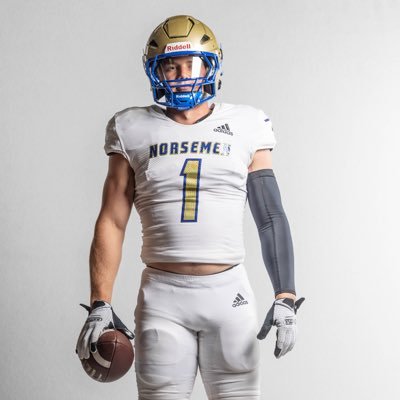
13,645 Aufrufe • vor 9 Monaten •via X (Twitter)

0 Kommentare

Keine Kommentare verfügbar

Kommentare vom Original-Post werden hier angezeigt

Ähnliche Videos

Did You Know⁉️ One of hip-hop’s most infamous late-’90s beefs—between LL Cool J and Canibus‼️started over a single line on the 1997 posse cut “4, 3, 2, 1” (featuring Method Man, Redman, DMX, and later Master P on the extended version)⁉️. If you dont, I gat you‼️ LL Cool J’s account‼️ LL has said (in interviews including the Joe Budden Podcast, Drink Champs, and others) that Canibus approached him outside the studio and mentioned wanting a tattoo just like the microphone on LL’s arm‼️. At the time, LL was “leading with my ego” and feeling territorial/immature, so he told Canibus to “get your own.”‼️ Then, when LL heard Canibus’s original verse—“Yo L, is that a mic on your arm? Let me borrow that”‼️he took it as a challenge or disrespect tied to that conversation, not a compliment‼️. He told Canibus the line had to go (or he’d be left off the record). Canibus changed it‼️. LL has later reflected that Canibus “really didn’t do nothing wrong,” that it was a compliment/admiration he misread due to his own mindset, and that the beef was more his fault‼️. He kept (or added) responsive lines on the final track that targeted the mic/tattoo reference‼️. Canibus’s account⁉️ Canibus has consistently said the line was pure respect and a term of endearment‼️not a diss‼️. In a recorded conversation with Mos Def, Big Pun, and DMX, he explained that the full original opening (“Yo Method Man, where the gods at? / Yo Redman, where the Squad at? / Yo L, is that a mic on your arm? Let me borrow that”) was him showing love and excitement at being included with veterans‼️. He has described asking about the tattoo idea as a salute (not biting), and stressed he wasn’t stupid enough to diss the host on his own record‼️. When LL called about 48 hours later accusing him of “playing” him, Canibus reportedly replied that he was arrogant and got busy when needed, “but I’m not stupid! I’m not gonna get on another ni**a’s record and [diss him].”‼️ He offered to re-record; LL indicated he’d adjust his own side too‼️. Canibus changed his verse (the released version starts more generally with lines about fighting for mics). He later felt betrayed when the final track dropped with LL’s responsive bars still in place (and Canibus was left out of the main video)‼️. That led him to drop “Second Round K.O.” (with Mike Tyson) in 1998‼️. Both sides agree on the core facts‼️: the original “mic on your arm / let me borrow that” line existed, LL objected and required a rewrite, Canibus complied, and LL’s final verse addressed the reference while Canibus’s did not‼️. The disagreement is intent and follow-through—LL initially heard a challenge (and has since owned his ego/immaturity); Canibus insists it was admiration and felt played when the response stayed in‼️. Redman (who was on the track and mentoring Canibus at the time) has backed Canibus’s view that it wasn’t aimed as disrespect‼️. The leaked original verse, phone call between the two, and later reflections from both have kept the story alive for decades‼️. They eventually appeared to squash it publicly years later, but the “4, 3, 2, 1” incident remains a classic example of how one ambiguous bar + egos + competitive culture can spark a full-blown rap war‼️💯. You're welcome‼️

(st_ides)

92,064 Aufrufe • vor 1 Monat

“Nobody was open” Caleb Williams had a throwing window to TE #84 Colston Loveland in the back of the end zone. Williams was looking right at him. Williams cocked his arm, but hesitated and “thought better of it.” Plus, he had a backside target #2 D.J. Moore in the end zone jumping around wide open on the opposite side of the field, but Williams never has seen the whole field well… Of course, nobody will focus on how the moment was too big for him and how he hesitated instead of taking the shot with the No. 1 seed in the NFC hanging in the balance. Instead, they’ll just make more excuses for him. Too harsh? No, I don’t believe it is. Some athletes want the ball in their hand in the biggest moment of their careers, and others do not. The problem with Williams is that he wanted to keep the ball in his hand, once again, way too long. I got 8.11 seconds when I put a stopwatch to it. That might be the longest he’s ever held it. It’s the longest I’ve ever seen him hold it and I studied every snap he ever took at USC and have watched many of his games with the Bears since. Ben Johnson has done a GREAT job hiding Williams behind the No. 3 rushing attack in the NFL (149.1 yards per game Team Rankings) and with YAC receivers who have accounted for about half of his “passing yardage” this season, but in the end, who players really are comes out in the big moments. In the end, the overwhelming urge for Williams to play hero ball again and do something more than just take what was there cost him and his team. Whether it was selfishness and/or fear of missing Loveland and not trusting his 57.9% arm, or a combination of both can be debated, but what can’t be debated is this right here embodies why Caleb Williams is NOT IT in Chicago, ironically in the city where another athlete lived to take the shot. Yes, Caleb Williams is a bust. Outside of all the glamorized “dink and dunk,” short little passes and sporadic highlights that misrepresent his full body of work, it’s once again confirmed that he is a bust, just like I wrote 107 days before the Bears selected him in this pre-draft scouting report: That doesn’t make me happy by the way, I just wish prospects could get fair valuations based on what they actually show in college as projections so that their NFL careers could be framed with realistic expectations and they would have their very best chance to succeed, which is one of my main goals in what I do. With Williams, the bar was set way too high, which this play confirmed, yet again. All-22 video:

FIRST ROUND MOCK

24,667 Aufrufe • vor 8 Monaten

1B Tanner Thach (UNCW Baseball) is another college bat to keep close tabs on this season. Thach was drafted by the Giants in the 18th round of the 2022 draft but decided to honor his commitment to the Seahawks. Thach made a significant impact in his first year on campus and posted a .290/.356/.544 slash line with 11 2B, 15 HR—a UNCW single-season freshman record—and 68 RBIs. He outdid himself in 2024 and hit .324/.406/.700 with 11 2B, a UNCW single-season record 27 HR and 75 RBIs in 61 games. Thach’s production didn’t end there, though, as he was named a Cape League all-star, hitting .275/.367/.493 with 6 doubles, 8 HR and 25 RBIs. Thach has a strong, physical build at 6’4” and 220-lbs. He has a crouched stance in the box with an open front side and a medium-high handset. It’s a bit of a noisy load in which he drops and drifts his hands, but Thach does possess plenty of bat speed. He has a steep, uphill swing path, and it’s a violent operation that is geared towards getting the ball up in the air and doing damage. However, it can get long at times. Thach’s carrying tool is undoubtedly his immense power. He has established a now-lengthy track record of power production with both metal and wood, and he has zero issue tapping into it on a game-to-game basis. Thach has home run power to all fields, though his highest quality of contact comes to the pull side. He gets the ball up in the air on a consistent basis, and when he catches the baseball on the sweet spot, it flies. Thach posted maximum exit velocities during the spring and summer of 113.5 mph and 103.1 mph, respectively. At the start of the summer, he would sometimes unnecessarily sell out to get to his power which caused him to top-spin line drives to the pull side, but as the season progressed he was able to break that habit. Thach has plus in-game power to all fields. The biggest key going forward for Thach is for him to continue to make enough contact to get to his power on a regular basis. His bat-to-ball skills are fringy, though he did post a 90% in-zone contact rate against all fastballs. Like a lot of hitters, the root of Thach’s contact struggles are secondary offerings. He’ll have difficulty at times picking up spin out of the hand which leads to both miss and chase. Thach will also tend to whiff and chase against heaters that are either elevated or on the outer-half of the plate. However, he does handle velocity well and last season he hit .533/.588/1.033 against all fastballs 92+. While Thach feasts on righthanded pitching, he hit just .246/.321/.551 last season against lefties. Thach’s power is tremendous, but he’ll need to add a coat or two of polish to his hit-ability as he transitions into professional baseball. First base isn’t the flashiest defensive profile, but Thach moves well around the bag and is a strong athlete at the position. He’s not afraid to range into the four-hole and he is a reassuring anchor on the right side of the infield. Thach has an advanced baseball sense, a trait that shines on a game-to-game basis. While he won’t pitch professionally, expect Thach to log some innings this spring for UNCW. His fastball tops out in the low 90s and flashes some hop in the top of the zone, but he’ll also mix in a mid-70s curveball and a low-80s changeup. The cherry on top with Thach is his makeup, both on and off the field. It’s impossible to stick a grade on it because it’s a 90 on the 20-80 scale. Would have him as a 2nd-early 3rd round type this July. (🎥: UNCW Baseball, Cotuit Kettleers)

Peter Flaherty III

42,659 Aufrufe • vor 1 Jahr

Some of Mae West's Best One-liners. Mae West was a master of witty, saucy, and iconic one-liners that celebrated independence, glamour, and double entendres. Her sharpest quips covered everything from romance and wealth to living life on her own terms. • “You only live once, but if you do it right, once is enough.” • “There are no good girls gone wrong ― just bad girls found out.” • “I generally avoid temptation unless I can't resist it.” • “Every man I meet wants to protect me. I can't figure out what from.” • “I wrote the story myself. It's about a girl who lost her reputation and never missed it.” • “Between two evils, I always pick the one I never tried before.” • “Good sex is like good bridge. If you don't have a good partner, you'd better have a good hand.” • “When I'm good, I'm very good, but when I'm bad, I'm better.” • “I'll try anything once, twice if I like it, three times to make sure.” • “I'm single because I was born that way.” • “Good girls go to heaven, bad girls go everywhere.” • “I'm no model lady. A model's just an imitation of the real thing.” • “Ladies who play with fire must remember that smoke gets in their eyes.” • “A dame that knows the ropes isn't likely to get tied up.” • “Marriage is a fine institution, but I'm not ready for an institution.” • “It's not the men in your life that matters, it's the life in your men.” • “All discarded lovers should be given a second chance, but with somebody else.” • “Don't cry for a man who's left you ― the next one may fall for your smile.” • “Sex is an emotion in motion.” • “I never said it would be easy, I only said it would be worth it.” • “Cultivate your curves - they may be dangerous but they won't be avoided.” • “Those who are easily shocked should be shocked more often.” • “Too much of a good thing can be wonderful!” • “I never worry about diets. The only carrots that interest me are the number you get in a diamond.” • “It is better to be looked over than overlooked.” • “I used to be Snow White, but I drifted.” • “Anything worth doing is worth doing slowly.” • “Don't keep a man guessing too long ― he's sure to find the answer somewhere else” • “You are never too old to become younger!” • “Love thy neighbor ― and if he happens to be tall, debonair and devastating, it will be that much easier.” “Women like a man with a past, but they prefer a man with a present.” • “He who hesitates is a damned fool.” • “Look your best ― who said love is blind? ” • “His mother should have thrown him away and kept the stork.” • “A woman in love can't be reasonable ― or she probably wouldn't be in love.” • “Is that a gun in your pocket, or are you just happy to see me?” • “To err is human ― but it feels divine.” • “I have found men who didn't know how to kiss. I've always found time to teach them.” • “If a little is great, and a lot is better, then way too much is just about right!” • “Men are my hobby, if I ever got married I'd have to give it up.” • “Getting married is like trading in the adoration of many for the sarcasm of one.” • “When women go wrong, men go right after them.” • “The curve is more powerful than the sword.” • “Good women are no fun... The only good woman I can recall in history was Betsy Ross. And all she ever made was a flag.” • “I've no time for broads who want to rule the world alone. Without men, who'd do up the zipper on the back of your dress? ” • “I never loved another person the way I loved myself.” • “Love conquers all things except poverty and toothache.” • “The score never interested me, only the game.” • “Keep a diary and one day it'll keep you.” • “She's the kind of girl who climbed the ladder of success wrong by wrong.” • JUDGE: “Are you trying to show contempt for this court?” MAE WEST: “I was doin' my best to hide it.” • “Women with pasts interest men because they hope history will repeat itself.” • “I've been things and seen places.” • “I only read biographies, metaphysics and psychology. I can dream up my own fiction.” • “I'm a woman of very few words, but lots of action.” • “An ounce of performance is worth pounds of promises.” • “One more drink and I'll be under the host.” • “A man’s kiss is his signature.” • “Everyone has the right to run his own life ― even if you're heading for a crash. What I'm against is blind flying.” • “Love isn't an emotion or an instinct - it's an art.” • “No one can have everything, so you have to try for what you want most.” • “Love is like a booger, you pick and pick at it. Then when you get it you wonder how to get rid of it.” • “I've been in more laps than a napkin.” • “I see you're a man with ideals. I better be going before you've still got them.” • “It's all right for a perfect stranger to kiss your hand as long as he's perfect.” • “Don't marry a man to reform him ― that's what reform schools are for.” • “I saw what a mess a lot of people could make of their lives when they're smitten. Some of them go temporarily insane. They find a person who they think holds the key to their happiness ― the only key to their happiness... My work has always been my greatest happiness” • “It isn't what I do, but how I do it. It isn't what I say, but how I say it, and how I look when I do it and say it.” • “The best way to hold a man is in your arms.” • “A hard man is good to find.” • “I didn't discover curves; I only uncovered them.” • “You may admire a girl's curves on the first introduction, but the second meeting shows up new angles.” • “Goodness, what beautiful diamonds!' ― 'Goodness had nothing to do with it'.” • “Ten men waiting for me at the door? Send one of them home, I'm tired.” • “If I had known I was going to live this long, I would have taken better care of myself.” • “A man in the house is worth two on the street.” • “Men are all alike ― except the one you've met who's different.” • “Brains are an asset, if you hide them.” • “I only like two kinds of men, domestic and imported.” • “I've been rich and I've been poor, and rich is better.” • “You can do what you want, but saving love doesn't bring any interest.” • Woman: “You certainly know the way to a man's heart.” Mae West: “Funny, too, 'cause I don't know how to cook.” • “When in doubt, take a bath...” • “Sex with love is the greatest thing in life. But sex without love — that's not so bad either.” • “What's the good of resisting temptation? There'll always be more.” • “If I can't have a man with a million dollars, I'll have a million men with one dollar.” • “Gentlemen prefer blondes, but who says blondes prefer gentlemen?” • “Whenever I have to choose between two evils, I always like to try the one I haven't tried before” • “An ounce of performance is worth a pound of promises.” • “Don’t ever make the same mistake twice, unless it pays.” MAE WEST

Hollywood Golden Age of Cinema

30,093 Aufrufe • vor 1 Monat

here's what most app founders don't tell you about scaling your app on tiktok here's the actual playbook, not the generic level "just post consistently" advice: accounts use personal/creator accounts, not business. business locks you out of trending sounds entirely, you get stuck with a library of 40 generic royalty-free tracks nobody's ear recognizes as "tiktok sound," and sound is half the algo's read on your content don't buy an aged account unless you can post from the exact location it was created in. mismatch the vpn/location and you'll watch views crater to single digits within days, tiktok resets your trust score fast pick one avatar, one template, one visual style. lock it in for at least 15-20 posts before you touch it. switching every few videos tells the algo you're a different account every time, you never build a consistent signal views aren't what you think they are 30-200 views is not a shadowban. shadowbanned means 0 views, full stop, nothing gets pushed. 30-200 means the hook, pacing, or format just isn't landing yet "i copied that viral video frame for frame" — you didn't. the millisecond pause before the reveal, the exact caption position (top third vs center), font size relative to screen, all of it is doing more work than the concept itself. people copy the idea and skip the 200 micro-decisions that made it work good content still won't always go viral. a 5:1 view-to-like ratio is genuinely strong signal, it just doesn't guarantee reach. the algo rewards volume of good attempts, not one perfect video cal ai didn't get one viral hit and coast. they ran hundreds of videos in the same format on repeat, and kept posting through videos that flopped at 1000 views. the winners paid for the losers views ≠ downloads, and this trips up everyone 1M views with almost no installs is extremely common. prank format, funny skit format, anything built for pure entertainment gets massive reach and contributes basically nothing to your install numbers because nobody's thinking about your product, they're thinking about the joke tutorial format does a fraction of the views and converts 10x better. screen recording of the actual app, green screen walkthrough, finger literally tracing where to tap. it's less entertaining and it's the format that pays your bills if you only chase views you'll optimize yourself into a wall of engagement with no revenue behind it content that doesn't scream "ad" don't slide the app into every single post, most of what you post should just be good standalone content bad: "here's why my app has 15 features your current app doesn't" good: "i saved $500 last month and used it to buy my kid a ps5" walks into walmart, grabs a ps5 off the shelf "had no idea i was burning $500/mo on subs i forgot to cancel" the app name/logo shows up after the value hit lands, never before. the viewer needs to feel the outcome first, the brand is just the explanation for how they get it too zero ideas? screenshot your competitors' top 20 tiktoks and study exactly what they're doing in the caption text, the hook, the pacing. copy the format, not the literal video. nobody's reinventing organic distribution from scratch, everyone's remixing what already works working with creators without torching your budget skip influencers at the start unless you've got real spend to burn. you'll pay a few hundred bucks, get 10k views, feel nothing happened, and quit the whole channel cheap ugc reaction clips ($2-5 for a 3-5 second reaction) stitched onto your own tutorial footage gets you dozens of usable videos in a day, this is the highest leverage move for a small budget pay per view if you can get creators to agree to it. rpm between $0.5-$2 depending on how "tutorial-ish" the content is, cap payout at $200-500 per video so you're not exposed. hard to find creators who'll take this deal but they exist, worth asking posting without tripping the flags skip the phone farm, skip the expensive 4g/5g proxy setup. you'll burn a month building infrastructure and still end up throttled a vpn is fine if you're targeting a country you're not in. tiktok can see the vpn, that alone doesn't flag you what actually gets you flagged: → reposting pinterest images hoping tiktok won't recognize them → posting 4+ times within an hour → random disconnected content with no pattern between posts → switching phones or vpn servers constantly → running more than 3 accounts from one setup → posting immediately on a brand new account with zero warmup batch a full month of content in one or two sessions. you already know you won't "post again tomorrow" once life gets in the way connect the vpn first, then open tiktok, so the algo resets to your target country before you touch anything. schedule max 2-3 posts a day with something like hootsuite, set it to drafts instead of auto-publish, review each one before it actually goes live link in bio is quietly killing your conversions tiktok's in-app browser doesn't carry the user's saved logins or cookies. they tap your link, hit "sign in with google," nothing autofills, nothing's remembered, they bail in 3 seconds fix: detect when your link is opened inside tiktok's in-app browser and show a quick prompt telling them to tap the three dots → open in browser. gets them into safari or chrome where their session actually persists, this single fix recovers conversions most people don't even know they're losing

Mufasa

17,518 Aufrufe • vor 1 Monat

10 years ago, Tim Ferriss walked into Google & revealed exactly how to cage the monkey mind that is destroying your life every passing day: 1. The real training is in the small embarrassments. We do not rise to the level of our hopes. We fall to the level of our training. If you cannot handle small moments of public embarrassment you will not have the backbone to make big decisions under real pressure. 2. Seneca practiced poverty once a month. He would wear rough clothing, eat the simplest food, and ask himself is this the condition I so feared. Tim does one three day water fast every month and one seven to ten day fast every quarter for the same reason. Once you know the worst case is survivable you stop fearing it. 3. The monkey mind is not a dialogue. It is a stern and irritating roommate in your head that never shuts up. The morning journal is not about producing writing. It is about giving that roommate a two dimensional prison so it stops playing on repeat for the rest of the day. 4. The Five Minute Journal takes two and a half minutes in the morning and two and a half at night. The morning portion is a gratitude and planning exercise. The evening portion is a performance review. The ROI on those five minutes is higher than almost anything else Tim does. 5. Depression is an obsession with the past. Anxiety is an obsession with the future. High achievers almost always skew toward anxious future focus. Without a deliberate gratitude practice they hit goal after goal and feel nothing because they are already racing toward the next one. 6. The single biggest difference between the top quartile of performers and the top one percent is the degree to which they can identify their goals and maintain focus on them. Everything else is secondary to that one thing. 7. Humility does not require willpower. It requires designing the right environment. Every day Tim tries to be the weakest person in the room at something. At 15 in Japan he thought he was a judo star until a guy forty pounds lighter destroyed him in seven seconds. Then he trained at a school that produced Olympic gold medalists and got demolished by twelve year olds for months. He came out the other end completely transformed. 8. More than eighty percent of the world class performers Tim has interviewed across every field have a daily meditation practice. Some do not call it meditation but they all have something that functions the same way. Amelia Boone, the greatest female obstacle racer alive, sings the same song to herself on loop for hours. Arnold Schwarzenegger did transcendental meditation for a year and said the benefits persisted for decades after he stopped. 9. A high percentage of the successful men Tim has interviewed over fifty skip breakfast entirely. Pavel Tsatsouline, the man who brought kettlebells to America, answered what did you have for breakfast with a single word. Coffee. 10. What matters is not having a specific routine. It is having a routine. Whatever it is. The goal is to preserve your decision making and creativity for the things that actually require them. Steve Jobs wore the same thing every day. That was not a fashion choice. It was an energy allocation strategy. 11. Tim treats his entire life as two week experiments and six month projects. A reliable five year plan almost by definition requires you to set goals below your current capabilities. He is unwilling to do that so he does not plan that way. 12. The most successful people he has interviewed are not naive optimists. They budget for the downside. Richard Branson's real skill is figuring out the maximum he can lose and the maximum time he can lose before committing to anything. Once you realize the worst case is reversible the risk disappears. 13. The podcast succeeded because Tim knew he had a guaranteed audience of one. He was building something he could not find anywhere else. Every book came from the same place. When designing for a market things fail. When solving his own problem things work. 14. He committed to doing six podcast episodes before deciding whether to continue. If you only do one you will quit. The learning curve does not hockey stick until at least six. The survival of the project depended entirely on that pre-commitment. 15. Email is not a priority system it is other people's priority system for your time. Tim batches email offline so he is not doing whack-a-mole where sending two emails generates five back. He also uses if-then lines in every email he sends. It takes thirty extra seconds and eliminates twenty rounds of back and forth. 16. Never attribute to malice what you can attribute to incompetence or busyness. Holding a grudge about someone not replying means you are carrying imaginary shrapnel like acid in a vessel. You are the only one harmed by it. 17. For longevity Tim does regular extended fasting to purge precancerous cells combined with hyperbaric oxygen at two and a half atmospheres three times a week. By forty almost everyone has precancerous cells. The goal is not uncontrolled growth and fasting addresses the metabolic conditions that allow that. 18. For insomnia the two things that helped him most were morning meditation to quiet the machinery before the day starts and reading fiction before bed to shift from problem solving mode into story consuming mode. The monkey mind cannot solve problems it does not know it is supposed to be solving. Follow Yasmine Khosrowshahi for more ideas on thinking better, becoming clearer & building a more intentional life.

Yasmine Khosrowshahi

194,293 Aufrufe • vor 2 Monaten

🚨What is she carrying? Part 2⁉️ Depending on your AI platform preference … we get either a $40,000 handheld X-ray device or a $40 thermos-and-lunch-bag cooler combo? What was your conclusion, and which was right? When we first came across this video months ago, I immediately said it looked like she was “carrying a lunch bag,” or some kind of cooler. But for whatever reason, and what we were more focused on at the time, we didn’t spend the hours and hours and hours required to drill down on those few seconds of video. Not until this week. Tons of social media critics say I should “just release everything we know, and let the truth fall where it may.” But that’s how we get in trouble. And we HAVE gotten things wrong in this five-year-long investigation. EVERYONE has made mistakes. Left and right media, major legacy media, alternative media, and even the best of the independent journalists have made mistakes or misreported details of the January 6, 2021 event. Whether on purpose, by accident, or careless disregard of the truth … you can be the judge of each incident. I’ve explained on numerous occasions that we’ve spent more than a year researching, investigating, and preparing some stories before going public. In this case, when we finally started looking hard at it, the Brave New World of AI took us on a wild goose chase. We now have good reason to finally drill down on the timelines and available video leading up to the sequence of events on the night of January 5, 2021 … the night before the discovery of the two “devices” at the RNC and DNC headquarters. When inputting into AI that first video — which I posted last night — It began spitting out some shocking alternatives to my original “lunch bag” assumption. Unprompted, the AI drew its own conclusion about what Ms. Kerkhoff was carrying, probably because they were “cops” in the video. To be clear, UNPROMPTED, AI was initially adamant that the item in her hand was a portable X-ray device for sniffing out narcotics, weapons, and explosives. Even some The U.S. Capitol Police sources we shared the video with said the same thing. Other Capitol Police sources were more skeptical. Then, suddenly AI wasn’t so sure. As I mentioned last night, in my second post, X’s Grok and Google’s Gemini were arguing with each other. Gemini was shockingly specific: “The item being carried by the officer in that CCTV footage matches the exact structural form factor, top-handle position, and multi-point shoulder strap design of a Viken Detection HBI-120 Handheld Backscatter X-Ray Imager … Rather than being transported bare, it is housed in its specialized tactical, weather-resistant soft deployment carry case.” Wow. You can imagine how that hit like a bolt of lightning, considering whom we were looking at. Grok was less committed, offering varying possibilities ranging from a “paper takeout bag” to all manner of sophisticated law enforcement-used electronic devices. When I pitted Grok against Gemini — and vice versa — Gemini dug in its heels, saying: “Based on the visual evidence in the video and the analysis circulating in response to Steve Baker's query, the device carried by Officer Kerkhoff is almost certainly a Viken Detection (formerly Heuresis) HBI-120 in its tactical soft-carry case. While officially unconfirmed, the visual and structural match is highly specific.” Grok countered: “The competitor [Gemini] write-up describes that pouch as if it were a catalog item with a unique layout, then maps the CCTV blob onto it and calls it an ‘exact’ match. The citations in that text are HBI-120 product pages, not photos of a factory soft case that looks like this bag. That is overfit. Size class + top handle + ‘looks tactical’ is not an identification of an 8-pound 120 keV imager. Could an agency have put an HBI-120 in some aftermarket or unit-made padded bag? Yes. Does this video prove that? No.” But Grok was also an absolute mess in describing the basic video scene itself: “A gray-haired person in dark clothing walks in from the left carrying a dark bag by a single top handle. Papers or a light object in the other hand. Two uniformed officers come down the ramp. They meet. Later two officers walk the sidewalk; one has a light-colored item (bag or papers), and a dark bag is still in the scene. Someone else walks away across the lot with a bag.” Huh? Anyway… Gemini didn’t like what it called “The Thermos Theory”: “Soft Lunch Coolers typically use flexible nylon webbing straps or soft padded handles that pinch or deform when lifted. The handle in the video does not appear to ‘pinch’ like a soft strap; it remains an open loop. This structural rigidity strongly favors the Viken device (or a hard-shelled case) over a soft lunch bag.” Grok’s conclusion: “On evidence quality, the Viken ID is the weaker of the two. It is possible in the abstract and unsupported as a positive ID here. The honest read is: dark soft top-handle bag, lunch-cooler to small-kit size, contents unknown. Anything more specific needs a better frame, a still of the bag on the ground, or provenance outside this clip.” Gemini’s conclusion: “This single frame is ambiguous due to the blur and lighting (reflection). However, the rigid, non-deforming handle visible in the officer's grip is a mechanical characteristic of the Viken HBI-120 (or similar heavy equipment) and is inconsistent with the flexible straps of a standard soft lunch cooler. While the "silver" glint is a point for the thermos theory, it is plausibly explained by the Viken's glass screen or case window. Verdict: The structural analysis (rigid handle) still favors the heavier equipment (Viken) over a standard soft lunch bag.” So, depending on your AI preference … we get either a $40,000 handheld X-ray device or a $40 thermos-and-lunch-bag cooler combo? But there is more evidence in the alternate video angles available. (That I now present below.) They seem to confirm with the ‘human eye’ that Ms. Kerkhoff is carrying a metal cylinder (possibly a thermos) in the same hand as a soft-sided lunch bag cooler. Though the design conflicts with the common thermos handle configurations of most known cylinder thermoses. (Photos below.) And we've not been able to get an accurate hit on the so-called "lunch bag" with that specific handle and strap configuration. And THAT is why you don’t just “release what you know” without seeking every possible video angle and expert opinion. That is why we didn’t run to print with our original November 8 story on the OG topic without first taking it to a government intelligence agency and professional investigators for review. That is why so many bad theories about January 6 still abound — five and a half years later — because they were based on a single camera angle, when years later, the same scene was revealed to have been captured from multiple angles that change reality 180 degrees. This is exactly why all CCTV footage — not just from January 6, but also January 5 and 7 — still needs to be released to the public. When Speaker Mike Johnson authorized Rep. Barry Loudermilk's old investigative subcommittee to begin uploading CCTV footage to a Congressional Rumble channel, we were elated. I had already spent many weeks in the Capitol CCTV viewing room in D.C. The travel, the expense, and the scheduling hassles with the committee made it nearly impossible to spend the amount of time required to prepare any story correctly. Not only to view and harvest what you were looking for, but also to sift through far more than the infamous “41,000 hours” of footage. Congress made more than 1,800 cameras' worth of footage available, and ten total days of footage. That’s hundreds of thousands of hours of potentially useful footage to review. An impossible task for any one person or media organization to review if Congress didn’t make that footage directly available to the public. But they didn’t finish the project. Tens of thousands of vitally important hours from both January 5 and 6 were never uploaded to the Rumble page. Additionally, my team has made specific requests for curiously missing gaps in footage throughout that two-day timeline. In an arrangement made with the Committee, they had originally been very good about getting us the footage from the specific cameras and timestamps we requested. That suddenly stopped when the new Congress and Loudermilk’s new J6 investigative subcommittee took over in January of 2025. Joe Hanneman and I have made innumerable requests — REPEATEDLY — for missing and/or unreleased cameras and timestamps specifically related to the pipe bomb investigation. Despite being told — REPEATEDLY — that they would provide the requested footage, they never did. Something happened. As I’ve reported several times in the last few months, the Capitol Police were finally and successfully able to shut down Loudermilk’s subcommittee investigation into ALL THINGS related to the Capitol Police. They did this only with the complicity and surrender of Speaker Johnson and Judiciary Chairman Rep. Jim Jordan to Capitol Police leadership’s demands. On that note, and in conclusion … there are eight full hours of missing footage from January 5, right in the middle of the day. ALL CAMERAS are missing. These are important hours for what we are tracking. We can see Ms. Kerkhoff arrive at Capitol Police HQ early in the morning to clock in for her shift, but she is not carrying her “lunch bag and thermos” when she arrives. Her car is parked two blocks away, and is in the same parking spot at the end of her day. We can see her leave HQ late in the day (as I’ve documented in the last several posts on this page) with other officers and go to the Fairchild Building. Only to return some half hour later carrying that … thing(?) … and only to spend 45 seconds in the HQ to “clock out” from her overtime shift. We’re still missing vital video footage that both Speakers McCarthy and Johnson promised the American people. Including certain cameras deliberately withheld at the RNC bomb drop location, and other cameras with mysterious gaps at the most important of moments. Do the other video angles here prove that either Grok or Gemini was right, or does the X hive mind have better theories on what Kerkhoff is carrying? How about that high-definition CCTV camera that is right inside that west side door at Capitol Police HQ, with good lighting? They should release that video to us. A $40,000 bomb detection device or a Walmart thermos and lunch bag? I’m good with either. The truth is what we seek. But we should be able to see ALL the footage. Including all Capitol CCTV cameras and footage from January 6, and the days immediately preceding and following. Including the 39,000 video files the FBI claims to have in the entire J5/J6 pipe bomb investigation. Conspiracy theories are born and fester precisely because the government isn’t transparent and purposefully keeps the People in the dark. Then the lawyers who control government make billions from the legal aftermath. (More Photos in the thread below.)

Steve Baker

48,351 Aufrufe • vor 21 Tagen

In 1998, Warren Buffett and Charlie Munger spent 4 hours explaining why the smartest people in finance keep going broke. It might be the most valuable finance lecture ever recorded: 1. The smartest people in finance went completely broke. Long-term Capital Management had 16 people with possibly the highest average IQ of any firm in the country, 350 to 400 combined years of experience, and most of their own net worth in the fund. They still went bankrupt. Buffett said if he ever wrote a book it would be called why smart people do dumb things. 2. Life and markets have no relation to sigmas. Buffett keeps a 1901 newspaper on his office wall. Northern Pacific went from $170 to $1,000 a share in a single day when two buyers accidentally cornered the stock. A brewer who had shorted it, facing a margin call, dove into a vat of hot beer. That man probably understood sigmas and knew such a move was impossible. Buffett has never wanted to end up in the vat. 3. Beta and sigmas tell you nothing about the risk of going broke. the LTCM team relied on mathematics and believed a six- or seven-sigma event could not touch them. they were wrong. history does not tell you the probabilities of future financial events. the real risk is a permanent blind spot in something crucial, often caused by knowing a great deal about something else. 4. To a man with a hammer, every problem looks like a nail. Munger's explanation for why brilliant people do dumb things. They learn a set of mathematical techniques and then twist every problem to fit the solution they already know. Combine that with a poor grasp of history, and you get people with advanced degrees blowing themselves up. 5. To make money they did not need, they risked money they did need. That is just plain foolish, Buffett says, no matter your IQ. Hand him a gun with a million chambers and one bullet, offer any sum to put it to his temple and pull once, and he will not do it. there is nothing on the upside that justifies the downside. people do this financially all the time without thinking. 6. The major banks all had risk models and had no idea what they owned. they met weekly at risk committees, printed all the statistics in neat columns, and did not have the faintest idea what risk they were carrying. The rare and essential quality is someone who can contemplate perils that have not popped up yet, the ones no past model contains. 7. A chief risk officer often just makes you feel good while you do dumb things. munger compares him to the Delphic oracle who convinced the Persian king to attack. he has a PhD and does advanced math, but he tortures reality to defend a model that does not hold under extreme conditions. all that computation makes you feel like you clobbered the risk when you have only clobbered your own head. 8. The whole quant risk system just changed the shape of the curve and kept going. Munger notes the business schools "improved" by throwing away the Gaussian curve and drawing a different one. They talk about fat tails now, but they still have no idea how fat to make them. he and Buffett always knew the tails were there, and used to roll their eyes at the risk-control people at Salomon. 9. Never risk what you have and need for what you do not have and do not need. Buffett will not explain to his family, who hold most of their net worth in Berkshire, that they went broke on a 100-to-1 gamble. Their returns get penalized 99 years out of 100 by being too conservative, and in the hundredth year they survive when others do not. 10. Build the business so that if the world stops working tomorrow, you have no problem. Berkshire double-layers its protection. First, they behave so no rational person questions their credit, then they hold so much liquidity that if the world suddenly hated their credit, they would not notice for months. It gives up higher returns 99% of the time and survives the one time others do not. 11. The real danger is a risk that has never happened before. Buffett wants someone who can imagine perils that have not yet appeared, the ones no model contains. The major institutions all had models, and that inability to envision the unprecedented is exactly what proved fatal. He and Munger spend a lot of time thinking about things that could hit them out of the blue that others leave out entirely. 12. Investing is simple, but not easy. The framework is not complicated. you did not need a high IQ to buy junk bonds in 2002 or stocks at low multiples in 1974. you just needed the courage of your convictions and the willingness to act when everyone else was paralyzed. Following logic rather than emotion is obvious, and yet some people find it almost impossible. 13. You cannot get rich with a weathervane. Buffett and Munger pay no attention to predictions about the economy or the market. People love predictions, entire industries are built on them, but it is like the king hiring a forecaster to read sheep guts. They have never made or avoided a single business purchase because of a macro view. 14. Name one super-wealthy economist. Munger's challenge. All these economists with 160 IQs spend their lives studying markets, and you cannot find one who got rich buying securities. Even Keynes tried to predict the credit cycle, broke a couple of times, and only did well once he switched to buying good businesses cheap and concentrating. 15. Focus only on what is important and knowable. Some things are important but unknowable, like whether someone drops a nuclear weapon tomorrow. Some things are knowable but unimportant. You narrow your attention to the small set of things that are both important and knowable, and you ignore everything else. 16. The market is there to serve you, not to instruct you. This is Graham's chapter eight, and Buffett calls it enormously important. When people talk about momentum or charts, they are saying the market instructs you. It does not. It just quotes prices. When it does something silly, you get a chance to act. Otherwise you go play bridge and check again tomorrow. 17. You can make a decision in five minutes or not at all. Buffett and Munger act fast because they rule out enormous territory in advance. Munger blots out startups entirely, and half a dozen other filters, so what remains is small enough to judge instantly. If they cannot decide in five minutes, they will not learn enough in five months to make up for going in deficient. 18. You can make a lot of money on a Sunday. Buffett said the calls you get on a Sunday, when things are truly screwed up, are the ones you make money on. All you have to do is be the collie and not the caller. You never get in a position where the other party can call your tune, so you can always play out your hand. 19. You are not right because others agree with you. Ben Graham said you are neither right nor wrong because the crowd disagrees. You are right because your facts and reasoning are right. Being contrarian has no special virtue over being a trend follower. All that matters is whether the facts are correct and the logic is sound. 20. Know where the edge of your circle of competence is. Buffett says the size of your circle does not matter. Knowing its perimeter does. You do not have to understand 90% of businesses. You just have to know something real about the few you actually put money into, and honestly recognize the ones you do not understand and walk away. 21. Intrinsic value is just the cash a business will produce, discounted back. Buffett thinks of every business as a bond with coupons that are not printed on it. Your job as an investor is to estimate those future coupons. If you cannot estimate them, like in a high-tech company, you pass. Investing is putting out money to get more back from what the asset produces, not from selling it to someone else. 22. The best businesses earn a royalty and need little capital. Coca-Cola sells a formula and takes a cut of every drink. Magazines like People operate on negative capital because subscribers pay in advance. The great businesses are the ones that can grow very large while needing almost no capital, which is why consumer businesses with pricing power are so valuable. 23. You only have to find one good idea, not twenty. Munger said you cannot find twenty deeply mispriced things, and Buffett agreed you do not need to. You do not have to have tons of good ideas in this business. You just need one good idea that is worth a ton, occasionally. For small sums, Buffett said he would have been 100% in Korea a few years earlier, where great companies traded at three times earnings. 24. The trick is measuring everything against your best opportunity. Munger calls this opportunity cost, the doctrine from the first page of the economics textbook that modern portfolio theory somehow ignored. Once you have found the best thing you understand, you measure every other option against it. The higher your default option, the more you can reject. 25. Modern portfolio theory is, in Munger's words, asinine. Most people will not find thousands of equally good things. They will find a few where one or two are far better than anything else they know. The right way to invest is to concentrate on your best opportunity cost, not to diversify into mediocrity because a model told you to. 26. Big opportunities must be seized, and seized big. Buffett says imagine you got a punch card with only twenty punches for your whole life, one per financial decision. You would think hard about each one, make fewer and better bets, and probably never use all twenty. The discipline of scarcity would make you rich. Dabbling in a bull market because it is easy is how people lose. 27. America has always been full of reasons to sell, and wrong every time. Coca-Cola went public in 1919 at $40, dropped to $19 within a year, and then faced the great depression, World War, and atomic bombs. One share reinvested is worth millions now. The country's opportunities have always won out over its problems. It is investors, not the economy, who tend to be their own worst enemy.

Jaynit

104,045 Aufrufe • vor 2 Monaten

Every night as a kid, Kobe Bryant fell asleep visualizing basketball. He’d see himself scoring 10 straight. Then 20. Then 30. “But in the dream, why would you ever interrupt that?” “So you keep dreaming.” “Before I go to sleep, I’m at 120 points.” In 2006, he scored 81. Kobe spent an hour at USC explaining what Mamba Mentality really means: He was born to play. "I started playing at like 2 years old." "My father wasn't one of these fathers that was like: you're going to play basketball. It was just I was around the game a lot and I gravitated to the ball." "I was completely geeking out about the smell of the ball. The way it sounds when it hits concrete versus how it hits a parquet floor." "The sound of the nets. The different material of the nets." "There's certain basketball hoops where the rim sits slightly above the backboard. I was geeking out if I got into a gym where they were completely parallel." "Little shit like that would freak me out." "To answer your question, I was born to do this thing, man. And I did it non-stop all day long from the age of 2 to when I retired." He explains how to know if you've found your thing. "That's the trick, isn't it? Finding what you love to do." "We talk about hard work all the time. And it's like, if you got to get up every single morning and remind yourself how hard you need to work, you probably need to choose a different profession." "That shouldn't be there." "I wake up in the morning excited to get to it. If I'm not training, I'm missing it. If I'm not watching a game of basketball, I miss it." "There's no place I'd rather be." "If you have that feeling, then you're truly doing what God has put you on this earth to do." He explains the 81-point game. "When you grow up downloading that into your brain over and over and over..." "That summer, I made 1000 shots a day. 1000. On top of weight training and conditioning." "And they weren't just shots. They were shots that you saw in that game." "Coming out of the corner. Going to the pinch post. Footwork in the post. Coming off the screen." "It was very specific." "So when you download that into your system and you go out on the court, you're just executing things that you've done thousands of times before." "And you have that dream." "Then that becomes possible." He explains why he doesn't reinvent. "Everything's been not choreographed, but it's been practiced so many times that it's second nature." "Why reinvent it?" "I don't understand that. You go out and play the game and you're just trying to create something new. No." "This is what I do. This is what I do extremely well." "You're going to have to stop me from doing that. And if you do stop me from doing that, I have a counter to that." "Done." He explains the pain. "To be honest, I wasn't even thinking about the game." "My knee was hurting so much. I didn't know then, but I had a flap of cartilage stuck in my joint line." "My mind was really trying to go to a place where I don't feel that pain." "The game started. And because of that, I was just in a different space." "I wasn't worried about what was to come. I wasn't worried about what just happened. I was just here." "When you're just there in the moment, your focus is heightened because nothing else matters." Pete Carroll asked the hard question. "What was it like for you to play with people that weren't as gritty as you were?" Kobe's response. "I'd kill them. I'd bury them." "The kind of culture that the Laker organization stood for, winning championships, is not tolerated." "You're going to show up to play. And you're going to lollygag through this scrimmage, through this drill? I'm going to beat you." "I'm going to let you know I beat you." "I'm going to want you to reconsider your professional life choice." "People will say: okay, that doesn't make a great teammate." "Well, I'm not here to be a great teammate. I'm here to help you win championships." "So it's different." He explains practice. "As a leader of a team, it's your responsibility to elevate the rest of the guys." "What people tend to get stuck on is saying: the way to make players better is to pass them the ball when they're open." "That's a very trivial way to look at things." "You have to get them emotionally to want to be better. You have to get them to an emotional space where they wake up every morning driven to be the best version of themselves." "How do you do that?" "In practice for me, it was a chance to drive them, to challenge them." "You have to know your teammates. Because then you know what nerve to touch." "Some guys, it's like: okay, come on, we can do this. That'll get them going." "Other guys, no. You got to figure out what button to push." He gives an example. "Pau was always Spain." "If I tell him how they lost in the gold medal to us and how they're going to lose again, how I'm going to beat your ass in practice just like I beat you in the gold medal game." "Oh. He would hate that. He would hate that." "But that's what practice was. You have to drive them." "If practice is more intense and harder than a game seven will be, then a game seven will be easy." "But if it's not, then that's when teams start folding and capitulating." He explains standards. "If I got to fight to get you in the gym, that's a problem. That's a problem." "You want players that are gym rats. Players that want to be in the gym, that want to work." "Then from there, you build on top of that." "But if you're lazy, man, I don't want to talk to you. I don't want to deal with you. You make me feel dumber." "You're going to lower my level. I don't think so." "You can go over there. There's plenty of teams where you'll fit right in." He explains loyalty. The Lakers offered to trade him to a contending team. His response. "We've known each other for a very long time. I'm questioning myself because I'm wondering what about me makes you think I would jump ship." "We don't do that." "As a leader, you got to be able to take the good with the bad." "You can't just because the ship's sinking all of a sudden jump off and swim to another. You don't do that." "If you can win championships in front of everybody, then you could miss the playoffs in front of everybody." "You got to be able to take both sides of it." "If you're doing something that's easy, you might want to reconsider what you're doing." He explains what he wishes he knew earlier. "Understanding empathy and compassion." "As a young kid when I came in the league, it was like: I'm driving this way and either you're going to be on the train or be on the track." "There was no such thing as understanding that people have lives outside of the game. Which apparently I did not." "If I understood that at an early age, then it helps me as a leader to communicate better." "Getting to know people on a personal level. What are their fears. What are their insecurities. What are their dreams and ambitions." "When you come to understand that about a person, then you can help them reach the best version of themselves." "I wish I'd known that earlier." He explains how he teaches his daughter. "My daughter said: Dad, can you teach me how to play basketball? I want to be better than you." "All right, cool. Let's start with 15 minutes a day." "For 15 minutes a day, we just stood right in front of the hoop and just shot. Right under the hoop. We didn't move around. We didn't do any dribbling." "Just 15 minutes a day just shoot here." "You do that for a month and a half. Then next month, you step back. Then next month, you step back again. Then you start working on dribbling." "Through actionable things is how we teach our children." "If it becomes a part of their process in sports, it'll become a part of their process in life as well." He explains dreams. "I just dream. I have dreams." "Dreams should be pure." "A lot of times when we're born into this world, we actually wind up going backwards." "The more we mature, the more responsible our dreams become. The more governors we put on ourselves and our ability to dream and to reimagine." "It's always a fight for us to make sure that our dreams always stay pure." "It's not a matter of pushing beyond your limitations or expectations." "It's really a matter of protecting your dreams. Protecting your imagination." "That's really the key." "When you do that, then the world just seems limitless."

Jaynit

17,383 Aufrufe • vor 4 Monaten

My speech at the International Pro-Israel Summit The Center in Budapest, Hungary (October 28, 2025): Ladies and gentlemen, it is an honor to be here today and to speak before you. But I have unfortunately not a very beautiful message. The 1930s are not only returning in a literal sense — they are coming back ideologically and culturally as well. In Belgium, where I come from, a famous writer can openly say that, and I quote, he wants to “drive a sharp knife through the throat of every Jew he meets” — and he remains unpunished. On our streets, Muslims can freely call to “burn the Jews”. Our Minister of Culture cancelled the Jewish-Israeli top conductor Lahav Shani. A mayor in Brussels has cancelled the metal band Disturbed, because its frontman, David Draiman, is Israeli. In Belgium, Israeli sports teams are not only unsafe, they are also unwanted — and so they are cancelled. Fortunately, the Israeli soccer team found refuge here, in Hungary — and that says it all, doesn't it? Jewish students hide their Jewish identity as much as possible. In my own city, Antwerp, people chant “Intifada” on the streets — calls for deadly jihadist terror. Jewish schoolchildren are bullied and terrorized by young Muslims, and a serial antisemite is writing everywhere in the city that “Jews are child murderers”. At some points, there were antisemitic incidents every single day in Antwerp. In Belgium, antisemitism is not only tolerated — it is continuously fueled by NGOs, academics, schools, journalists, and politicians. Across Western Europe, Jews are being intimidated, terrorized, harassed, spat upon, attacked, or even worse — murdered, as happened recently in Manchester. Synagogues are vandalized, Jewish schools and institutions need more and more heavy protection. Ladies and gentlemen, this did not start on October 7, 2023. Already in 2018, the French newspaper Le Parisien reported that 50,000 Jews had fled from the Paris region because of rising Islamic antisemitism. In the past two years, antisemitism has been normalized — like before, like in the thirties. Because of the war in Gaza, all the antisemites — from left to right, from Islam to Christianity — have crawled out of their nasty, pathetic little holes. As the German-Jewish writer Henry Broder once wrote, and I quote — he wrote it already many years ago: “Europe will never forgive the Jews for the Holocaust.” Think about these words. Antisemitism takes many forms, but I believe it is fundamentally rooted in jealousy — a deep envy of the Jewish people's success. Anti-Zionism, which denies only an independent state to the Jewish people, is antisemitism. Treating Israel as ‘the Jew among the nations’ — by systematically singling out and slandering the Jewish state — is antisemitism. That is why in the Belgian Parliament I often refer to the UN as ‘United Nazis’. By the way — aside from antisemitism, many cowardly mainstream journalists and politicians are also angry with Israel, and with Hungary, because these two nations have a strong sense of identity, and they refuse to be Islamized. You don’t need to be a Middle East expert, ladies and gentlemen, to understand that this is a battle between good and evil, between civilization and barbarism. Just open your eyes, look at the pro-Israel demonstrations and compare them with the pro-Palestine demonstrations on our streets. Ladies and gentlemen, in Western Europe, where I come from, it’s already five or ten minutes past midnight. Those who wear a Palestinian flag, an Arafat scarf, or an Islamic veil, those who are pro-Palestine or even calling for deadly jihadist terror, have nothing to fear. But those who wear an Israeli flag, a Star of David, or a kippah, and those who are pro-Israel, have to fear for their safety — and often, like I said, they are cancelled. Cancelled because it’s too unsafe due to the many jihadists and left-wing radicals — or because leftist mayors and globalist ministers behave like cowards or opportunistic antisemites. No wonder that today, I feel far more at home here in Hungary, and of course in Israel, than in Belgium or the Netherlands. Since October 7, 2023, the outcome of decades of leftist and globalist policies has never been clearer — it’s disastrous. The most virulent and widespread antisemitism comes from the various Muslim communities that have been imported the last decades. Winston Churchill — he was quoted before, not many people know this — called Mein Kampf “the new Koran” — and he knew. Islamo-Nazism, as I like to call it, has been imported widely in our streets from various Islamic countries, including the Palestinian territories. And it’s very simple: Those who import the Islamic world will become the Islamic world. If Islamization doesn't stop, Western Europe, the West, will become Judenrein — all Jews will be replaced by Muslims. And that is why I am ‘happy’ to be here and talk to you, and why I raise the issue of antisemitism every week in the Belgian Parliament and in the Antwerp City Council — and daily on my social media. Not only because I feel deeply connected to the Jewish people and the Jewish state, but because history teaches us that the Jews are the canary in the coal mine. If we fail to protect the Jewish community, if we fail to let the Jewish community thrive in our society, then we — Europe — and our Judeo-Christian civilization that I love with all my heart will perish. After Saturday comes Sunday: after the Jews, the Christians will be next. After Jerusalem, Rome will be conquered and Islamized. That is what the Muslim fundamentalists say and actively preach. They say this out loud — we'd better take them very seriously, and we cannot make the same mistake as in the 1930s. So I call on everyone to act now — because “Never Again is now.” I want to thank Hungary for standing so strongly with Israel, and for defending the Jewish community — and therefore for defending Europe and our Judeo-Christian civilization, our civilization that I desperately want to protect and save. And I want to thank you, ladies and gentlemen, for your kind attention. 👇

Sam van Rooy MP

110,469 Aufrufe • vor 10 Monaten

Most people scroll past suffering every single day and don't even notice. She didn't. And that one decision — made in less than three seconds, with zero hesitation, zero plan, zero audience — is why this video is currently wrecking people's timelines and making grown adults cry at their desks. I've been studying viral content for over a decade. I've watched thousands of videos get dissected, algorithm-tested, A/B'd to death by teams trying to "engineer" emotion. And every single time, the ones that actually break the internet have one thing in common: they weren't engineered at all. They just happened. This is one of those. You need to watch this one. Not read about it. Watch it. Because there's a specific moment in this video — you'll know it when you see it — where the entire emotional weight of the situation flips in half a second, and no description, no summary, no paragraph I write is going to do that moment justice. I'm not even going to try. What I am going to do is tell you why this matters, why it's spreading the way it is, and why — once you see it — you won't be able to stop thinking about it. Let's talk about what nobody talks about. There is an entire invisible war happening in every park, every lake, every pond, every quiet patch of "nature" tucked into our cities. It's silent. It doesn't trend. It doesn't get news coverage. Animals get hurt, get tangled, get trapped, get sick, get slowly, quietly destroyed by things we left behind — and 99.9% of the time, nobody is there to notice. Nobody is there to act. The animal just... disappears. No headline. No hashtag. No one ever knows. That's the baseline. That's what "normal" looks like for wildlife living next to humans. Quiet suffering, unwitnessed, unresolved. And then — every once in a while — someone walks into that invisible war by accident, on a normal day, wearing normal clothes, holding nothing but a phone and maybe a bag of bread, expecting absolutely nothing out of the ordinary. And something in them refuses to just keep walking. That's what you're watching here. Not a stunt. Not a "content piece." Not something built for the algorithm. A real, unscripted, completely human reflex — the kind that separates the people who notice from the people who don't, and then separates the people who notice from the tiny, tiny percentage who actually do something about it. Here's the thing that gets me every time I rewatch this. It's not the rescue itself that hits hardest. It's the speed. There is no internal debate happening on screen. There's no "should I get involved," no calling someone else to handle it, no filming from a distance for views. There's a problem, and then there's motion. That gap — the one between noticing and acting — is usually where 95% of us live our entire lives. We notice. We feel something. We keep walking. This video is what happens when that gap doesn't exist. I want you to sit with that for a second, because it's actually rare. Genuinely rare. Most "hero" content you see online has been staged, has been reshot, has a director just out of frame. This isn't that. You can feel it in the way things unfold — messy, urgent, real, imperfect in all the ways real moments are and staged moments never are. That authenticity is exactly why it's spreading the way it's spreading. People are starving for something real in a feed built entirely out of things that are fake. Now let's talk about the animal at the center of this, because most people underestimate exactly how much is at stake for a creature like this in a situation like this. Waterfowl — geese specifically — are tougher and more resilient than almost anyone gives them credit for. They migrate thousands of miles. They survive brutal winters. They defend their families with a ferocity that has made more than one grown adult sprint across a parking lot in fear. But that same toughness has a blind spot: when something goes wrong — when they get tangled, injured, caught in something man-made — they often have no way to fix it themselves. No hands. No way to cut, unwind, or remove whatever's constricting them. Just time, working against them, second by second, while the injury gets worse and the body starts shutting down blood flow to protect the rest of itself. Left alone, that kind of situation doesn't resolve. It doesn't "work itself out." It ends exactly one way, and it's not a good one. Which is why the window that matters here is so brutally small. Not days. Not hours in some cases. The margin between "this animal makes it" and "this animal doesn't" can come down to a single person, on a single day, choosing not to keep walking. That's the stakes you're watching play out. That's why your chest tightens the second you hit play. Your body understands the stakes before your brain even finishes processing what's happening on screen. And this is the part that I think explains why videos like this hit different than almost anything else on this platform. We are, all of us, walking around holding an enormous amount of helplessness we can't do anything with. The news. The scale of everything wrong in the world. Problems so big, so systemic, so far outside any single person's control that we've collectively learned to just... go numb. Scroll past. Compartmentalize. It's a survival mechanism. You cannot feel the full weight of everything, all the time, or you'd never get out of bed. But every so often, something shows up in your feed that's the exact opposite of that. A problem small enough — specific enough — local enough — that one single, ordinary, non-famous, non-wealthy, non-powerful person can just... solve it. With their hands. In real time. No committee. No funding request. No permission slip. Just a person deciding that this particular piece of suffering, right here, right now, is not going to continue on their watch. That is enormously, viscerally satisfying to witness. It's satisfying in a way that almost nothing else in your feed is, because it's proof — actual, undeniable, on-camera proof — that individual action still means something. That you, one person, with no special resources, could be the difference between an animal living and an animal not living. That agency still exists. That the world isn't only made of problems too big for any of us. That's not a small thing to be reminded of. That's actually one of the most quietly desperate things people are craving right now, whether they'd admit it or not. Now here's where it gets even more interesting, because this isn't just an emotional story — this is a legitimately fascinating one if you understand what's actually happening biologically and behaviorally in the footage. Watch how the surrounding flock reacts. Watch what the rest of the group does, and doesn't do, while all of this unfolds. Geese are famously social, famously alert, famously reactive to any perceived threat near one of their own — and yet what you'll see here defies the instinct you'd expect. There's a reason for that, rooted in how these animals actually assess threat versus help, and once you notice it, you won't be able to unsee it in the rest of the clip. I'm not going to spell it out for you. Watch for it. It's there, right in front of you, and it's one of the most quietly remarkable details in the entire video — the kind of detail that separates people who watch it once from people who watch it five times in a row trying to catch everything they missed. Then there's the ending. I will tell you this much and nothing more: the ending is the reason this is getting saved, not just liked. Saved. Sent to group chats. Sent to people's moms. Sent with the caption "I'm not crying, you're crying." There is a specific final few seconds that recontextualizes literally everything that came before it — turns what could have been a simple "good deed" clip into something that feels closer to a small, perfect short film. A beginning, a crisis, an intervention, and a resolution that actually lands, emotionally, in a way most content never manages to pull off in fifteen seconds or two minutes or however long you end up watching it for. I've watched a lot of "feel-good animal content." Most of it is forgettable. Cute, sure. A dopamine hit, sure. Gone from your memory in ten minutes. This is not that. This is the rare kind that actually sits with you — that you think about later that night, or the next morning, for reasons you can't fully articulate. That's the difference between content and a moment. This is a moment. Let's talk for a second about who does this. Because I think that matters too. There's a version of this story where the "hero" is a trained wildlife rescuer, someone with credentials, equipment, years of experience, a whole organizational apparatus behind them. That story is good. It's reassuring in its own way — proof that the system works, that there are professionals out there handling things. This is not that story. This is an ordinary person. Someone who woke up that day with no plan to become anyone's hero. No training montage. No wildlife rescue license. Just a person who happened to be in the right place, who happened to actually look — really look — instead of glancing and moving on, and who happened to have whatever internal wiring makes some people act instead of hesitate. That distinction matters enormously, because it collapses the distance between "the kind of person who does something like this" and you. It's not a superhero story. It's a "this could have been literally anyone, including me" story. And the honest, slightly uncomfortable truth buried inside that realization is: most of us, most days, would have kept walking. We'd have felt a flicker of concern, maybe taken a photo, maybe felt vaguely bad about it for the rest of the afternoon, and then moved on with our lives, because that's simply what most people do, most of the time, when they're not forced to reckon with an alternative right in front of them. This video is that alternative, playing out in real time, and it's impossible to watch without quietly asking yourself which version of a person you actually are. I don't think that's a comfortable question. I think that's exactly why people can't stop sharing it. Now — a word on why this specific footage works so well from a pure craft standpoint, because even setting aside the emotional weight, there's something happening here structurally that most creators spend years trying to figure out and never quite land. Great short-form video has a shape. Setup. Escalation. Turn. Payoff. Most people who try to make "emotional" content front-load everything — they tell you how to feel before you've felt anything, they oversell, they manipulate obviously, and audiences today can smell that from a mile away and bounce immediately. What makes a clip like this different is that it doesn't ask you to feel anything. It just shows you a sequence of real events, unfolding in real time, and trusts you — correctly — to arrive at the emotion yourself. That trust is rare. That restraint is rare. And it's exactly why, when the turn comes, it hits as hard as it does. Nobody told you it was going to. You got there on your own, which means you actually feel it, instead of being told you should. That's not something you can fake with editing tricks or a trending sound. That's something that only happens when the moment itself is genuinely, unmistakably real. I also want to talk about scale for a second, because I think it's easy to miss how much bigger this issue is than one video, one goose, one lake, one afternoon. Every single day, in cities all over the world, urban wildlife is quietly colliding with human infrastructure in ways most of us never think about. Fishing line nobody bothered to clean up. Litter that looks harmless to us and is a death trap to something smaller, more fragile, more entangled in its environment than we are. Storm drains. Discarded packaging. The debris of a species — us — that moves through the world without much thought for what we leave behind. Most of the time, none of us see the consequences. The animals affected by it don't post about it. They don't trend. They just quietly don't make it, somewhere out of frame, and life goes on for the rest of us completely unaware that anything happened at all. This video is a rare, accidental window into that entire hidden layer of reality — the one that exists parallel to ours, constantly, that we almost never get to actually witness. And for a few minutes, thanks to one person's phone and one person's reflexes, we get to see it, and we get to see it resolved the right way instead of the way it usually resolves when nobody's there. That's not nothing. That's actually kind of extraordinary when you sit with it. Here's a question worth asking yourself honestly, and I want you to actually answer it, not just skim past it: when was the last time you personally stopped — actually stopped, changed your plans, got your hands dirty, inconvenienced yourself in some real way — for a creature that couldn't thank you, couldn't pay you back, couldn't do anything for you in return except exist a little longer because you showed up? If your honest answer is "I can't remember," you're not alone. Most people can't. That's not a moral failing, exactly — it's just how modern life is structured. We're busy. We're distracted. We're moving fast between obligations that already feel like too much. Stopping for something that asks nothing of us and offers nothing back except the fact of having helped is, increasingly, a rare kind of choice. Which is exactly why watching someone else make that choice, cleanly, instinctively, without hesitation, feels almost like watching a small miracle. Not because it's supernatural. Because it's so uncommon in practice, even though in theory it's the simplest, most obviously "right" thing a person could do. I'll say this plainly: I've built accounts to millions of followers. I've seen what actually spreads versus what merely performs well for a day and disappears. The stuff that performs well for a day is clever. It's well-edited. It rides a trend. The stuff that actually spreads — that gets forwarded person to person, week after week, long after the algorithm has moved on to the next thing — is always, always this. Real stakes. Real people. A real moment where something could have gone one of two ways, and it went the better way, because someone decided it would. You're looking at one of those right now. So here's my actual advice, and I don't give this kind of direct instruction often: don't read a recap of this. Don't let someone else's summary substitute for the thing itself. There is a version of this moment happening on your screen, right now, in full, unedited by anyone's words including mine — and it is genuinely, unambiguously worth the two minutes of your life it will cost you. You will see the moment where everything is uncertain. You will see the moment where a decision gets made in real time, with real risk of it not working. You will see the moment where you don't know, and neither did anyone there in that moment, how this was going to end. And then you will see how it actually ended. I'm not going to tell you what that ending looks like. I'm telling you that when you get there, you'll understand exactly why this is the video everyone's been sending to everyone else this week, why it's sitting in a hundred thousand people's "saved" folders, why comment sections under it are full of people saying some version of the same three words over and over. Hit play. You'll get it in the first ten seconds, and you won't regret the two minutes after that. One more thing before you go watch it, because I think it's actually the most important part of all of this, and it's the part that gets lost in every "feel-good video" cycle the internet runs on: the feeling this video gives you — that lump in your throat, that little surge of hope, that reminder that individual action still matters — that feeling is not supposed to be a one-time hit you get from watching someone else do something good and then close the app and move on with your day unchanged. That feeling is supposed to be a signal. A nudge. Evidence, presented to you directly, that the gap between noticing and acting is smaller than you think, and that crossing it is available to you too, the next time you're the one standing there, noticing something that most people would just walk past. You don't need a license. You don't need training. You don't need permission, or an audience, or a camera rolling, or anyone to ever find out you did it at all. You just need to be the kind of person who doesn't keep walking. This video is proof that person exists. Go watch it, and then decide if you're going to be one too. Sound on. Full screen. Watch it to the very end — the last few seconds are the whole reason this is everywhere right now, and no summary, no recap, no paragraph anyone writes about it is a substitute for actually seeing it happen with your own eyes. This is what it looks like when someone chooses not to look away. Now you choose. Let me go a little deeper, because I don't think most people actually understand why their own reaction to this footage is so strong, and I think understanding it makes the video hit even harder the second time around. Psychologists have a name for what you're feeling right now if you've already watched this once. It's sometimes called "moral elevation" — a very specific, very physical response that happens when you witness an act of unexpected goodness. Not just any positive emotion. A distinct one. Your chest can feel warm. Your throat can tighten. Some people report actual chills. It's not the same thing as happiness, and it's not the same thing as being impressed. It's your nervous system responding to proof that people are better than you'd started to assume they were. And here's the part that matters: that response isn't random, and it isn't rare because it's hard to trigger. It's rare because most of what we consume all day is engineered to trigger the opposite — outrage, comparison, anxiety, fear of missing out. Feeds are optimized for reaction, not elevation, because outrage is cheap to produce and elevation isn't. You can't fake this feeling with a clever caption. You can't manufacture it with a trending sound or a plot twist. It only happens when something real, something with actual stakes, resolves in a way that reminds you decency still exists in the wild, unscripted, unpaid, unrewarded. That's why this spreads the way outrage spreads, except it leaves you feeling the opposite of drained afterward. Outrage burns you out. Elevation refuels you. People aren't just sharing this because it's touching — they're sharing it because, for the length of one short video, it makes them feel like being a decent person is still worth it. That's an incredibly rare thing for any piece of content to do, and it's exactly why you're seeing it everywhere this week. Let's talk about the setting for a second too, because I think it's easy to overlook how much it matters that this didn't happen somewhere remote, somewhere wild, somewhere far from ordinary life. This happened in the kind of place you've walked past a thousand times without thinking twice. A park. A pond. The kind of unremarkable, background scenery that exists in almost every neighborhood, that most of us jog past, walk our dogs past, eat lunch near, without ever really looking at it as a place where anything could actually happen. That's exactly the point. The ordinary backdrop is what makes the extraordinary moment inside it land so hard. This isn't some far-off nature documentary shot by a professional crew with a permit and a budget. This is five minutes from somebody's house. This is the kind of place that exists five minutes from your house too. Which means the opportunity this video captures — the chance to notice, to stop, to help — isn't some rare alignment of stars that only happens once in a lifetime, in some exotic location, to some uniquely positioned person. It's sitting there, quietly, in ordinary places, all the time, waiting for someone to actually look. Most days, nobody does. This is what it looks like on the rare day when somebody finally does. I keep coming back to that idea because I think it's the actual core of why this resonates so widely, across ages, across backgrounds, across every single kind of person who ends up watching it. It's not really a story about a goose. It's a story about attention — about what happens in the tiny, easily ignored moment when you notice something is wrong, and what you do with that noticing. Everything else — the outcome, the emotion, the ending that's got everyone talking — flows directly out of that one, incredibly small, incredibly human decision. And if I'm honest, that's what makes content like this so much more valuable than almost anything else competing for your attention today. It doesn't sell you anything. It doesn't want you to buy a product, follow a brand, join a movement, or believe a particular opinion about a particular issue. It just quietly asks you to notice something you might otherwise have scrolled past, the same way the person in this video almost could have too, and didn't. A few things people keep asking in the comments under this video, worth addressing directly: Was this real, or staged? Watch closely and you'll answer that question yourself within the first several seconds — nothing about the pacing, the urgency, or the imperfection of how it unfolds reads like something blocked out in advance. Staged content has a rhythm to it. This doesn't have that rhythm. It has the rhythm of something happening for the first and only time, exactly once, exactly as it happened. Was the animal okay afterward? That's exactly the question this video answers — and it's the reason the final stretch of footage matters so much. I won't spoil it. I'll just say: pay close attention to the very end, because that's the payoff the entire rest of the video has been building toward, whether you consciously noticed the build or not. Why does a video like this get more engagement than videos with way bigger production value, bigger creators, bigger budgets behind them? Because production value has never been what actually moves people. Truth does. A shaky, imperfect, unscripted two minutes of someone doing the right thing at the right moment will outperform a polished, professionally shot piece of content nine times out of ten, because audiences aren't actually asking to be impressed. They're asking to be moved. Those are two very different things, and only one of them is genuinely rare. Here's something else worth sitting with. Somewhere, right now, there's a version of this exact situation playing out with no witness at all. No phone rolling. No person who happens to notice. No intervention. It's happening constantly, everywhere, completely unrecorded, completely unremarked upon, because most of the time, nobody's there, or the person who's there keeps walking. This video isn't rare because the situation itself is rare. The situation is common — heartbreakingly, quietly common. What's rare is the outcome. What's rare is someone actually being there, actually noticing, actually choosing to act, and someone else actually catching it on camera so the rest of us get to witness what usually happens completely out of view. That's the real reason this deserves your two minutes more than almost anything else you'll see in your feed today. Not because it's rare that an animal needed help. Because it's rare that help actually showed up in time, and rarer still that any of us get to see it. So go watch it. Not the summary. Not somebody's recap in the replies. The actual footage, start to finish, full screen, sound on. Let the moment build the way it's supposed to build. Let yourself not know how it ends until it ends. That uncertainty — that genuine not-knowing — is exactly what makes the resolution land the way it's supposed to land. And when you get to the end, and you feel whatever you're about to feel, do one more thing: send it to somebody. Not because it needs the views. Because somebody in your life probably needs the reminder, just as much as you did, that this is still what people are capable of when nobody's asking them to be. That's the whole point. That's why it's everywhere. That's why you should watch it right now, before you scroll past one more thing today without actually seeing it. #AnimalRescue #WildlifeRescue #GooseRescue #AnimalsOfTwitter #RescueStory #ActOfKindness #HumanityRestored #WildlifeConservation #UrbanWildlife #ViralVideo #EmotionalStory #DoGood #AnimalLovers #NatureRescue #HeroesAmongUs #WeLoveAnimals #RescueMission #CompassionInAction #FaithInHumanity #WatchTillTheEnd

Earth Unveiled

25,468 Aufrufe • vor 5 Tagen

I am leaving San Francisco. My heart is broken... Thank You Gavin Newsom, London Breed, Scott Wiener, Connie Chan, Jennifer Friedenbach, Aaron Peskin, Dean Preston, Hillary Ronen, Myrna Melgar and all the other leftist anti-American politicians who destroyed one of the greatest cities in history. San Francisco used be to the most beautiful city in the world... Now how can I build a life for myself in this city, let alone start a family, with all this chaos, corruption, incompetence and lawlessness that plagues our community? I gave this city everything I had. Years of my life, my safety, my money, my energy. I fought for it. I poured out my blood, sweat and tears for it. I stayed when almost everyone else left. And now in order to save my own life, I must make the painful decision to leave. I don't want to go but I have to... Our government is corrupt to its core... leftist reptilians in suits who keep the chaos alive because it keeps their donors and “nonprofits” flush with cash. Our streets look like a third world country... open air fentanyl markets, tents everywhere, human feces, needles, trash piles and bodies on sidewalks. It’s not “progressive.” It’s a collapse. My family and friends? Most of them are gone either they left or they died here. None of my family and friends want to visit me and that's because traveling to San Francisco has become risky. Nobody wants to jeopardize their car or see the humanitarian crisis happening on the sidewalks. The cost of living is skyrocketing. Our wages stagnate and jobs are disappearing to robots and immigrants. You can’t afford to exist in San Francisco unless you’re already rich. I don't want to live paycheck to paycheck. I deserve to enjoy the fruit of my labor. I am paying the highest rates in the country for the least representation as our infrastructure falls apart... aging pipes, crumbling roads, power outages and the constant threat of The Big Earthquake. Our economy has hit terminal velocity. Businesses are fleeing, stores are closing and the tech bros who once promised utopia have replaced themselves with AI and automation. Now they’re laying their own people off while the executives hide behind private security. Illegal immigrants are prioritized over American citizens... luxury hotels, gift cards, free services, while our veterans sleep in the rain and our own homeless get ignored. Every single night my car is either ticketed, towed, broken into, or all three. These people openly prefer socialism and communism over conservatism. They say it with pride. And if you’re straight, white, male, or Christian? They hate you on sight. They treat you like you’re the enemy. No subtlety, no shame. The women here are in constant fight-or-flight mode. They only feel safe dating millionaires. The dating scene is a nightmare. I’m a good looking guy who knows how to talk to women, I do better than most guys and even I can’t get a real date without some woman asking how much money I make. How about, "How's the weather"??? The nightlife is dead. All my favorite bars, clubs, and restaurants have shut down. The few that are left charge $20 just to walk in, then another small fortune for drinks that taste like regret. The local newspapers are pure far left propaganda. If you’re a good guy who votes red and risks your life to stop a restaurant robbery... and actually thwarts the robber... they’ll still paint you as the villain. I’ve seen it happen to me and others. The coroner’s office can’t even keep up with all the goddamn bodies. They mix up the names of dead people with living ones, misidentified remains and dumped corpses in the bay because there’s just simply no room left anywhere else. Fentanyl is showing up on playgrounds and in schools. Public schools are indoctrination factories that teach kids to hate their own country while test scores plummet and parents pull their children out in record numbers. Scott Wiener wants kids who don't even know their ABCs and 123s to change genders and hide secrets from Mom and Dad. Leftist educators are predators. And algebra has become illegal. The public library has become a daytime drug den and homeless shelter, where you can’t even use the bathroom without stepping over people shooting up. Our parks and beaches are littered with human waste, stolen bikes, and abandoned tents... places that used to be beautiful are now no go zones. I need to escape the containment zone. The city’s budget is billions in the red and yet for some reason they keep spending on “equity” programs and luxury accommodations for non citizens while basic services like street cleaning and pothole repair are neglected. Mental health services are a joke... people in crisis are left to wander the streets screaming and the only “help” they get is a tent and a government-issued crack pipe. Yeah that'll help them. Crime statistics are deliberately underreported or reclassified so politicians can claim “declining crime” while residents live in fear. The city’s water supply is contaminated with everything from lead to fentanyl runoff, people are calling themselves "chemical babies" and they still charge premium rates for this water. San Francisco’s “progressive” housing policies have made it impossible to build affordable homes, leaving thousands sleeping in cars or on sidewalks while empty luxury units sit vacant. The transit system is a rolling mobile open air asylum disaster... buses and trains are filthy, unreliable, and unsafe, with assaults and thefts happening daily. I don't even want to talk about the things I have expirienced on the san francisco train. I have seen drug addicts fornicating, homeless people overdose, criminals fleeing the law, people using fentanyl, people pooping and peeing, families being attacked by violent lunatics, yeah, that San Francisco train is giving New York City's subway a run for their money. Animal control is nonexistent. Where is PETA when you actually need them? All these abused stray dogs, raccoons and abandoned pit bulls roam free while people get attacked in broad daylight. Roving packs of cayotes in San Francisco abandoned downtown financial district. Empty Skyscrapers and packs of Cayotes and we still vote Democrat. The city’s fire department is chronically understaffed and underfunded, yet they prioritize “climate justice” training over basic firefighting readiness. Streetlights are burned out for months at a time, leaving entire blocks in darkness while car break ins and assaults spike. The city refuses to enforce basic but will ticket you for the wrong color license plate frame. San Francisco’s “sanctuary city” policies have turned it into a magnet for international criminal , while local police have their hands tied by progressive DAs who refuse to prosecute. Even if they do, the judge just releases them the next day, The air quality is toxic from wildfires, encampment fires and unchecked drug use, yet they lecture residents about carbon footprints. The city’s recycling and composting programs are a farce... I used to work at the landfill... most of it ends up all mixed together in the landfills anyway, while residents are fined for using the wrong bin. Public restrooms have all been closed down because of the homelessness and fentanyl crisis in our community. Most bathrooms are permanently locked or destroyed, forcing people to defecate in alleys and doorways because the city won’t maintain them. Our local leaders fly private jets to climate conferences while telling citizens to stop driving gasoline powered cars. The city’s permitting process is so slow and expensive that small businesses die waiting for approval, while big developers get fast tracked. San Francisco’s “defund the police” experiment left the department gutted, morale crushed, and response times so slow that people just stop calling 911. When my front door got kicked in by burglars, I had to fight them off with my two hands because I didn't have a gun. When I called 911, I got a voicemail and told to leave a message at the beep. The city’s “equity” hiring practices have filled critical departments with unqualified people who prioritize ideology over competence. Not being white shouldn't be the only qualification somebody needs to get hired. Rat infestations are so bad that they’re now considered “wildlife” and protected, while residents wake up to rodents in their kitchens. The city’s homeless “outreach” teams hand out tents and needles but refuse to enforce any rules, turning public spaces into permanent encampments. Emergency rooms are overwhelmed with overdoses and psychiatric cases, forcing regular patients to wait hours or leave untreated. The city’s tourism board still markets San Francisco as a “world class destination” while tourists get robbed in broad daylight and leave traumatized. This isn’t the San Francisco I grew up loving. The city council spends more time debating pronoun policies and symbolic resolutions than fixing the actual problems residents face every day. Public art grants go to waste on virtue signaling artists instead of actual talented artists, while classic statues and monuments are removed or defaced for being too white". Street vendors operate illegally without permits, selling stolen goods and counterfeit items while legitimate businesses are crushed by regulations. Often times the fence guys are standing next to the fentanyl dealers. Fent is $3 a gram, cheaper than a loaf of bread, a gallon of milk and a gallon of gasoline. San Francisco’s “climate emergency” declarations come with more regulations and fees, yet the city does nothing to help Mother Nature. Look at The Great California Delta. It is dying. The public health department pushes endless vaccine mandates while ignoring the overdose epidemic killing thousands every year. All the while Gavin Newsom eats at the french laundry without a mask. The city’s “zero waste” goals are a joke... trash piles up faster than ever while residents are lectured about single use plastics. The board of supervisors routinely votes to protect drug dealers from prosecution while residents are left to deal with the consequences of their leniency on international criminals. Makes you wonder if they are being bribed or blackmailed? Our city’s “sanctuary” policies extend to protecting violent criminals, as long as they claim asylum or fear deportation. The SFPD has been reduced to a skeleton crew, and when they do respond, they’re often told to stand down to avoid “escalation.” The city’s homeless czars make six figures while sleeping in a luxury apartment, yet can’t explain why tent encampments keep growing. They are disconnected from the people they are supposed to help. Women disappear from the streets for days or weeks at a time, or sometimes never to return, only to turn up dead or never turn up at all, yet the city barely investigates missing persons cases anymore. Walking around downtown San Francisco, there are new missing women flyers every week. It is very disturbing. I might be silenced for discussing this one topic. Homeless women and children are left vulnerable in encampments with no protection, while predators move freely among the tents and no one intervenes. I shouldn't be seeing family units living on the streets but I am and across the street are billionaire tech offices. Theft is so normalized that people openly smash windows in broad daylight, grab packages off doorsteps and walk away with bikes while residents watch helplessly. No house or apartment is ever really safer. Shoplifting gangs hit stores multiple times a day, loading up carts and walking out without consequence, leaving retailers to eat the losses. Shelves are empty. You would think people are preparing for the apocalypse. Nope. THEY ARE SELLING THE STOLEN ITEMS TO BUY FENTANYL. Theft of catalytic converters, car batteries, and even entire vehicles has become so common that insurance companies are dropping coverage for entire neighborhoods. Good luck getting car or home insurance in California. I’m not abandoning San Francisco. I fought every day for years to save the city. Now I'm choosing to live. I’m moving somewhere I can breathe, build, create and follow my American Dream. Hope you understand. I can't keep living like this in this modern Sodom and Gomorrah.

Darren Stallcup - World Peace Movement

14,354 Aufrufe • vor 9 Monaten

Just in $AMD Anush "Speed is the moat"|ROCm🎙️ In the race to define the future of AI, what's the one advantage that truly lasts? It's not proprietary tech, argues Anush Elangovan Elangovan, VP of AI Software at AMD , but the sustainable speed of innovation. He explains why AMD is rejecting the "walled garden" model for its open source ROCm stack, betting that an open community flywheel is the key to victory. Listen to understand how this open strategy is designed to out-innovate closed systems by empowering developers to solve everything from frontier-model challenges to the mundane, everyday problems that define the "last mile" of AI. AMD ROCm Software: Part 1 Transcript [00:00:00] Andrew Zigler: Joining me is Anush Elangovan, VP of AI software at AMD. And when people talk about AI compute, the conversation often stops at hardware specs, but it's more than just physical chips that win the game. It's also the software ecosystems supporting them. [00:00:18] Andrew Zigler: The prevailing strategy in the industry has been to build something like a walled garden. You know, something closed, proprietary locks, developers in. But AMD is betting on an entirely different play, open source acceleration, and with rock, their open source AI software stack. AMD is building not just hardware parity, but an innovation flywheel that's powered by the community with interoperability and the freedom to scale without all of that pesky lockin. [00:00:48] Andrew Zigler: And in this world, speed is your moat and how fast you can innovate while your platform remains open, flexible, and standardize across all of its applications. That's what we're gonna explore [00:01:00] today. So Anush, I'm really excited to have you here. Welcome to Dev Interrupted. [00:01:04] Anush Elangovan: Thanks for having me. Uh, super excited to chat about it. [00:01:07] Andrew Zigler: Amazing. Well, let's go ahead and dive right in with kind of what I laid it out with in the beginning, the idea of the moat and it being about speed. I wanna unpack that a bit because that came from you when you and I first spoke. And I, and I want to know, you know, how do you define speed inside of AMD beyond just things like hardware, benchmarks. [00:01:27] Anush Elangovan: Yeah, that's a very good question. So when we typically talk about speed, everyone's like, Hey, hardware benchmark specs, right? Like, uh, memory bandwidth or, or flops. And that is one important part of it, uh, AMD does very well. With that, we do have, a, a very good history of executing on that axis. [00:01:47] Anush Elangovan: But when I say speed is the moat, it is about, uh, how we prepare, how we build the muscle to run the race for a long time and run it fast. And it is [00:02:00] not about a single point in time that you've, you've beat some you know, benchmark and, and you declare victory. It's about building the ability to consistently develop and deliver. [00:02:13] Anush Elangovan: Both hardware and software innovation at scale and do it fast, right? Like, you know, we we're increasingly getting to a point where models come out and they're, uh, you know, a year or two ago it was like, Hey, they work on AMD on day zero, which is great, but now they are performing on AMD the day it releases, right? [00:02:32] Anush Elangovan: So, what does it take to Prefetch where the industry is going? Be prepared to intercept. At that point is what you know, I, I refer to as you know, the, the speed factor in, in creating this mode, right? And the mode is just shed all things that hold you back and run as fast as you can. [00:02:53] Anush Elangovan: Uh, because the pace of innovation that is, uh, being seen in, in AI [00:03:00] industries is just. Amazing. Right? And it's like, it's transformational at at how you generate electricity. It's transformational as at how you build data centers. It's transformational at how you deploy compute, networking. It's transformational at what kind of use cases you, you know, uh, use AI for. [00:03:17] Anush Elangovan: Uh, and for that, you need to be prepared to, see what comes tomorrow and be prepared to run the race tomorrow. [00:03:23] Andrew Zigler: Yeah, it's a really great perspective because it highlights that it's not just like a checkpoint that you run through. I like how you called out, like it's not just hitting that benchmark or being the best in class at that moment, in that snapshot, it's about having a. The throughput and about having that dedication to the idea and continuing to deliver on it. [00:03:43] Andrew Zigler: It's not just crossing the threshold, but it's also being the engine. And that's what, that's what protects a business. That is the moat, because the moat is that innovation layer, the faster and more, uh, future forward. That you can work and think, [00:04:00] you know, the better. Uh, we, we talk a lot about like future forward work styles. [00:04:04] Andrew Zigler: Like what are the things I could be doing right now today that are gonna be like, way more useful tomorrow? Let, let's abandon those, workflows that are older and that kind of like, that translates into. An advantage when you work that way. You know, what kind of things have you learned working with, uh, like across all spectrums of people who would use ROCm, right? [00:04:23] Andrew Zigler: You have like the developers, but then you also have the enterprises and you have this large span of adoptees, right? So what is the, what does that look like that you learn? [00:04:32] Anush Elangovan: Yeah, so, so the way I look at it is there are gonna be pockets of different, uh, you know, cadences, right? Like, so people who are deploying in enterprises, for example, right? The validation and how long it takes for them to deploy an LLM that's secure. It's, with guardrails, et cetera, maybe longer. [00:04:52] Anush Elangovan: but you still have to go through the process and you have to be prepared to like, walk that walk to deploy an enterprises. That doesn't mean it's [00:05:00] not fast, that's as fast as you can do for that industry, right? And if you are deploying AI in healthcare, right, it's, it's got its own, uh, cycle. [00:05:07] Anush Elangovan: but in each one of these, you want to see how, like, go down to the essence of what is it that you actually have to do. And, you know, I, I, I like how you framed it. It's like it's, you shed your prior assumptions of how things are done, right. And, and you kind of build up from a, uh, first principles, uh, approach to say, this is how I could use AI to unlock, whatever I'm doing. [00:05:33] Anush Elangovan: And, and, some of it, you know, it's good to really step back and look at. Just question every part of it, right? Like right now you're getting chat GPT and, Gemini competing for like, math, olympiads and, and, uh, college, uh, reasoning, uh, tests. Right? And, and those are like that, that is amazing and increasingly like complex tasks that they're trying to do. [00:05:58] Anush Elangovan: But there may also be like. [00:06:00] More mundane things that AI could, could get applied to. Right? And, and so when we think about shedding old ways, you wanna shed it not just in like the tip of the spear. It's like, you know, I'm gonna see what's the frontier model. It's also, it could be something as simple as. [00:06:18] Anush Elangovan: How do you choose a, a movie, uh, you know, like a recommendation system, right? Or, or, uh, an automated, uh, flight, uh, rebooking system. So the moment, you know, your flight is late, uh, right now it's a notification, right? It's like, oh, you got a text message saying your flight's late. And I got that like three times this week. [00:06:38] Anush Elangovan: But anyway, uh, and, and, and, and, I was just like, okay, so if I were to rethink this. All this MCPs that we have that should be hooked up into an MCP that says, your flight's delayed. Here are your options. If you want, you know, these are the paid options. Yeah. Here are the free options. This will get you back into your you know, Toronto airport [00:07:00] tonight. [00:07:00] Anush Elangovan: Or if you stay, here's a hotel plus this, plus this, plus. It's just like, go ahead is all I should say. Versus now I'm like, okay, can someone, you know, can I call a travel agent? Can I do this? Can I go online and log into And you know, so we gotta fundamentally rethink even those like small, nuances of, things that we do that can be automated out and AI is really, really good at doing something like this, right? Maybe I just explained an AI startup idea right now. Somebody should just start that. [00:07:29] Andrew Zigler: I think you did. Yeah, you definitely did. Someone, one of our listeners is definitely going to lift that off of you. I, I, I, you know, I hate being on the receiving end of those. You feel a little helpless and then you have to like, follow the whole flow. So I know what you mean. Like I, I like how you called out that the build and this like. [00:07:45] Andrew Zigler: Where speed is your moat and the innovation layer is protecting you, is what makes you better than your competitors. How you scale that and you bring that to market. So by understanding the problems that you're solving, uh, throwing away those older assumptions, but also [00:08:00] recognizing that like. We're building every single day, new things and new ways of using stuff that we're still figuring out the implications of. [00:08:08] Andrew Zigler: And so when you have a lot of velocity and you're introducing a lot of new ideas, and maybe you have that workflow now that automatically rebook your flight off of your late flight text message, and uh, I know I would certainly use it, but you know, what kind of philosophies guide the way that y'all think about building this ecosystem to manage that stability while letting folks. [00:08:29] Andrew Zigler: Play with the speed and the assumptions and the airplane re bookings. [00:08:34] Anush Elangovan: so, so I think, you know, we need to peel one layer down, right? and the philosophy is, Hey, we, we just discovered electricity, right? And you know what we're gonna do? We are gonna make motors, uh, or dynamos, right? Like engines. Uh, sure. We don't know if it's gonna be a Ferrari that you're gonna make, or it's a a a a dump truck. [00:08:57] Anush Elangovan: That's good for doing this. But let's [00:09:00] let, which is also required, right? You need a dump truck. You need a garbage truck. And, [00:09:04] Andrew Zigler: Yeah. You need the [00:09:04] Anush Elangovan: course you need, uh, a Ferrari for a midlife crisis, right? So, [00:09:09] Andrew Zigler: precisely. [00:09:10] Anush Elangovan: But, but my, uh, point is what do we build next? And, uh, and this is what I meant by like, okay, let's, let's take those baby steps to build the. [00:09:20] Anush Elangovan: Infrastructure that's required that we know we'll have to use, right? So, so if I just discovered electricity, okay, great. Now one, how do I save this electricity and how do I use it? So there's battery technology, so you need to do something like that, right? Like so. But then you also want to make it into an actionable thing. [00:09:37] Anush Elangovan: You want to make it for like automobiles, or you wanna use it for, you know, powering, uh, entire cities. So it is that transformational. So, uh, AI is that transformational. So, if you distill down, it'll, it'll come down to how do we think about, what we can do with this this fundamental technology that, We may not be aware of what it [00:10:00] is gonna unlock next, but at least you know the next step is clear, right? It's like a dense fog, you know, it's gonna be like, it, it's the right path. You see the light, but it's kind of like out there and, and the steps you're taking are concrete and you're like, okay, this is good. [00:10:16] Anush Elangovan: I, this is better than where I was or where we were. So we are moving forward. So you can build with the. Intuition from what you see in the short term and a tactical view, but towards what you think the future is gonna be. [00:10:28] Andrew Zigler: Right. You almost like we're all in this like fog of war, right? And like you said, you're reaching out and you're trying to step through it. You could think of it too, as like you're in the dark and your hands are up in front of you and you know that. You're, you're not gonna run your face into a wall because your hands are out in front of you, but you're not gonna maybe do much better than that. [00:10:45] Andrew Zigler: So that's kind of like, I think the eco, the, the industry, the world that we find ourselves in, uh, and we all have to, then this becomes the power of an ecosystem, of a group of people working together to create that layer of, [00:11:00] uh, of establishing the [00:11:01] Anush Elangovan: exactly. And I, I, I just, instead of, you know, saying fog of war I describe it as like, you're in this. Beautiful valley with like a morning, uh, fog that's in. You can smell the flowers. You, you hear the birds. You are like, okay, it's, we are in like, uh, utopian paradise and yes, I just need to like, continue the walk, right? [00:11:24] Anush Elangovan: and then move forward with that, conviction that you're in the right spot. [00:11:27] Andrew Zigler: Yeah. So let's talk about that ecosystem world. This nice, I love how you describe it, this grassy side of a hill in the morning that's covered in some mist and maybe we can't see 30 feet in one direction, but it sure is a beautiful hill and it smells nice. And so we're all here. And why is, in that world, why is. [00:11:44] Andrew Zigler: You know, open source, their strategic advantage that y'all are going for in the AI hardware market. And, and then how does like ROCm turn that into wins for people within that ecosystem? [00:11:56] Anush Elangovan: you know, the, the way we look at it is this, is kind of like how I view [00:12:00] AI and the ecosystem, right? But, but it is for everyone to enjoy. Uh, and so we do want to make sure that. You know, it is, uh, beneficial for everyone. [00:12:09] Anush Elangovan: The ecosystem can come in and, and innovate. It's an open innovation engine. and uh, it is very different from, you know, having a walled garden with, Hey, only I know how to do this and I'm gonna do it and throw it over the fence and you can use it or keep walking, right? So we'd like to be good citizens that way, but also. [00:12:30] Anush Elangovan: Uh, it is self-fulfilling in a way, right? Like it, the, the pace at which we innovate with open source is unmatched. Like, you know, our serving engines are like VLLM and, and sg l. Those things, uh, those frameworks are like super, super aggressive in terms of how fast they come out with features and how fast they can you know, get performant models out. [00:12:52] Anush Elangovan: And that compared with what, uh, you'd get from, you know, the likes of like T-R-T-L-L-M or something is always lagging, right? Because you [00:13:00] just can't keep up with you know, 200 commits a week just on one particular model to get that model really performant [00:13:06] Andrew Zigler: And, and, and in that world where, you know, everyone can enjoy the winds of this, what kind of customer stories or innovation stories have really stood out to you and excite you about building and creating this place for developers? [00:13:19] Anush Elangovan: Yeah. So I think the parts that are super exciting for me are when when we get to see a customer that is first skeptical. Then they start a little like, okay, fine, we'll give you a chance. Uh, we do a simple, uh, POC and then they're like, huh, this seems to work. Yeah, we told you it works. [00:13:42] Anush Elangovan: You don't have to change one line of code. Really? Yes, no need to change one line of code. Okay, let's try a production workload. So then they try it. Oh, you're more performant than the competition. Yes. We're more performant than, than the competition. So how much does it cost? And we're like, oh, it's your TCO is better with, uh, [00:14:00] AMD. [00:14:00] Anush Elangovan: So again, they're like, wow, okay, good. So now how do we deploy at scale? And then we go deploy it at scale. And when they give a thumbs up on that and they say, this is good, right? That's when you know, you, you see it go full circle from like, oh, we, we've never heard about AMD to like actually deploy to tens of thousands of GPUs In the order of a few months, right? It, it, it really is fascinating to see and very exciting and invigorating to [00:14:28] Andrew Zigler: Yeah. At like a great exposure to a lot of interesting problems. And, and then people using the infrastructure, the, the technology available to solve those problems. Really specific problems by the way, that's often why they're bringing their data and AI to it, uh, is because it is really specific and important for them. [00:14:45] Andrew Zigler: And there's a, a lot I think that other engineering orgs can learn and even emulate from AMD's success and, and having this open source ecosystem and it causing this acceleration within. You [00:15:00] know, uh, customers and enterprises that use and adopt the tools and, and, and that creates an advantage. And that goes back to why we're talking and like the real thesis of our conversation today. [00:15:10] Andrew Zigler: So how do you think engineering leaders that are listening to this and obviously tapping into this great success AMD has from an open source flywheel, how do you think other, other folks building in the same space can foster that open, first, that open source oriented culture in order to, you know, accelerate their innovation goals? [00:15:29] Anush Elangovan: Yeah, that's a very good question. So the startup that um, was acquired by AMD we, we built, I mean, we started off doing iot stuff and you know, smart ring and all that, right? But in the, the end of like, uh, and not the end, the last six years of the company was building ML compilers. [00:15:47] Anush Elangovan: And ml, ML compilers are like super, uh, complicated, sophisticated, advanced algorithms, dah, dah, dah. but it was all open source, right? So our VCs were like, wait, what do you mean your core [00:16:00] IP is open source? And um, the speed is the moat applied even then, right? It was just like, yes, if you have an idea that. [00:16:08] Anush Elangovan: Because someone saw this idea that you are, they're gonna be able to catch up, then you probably have the wrong idea anyway. But if they are, you know, you execute and they're gonna catch up, that you should assume they're gonna catch up. Right? So you gotta move forward. So keeping it open source is super important. [00:16:25] Anush Elangovan: But also to your question on like, you know, the learnings from an AMD standpoint, right? If there are, hard problems, I'd say dig in and work through it, right? Like there's no way but through it, right? That should be the simple mentality. And more, uh, frequently than not. you'll see that you'll just make it through in a, in, in good form. [00:16:52] Anush Elangovan: But if you doubt it and you're like, oh, I don't know if I should commit, if I'm, I, you know, what should just commit to do the right thing [00:17:00] every step, right? Every step, and just keep taking one step in front of the other. And in no time you'll see that you'll be running. Right. And, and yes, the first few steps will be like, yeah, everyone's complaining about your software quality. [00:17:15] Anush Elangovan: Everyone's complaining about this and that, and it doesn't work. And, and a few steps in, you know, you get, you get the hang of all the complaints that are coming in. You get the feedback loop. You're like, okay, what, what are you prioritizing again? One step in front of the other, right? You just keep knocking that out and then you get to a point where you're, it just becomes second nature, right? To do the, to do the right thing. And, and then yes, if someone gives you two options, you'll be like, fine. This is, uh, you know, there's always the resource trade off. There's always a human capital trade off, but what's the right thing to do? of course, I, I'm pragmatic about what we choose, but, but if the right thing for your long-term success is dig in, go first, principles, make it [00:18:00] happen. [00:18:00] Anush Elangovan: Well. Then just go for that. There's, there is no shortcut to [00:18:04] Andrew Zigler: acknowledging, you know, how it aligns with your mission, your core company goals, and what you're looking to achieve. And, and I, I love how you rightfully called out that in the open source world and you know, you have your technology that you've built, what you think is your moat upon, right? [00:18:22] Andrew Zigler: It's your code and, and to open source that, or to just make it where anyone could peer in is, you know. Scary in one regard, but two, it just kind of feels like you're handing away your throne room in some kind of sense, a very direct feeling sense. But the ultimately, you were really right to call out, and this is something I think about all the time, that the real power there is still the speed This the speed. [00:18:42] Andrew Zigler: That was the moat at the beginning of our conversation. It's the speed in combination with your. Very specific domain understanding of what you're building and what you're creating, and your new role as the steward of that world and how people plug into it, which [00:19:00] has frankly, a lot more influence and power than lording over a closed. [00:19:04] Andrew Zigler: You know, repository or an ecosystem, and like you said, like throwing things over the wall. Sure. There, there might be people always on the other side of that wall, but you're not gonna have a great connection with them. You're not gonna be able to really clearly understand them. I, I like your metaphor of the side of the field of the mountain a lot more. [00:19:23] Andrew Zigler: But, but in the, in this world, you know, where. That speed is, is the power and, and open source is just one way that you can harness that speed to get really far ahead and to innovate. , There's other parts of this equation that you can be experimenting with too, and I'd love to pick your brain about them as a software leader and, and, and one of them is about looking forward and kind of understanding that future that we're all building towards and beyond today's models and hardware. [00:19:48] Andrew Zigler: You know, what do you see as the next major bottleneck or opportunity in the AI compute space? As, as you know, enterprises and folks start to get a little more mature about what's available to [00:20:00] them. [00:20:00] Anush Elangovan: Yeah, I think, the bottleneck and opportunity is, uh, what I'd call, call walking the last mile of ai. Right. Uh, and like I I, I gave you an example, uh, previously, but, but it's similar to that. It's like there are cases where Humans have so many, uh, things to do in your day. You know, like the, if we sit down and actually had a customer focus like, okay, these customers lives, I'm gonna save four hours of this customer's life. And if you actually sit down and look at all of that, it'll be. Easily automatable, easily you know, uh, applicable, uh, for ai, right? [00:20:39] Anush Elangovan: Like, but then making it happen is gonna take a little bit, right? It's like maybe it's, uh, paying your utility bill, right? Or something like that, right? Or, or, your healthcare explanation of benefits. Uh, like, I'm sure you get an explanation of benefits, and I'm like, I, I don't even know what that thing is. [00:20:55] Anush Elangovan: It's just like EOB and like. [00:20:57] Andrew Zigler: it's a big, a big old PDF. Yeah, [00:21:00] exactly. [00:21:01] Anush Elangovan: Like, like, I'm like great straight to the, uh, shredder, right? And but that could be, you know, automated with the ai, right? It, it, it'd be like, Hey, the summary of this thing is you went and visited this day. Everything is okay. Everything is paid for, so don't worry, it's not a bill. [00:21:17] Anush Elangovan: That again, the same, uh, thing, but the sense of what that information overload is could be. Digested by ai, uh, accumulated over time and retrieved when you need it. Like, I don't, I actually don't even need to know this EOB right now, unless of course, whenever I need to know it, that maybe, you know, like for some benefits I need to figure out what do, what did I do over the past year and how do I apply it? Source:

Mike

15,248 Aufrufe • vor 9 Monaten

I watched every SEC Football Media Day press conference so you don’t have to. Here’s the best answer from every head coach: -- LSU Coach Lane Kiffin on why personal growth often comes from subtracting, not constantly adding: “If you really want to keep growing, a lot of people add things as they go versus subtracting things that are issues.” “Once you remove something from your life, you start to realize how many other people are addicted to it or need it.” “To be free of that has been interesting because you don’t compare.” “Social media… makes you compare your job, the city you live in, your vacation, your kids, your clothes, your car, your significant other.” “When you don’t see that all day, you’re free of that comparison.” “It’s been a way of being more present.” — Georgia Coach Kirby Smart explains how leaders should operate when their industry is changing rapidly: “What wins football games has not changed. Each coach has to decide within their own program what they want to major in.” You’ve got to be able to wear multiple hats. But you’ve got to choose which hats you want to wear the best.” “I’m not afraid to change what we need to change to be successful. I don’t have an ego that says you have to do it my way. I want to hear how you want to do it, and let’s find the best way.” — Oklahoma Coach Brent Venables on the player who asked for more money before he had earned a role, and how he responded: “Why don’t you worry about playing first before we worry about incentives?” — Kentucky Coach Will Stein on why he believes Kentucky can overcome its history and win at a championship level: “I think because of me, to be honest.” “I know what it takes. I’ve seen it at the highest levels. You’ve just got to believe. You’ve just got to put the ball down and play.” “The best determination of whether what you’re doing is working is putting the ball down and playing football.” “There are going to be bumps in the road. I’m prepared for tough moments and tough times. I already do self-talk with myself: ‘How can I stay neutral when stuff’s bad?’” “You’ve got to go attack. You can’t sit back and wait.That’s one thing I refuse to do at Kentucky—wait.” — Missouri Coach Eli Drinkwitz explains what Ahmad Hardy’s recovery taught him about the real purpose of coaching: “There was that moment where he realized he was mortal. I’ve been very proud of the way he’s approached his recovery and his rehab. His number one responsibility is to be a father, and then after that, to continue to be a great teammate.” “That’s exactly what coaching is all about. It’s about taking young men on a journey from 18 to maturity—and it’s a lifelong process.” “Regardless of how much the business changes or is disrupted, it’s still about helping players achieve their dreams.” “When Ahmad scores his first touchdown this year, I’ll be thinking about that journey from hospital bed to end zone.” — South Carolina Coach Shane Beamer takes complete ownership of South Carolina’s disappointing season and explains how adversity revealed the strength of the program’s culture: “There was no ceiling on the football program at South Carolina, and nothing has changed. We fell woefully short, and that’s on me. We don’t seek comfort from how close we were.” — Vanderbilt Coach Clark Lea on Vanderbilt’s disastrous 2023 season and explains how it became the turning point that eventually led to a 10-win season: “That’s called getting your ass kicked.” “It may have been the most important thing that’s ever happened to me as a head coach and to the program.” “The vision never left us.” “In 15 years, when I look back on this moment, what am I learning right now—not what am I feeling right now?” — Tennessee Coach Josh Heupel explains how to develop an inexperienced quarterback without coaching away what makes him special: “The players have to go learn it, earn it, and compete for it every single day.” “Each one of them is a little bit different. They’re the artist. You’ve got to hand them the paintbrush and let them go paint it.” — Florida Coach John Sumrall explains the attitude he wants to establish at Florida: “I may have some bad moments. I don’t have bad days.” “Attitude is demeanor, drive and desire. Demeanor is your body language. Your drive and desire is the mindset that you’ve never arrived, you can always get better.” — Texas A&M Coach Mike Elko on how he prevents complacency after a playoff appearance: “I show them our trophy case, and it’s empty.” — Ole Miss Coach Pete Golding explains how he defines an elite program beyond wins and football performance: “Elite programs aren’t designed for when they’ve got cleats on. Elite programs are designed for when they take them cleats off.” “Are they a better dude? Are they a better husband? Are they a better father?” — Auburn Coach Alex Golesh explains where real confidence comes from: “Real confidence, not fake confidence, but real, authentic, genuine confidence, comes from elite-level process day in and day out.” — Arkansas Coach Ryan Silverfield explains why rebuilding Arkansas required examining every detail: “The night I got there… I said, ‘We need to fix the light bulbs.’ How you do anything is how you do everything.” “People now are starting to catch on: this is how we need to do this. We need to be better here. We need to support this more.” — Mississippi State Coach Jeff Lebby explains why the next step for a talented young quarterback is not always making more plays—it is learning which plays not to make: “I don’t necessarily put a ceiling on K1. The way he goes about his business on the day-to-day to prepare himself to have success between the white lines—it’s elite.” — Alabama Coach Kalen DeBoer explains why reputation, returning talent and last year’s progress mean nothing until the new team proves it again: “That’s okay, because we’ve got to go prove it. It doesn’t matter how many guys you return.” “Until we prove it, we understand there’s going to be doubt.” — Texas Coach Steve Sarkisian explains how Arch Manning handled being hyped by outsiders, blamed when their predictions failed, and refused to respond publicly: “Arch Manning wasn’t on social media or television saying, ‘I’m going to be the first pick of the draft.’ All he did was work really hard.” “Then those same people wanted to criticize and demean him almost for letting them down because he didn’t live up to what they thought he was going to be.” “What he got put through probably would have melted or destroyed 99% of people in his shoes.” “All he did was stay consistent and true to who he was. He didn’t go back on social media and say, ‘I told you so.’” “I think right now he’s a very dangerous player because he learned a lot from last season.”

Josh Chambers

64,219 Aufrufe • vor 2 Monaten

Charlie Munger spent 50 years studying why intelligent people make catastrophically stupid decisions. It is the most useful thing I have ever watched: 1. Incentives are more powerful than anyone thinks. Munger says he has been in the top 5% of his age cohort his entire life in understanding the power of incentives and he has still underestimated it every single year. Federal Express could not get their night shift to work efficiently until someone realized they were paying by the hour. They switched to paying by the shift. The problem disappeared immediately. 2. People rationalise terrible behavior when their incentives point that way, and they do not even know they are doing it. A doctor in Nebraska was removing perfectly healthy gallbladders for years. When Munger asked an old colleague whether the doctor knew he was harming patients, the answer was no. he genuinely believed the gallbladder was the source of all medical evil and that removing it was an act of love. That is incentive-caused bias at its most extreme. 3. Psychological denial is real, and it is not just for weak people. A family friend's son flew off a carrier in the North Atlantic and never came back. His mother, a completely sane woman, simply never believed he was dead. Reality was too painful, so she distorted it until it was bearable. Munger says we all do this to some extent, and it causes terrible problems. 4. Consistency and commitment tendency are one of the most powerful forces in the human mind. Once you have stated a position publicly, you are psychologically locked into it. Max Planck said the really important new physics was never accepted by the old guard. A new guard came along that was less brain blocked by its previous conclusions. If this happened to the deans of physics, Munger says, imagine what it does to ordinary people. 5. The Chinese brainwashing system used on prisoners of war worked better than torture. They did not start with big demands. They maneuvered people into making tiny little commitments and declarations and slowly built from there. The same mechanism operates in every cult, every sales system, and every ideology that gets deeply embedded in people's heads. 6. Pavlovian association shapes buying behavior at a level most people never consciously process. Munger estimates three quarters of all advertising works on pure Pavlov. Coca-Cola does not want to be associated with funerals. They want to be associated with the Olympics, wonderful music, heroics. The association itself changes how people feel about the product at a subconscious level. Raising the price of a product can actually increase its market share because price and quality are associated in the human mind, and people use price as a signal of value. 7. Persian messenger syndrome is alive and running every major organization. The Persians killed the messenger who brought bad news. Bill Paley in his last 20 years, did not hear one thing he did not want to hear. everyone around him knew bringing bad news was dangerous. The result was that one of the most powerful men in media made terrible decisions for two decades because reality never reached him. 8. Social proof causes otherwise intelligent people to follow each other off cliffs. When one oil company bought a fertilizer company in the 1970s, practically every other major oil company rushed out and did the same. There was no rational reason for oil companies to own fertilizer companies. But if Exxon was doing it, it was good enough for Mobil. Every single acquisition was a disaster. 9. The efficient market theory persisted in academia for decades despite Berkshire Hathaway existing as a living contradiction. One economist kept adding sigmas to explain away the anomaly. two sigma, then three, then four, eventually six sigma. Munger's observation: It is better to add a sigma than change a theory just because the evidence comes in differently. That economist later went into money management himself and sank like a stone. 10. Contrast bias warps perception constantly and invisibly. Put your hand in hot water, then room temperature water. It feels cold. Put your hand in cold water, then room temperature water. It feels hot. same bucket. The human sensory apparatus has no absolute scale, only a contrast scale. Real estate agents exploit this deliberately. They show you two overpriced, awful houses first, then take you to a merely overpriced house, and it feels like a bargain. 11. The frog in slowly heating water is the business version of contrast bias. If something bad comes to you in small pieces, you are likely to miss it entirely. Munger says he has known many high-powered brilliant businessmen who were destroyed this way. not because they were stupid but because each incremental change was too small to trigger alarm. The contrast was never large enough to notice. 12. Authority bias is so powerful it can make trained professionals watch a plane crash. In flight simulator experiments, when the pilot, the authority figure, does something that any trained co-pilot knows will crash the plane, 25% of the time, the co-pilot sits there and lets it crash anyway. They have been trained to know better. The authority relationship overrides the training. 13. Deprivation super reaction syndrome explains why people go insane over small losses. Munger's neighbor had a 180 degree view of the harbor. the neighbor put in a pine tree about 3 feet high that turned it into a 179 and three-quarter degree view. They had a blood feud that went on for years. The New Coke disaster is the corporate version. Coca-Cola told customers they were changing a flavor and triggered a deprival super reaction so powerful that Pepsi was weeks away from releasing old Coke in a Pepsi bottle. smart engineers. brilliant lawyers. armies of psychologists. All missed it. 14. Envy and jealousy are far more powerful than greed and almost entirely absent from psychology textbooks. Munger says Warren Buffett has said half a dozen times that it is not greed that drives the world but envy. In a thousand-page psychology textbook, the index entry for envy and jealousy is blank. One of the most powerful forces in human behavior and academia essentially ignores it. 15. Gambling addiction is not explained by variable reinforcement alone. Skinner thought he had fully explained gambling by showing that variable reward schedules pound in behavior more powerfully than fixed ones. But the people who design modern slot machines know things Skinner did not. Lotteries where you pick your own number get far more play than lotteries where the number is assigned to you. People who commit to a number believe it has more validity because they chose it. Near misses on slot machines trigger deprival super reaction syndrome. It is four or five psychological tendencies working together, not one. 16. The most dangerous situations are when multiple psychological tendencies combine toward the same end at once. Munger calls this the lollapalooza effect. Tupperware parties use four or five tendencies simultaneously. Moonie conversion methods combine multiple tendencies and work extraordinarily well. alcoholics anonymous achieves a 50% no drinking rate when everything else fails because it also combines multiple tendencies toward a constructive end. The Milgram experiment is not just about obedience. it involves authority bias, consistency and commitment tendency, and contrast effects all working together. That combination turns human brains into mush. 17. Boards of directors are structurally designed to fail as corrective mechanisms. The top executive is the authority figure. He is doing something questionable. You look around, and nobody else is objecting, which is social proof that it is fine. He flies you around in the corporate jet and raises your director fees every year, which triggers reciprocation tendency. Munger's rule: boards only act when the behavior gets so bad it starts making them look foolish or threatens legal liability. That is the only forcing function that reliably works. 18. John Goodfriend of Salomon Brothers destroyed his career and reputation because he did not fire a trusted employee who had lied to the government. Every psychological tendency pointed toward keeping the man. He was a close colleague. His wife was known. He was part of a group that had made over a billion dollars for the firm. He said he had never done it before and would never do it again. Goodfriend looked into his eyes and believed him. The man did it again. The lesson: everyone who gets caught embezzling says they have never done it before and will never do it again. That is what they all say. 19. Darwin avoided confirmation bias by deliberately seeking out disconfirming evidence. Munger says Darwin was not especially smart by ordinary standards of human acuity. Yet he is buried in Westminster Abbey. Munger studied how Darwin worked and realized he had psychological tricks worth learning. Darwin always paid extra attention to evidence that contradicted his theories. Munger started doing the same and credits it as one of the most important intellectual habits of his life. 20. Why is the most important word in communication? Carl Braun designed oil refineries with spectacular skill, and you got fired in his company if you wrote a communication without explaining why. not just who, what, where, and when, but why. Braun knew that in a complex system where things can blow up, a communication system that always explains the reason behind an instruction works dramatically better than one that does not. Forstein, the general counsel of Salomon, told Goodfriend on multiple occasions that he had to report the employee's misconduct. He explained it was the right thing to do. He never explained what would happen to Goodfriend personally if he did not. he failed to use the most powerful tool of persuasion. Goodfriend ignored him. When Goodfriend went down, Forstein went with him.

Jaynit

780,567 Aufrufe • vor 2 Monaten

Pierre Poilievre Declares War on Red Tape and Liberal Decay in Osoyoos There was a moment in Osoyoos, British Columbia, this week when you could feel the tectonic plates of Canadian politics shift. Pierre Poilievre didn’t just give a campaign speech—he delivered a declaration of war. Not against a rival party, not against a foreign power, but against the bloated, self-sustaining bureaucracy that has buried this country in red tape, crushed small business, and handed our economic sovereignty to Washington. And he did it with names, numbers, and fire. Standing beside Conservative candidates Helena Konanz and Dan Albas—real people with skin in the game—Poilievre laid out the most aggressive anti-regulation, pro-prosperity plan Canada has seen in a generation. This wasn’t “efficiency.” It wasn’t “modernization.” It was a full-scale rollback of the federal state. A 25% cut to red tape within two years. A “two-for-one” regulation kill rule: for every new rule, two must die. A dollar-value offset: $1 of new administrative cost must be matched by $2 in cuts. And for once, someone’s watching the swamp: the Auditor General will audit compliance. No tricks. No loopholes. No gluing rulebooks together to fake progress like the Liberals did. Real cuts, enforced in public, with consequences. Now compare that to what the Liberals have done. Under Justin Trudeau and now Mark Carney, the number of federal rules has exploded—149,000 and counting. That’s 20,000 more than a decade ago, with $51 billion in annual compliance costs for small businesses. It’s not just inefficiency. It’s economic sabotage. And who benefits from that sabotage? The United States. Poilievre didn’t dance around it—he hit it head-on. President Trump has said he prefers the Liberals in power. Why? Because they’re weak. Because they keep Canadian oil in the ground and Canadian dollars flowing south. “Trump supports the Liberals because he wants Canada to stay weak,” Poilievre said. “I want the opposite. I want to bring it home.” The press tried to corner him—tried to paint him as “too Trump-like.” The irony, of course, is that Trump has openly rejected him, because unlike Trudeau and Carney, Poilievre is not for sale. And then came the attacks on Aaron Gunn. The media paraded misinformation accusations that Gunn denied the impact of residential schools. Poilievre didn’t flinch. He called it out for what it was: misinformation. He defended his candidate. He stood for truth, not Twitter mobs. And he flipped the narrative: if you want prosperity and dignity for First Nations, give them control over resources, revenue, and jobs—not slogans. Then came the issue of interprovincial trade, where Poilievre again showed he’s living in the real world. Local wineries in the Okanagan are shipping their product to the U.S. because it’s easier than selling across provincial lines. Under the Liberals, it's harder to trade within Canada than with foreign nations. That’s not a federation—that’s a farce. Poilievre promised to tear down the internal barriers the Laurentian elite have protected for decades. The CBC? He torched it. Not with culture war talking points, but with precision. It’s become an overfunded, Toronto-centric mouthpiece for the Liberal Party, sucking up $1.5 billion a year to produce less local coverage than ever. Mark Carney just promised another $150 million with no plan to pay for it. Poilievre called it what it is: “a morbidly obese Liberal government—on steroids.” And he’s right. Carney hasn’t named a single Liberal expenditure he’d reverse. Not one. He’s offering the same broken promises, wrapped in fancier language, from the same corrupt team. Poilievre, on the other hand, laid out a detailed plan to: Eliminate the GST on new homes and Canadian-made cars. Cut income taxes by 15%. Abolish the capital gains tax on money reinvested in Canada. Fast-track LNG projects on the West Coast. Repeal every anti-energy, anti-growth law passed by Trudeau’s swamp. He didn’t ask for permission. He promised results. He’s not trying to manage the decline. He’s here to stop it. Final Thoughts I’ve been watching these press conferences like a normal person, which means with my jaw somewhere on the floor. On one side, you’ve got Pierre Poilievre, actually talking about numbers, policies, things that, you know—exist in the real world. On the other side? You’ve got Mark Carney, Trudeau’s old economic braintrust, grinning like a Bond villain, promising to “invest” another $150 million into the CBC—because apparently, $1.5 billion a year isn’t enough to produce wall-to-wall Liberal talking points and a half-hour panel on white fragility. Carney calls it “public broadcasting.” Let’s call it what it is: state propaganda—funded by you, weaponized against you. And this is the guy who’s being sold to Canadians as the adult in the room? The savior? Mark Carney—the guy who’s spent the last decade not in Canada, but lecturing Canadians from London, New York, and climate finance panels in Geneva? He’s not some neutral economist. He’s a gold-plated Davos swamp rat who literally helped engineer the economic disaster we’re now living through—and now he wants to be rewarded with the keys to the kingdom? This man flew in from Glasgow—no joke—where he was pushing his net-zero snake oil to a bunch of unelected bureaucrats who couldn’t find Fort McMurray on a map if their Tesla battery depended on it. And what’s he proposing now? Keep Bill C-69, the law that strangled Canadian energy, killed pipeline after pipeline, and handed America control over our oil wealth. Keep the law that says: If you want to build anything in this country, you better ask permission from 14 departments and Greta Thunberg’s cousin first. Oh, and while he’s at it, don’t expect a single dollar of waste to be cut. Not one. Carney hasn’t named a single Liberal program he’d reduce. Not the CBC. Not the bloated bureaucracy. Not even the social engineering schemes buried deep in your child’s classroom. So let’s spell it out: Mark Carney is Trudeau without the TikTok. Same worldview. Same smugness. Same ideology. Except now he’s dressed it up in Oxford accents and finance jargon and thinks you’re too dumb to notice. He talks about “fighting climate change,” but never mentions the carbon imports from China. He talks about “building the future,” while propping up the same agencies that couldn’t build a bus stop on time. He talks about “standing up to Trump,” while literally keeping in place the laws that give Trump control over our energy, our jobs, our investment. And we’re supposed to believe he’s the serious one? No. What he is—is the avatar of managed decline. The velvet glove of the same iron fist that’s been throttling Canadian prosperity for ten years. Poilievre sees it, and he’s naming it. That’s why the media hate him. That’s why the Liberals fear him. And that’s why Donald Trump doesn’t want him elected—because he won’t roll over like Carney will. So again—this is not a normal election. It’s not Liberal vs. Conservative. It’s not progressive vs. populist. It’s elite decay vs. national revival. Poilievre doesn’t want to “manage” this slow-motion collapse. He wants to rip the duct tape off the pipes, shut down the bureaucracy, and start building again. He didn’t ask for permission. He didn’t host a panel. He promised results. And when he says “Canada First,” it’s not some borrowed slogan. It’s a warning to the swamp: Your time is up. Carney is decline dressed as competence. Poilievre is the first sign of life this country has had in a decade. So yeah, Pierre Poilievre chose defiance. Now it’s your turn.

Dan Knight

47,387 Aufrufe • vor 1 Jahr

The 118,000% Alpha: Building a High-Frequency AI Trading Floor with Claude Code if you think claude code is just for writing simple scripts then you are already losing to the bots that are hunting your liquidity right now. most traders are still clicking buttons while i have an ai employee running backtests on twenty eight different data sources simultaneously. i am going to show you how a strategy that returned over four hundred thousand percent was built in minutes using a secret sub agent workflow most people treat ai like a chatbot but i treat it like a quant architect that builds systems better than the devs i used to pay hundreds of thousands of dollars. there is one specific indicator combo that actually survived a stress test across tesla and bitcoin at the same time and i will reveal that logic further down. we have to talk about why your current backtests are probably lying to you before we get into the code my name is moon dev and i truly believe that code is the great equalizer in this world. for years i was the guy getting liquidated and overtrading because i was letting my emotions drive the wheel. i spent an insane amount of money hiring developers to build apps for me because i thought i was not smart enough to code myself. through that pain i realized that if i wanted to win i had to automate everything and learn to do it live on youtube for the world to see the secret to trading with claude code is not asking it for a strategy but using it to build a backtest architect. this sub agent acts as a consistent employee that understands how to test against massive datasets without getting tired. it allows me to iterate through hundreds of ideas in the time it used to take me to write one single line of python. this is how i found the strategy that hit a one hundred and eighteen thousand percent return on a single run there is a massive trap that almost every beginner falls into when they start using ai for trading. they find a strategy that looks amazing on one chart and they think they found the holy grail of wealth. that is usually just a lucky fluke or a curve fit mess that will blow up your account next week. the real secret to staying alive is the multi data testing system that claude built for me today we test every single idea against bitcoin and ethereum and solana but we also throw in apple and tesla and nvidia. if a strategy only works on crypto it is probably just riding a trend that is already over. i want to find the logic that is robust enough to handle the volatility of a meme coin and the steady grind of a blue chip stock. this is the only way to prove that the code actually has an edge in the market before we dive into the kalman filter logic i have to tell you about the dca bot i have running on solana right now. it is called housecoin and the thesis behind it is either going to make me a genius or leave me with nothing. it is buying every time we are under the five minute sma and i have been checking the transactions live. i will explain the risk management behind this "all or nothing" play shortly but first we need to look at the winners the winner of today was the acceleration bands combined with a kalman filter. the kalman filter is incredible because it helps remove the noise and lag that you get with standard moving averages. most indicators repaint which means they change their past values to look better after the price has already moved. the way i have implemented this filter prevents that trap so the results you see in the backtest are actually tradable when we ran the acceleration bands across the hourly nvidia chart it returned over two hundred percent while the underlying asset was down forty percent. that is a massive alpha gap that most people will never see because they are stuck using standard rsi settings. i have found that adding a volatility breakout with atr to this setup helps catch the moves that the banks are trying to hide. the math behind the atr breakout is what kept me from getting chopped up in the sideway ranges you might be wondering why i am giving all this code away for free on github instead of keeping it in a vault. it is because i remember what it felt like to be on the other side of the trade losing money every single day. i want to build a community of quads that are all researching and backtesting together. the goal is to chase the legacy of jim simons who proved that math and code are the only things that matter in the long run the rbi system is the framework that i follow every single day without exception. it stands for research and backtest and implement. most traders skip the middle step because they are too impatient to see the results. they hear a rumor on twitter and they buy the top only to get liquidated when the whales decide to take profits. if you do not backtest your ideas then you are just gambling with your life savings i am spending around forty to one hundred dollars a day on claude opus tokens because it is a drop in the bucket compared to what a developer would charge. this ai does not need a lunch break and it does not get bored when i ask it to create sixty different variations of a strategy. we just created five different parabolic sar versions today and found that the long only setup was the only one worth keeping. it returned sixteen thousand percent on the soul data set because it stayed out of the short side traps shorting crypto is extremely dangerous and usually not worth the stress for most people. i have found that focusing on long only strategies with a tight trail stop is the most consistent way to grow an account. the sub agent architect allowed me to verify this across twenty five data sources in less than ten minutes. this speed of iteration is the only way to stay ahead of the curve in an industry that changes every few seconds the dca bot i mentioned earlier is still grinding away and buying the dips as we speak. i have built it to be a long term play where i am slowly accumulating a position in housecoin based on smas. if the price stays under the moving average the bot keeps buying and if it goes above then it sits on its hands. it is a simple logic but it removes the human desire to "buy the moon" when the price is already overextended i found that the camarilla pivot indicator was mostly trash today when we ran the numbers. even though it looks fancy on a chart the backtest showed negative expectancy across almost every asset we tried. this is why backtesting is so important because it kills the "indicator porn" that influencers use to sell you courses. i would much rather know that a strategy is a loser now than find out after i put real money on the line the true secret to using claude code is to treat it like a partner and not just a tool. i ask it to find anomalies and then i ask it to prove me wrong by testing it against the worst market conditions in history. if a strategy can survive the 2022 crypto crash and the 2020 stock market dip then i might consider it for a live run. we are stepping on the gas every single day because there are always new anomalies popping up if you are fast enough to find them i have uploaded over twenty five new backtests to the github today for everyone to use. code is the equalizer because it does not care about your background or how much money you started with. if you can write the logic and prove the edge then the market has to pay you. i am going to keep building in public and showing the wins and the losses because that is the only way to stay real in this space the final piece of the puzzle is the mindset of iteration over perfection. i would rather run a hundred messy backtests today than spend a month trying to write one perfect script. the ai allows me to fail fast so that i can find the winners that actually move the needle. my housecoin dca bot is a testament to that philosophy of just building and letting the systems do the heavy lifting for me if you are still trading by hand you are playing a game that is rigged against you by the biggest firms in the world. they have the best servers and the best data and the best phds but they do not have your specific creativity. when you combine your ideas with the power of claude code you are creating a custom weapon that they have never seen before. i will see you in the code and we will keep chasing the goat until we find that ultimate edge

Moon Dev

18,968 Aufrufe • vor 7 Monaten

Tucker Carlson is Outing Obama as Gay. But Everyone is Missing the Big Story. I’m Obama’s College Classmate. I’ve Been Trying to Warn America for 15 years! By Wayne Allyn Root I’m Barak Obama’s college classmate at Columbia University, Class of ’83. I’m also the author of the #1 bestselling hardcover book in America in 2012, “The Ultimate Obama Survival Guide.” I’ve always had Obama’s number. I understand what makes him tick. I understand his goals. First let’s get the “gay issue” out of the way. I’ve reported on both my radio and TV shows for 15 years that my wealthy, connected friends in Chicago have always said, “Obama frequented gay bath houses and gay clubs. Everyone in the know, knows Obama is gay.” Now that we’ve heard from Obama’s biographer that Obama wrote about his daily gay fantasies, I think it’s pretty clear my Chicago pals were right. Tucker Carlson is onto something! But gay is not the issue. The issue here is fraud. If Obama is in fact gay, then he was lying to the American people from day one. He portrayed himself as a happily married family man with a wife and two beautiful young daughters. That’s called fraud. If America had known the truth in 2008, does anyone honestly think Obama would have been elected president? But all of this is small potatoes. This is not the big story. Why does any of this matter now? Because Joe Biden is a brain-dead puppet. This is the third term of Obama. The proof is we are all reliving the nightmare Obama economy. Great for Wall Street and billion-dollar multi-national corporations. But a disaster for the American middle class and Main Street. Second, Biden is fading fast – and everyone can see it. At the same time Biden’s cognitive health is in freefall, all of his corruption from the past is pouring out of the closet. Biden is finished. He is toast. He will never make it to 2024. Sometime this fall Biden will have a very public “episode” and be hospitalized. Soon thereafter he (or Jill) will announce he is stepping down for “health reasons.” Who will replace him? Either Michelle Obama or Gavin Newsom. But whoever it is, Obama will be calling the shots from his nearby Washington DC mansion. That’s why this story matters. I’ve had Obama pegged from the first day. Obama is the ultimate “Manchurian Candidate.” Gay is unimportant. What matters is he was groomed to be president by the Deep State and communist, fascist, globalist enemies of the United States. What matters is Obama is a radical Marxist tyrant carrying out the destruction of America. Obama was tame in his first two terms. He was “boiling the frog slowly.” But Trump ruined his plan. Now Obama is trying to destroy this country as fast as he can before Trump has a second chance to undo the damage. And at the same time, Obama is coordinating the attacks on Trump to either imprison him, kill him, or disqualify him. My guest on my show, “America’s Top Ten Countdown” on Real America’s Voice TV last week was former Illinois Governor Rod “Blago” Blagojevich. Blago’s Governor’s mansion was raided by an early morning FBI Swat team. Sound familiar? I pointed out to “Blago” that Obama’s fingerprints were all over his frame job… and FBI SWAT raid… and long prison sentence. Obama set him up. Obama took away his freedom. I asked him to comment. Blago reported, “Obama set up the meeting that led to my arrest.” Do you get it now? It’s the exact same M.O. as what’s happening to President Trump. The same FBI raids, persecution, frame job. The same weaponization of government to destroy Obama’s political adversaries. I’ve always said the key to understanding Obama was his time at Columbia University. First, there is the “Ghost of Columbia” mystery. I was a Pre Law, Political Science major. So was Obama. He had to be in all the same classes as me. But he was never in one class. I never met Obama, never saw him, never heard of him, never met anyone at Columbia who has. Obama got in, so why didn’t anyone ever see him? My educated guess is Obama was in the Soviet Union studying communism. Columbia had a “sister school” in Moscow. That would be the only real answer as to why Obama was rarely if ever seen at Columbia. He was being groomed way back then by the enemies of America. Secondly, at Columbia we learned a plan to destroy America called “Cloward Piven.” I’ll bet Obama spent two years in the Soviet Union at our “sister school” becoming the world’s expert. Look around. Everything happening in America today is Cloward Piven… The open borders bringing millions of foreigners into our country, changing our demographics forever. The explosion of welfare and bailouts. The Green New Deal. The destruction of our military. The end of the dollar as world reserve currency. The plans for pandemic lockdowns, climate change lockdowns and Central Bank Digital Currency. The censorship, banning of dissent, and weaponization of government against conservatives and Christians. Defund the police. The vicious criminals let out without bail. Critical Race Theory and Transgender brainwashing. Persecution of PTA parents. Conservatives and Christians classified as “domestic terrorists.” The arrest of political opponents. 87,000 new IRS agents. It’s all about Cloward Piven and communist-level control. Sound familiar? It’s what Obama the “Manchurian Candidate” learned in the Soviet Union from the best. This man was groomed from day one by the communist and globalist enemies of America. He was sent to destroy us. Now he’s working behind the scenes to finish the job. He is the man who ordered the spying on Trump. The framing of Trump. Now he’s the man directing the nonstop government attacks against Trump. Just as he did to Blago. So, Obama being gay is the least of it. America is being destroyed. Obama is at the root of every evil thing happening.

Scott Fishman 🇺🇸

3,825,153 Aufrufe • vor 3 Jahren

Qwen 3.8 27B on hit 3.3x faster decode in 7 days. Here's what happened and what we're thinking next. Result (so far) Median decode speed increased from 26 tok/s to 87.9 tok/s on the verifier M5 Max (33 to 93.1 tok/s across the eight prompts), with prefill around 971.8 tok/s. This came out of a collective effort: 31 solvers across 67 improvements. Most of the recent ones run custom MTP heads that draft and accept ~3.9 tokens per round while still matching serial output exactly. Why this matters Beyond the performance itself, two things stand out to me. (1) Dense models on Apple Silicon were supposed to be the hard case. "Everyone knows Macs are slow at dense models." But watching the community take it from the usual baseline to >3x in seven days shows the low-hanging fruit was still there. (2) Open-weight models have been small and effective for a while. This is the first time one is small and frontier. Qwen 3.8 27B is an extremely strong dense model, comparable in capability to Opus 4.6 (Max). Running it at usable speed (>45 tok/s) is a step change for local AI users. What we improved about the challenge itself This is our second challenge, and we took the feedback from the Laguna track and rebuilt a few core pieces. - Speculative decoding (native MTP) was available and editable on day one instead of bolted on later. - Scoring became the median of eight independent prompt speedups over pure serial decode (anchored at 1.0, floor 0.90, ceiling 3.0), so no single fixture could dominate. - The leaderboard now ranks total contribution rather than just the current record holder. - Every submission gets automated screening for gaming before it scores. I really appreciate folks who's provided feedback. Naming a few that came to mind Ivan Fioravanti TheDavidTai Morgan McGuire poly Takeshi7 Steven Gumbii.Digital Tanishq Dubey Arjun Ram Andrey 🦃 Petrov tiny edge David Zhang Jaime Rader Surf and many others on slack! We also widened the editable surface to include the MTP head weights themselves, the full draft/verify loop, and a large set of the underlying Metal kernels. How we got to the 3x speedup Here's a summary from Grok. Much of it is beyond my understanding, but I expect people (and agents) smarter than I am can take these insights and apply them in other contexts. Custom MTP heads + adaptive draft policy People stopped treating the head as fixed and started training or editing it for higher acceptance under the exact verify constraints. Combined with per-round draft counts that can adapt (0 to 8), this is what pushed average accepted tokens from ~1-2 up to 3.9 on the top runs. Tighter verify-block and KV rollback paths The Swift session code for assembling the verify pass, snapshotting KV, and rolling back on rejects got cleaned up a lot. Small latency wins here compound once you're drafting ~four tokens at a time. Metal kernel work on the hot paths SDPA, the MoE gather GEMM, RoPE, RMSNorm, and a few of the smaller element-wise ops saw targeted edits. Most of the gains only show up once the verify width is high and the memory traffic pattern changes. Fidelity-preserving residual handling Several submissions improved how residuals and acceptance decisions are managed, so that higher draft depth doesn't quietly degrade the token match rate. The gates stayed strict: every emitted token still has to equal serial, so these were real engineering wins rather than score hacks. What's next for Qwen 3.8 27B MLX. We plan to keep the track live a bit longer, then switch to Qwen 3.8's MoE version (rumored to be 35B-A3B). Given the recent DFlash 2 announcement, we're also looking at whether we can support broader speculative methods. The current surface already supports a lot of experimentation. The main gaps are better upstreaming for local usage and clearer docs on how the benchmark and verifier work. Multiplatform. In parallel, we're experimenting with running a similar effort around CUDA for Qwen 3.8 27B. A lot of people have asked for this, since the two communities overlap quite a bit. Our goal is to ship the CUDA version next week. We'd also love to partner with Qwen on it. If anyone has a connection there, please introduce us, and we'll see if they're down to match a bounty with us to push this out. What's most useful for the broader MLX community The improvements from the challenge are already upstreamed inside Darkbloom, and we're seeing ~2x faster decode in our production traffic for Qwen. Outside the challenge itself, something I've been thinking about deeply, and that a few community members have raised, is how to make these results useful to more people. There are many individual efforts happening across the MLX community, and honestly, the more I dig in, the more confused I get by the overlapping libraries and concepts. I'm sure I'm not alone, and newcomers probably feel the same. That's no one's fault, just the growing pains of an open source community. I don't expect I'm gonna come up with the answer, but I'd love to learn more about what different folks are working on and how they're thinking about their roadmaps. I'll share what I learn along the way, and hopefully someone smarter than me can turn it into a proposal for us to rally around.

Kydo

32,945 Aufrufe • vor 1 Monat

"Where the hell are the [NHIs] in all this? Why aren't they coming out?" ~Semivan "What I experienced, you know, physical marks the whole thing, and my wife, worse." ~Semivan on their abduction "I would be very careful giving these entities that are f**king with you, like, all this great credit and putting them on a pedestal." ~DeLonge to Chris Bledsoe "It's indifferent to man." ~Vallée to Semivan "Are we evil when we go fishing and we hurt fish? Are we considered evil to the fish"? ~DeLonge Jay Stratton's, "got orbs flying around in his house, scaring the hell out of his wife and his kids." ~Semivan ( I enjoyed this episode because a lot of this is where I am when it comes to thinking about the phenomenon. I'm not saying this is the truth but it definitely resonates with me.) ~~~ Jim Semivan: "When we started 'To The Stars,' a while back, we took a little bit of flack because we were talking about...we weren't going along with the idea that the phenomenon was always a great, beneficial thing. We were saying, like, 'Look, let's just wait. There's been instances where it hasn't been...' I always like to use Chris Bledsoe as an example. He's just a dear, dear man, but when you listen to his story, up close and personally, and you could see the absolute fear that he went through, and his family went through, when he first encountered these beings, and this phenomena, and then later on how it transformed him into a very, very deeply spiritual man and healer. So you see this dichotomy. "And if you talk to Chris, Chris will tell you, 'No, this is a beneficial thing.' And then, you know, you run into guys like Keel, and even Jacques Vallée to a certain extent, where they'll tell you, 'Well, no, no, hold on a second.' Because I remember when when I had my experience, I was visited. It was years after my experience, I had met John Alexander at a conference and John put me in touch with some people. And then next thing I know, Jacques Vallée, you know, the guy, right? The house god of TTS calls me up and says, 'Can I come out and see you?' "So he flew out from San Francisco, came to my house in Virginia, and spent the day with my wife and I. And we had some very, very long, involved conversations about this. And I asked him, I said, 'Well, you know, what I experienced, you know, physical marks the whole thing, and my wife worse.' (That may be the first time he's said he had physical marks from his abduction-like experience with his wife when he was in grad school. We don't know details of what his wife experienced.) Semivan: "I said (to Vallée), 'Do you think this is evil?' And he said, 'I don't know, I don't think anybody knows. But I will tell you one thing: What I do know is that you can say that it's basically indifferent. It's indifferent to man. In other words, people get harmed by walking into it or getting caught in it, but it doesn't seem to have an evil intention, per se.'" (Reminds me of what Lue Elizondo said to Curt Jaimungal) Lue: "What if it turns out that a lot of the things that we thought were one way, aren’t. Are we prepared to have that honest question with ourselves? Are we prepared to recognize that we’re not at the top of the food chain, potentially?” (Most humans are indifferent to the welfare of most beings that are below us on the food chain. If we're driving and hit a squirrel, and they get hurt or killed, we may feel bad for a little bit, but we get on with our business and enjoy the rest of our day. How many cows, chickens and pigs are killed every day so we can eat them? Most humans, including me, don't give that a second thought. Indifference. That indifference may be happening with an intelligence (or multiple intelligences) that's above us on the food chain. And I'm not saying they're eating us, although that can't be ruled out 100%. I'm saying "they" just do their thing and if we get hurt or killed, it's not a huge deal to them. Indifference. And maybe some of them enjoy messing with us?) Semivan: "But then when you read Keel and you know, you read the Mothman and and a lot of these other stories like 'The Mojave Incident.' Well, holy cow! You look at this stuff. And, you know, you get these hobgoblins flying around, you know, with Jay Stratton. He's got orbs flying around in his house, scaring the hell out of his wife and his kids. I don't see, I don't know where there's any kind of a spiritual turn to that where you could look at all that and all of a sudden you say, 'Oh, now I'm a better person.'" (Most of us have known that Axelrod in "Skinwalkers at the Pentagon" is Jay Stratton but that's the first time one of his colleagues/friends has said it. And I agree: What's the purpose of orbs scaring, and leaving marks on, his kids? And the wolf that his wife, kids and their friends say they saw? Why? To make them better people? It makes zero sense to me.) Semivan: "It happened with Chris (Bledsoe) and, you know, great for him. Sure, as hell didn't happen to me. And I don't think it happened to Jay Stratton, either. I think it gave Jay a different outlook as with me, but sh*t, I mean, nothing I couldn't have got from reading books. What do you think?" Tom DeLonge: "I think like, yeah, you know, the idea of what we might call something evil, but to that, it's like, you know, are we evil when we go fishing and we hurt fish? You know, are we considered evil to the fish? So it's things looking out for its own interest." (100%. Someone asked me about good vs. evil last night and I wrote back, "Not about good vs. evil. About survival and food chain. Somber.") DeLonge: "The thing that I look at, you know, a lot of the ideas of good and evil come from like, religion, all different types of religions where it really defines the metaphysical nature of who we are and what we're living in. But I look at religion... I cannot think of one religion that hasn't left a wake of destruction. I mean, literally, every single one has done so much harm. And the one pattern in all these religions is that most of them, outside of the pagan ones, have really tried to just to get us to believe that the creator of the universe is some kind of human, or something. It's not like a source, an energy, it's like, it's a Jesus or an Allah, or it's a Buddha, or I don't know. Buddhism doesn't really say that, but you know what my point is. It's trying to humanize something. "And so, to me, it's like when Chris Bledsoe, or some of these others that have these kinds of spiritual experiences, these are the exact same experiences that are written about throughout the entire Bible, in the Quran, and like, all these other texts. And all of them are really setting the stage for us to worship the UFO and their occupants, to some degree." (You see this a lot with the folks who think we're dealing with ETs here to uplift humanity. The Space Brothers theory. I don't know the truth but, to me, it doesn't seem like that's the answer.) DeLonge: "And that, to me, is the one strong pattern, is to confuse us and not let us know of our own spiritual nature to source consciousness." (I've said many times that I believe a lot of this is about human potential and our untapped capabilities in the psi (psychic, pk, consciousness, etc.) area) DeLonge: "And as long as we don't know that, then we will think that, 'Okay, the aliens like, f**ked with our DNA and made us like this,' or 'The Tall Whites showed up and they were the Greek gods, too, and they gave us philosophy and all this whatever.' It's like we're always like, giving some kind of humanized form credit for everything. "And the one thing that's common in all these religions is that it's not giving credit to source energy that allows us to heal, that allows us to be telepathic, that allows us to have telekinesis, that allows us to have, like, compassion in energy to healing. Like, whether you do Reiki and meditate, or whether you sit and pray, it doesn't matter. Why does it work in every religion? Because it's source energy, it's not about the religion." (The one thing I could never get behind is healing because there was no data to back it up. That was until I was shown the work of Bill Bengston. Tons of data. How does it work? I don't know. Nobody does.) DeLonge: "But if you look at who's responsible for all the religions? Well, it's whatever UFO the Star of Bethlehem was, or whatever UFO the Fatima thing was, or whatever the Tall White was that met with Joseph Smith and started the Mormon religion was. Whatever the Jinn are that are in the Koran, or whatever the Demons are there in the Old Testament, they seem to be the things that come in, that take you in your sleep, and make you think things and deceive you. It's all the same." (Deception, deception, deception. A lot of this is very similar to what David Icke (and others) has written about.) DeLonge: "So you have all these things f**king with you, as the good ones and the bad ones. But all the religions, the pattern is, is never ever, ever let humans know the physics of their existence. Which is meditate, you can heal somebody and have all your information you need, or pray. It's the same thing, it doesn't matter. "That's more like my line of thinking is, is why it's so important for us to understand the true nature of spirituality, and why I step back when I hear the Chris Bledsoe stories. And it's wonderful that he's gotten to a place that it's helping him, because I really do like him as a person, and I really respect and honor his experiences because I firsthand have heard them from him. And he's just a wonderful human. I mean, it was an incredible story. But I told him personally, I said, I would be very careful giving these entities that are f**king with you, like, all this great credit and putting them on a pedestal, because these are the same groups that have been doing a lot of weird s*it throughout time, good and bad.' (Again, I think Bledsoe has had real experiences but IMO, his interpretation of what he's dealing with is off.) DeLonge: "And that, to me, seems, you know, that seems suspect. You know, it seems like if there is any really, true, beautiful, great force, and entities representing that force, like your angels in the Bible. I mean, even in the Bible, people would, you know, when they saw an angel, they would collapse on the ground in extreme fear, and like, they couldn't even look at them. It was like the scariest thing that's ever happened. And that doesn't sound like a real loving interaction to me (laughs). That sounds like some scary shit, you know? "So I think whatever would represent true love and unparalleled love, that doesn't seem to be showing up and f**king with our society and our timelines, and our behaviors, and trying to manage us. It's letting us do it on our own, you know, like, figure it out on your own, you know? But everything else that's showing up, seems to have its own interest at heart." (I think TD is saying that a loving/caring intelligence wouldn't try to manipulate us into doing things that just benefit THEM. And that's what appears to be going on. "They" only care about themselves. If there were ones here who truly cared about us, they would leave us alone and let us figure it on our own.) Semivan: "I tend to agree with you on this. I did a podcast a while back and somebody related to this. They were talking about why there hasn't been Disclosure? And I said, 'Well, you know, there's two sides of this story.' I said, 'You have the non human-intelligences, you know, or the phenomenon, and then you have the governments.' And I said 'Well, where the hell are the non-human intelligences in all this? Why aren't they coming out? They pretty sneakily running around, and they meet people in weird, obscured circumstances, make their experiences sound crazy. Yet, they sort of wanna be known, but they don't wanna be known.' As I mentioned to somebody once, 'They'll screw around with you but you can't take them home to meet your parents. They're not landing on the White House lawn for a reason.' I'm not quite sure what that is."

Joe Murgia

85,713 Aufrufe • vor 2 Jahren