Video yükleniyor...
Video Yüklenemedi
JUST IN: Developer Misha Komarov explains proposal framework for private transfers on Bitcoin without a need for a soft fork in detail 👀 Bullish for Bitcoin privacy 🚀
94,559 görüntüleme • 6 gün önce •via X (Twitter)
9 Yorum

@watchbmtv @nemothenoone @realseanhagan @GraceRemiTV This is good.

@watchbmtv @nemothenoone @realseanhagan @GraceRemiTV privacy without a soft fork is the upgrade path that actually ships

@watchbmtv @nemothenoone @realseanhagan @GraceRemiTV That’s a serious win for Bitcoin. Bullish 🚀

@watchbmtv @nemothenoone @realseanhagan @GraceRemiTV privacy upgrades that ship are the ones that matter tbh

@watchbmtv @nemothenoone @realseanhagan @GraceRemiTV

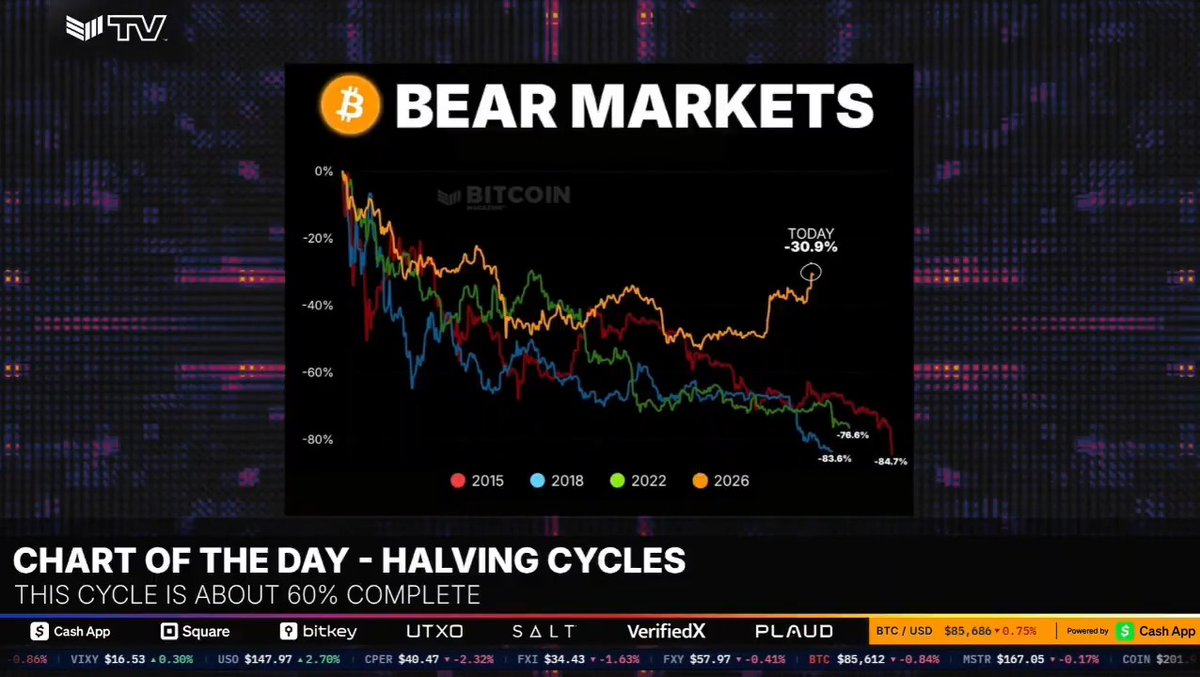
🦈 👀 THIS COULD BE A HUGE STEP FOR BITCOIN PRIVACY. Developer Misha Komarov and the team at [[alloc] init] have detailed a framework for PRIVATE Bitcoin transfers... WITHOUT a soft fork. The proposal is called: **SHIELDED BITCOIN** The idea is essentially to bring Zcash-style shielded transactions to Bitcoin while leaving Bitcoin’s existing consensus rules untouched. Instead of changing Bitcoin Script, the heavy lifting happens through cryptography. The system uses: • Zero-knowledge proofs • Witness encryption • Bitcoin PIPEs • Encrypted “notes” representing shielded BTC Users could deposit BTC into a shielded pool, privately transfer those notes, split them, spend them and eventually withdraw back into normal Bitcoin. And from Bitcoin’s perspective? The final spend can still look like an ordinary valid Schnorr-signed Bitcoin transaction. No federation. No company controlling the pool. No new blockchain. No hard fork. No soft fork. That is the BIG idea. Move the programmability into CRYPTOGRAPHY instead of changing Bitcoin itself. There are still major hurdles. The system is experimental, transactions would be larger and more expensive, and the underlying witness-encryption technology still needs serious testing before anyone should treat this as production-ready. But if developers can make it practical... Bitcoin could potentially gain MUCH stronger privacy without forcing the entire network through another contentious protocol upgrade. **Bitcoin keeps the conservative base layer.** Developers build the experimentation around it. That is an incredibly Bitcoin-native way to approach privacy. $BTC 🦈

@watchbmtv @nemothenoone @realseanhagan @GraceRemiTV Privacy money without asking anyone's permission was the entire e-gold pitch in 1996: gold-backed internet cash anyone could hold and spend. Twenty-nine years later the same argument is back on the agenda, this time as a proposal.

@watchbmtv @nemothenoone @realseanhagan @GraceRemiTV Interesting

@watchbmtv @nemothenoone @realseanhagan @GraceRemiTV Who needs Monero and Zcash after this? Answer: Nobody.


![1/ It’s finally time for Bitcoin to get privacy. Introducing strkBTC [₿]: a new wrapped Bitcoin token with built-in privacy capabilities. Shield your Bitcoin balances and transfers, or don’t. You choose 🧵](https://image.24vids.com/tw-2027005853488832975/amplify_video_thumb/2027005797591351297/img/ceIqwPvyzKLH54rx.jpg)





![PIPEs, Witness Encryption & the Future of Privacy on Bitcoin | with Misha Komarov and Clara Shikhelman 🔗 YouTube: Today, Alloc Init co-founder Misha Komarov and Head of Protocol Research ClaraS join me to unpack PIPEs — a framework that could potentially make binary covenants possible on Bitcoin without the need for a soft fork, enabling truly trustless bridges amongst other expressive functionality. Leveraging advancements in Witness Encryption — one of the most cutting-edge areas of advanced theoretical cryptography — PIPEs enables the execution of Bitcoin signatures by proving correct computation (e.g. of account balances on layer 2s and metaprotocols). Although the underlying cryptographic assumptions remain experimental and unhardened, Komarov and Shikhelman believe PIPEs could deliver the functionality of covenant-enabling upgrades like OP_CAT without the need for protocol-level changes—making PIPEs one of the most significant potential developments for Bitcoin since the advent of BitVM. The team also announced their first proposed use case this morning: a privacy protocol titled "Shielded Bitcoin." In this episode, we unpack the theory and the practice of how this technology is evolving — and what the new road ahead looks like for PIPEs, Shielded Bitcoin and beyond. This episode of Bitcoin Rails is brought to you by: LayerTwo Labs LayerTwo Labs — developing research, software, and technologies for scaling Bitcoin via the integration of Drivechains (BIP 300/301) Hashi on Sui — a primitive for executing Bitcoin DeFi transactions, without having to trust a federated bridge or other centralized entity BitBox BitBox — an open-source Bitcoin-only hardware wallet, with smooth UX and no compromises on security. Check out Bitbox [dot] swiss and use code BITCOINRAILS to get a discount TIMESTAMPS: 🎙️ 01:42 Tying PIPEs to the mission at [[alloc] init] 🔓 08:31 Defining witness encryption and conditional decryption 🛠️ 23:59 Shifting from functional encryption (PIPEs v1) to witness encryption 📜 26:17 Outlining pre-covenants vs. post-covenants on Bitcoin 🏎️ 39:37 Why PIPEs v2 is far from the end of the road 🌐 56:57 Building meta-protocols and avoiding external sequencer risks 👀 1:05:00 Implementing optional compliant privacy via viewing keys ⚡ 1:15:33 Comparing PIPEs to BitVM and rendering BIPs obsolete 🎲 1:23:07 Evaluating the min-rank hardness assumption](https://image.24vids.com/tw-2103153026441593024/amplify_video_thumb/2103138197748236288/img/8fzu26iswQ0PPTH9.jpg)