Loading video...

Video Failed to Load

Go Home

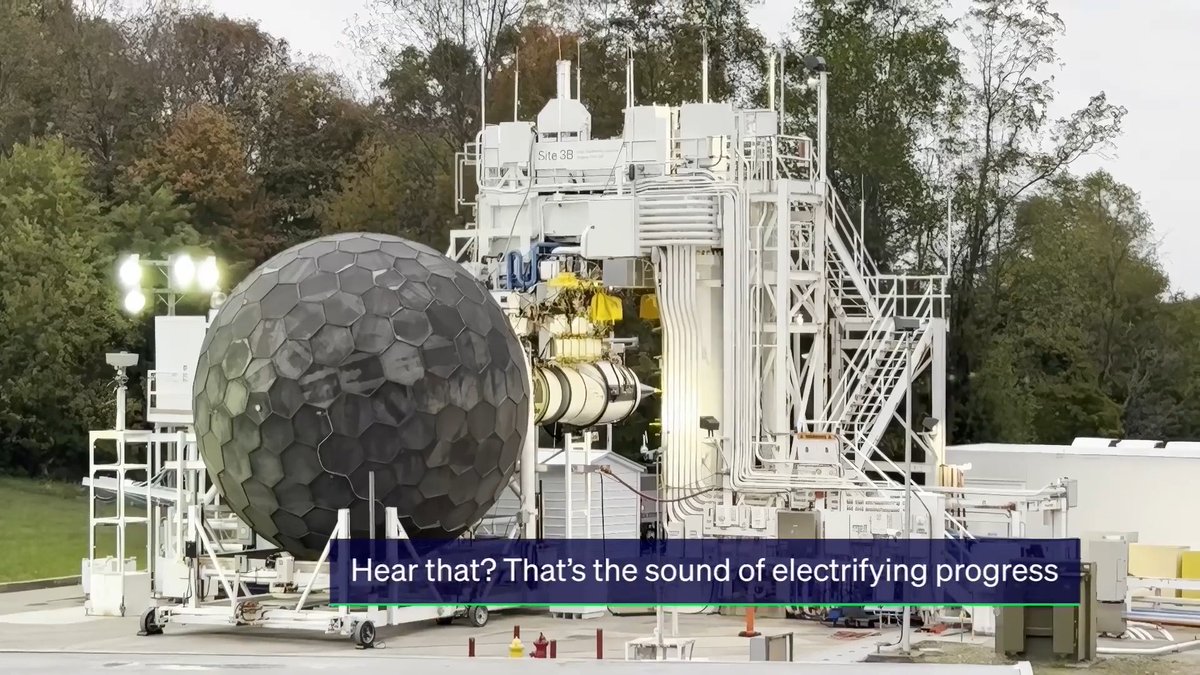
Just in time for a Labor Day “sail”, NASA’s Advanced Composite Solar Sail System (ACS3) has successfully deployed! Solar sail propulsion systems like ACS3 can make future low-cost deep space missions possible. Learn more about the ACS3 mission to fly using the power of the Sun:
156,549 views • 2 years ago •via X (Twitter)

0 Comments

No comments available

Comments from the original post will appear here
Related Videos

🚨 CHINA IS RACING TO BUILD A SPACE SOLAR POWER PLANT THAT COULD BEAM ELECTRICITY FROM ORBIT TO EARTH. Scientists at Xidian University have successfully tested a ground-based system that can wirelessly transmit kilowatt-level power over 100 meters using microwaves. Their ultimate goal is far more ambitious: placing large solar power stations in geostationary orbit (36,000 km up), where sunlight is available 24/7 with no weather or atmosphere blocking it. The project, called Zhuri (“chasing the sun”), uses mirrors to concentrate sunlight onto solar panels, converts the electricity into microwaves, and beams it down to a receiving antenna (rectenna) on Earth. Why this matters: • In space, solar energy is up to 6 times more efficient than on Earth because there’s no night, clouds, or atmospheric filtering • A single large space solar station could theoretically generate gigawatts of continuous clean power enough for millions of homes • The team has already proven the system can beam power to multiple moving targets at once • China is now among the world leaders in this technology, alongside the US and Japan The deeper implication: Space-based solar power has been a dream for decades because it could provide truly baseload renewable energy. While the technical and financial challenges are enormous (building massive structures in orbit, precise microwave beaming, and safety), steady progress like this brings the concept closer to reality. If successful, it could fundamentally change how humanity generates and distributes energy moving power collection off the planet entirely. Near-term applications could include wirelessly charging satellites or powering future lunar bases. Do you think space-based solar power will become a major energy source in the coming decades, or will it stay too expensive and complex? Follow for more frontier energy and space technology developments.

TheNewPhysics

15,361 views • 2 months ago

🚨 ELON MUSK AND NASA’S JARED ISAACMAN JUST SAID THE QUIET PART OUT LOUD: ANTIMATTER PROPULSION COULD BE THE KEY TO INTERSTELLAR TRAVEL. In a recent exchange, Musk predicted that trillions of dollars will eventually be spent developing antimatter propulsion systems to reach other star systems. NASA’s Jared Isaacman publicly backed the vision. When matter and antimatter meet, they annihilate completely, converting 100% of their mass into energy roughly 10 billion times more energy per unit mass than chemical rockets. Why this matters: • Chemical rockets are fundamentally limited by how much energy you can extract from fuel • Antimatter offers orders-of-magnitude higher energy density, which could enable dramatically faster travel and much heavier payloads • It would theoretically make interstellar missions far more feasible than current propulsion concepts The deeper reality: While the physics is sound, turning antimatter into practical propulsion is an enormous engineering challenge. We can produce tiny amounts of antimatter at places like CERN, but scaling it up by the many orders of magnitude needed for a spacecraft is currently beyond our capabilities. Storage is also extremely difficult antimatter annihilates on contact with normal matter. Right now, this remains a long-term theoretical possibility rather than a near-term engineering project. However, the fact that serious figures in both the commercial space sector and NASA are openly discussing it shows how the conversation about deep-space propulsion is evolving. Do you think antimatter propulsion will remain science fiction for the next century, or could we see meaningful progress within our lifetimes? Follow for more frontier space propulsion and interstellar travel concepts.

TheNewPhysics

176,408 views • 1 month ago

🚨 PARKER SOLAR PROBE JUST FOUND HIGH-ENERGY PARTICLES NEAR THE SUN THAT NO MODEL PREDICTED AND WE DON’T KNOW HOW THEY GOT SO ENERGETIC. During its close passes through the solar corona, NASA’s Parker Solar Probe detected protons accelerated to energies around 400 keV roughly 1,000 times higher than current models of magnetic reconnection at the heliospheric current sheet could explain. The particles appear to be trapped and energized inside magnetic islands that form and merge during reconnection events at the current sheet (the vast surface where the Sun’s magnetic field flips polarity). This mechanism was not expected to produce such high energies so close to the Sun. Why this matters: • It reveals a previously unknown or underestimated source of energetic particles right in the solar corona • Existing models of solar energetic particles have focused mainly on shocks from coronal mass ejections — this suggests reconnection can also be a powerful accelerator • The same process may be contributing more to coronal heating than previously calculated • It has implications for space weather forecasting, since these particles can affect spacecraft and astronauts The deeper implication: Parker is showing us that the physics of the near-Sun environment is more energetic and complex than our models assumed. Magnetic reconnection long known as an important process appears capable of accelerating particles to surprisingly high energies through the merging of magnetic islands. This doesn’t just tweak our understanding of the Sun; it may force revisions in how we model particle acceleration across many astrophysical environments. We’re still in the early stages of understanding what Parker is revealing, but it’s already clear that the corona is more violent and dynamic than we thought. How do you think this discovery might change our models of space weather or solar physics in the coming years? Follow for more updates from Parker Solar Probe and the evolving picture of our Sun.

TheNewPhysics

16,192 views • 2 months ago