Video yรผkleniyor...

Video Yรผklenemedi

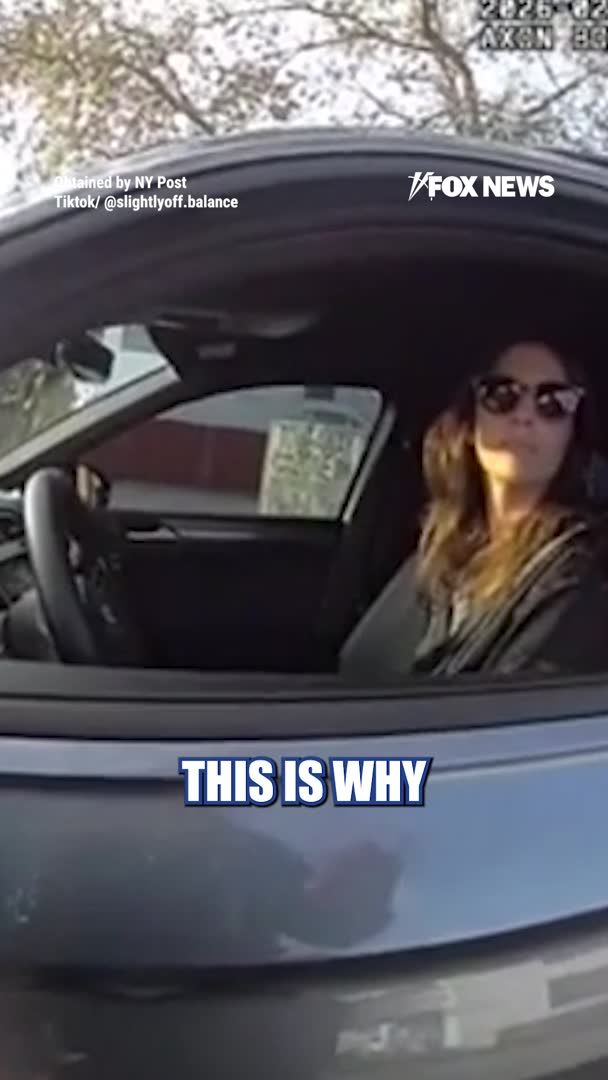
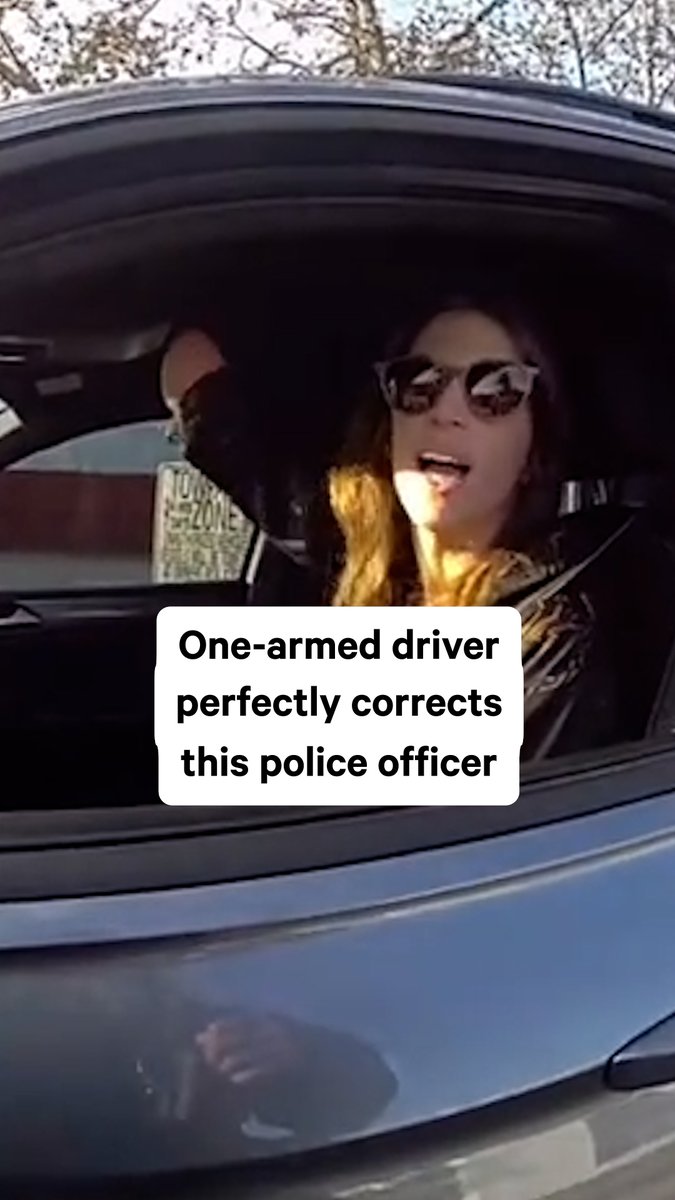
JUSTIFIED FORCE OR EXCESSIVE? โ€œLET ME SEE THE VIDEO.โ€ Thatโ€™s how it started. A routine traffic stop. A stop sign. A flashing set of red and blue lights in the rearview mirror. The officer approaches calmly and explains the violation. She immediately demands proof. โ€œLet me see me running...

106,687 gรถrรผntรผleme โ€ข 4 ay รถnce โ€ขvia X (Twitter)

0 Yorum

Yorum bulunmuyor

Orijinal gรถnderinin yorumlarฤฑ burada gรถrรผnecek

Benzer Videolar

TRAFFIC STOP TURNS INTO A LAWSUIT BATTLE If a driver becomes argumentative during a traffic stop, does the officer have the right to take stronger control of the situation? Is this a case of someone standing up for their rightsโ€ฆ or someone hoping a lawsuit will erase a mistake behind the wheel? A traffic stop in Hurst, Texas will turn to the courtroom to decide who was actually in the wrong. What is your opinion??? Newly released dashcam footage shows a woman pulled over for speeding while traveling with her 15-year-old son. According to the driver, she had just come from a doctorโ€™s appointment and a hair appointment when the officer initiated the stop. At first, the interaction appears fairly typical. The officer runs her information and returns to the vehicle with a citation. Thatโ€™s when things start to change. The conversation becomes tense. Voices rise. What should have been a simple ticket suddenly turns into a confrontation caught on camera. Now the driver, Taneisha Thompson, says the officer crossed the lineโ€ฆand sheโ€™s filed a civil lawsuit against the police department. She believes the stop escalated unnecessarily and that the officerโ€™s actions violated her rights. Supporters of the officer say something different. They argue that traffic stops can turn dangerous quickly and officers must maintain control of the situation. From their perspective, issuing a citation and managing the stop is simply part of the job. Now the question isnโ€™t just about a speeding ticket anymore. Itโ€™s about accountabilityโ€ฆ authorityโ€ฆ and whether a routine stop became something it shouldnโ€™t have. A court may eventually decide who is right. Itโ€™s currently pendingโ€ฆ Should a heated interaction during a routine ticket ever justify a lawsuit against a police department?

๐Œ๐‘. ๐–๐‡๐ˆ๐“๐„ โ„ข

267,203 gรถrรผntรผleme โ€ข 3 ay รถnce

Should officers give someone extra patience in a situation like thisโ€ฆ or immediately take control once the driver becomes confrontational? The ending of video is the bestโ€ฆ A SIMPLE TRAFFIC TICKETโ€ฆ OR A SITUATION ABOUT TO EXPLODE? What should have been a routine traffic stop suddenly turned into a tense roadside confrontation. Officers pulled a woman over for a violation and issued her a citation. Normally, the process is simpleโ€ฆexplain the ticket, have the driver sign it, and everyone moves on. But thatโ€™s not what happened. The woman suddenly insisted she had no idea her license was suspended. Her frustration quickly turned into anger. Voices rose. She refused to accept what officers were telling her and the stop began spiraling out of control. Now the officers faced a dilemma. Do they keep trying to calmly explain the situation and risk the scene escalating even more? Or do they move quickly to detain her for driving on a suspended license before the roadside argument turns into something dangerous? Every second the tension grew. A stop that should have taken two minutes had now turned into a confrontation on the side of the roadโ€ฆ with passing traffic, emotions running high, and officers forced to make a decision in real time. One small ticket. One angry driver. And suddenlyโ€ฆ a routine stop becomes a situation where every move matters. If you truly didnโ€™t know your license was suspended, would you still be responsible once youโ€™re behind the wheel? At what point does arguing during a traffic stop turn from frustration into interfering with law enforcement?

๐Œ๐‘. ๐–๐‡๐ˆ๐“๐„ โ„ข

39,449 gรถrรผntรผleme โ€ข 3 ay รถnce

"I can sign the ticket from inside my car." โ€‹A routine stop for a phone and a coffee cup turned into a full-blown police standoff when an Orlando driver refused to get out of her SUV. โ€‹She thought she knew her rightsโ€”but the law said otherwise. โ€‹Why a basic traffic ticket turned into a night in jail: The officer pulled over a red Dodge SUV after observing the driver run a stop sign at the intersection of Livingston Street and Broadway Avenue. The officer noted that the driver had both hands occupiedโ€”a cell phone in her right hand and a coffee tumbler in her leftโ€”leaving her unable to properly manage the steering wheel. โ€‹Upon running her information, the officer discovered that the driverโ€™s license had two active suspensions and that there was a "seize tag" order in place for her license plate. โ€‹Because driving on a suspended license is an arrestable offense in Florida, the officer called for backup. When additional officers arrived, they requested that she exit the vehicle to sign citations and be placed under arrest. โ€‹The driver repeatedly refused to step out of the SUV, arguing that she could sign the paperwork from inside her car and questioning the necessity of getting out. Officers warned her multiple times that if she did not comply, they would be forced to break her window and physically remove her. โ€‹After an extended standoff, the driver eventually opened her door but continued to physically resist being handcuffed. She was ultimately secured and placed in the back of a patrol car. โ€‹The legality of this interaction rests heavily on established U.S. Supreme Court precedent and specific Florida State Statutes (F.S.S.). โ€‹1. Ordering the Driver Out of the Vehicle โ€‹The driver repeatedly argued that she did not legally have to step out of her car to sign a ticket. Legally, she was incorrect. โ€‹Pennsylvania v. Mimms (1977): The U.S. Supreme Court ruled that an officer can order a driver out of a vehicle during a lawful traffic stop as a matter of course for officer safety. The officer does not need separate suspicion or justification to make this demand. Failing to comply turns a traffic infraction into a criminal obstruction issue. โ€‹2. Driving While License Suspended (DWLS) โ€‹Statute: F.S.S. 322.34 โ€‹ While some traffic violations only warrant a civil citation (a ticket), driving with a known suspended license can be treated as a criminal offense (misdemeanor or felony depending on prior convictions). Because her license had multiple active suspensions, the officer had full legal authority to change the traffic stop into a custodial arrest. โ€‹3. Resisting an Officer Without Violence โ€‹Statute: F.S.S. 843.02 โ€‹This charge applies when an individual intentionally resists, obstructs, or opposes an officer who is engaged in the lawful execution of their legal duties. By refusing lawful commands to exit the vehicle during an arrest, the driver obstructed the officer's duty, resulting in this criminal charge. โ€‹4. Hands-Free / Distracted Driving Laws โ€‹Statute: F.S.S. 316.305 (Wireless Communications Using a Mobile Distracted Device) โ€‹In Florida, texting or holding a phone while actively driving is a primary offense, meaning an officer can pull you over solely for that action. While holding a coffee cup isn't inherently illegal, using both hands for non-driving objects can be cited under broader careless driving statutes (F.S.S. 316.1925), which require drivers to operate vehicles in a safe, attentive manner. โ€‹Final Charges & Citations โ€‹Following the encounter, the driver was formally processed under the following terms: โ€‹Criminal Charge: Resisting an officer without violence. โ€‹Criminal Charge: Driving while license suspended (DWLS). โ€‹Civil Infraction: A $164 traffic ticket for failing to stop at the stop sign.

โœจ๏ธSereniteeโ™กSamโœจ๏ธ

22,838 gรถrรผntรผleme โ€ข 1 ay รถnce

This driver turned a simple paperwork mistake into a mandatory felony arrest in under five minutes. Once the deputy confirmed that Rebeccaโ€™s license was permanently revoked, the nature of the interaction immediately shifted from a routine traffic infraction to a criminal investigation. Under Florida law, driving with a permanently revoked or suspended license is a criminal offense, meaning the deputy no longer had the discretion to simply issue a warning for the obscured plate and let her go. The confrontation usually escalates due to a combination of denial and legal misconceptions: โ€‹The driver repeatedly denies the suspension, likely expecting the officer to take her word over the official database dispatch system. Presenting expired or irrelevant paperwork is a common stall tactic, but it does nothing to override the real-time computerized records the officer is viewing on their MDT (Mobile Data Terminal). โ€‹Shouting into a cell phone that she is "about to be arrested" serves as a self-fulfilling prophecy. Instead of de-escalating, it heightens tension and signals to the officer that the driver is mentally preparing to resist. When the deputy ordered her out of the vehicle, Rebecca crossed a legal point of no return by refusing. โ€‹Per the landmark U.S. Supreme Court ruling Pennsylvania v. Mimms (1977), a police officer has the absolute authority to order a driver out of a vehicle during a lawful traffic stop for officer safety. Refusing to comply with this lawful order is inherently a crime (Resisting an Officer Without Violence). โ€‹By physically resisting the extraction and threatening violence ("threatening to punch the officer"), the driver legally compounded her issues. What would have likely been a misdemeanor charge for driving on a suspended license and non-violent resisting quickly escalated into felony territory due to the explicit threats against law enforcement. โ€‹Ultimately, the passenger's subsequent conversation with the deputy highlights the tragic irony of the situation. The root causeโ€”a failure to complete a mandatory Basic Driver Improvement (BDI) classโ€”was an administrative issue that could have been sorted out through the court and the DMV. By choosing physical and verbal resistance over compliance, the driver transformed a fixable paperwork problem into a severe criminal arrest.

โœจ๏ธSereniteeโ™กSamโœจ๏ธ

14,369 gรถrรผntรผleme โ€ข 1 ay รถnce

Watch the exact moment a traffic stop went from a citation to an arrest over a single piece of plastic. An officer pulls the driver over, stating she failed to come to a complete stop at a stop sign. The driver refuses to physically hand over her driver's license to the officer. Instead, she holds it up so the officer can see the information but refuses to surrender physical possession of the license. She cites a belief that she is not legally required to "hand" the officer her license. โ€‹The officer repeatedly explains that he needs to hold it to verify it as part of the traffic stop. The driver continues to refuse, and the officer orders her to step out of the vehicle. โ€‹The driver eventually steps out of the vehicle after a lengthy debate about the law and her rights. The video concludes with the driver outside her vehicle, continuing to argue her legal stance with the officers and getting arrested for resisting and obstructing law enforcement. โ€‹The Conflict Over "Presenting" a License โ€‹In Florida, as in many states, the requirement to "present" or "submit" a driver's license is not interpreted as merely showing it from a distance. Law enforcement requires physical possession of the document for several operational reasons: โ€‹Authentication: Officers must verify the security features of the card (holograms, tactile elements, etc.) to ensure it is not a counterfeit or an altered document. โ€‹Database Verification: To complete a traffic stop investigation, the officer must run the license through the FCIC/NCIC (Florida Crime Information Center / National Crime Information Center) databases. This check verifies the status of the license (valid, suspended, revoked) and checks for outstanding warrants or other issues. An officer cannot perform this background check without the license number and/or the ability to scan the card. โ€‹The Charge of "Resisting Without Violence" โ€‹While the driver may have provided other documentation, the refusal to surrender the driver's license for verification is viewed by law enforcement as a failure to comply with a lawful order during a traffic stop. โ€‹The Legal Trigger: Under Florida Statute ยง 843.02, an officer can charge a person with "resisting an officer without violence" if they believe the individual is obstructing them in the "lawful execution of any legal duty." โ€‹The Interpretation of Obstruction: If an officer determines that the driver's refusal to hand over the license prevents them from completing the mandatory identification and background check, they may consider the driver to be intentionally obstructing their investigation. โ€‹The Escalation: Even if the driver was cooperative in other aspects, the persistent refusal to comply with the officerโ€™s instruction to hand over the license can lead to a formal detention and, ultimately, an arrest. The arrest is typically made because the officer determines that the driver is willfully impeding their ability to perform their official duties. โ€‹In court, defense attorneys often argue whether a driver's actions constituted "obstruction" or merely a misunderstanding, but the outcome is highly dependent on the judge's interpretation of whether the driverโ€™s refusal effectively stopped the officer from performing their duties.

โœจ๏ธSereniteeโ™กSamโœจ๏ธ

12,796 gรถrรผntรผleme โ€ข 1 ay รถnce

This dude unloads on cop in a who is in the right type situation. We are in Adam's county PA where a Law Enforcement Ranger pulls over a man because he is saying he could not see his tag. By the officers own admission he was able to see the tag as he got closer but proceeded with the stop. As per usual the officer asks for ID and the man in truck went to work on this officer telling him this is an illegal stop as no crime has been committed so he is not required to provide ID. Through out the interaction he asks the officer if he is free to go and the officer doubles down on detainment. However at the same time when asked the officer was not able to articulate a crime. The man also asked for a sergeant and the officer never compiled by getting a supervisor on scene which honestly would have been the best move. There are two ways to look at this interaction. The eyes of the officer: The officer calmly maintains that the traffic stop is entirely lawful. In the United States, law enforcement needs reasonable suspicion to initiate a traffic stop. An obscured license plate or illegally dark window tint satisfies that standard in almost every jurisdiction. Furthermore, once a lawful traffic stop is initiated, a driver is legally required to produce a valid driver's license, proof of insurance, and vehicle registration. The driver's perspective: The driver claims that his tags are legit and the officer was able to see that when he ran them. He argues that because the ranger claimed at first he could not see the tags but now he can as he approached the vehicle. Since the officer admitted he can now see the tags and there is no problem with the tags, the initial stop was "erroneous" and constitutes an illegal search and seizure. He also details a personal grievance with local law enforcement, claiming a local district attorney and police officers have been "terrorizing" him. What is your take on this stop? Was this a case of an officer error where with the cop trying to save face by digging for a reason for the stop, or was this a legal stop and this officer deserves praise for staying calm while dealing with this man's outbursts? Share your thoughts below.

Giggling Ganon

191,102 gรถrรผntรผleme โ€ข 10 gรผn รถnce

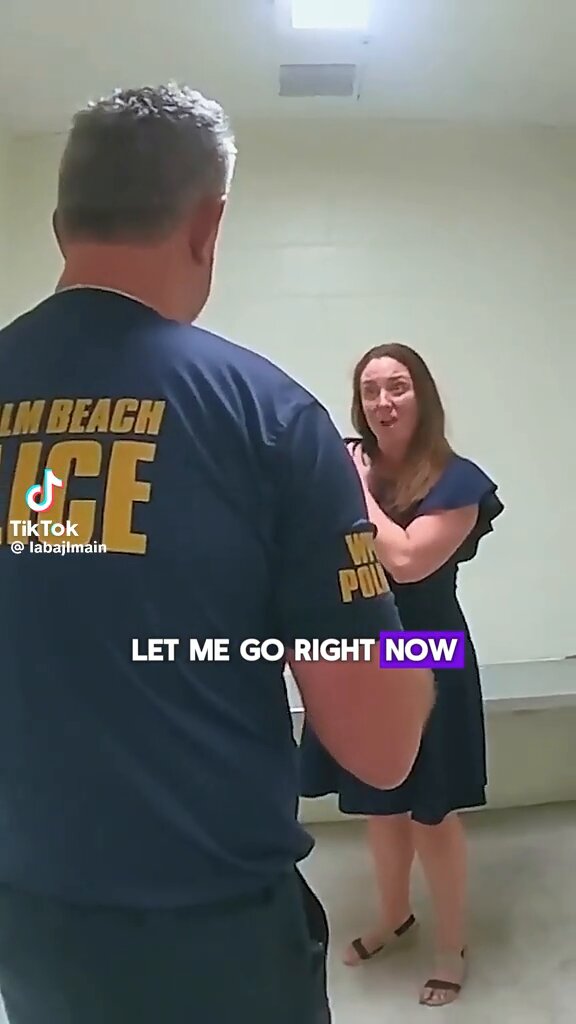
She argued instead of backing up. By the end of the encounter, she was headed to jail facing multiple criminal charges. West Palm Beach Police say the incident began after officers found Sarah Swanson driving the wrong way down a one-way street during an active public protest. Officers repeatedly instructed her to back up because she was blocking traffic and there were pedestrians, including children, nearby. Instead of complying, Swanson argued that she was trying to get home. Officers warned that if she refused to move, she would be removed from the vehicle and arrested. When she continued refusing lawful commands, she was taken into custody. While handcuffed, the encounter escalated. Officers offered to remove the handcuffs so she could perform field sobriety exercises in a less crowded area, but she refused to cooperate. During the confrontation, she a$saulted an officer, resulting in an additional felony charge. After being transported to the police holding facility, Swanson admitted she made a "wrong decision" by driving into the protest. She was ultimately booked into the Palm Beach County Jail on charges of: - DUI (Driving Under the Influence) - Battery on a Law Enforcement Officer - Resisting Arrest Legally, Florida officers may detain and arrest a driver who refuses lawful commands during a traffic stop when public safety is at risk. Intentionally a$saulting or making unlawful physical contact with a law enforcement officer performing official duties can elevate the offense to Battery on a Law Enforcement Officer, a felony under Florida law. Whether the DUI and other charges result in conviction is determined later through the court process.

โœจ๏ธSereniteeโ™กSamโœจ๏ธ

200,127 gรถrรผntรผleme โ€ข 12 gรผn รถnce

Officer gets upset at man that knows his rights so he packs up his toys and goes to sit in his squad car until another officer gets him to come out and finish the traffic stop. โ€‹The driver, identified as Mr. Brewer, is pulled over for a standard nighttime headlight violation. He complies fully with the initial lawful demandsโ€”handing over his driver's license and proof of insurance. But once the officer has the necessary paperwork to write a fix-it ticket or a standard citation, the questions start drifting into unlawful territory. โ€‹After processing the license, the officer asks Mr. Brewer for his phone number, followed by a request for his Social Security number. โ€‹Mr. Brewer correctly draws the line here. While law enforcement can ask for voluntary information, they cannot legally compel a driver to hand over a Social Security number or phone number during a routine traffic infraction. Mr. Brewer stands his ground, stating clearly: "I've given you everything I'm legally required to give you." โ€‹The core battle of this stop happens when a backup officer arrives on scene. The original officer had demanded identification from Mr. Brewerโ€™s wife, who was sitting quietly in the passenger seat. The second officer attempts to back his partner up by claiming that because Alabama is a "Stop and Identify" state, they have the right to demand her ID. โ€‹This is a massive and common misconception among law enforcement, and Mr. Brewer shuts it down perfectly: โ€‹The reason for the stop is a headlights violation. The scope of the officer's traffic investigation stops at the driver. โ€‹ Under Fourth Amendment precedent, a passenger in a vehicle is not the operator and cannot be forced to identify themselves unless officers have reasonable, articulable suspicion that the passenger specifically has committed, is committing, or is about to commit a crime. Simply riding in a car with a headlight violation does not strip you of your right to privacy. โ€‹Knowing that Mr. Brewer knows the law, is well-aware that refusing to sign a ticket can result in an arrest, but that signing it means the stop is legally concluded, the officers realize they have zero leverage. With the citation signed and no legal grounds to prolong the detention or force the passenger to comply, the officers back down and send them on their way. โ€‹Knowing your rights isn't about being difficultโ€”it's about keeping the system accountable.

Giggling Ganon

38,680 gรถrรผntรผleme โ€ข 9 gรผn รถnce

A routine traffic stop turned into something much bigger after one small license check. An officer ran the license plate on a vehicle and learned the registered owner, Valerie, had a suspended driver's license after failing to pay a traffic ticket. After stopping the vehicle, Valerie appeared genuinely surprised that her license had been suspended. As the conversation continued, the officer noticed she seemed unusually anxious and that one of her hands showed signs of physical wear. Valerie explained she had been doing construction work on a house, but the officer believed her behavior and the marks on her hand warranted further investigation. A second officer arrived to assist, and Valerie was placed under arrest for driving with a suspended license. Because no licensed driver was available to take the vehicle and it was being impounded, officers conducted a standard inventory searchโ€”a procedure used to document the contents of a vehicle before it is towed. Although Valerie repeatedly objected, officers explained the search was required under department policy and did not require her consent. During the inventory, officers located multiple paraphernalia in the vehicle's center console. Valerie was ultimately charged with driving under the influence (DUI) and possession of drug paraphernalia under Florida law, in addition to the suspended-license violation.

โœจ๏ธSereniteeโ™กSamโœจ๏ธ

43,657 gรถrรผntรผleme โ€ข 6 gรผn รถnce

VIDEO: Woman who threw speeding ticket toward Hurst Police officer brings complaint to city council FOX 4 NEWS ... HURST, Texas - A Hurst woman and the local police department are telling different sides of a story involving a traffic stop and a thrown speeding ticket. On Jan. 16, Taneisha Thompson was stopped by a Hurst police officer after allegedly speeding in a school zone. Hurst Police released body camera footage of the incident on Tuesday. In the video, an officer issues Thompson a traffic citation after a brief conversation. Thompson is seen throwing the ticket back at the officer, who then placed Thompson under arrest with the help of another officer. Officers pulled Thompson out of her car and onto the ground before arresting her. Thompson's child was present in the passenger seat of the vehicle at the time of the incident. Thompson has hired civil rights attorney Lee Merritt as she considers legal action against the Hurst Police Department. She says she suffered a black eye, a lip injury that required stitches and several bruises on her body from the incident. Thompson read a statement to reporters on Tuesday evening during a press conference before sharing her story with Hurst City Council. "I am here today because this is bigger than meโ€”this is about all of us. It is about ensuring de-escalation, about prioritizing the safety of every citizen, so that no one else endures what I did. I am deeply grateful for all the support I have received from around the worldโ€”this is a call for justice, for humanity, and for safety. I will not be silenced," part of Thompson's statement read. Merritt answered questions during the presser. When asked about Thompson's throwing of the ticket, Merritt said: "I tell my clients, I tell the public in general, itโ€™s not best to litigate a case on the side of the road. If youโ€™re upset about a police encounter, hold your peace, hire an attorney, file a complaint with the police department later." He also stated: "I let the public know, just because this is the law, that you actually have every right to be rude to law enforcement. Not best practice, but you have every right to be rude." Hurst Police are standing by the officer. "Corporal Morgan acted in full accordance with the law and with our departmentโ€™s policies and the department stands firmly behind his actions," Hurst Police Chief Billy Keadle said. The department conducted an investigation into the incident after Thompson filed a formal complaint claiming excessive use of force. The investigation determined the claims were unfounded. Alex del Carmen, a criminologist at Tarleton State University, viewed the footage and said the officer's actions were lawful. "What I said after reviewing the entire footage was that the woman was very disrespectful of the office during the entire exchange. Further, that the officer, up to the point of handing the ticket to her, was very respectful, professional and showed restraint," del Carmen said. "However, when the woman threw the citation out the window, the officer had the choice of either giving her another citation for loitering, ignoring it, or asking another officer to step in. Instead, he chose to issue a verbal command for the woman to get out of the vehicle, and she refused." "At that point, the officer used physical force. Although this was awful, it is lawful, for the woman refused to get out of the vehicle and ignored the officerโ€™s commands."

David Sentendrey

65,664 gรถrรผntรผleme โ€ข 3 ay รถnce