Video wird geladen...

Video konnte nicht geladen werden

Zur Startseite

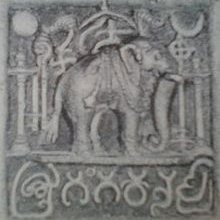
Kannada earned Classical Language status not by lobbying (like Tamil) bt by history Ganga, Nolamba & Bana dynasties wrote governance, grants & culture in pure Kannada engraved on copper plate inscriptions centuries ago Watch video how struggle faced to get that recognition 1/n
100,089 Aufrufe • vor 5 Monaten •via X (Twitter)

0 Kommentare

Keine Kommentare verfügbar

Kommentare vom Original-Post werden hier angezeigt

Ähnliche Videos

Ather's announcement of the Tamil dashboard (well-timed for Pongal) made me go back to the time when the company announced the launch of its Kannada dashboard, for Kannada Rajyotsava Day on November 1, 2025. The Tamil ad has actor-director Parthiban using his famous Tamil wordplay to talk about Tamil, as a language, and then introducing the scooter's Tamil dashboard, with a nod to his famous 'Dubai Kurukku Sandhu' comedy too :) Parthiban speaks entirely in Tamil, addressing Tamilians directly - understandably so. But interestingly, Kannada actor Ramesh Aravind (who, incidentally, has a sizeable body of work in Tamil cinema too) spoke in a mix of English and Kannada. Ramesh seemed to be addressing more of the non-Kannadiga population than Kannada-speaking, asking people to learn Kannada through small, simple methods using everyday conversation. Why this change? Is it because of Bengaluru's famous cosmopolitan nature, and the predominant grouse of the local population that those who make the city their home do not make an attempt to assimilate into the local culture (with knowledge of Kannada cited as a gateway for such assimilation, even though cultural assimilation can happen in many more ways than just speaking or understanding the language)? But isn't Karnataka much, much bigger than just Bengaluru? Step away from Bengaluru and you would more likely need to understand Kannada for everyday conversations in most other cities in Karnataka. Not very different from stepping away from Chennai, into the many other cities of Tamil Nadu. The other logical miss was the fact that the Kannada dashboard was meant for people who understand, prefer, and love that language. Not those who are learning it (or not) to assimilate into the local culture. Ather anyway has multilingual dashboard; so, someone who lives in Bengaluru and has Hindi as their mother tongue, would rather choose the Hindi dashboard, over the Kannada dashboard. There's no point in addressing them in a mix of English and Kannada, and introducing the Kannada dashboard to them. The Tamil ad plays first, followed by the Kannada ad. #marketing #advertising #language

Karthik 🇮🇳

20,421 Aufrufe • vor 6 Monaten

Periyarist Propaganda or Pure Ignorance? Kamal Haasan Belittles Kannada Hello Kamal Haasan, before making such historically and linguistically inaccurate statements, kindly educate yourself with authentic historical scholarship rather than regurgitating outdated, ideologically driven narratives. This land doesn’t need language lessons from Periyarist fanatics who twist history to fit their agenda. Kannada is one of the world’s oldest surviving languages, with a rich literary and inscriptional tradition spanning over 2,000 years. The Halmidi inscription (circa 450 CE) stands as undeniable evidence of Kannada’s early use and evolution far from being a "branch" of Tamil, as you so inaccurately claim. Your remarks are not just misleading, they are deeply disrespectful to an entire linguistic and cultural identity. This is not how one unites the diverse heritage of the South — by sowing discord with baseless assertions. Such linguistic chauvinism only deepens divides. And DrShivaRajkumar your silence on this issue is both surprising and disheartening. As the torchbearer of Dr. Rajkumar’s legacy and a senior voice in Sandalwood, your words carry weight. When the dignity of Kannada is publicly undermined, silence is not neutrality it’s complicity. It's time to rise above diplomatic silence and stand up not just for Kannada, but for truth, heritage, and cultural integrity #bengaluru #bangalore #kannada #kannadiga ಬೆಂಗಳೂರು ನಗರ ಪೊಲೀಸ್‌ BengaluruCityPolice ಬೆಂಗಳೂರು ಸಂಚಾರ ಪೊಲೀಸ್ BengaluruTrafficPolice CP Bengaluru ಪೊಲೀಸ್ ಆಯುಕ್ತ ಬೆಂಗಳೂರು Joint CP, Traffic, Bengaluru alok kumar DGP KARNATAKA ಕರ್ನಾಟಕ ರಾಜ್ಯ ಪೊಲೀಸ್ Karnataka State Police ChristinMathewPhilip

Karnataka Portfolio

15,721 Aufrufe • vor 1 Jahr

“India is not divided by language on the ground… it is divided by politics on social media.” This video itself proves one simple thing: A Tamil Nadu street vendor came to another state, spoke Hindi normally, interacted with customers, sold food, earned money, and people happily bought from him. No hate. No fight. No force. That’s how real India works. The common Indian understands one thing very clearly: Language is a tool for communication, not a weapon for division. If someone goes to Tamil Nadu and learns a few Tamil words out of respect good. If someone from the South speaks Hindi in North India for business convenience also good. If someone uses English because it connects more customers again normal. This is called practicality and coexistence. But the problem starts when political groups, extremist regionalists, and agenda-driven NGOs turn language into an emotional battlefield for votes, identity politics, and division. One day they say: “HINDI IMPOSITION!” Another day the same people use Hindi or English for: • business • YouTube content • movies • tourism • customer dealing • jobs • social media reach Why? Because market decides communication naturally. Nobody forced this vendor. Nobody attacked him for speaking Hindi. Customers understood → business happened. That is organic India. India has always been multilingual: Tamil, Hindi, Marathi, Bengali, Punjabi, Telugu, Kannada, Malayalam, Gujarati, Sanskrit every language is part of Indian civilization. The real civic sense is: “Respect every language, force none.” The moment politicians start telling people: “You are different from them.” “North vs South.” “This language vs that language.” …they create unnecessary poison among people who otherwise live, travel, work, eat, and do business together peacefully every day. A Tamil person working in Delhi, a Punjabi working in Bengaluru, a Marathi businessman in Hyderabad, a North Indian worker in Chennai this is not division. This is India functioning as one nation.

First Witness X

103,534 Aufrufe • vor 2 Monaten

On the back of the recently proposed (now paused) Karnataka bill mandating reservations for locals in the private sector, the ensuing criticism, and the criticism of the criticism, here comes a heartwarming new ad for WhatsApp made by BBDO India and directed by Shimit Amin. In fact, the film itself has a mild whiff of his film, Rocket Singh! Ikbir, the young Sardar chef, who comes to Bengaluru to join a hotel, is shown to be lost, initially, because he is unable to relate to the cultural milieu, but his mother's words inspire him to use food as a route to win over his colleagues. Food is a universal language by itself, and his effort to make a local cuisine (Bisi Bele Bath) helps bridge the first step. But he doesn't stop with food. He makes an effort to learn and speak Kannada too. So, while he may not be fluent in Kannada, or familiar with the local culture, he makes an earnest effort to explore, understand, and appreciate them (including celebrating Ugadi), instead of assuming that the local population needs to learn a language that he is comfortable with (Hindi, as a bridge) and that he can continue to ignore/overlook the local culture. In his line of work, the local culture manifests in the form of food, thankfully. The locals are not shown to be intolerant. They bond among themselves, but they also make an attempt to get Ikbir to feel welcome (asking the chat group to keep the conversation in English) once they understand that he is making an honest effort to adapt. The human story in this ad is truly wonderful. Where I felt it fell short is its link with WhatsApp. Except 'Verified Business' (the 'Spoken Kannada' business handle), the other features don't seem to be explored adequately. Shwetha's WhatsApp message comes with added context ('Block', 'Add', 'Not a contact. No common groups') but the story has no context to explore them. Ditto with the 2-step authentication or end-to-end encryption that are shown when Ikbir opens his voice messages or does a video-call with his mother. Most users take these for granted, so unless these are explored further, their presence in the script seem perfunctory. #advertising #marketing #creative

Karthik 🇮🇳

108,657 Aufrufe • vor 2 Jahren

How does the presence of older siblings influence the development of language? This lovely video brought my mind immediately to research on the topic. There is some consensus that the presence of one or more siblings can correlate with slightly slower* language development among children who are not first born. This is because parents juggling the demands of multiple children generally have less time for one-on-one interaction. But research suggests that this the presence of a “cognitively sensitive” sibling can mitigate against such delays. What is “cognitively sensitive?” It’s this little guy. Notice how he not only takes time out to deliberately expose his newborn sister to language and vocabulary, but makes an effort to slow and simplify his language in recognition that he’s speaking with a baby. He shows the photos. He points (as he’s able) to match vocabulary with what’s on display. It’s like having a third, mini-parent. What a fantastic little teacher. *By the way, the delayed language often displayed by younger siblings is not anything to get too worked up about. Might they develop a little slower? In some cases yes. But do they catch up and close this gap? Also yes. In the long run, there’s also plenty of reason to believe that the presence of siblings can be advantageous. Though subsequent siblings may receive slightly less one-on-one time, they are often exposed to richer and more varied language due to the presence of older children in the home. What was your experience? This loving brother-sister pair was shared to IG by halesmoore.

Dan Wuori

418,388 Aufrufe • vor 2 Jahren

Dear Non-Marathi Speaking brothers,sister’s,Influencers and Commentators, (kindly listen to below attached clip in Hindi) Criticizing Marathi culture or leaders like Raj Thackeray and Uddhav Thackeray may unintentionally fuel their divisive agendas. Here’s why we should approach this issue thoughtfully: 1. Avoid Unintended Consequences: Criticizing Raj Thackeray and Uddhav Thackeray can generate sympathy among Marathi-speaking locals, inadvertently boosting their support. Let the local Marathi population, who understand the nuances, address these leaders through the democratic process. 2. Divisive Narratives Harm Unity: Claims on TV and YouTube about Mumbai’s demographic split (46% Marathi-speaking vs. 54% non-Marathi) mirror the divisive tactics of leaders like Raj Thackeray. Such rhetoric risks fragmenting Sanatana Dharma Hindu voters, playing into the hands of those pushing language-based division. 3. Marathi Voters Have Spoken: In the 2024 Maharashtra Assembly Elections, Marathi-speaking voters rejected Raj Thackeray’s MNS, which secured zero seats and just 2% vote share statewide (8-10% in Mumbai). Uddhav Thackeray’s UBT party also won only 20 seats. The local electorate knows how to counter divisive language politics effectively. 4. Let Locals Lead: Non-Marathi speakers, both within and outside Maharashtra, should refrain from attacking these leaders or Marathi culture. Such criticism often backfires, aiding their narrative of victimhood to sway upcoming local elections, including BMC polls. 5. Lessons from the Past: In 2008-09, excessive FIRs against Raj Thackeray and MNS created sympathy among Marathi voters, helping Congress-NCP win the 2009 elections by splitting opposition votes. Let’s not repeat this cycle. 6. Mutual Respect is Key: Both sides—Raj Thackeray’s insistence that everyone must speak Marathi and non-Marathi speakers’ refusal to engage with the language—reflect arrogance that undermines India’s unity. Embracing and respecting each other’s languages strengthens our diverse culture, while ego-driven conflicts weaken it. 7. Media Missteps: The Mira-Bhayander incident, where a shopkeeper was allegedly attacked by MNS workers, was misreported. Reports suggest the shopkeeper provoked the situation by insulting customers over language. Media must report facts fully to avoid inflaming tensions. 8. A Broader Perspective: Similar issues, like the reported arrogance of SBI officials toward Kannada-speaking locals in Bengaluru, highlight a recurring problem. If individuals choose to live or work in a state, respecting its language and culture is essential. Disrespect or refusal to engage fosters division. India’s strength lies in its linguistic and cultural diversity. Let’s promote unity by respecting local languages and addressing political challenges through dialogue and democracy, not division. #UnityInDiversity #RespectAllLanguages #Maharashtra #Marathi #MarathiLanguageRow #marathilanguage #Hindi #Tamil #Kannada 👇

KailashGWagh 🇮🇳

93,772 Aufrufe • vor 1 Jahr

From Forts to Classrooms Maratha Legacy Lives On! Laid the foundation stone of the ‘Shri Chhatrapati Shivaji Maharaj Special Center for Security and Strategic Studies’ and inaugurated the ‘Kusumagraj Special Center for Marathi Language, Literature and Culture’ at JNU, today. The commemorative stone plaques of both centers were also unveiled. There was a deep sense of fulfilment in seeing Chhatrapati Shivaji Maharaj’s legacy of vision and strategic brilliance receive a space for academic study in the heart of the nation’s capital. Chhatrapati Shivaji Maharaj's forts were never mere stone structures. They were expressions of foresight, courage, and unmatched planning. Their recent recognition by UNESCO as the 'Maratha Military Landscape of India; stands as a global tribute to that legacy. Built across the Sahyadris, the coasts, and the plateaus, these forts still stand strong centuries later, each telling a story of civilisational strength and tactical mastery. In a time when many bowed before foreign powers, Chhatrapati Shivaji Maharaj, blessed by Rajmata Jijau, took the oath of Swarajya. The battles Chhatrapati Shivaji Maharaj led were never for personal rule, but for self-rule of the people. That resolve was carried forward with unflinching courage by Chhatrapati Sambhaji Maharaj, who defended Swarajya against relentless aggression. The Marathas, as a united force, never fought for territory alone. They fought for Bharat as a whole to safeguard its civilisation, culture, and honour. Soon, a statue of Chhatrapati Shivaji Maharaj will grace the JNU campus. It will stand not just as an artwork, but as a quiet teacher. A presence that will remind generations of students about the strength that comes from clarity of purpose, discipline, and nation-first thinking. Equally meaningful was the inauguration of the Kusumagraj Special Center for Marathi Language, Literature and Culture. Marathi, now recognised as a Classical Language, has always carried the richness of saints, thinkers, poets, and playwrights. From the timeless wisdom of Sant Dnyaneshwar to the stirring verses of Kusumagraj, this language has shaped the mind and soul of Maharashtra. This recognition as a Classical Language came after strong scholarly backing and a heartfelt appeal, which was graciously accepted by Hon PM Narendra Modi Ji, a gesture that reflects his deep respect for India’s linguistic heritage. Language carries memory, emotion, and knowledge. It must be spoken with respect and preserved with openness. Whether it is Marathi, Tamil, Kannada, Hindi or Sanskrit, every Bharatiya language is a pillar of India’s cultural strength. To honour one’s mother tongue is to honour the roots of the nation. The Maratha worldview has always been expansive. Whether on the battlefield or in ideas, the goal was never limited to a region, but always about the larger good of Bharat. To see that legacy reflected today in these two academic centres is more than a tribute to history. It is a step towards shaping a future rooted in knowledge, courage, and cultural confidence. Minister Uday Samant, MP Anil Bonde, MP Dr Ajeet Ghopchade, MP Dhananjay Mahadik, JNU Vice-Chancellor Prof Santishree Dhulipudi Pandit, Chhatrapati Babaji Raje Bhosle, Thanjavur and other dignitaries were present. Narendra Modi Uday Samant Dhananjay Mahadik Dr. Anil Bonde Dr Ajeet Gopchade Jawaharlal Nehru University (JNU) #NewDelhi #JNU #MarathaLegacy

Devendra Fadnavis

107,256 Aufrufe • vor 1 Jahr

If somebody working in other states don’t want to speak that states official local language then why go there to make living or do business? Get out and go back to your home state. (Listening to below attach clip will further make more sense) 1. Though normally don’t agree with politicians like Tejasvi Surya or for that matter Raj Thackeray style of divisive politics based on language. But here what wrong had #TejasSurya said? He had not incited people for violence or to hate others. He just said migrants people who had come to Karnataka for a living should speak in local language. What wrong in that ? 2. This is not just a question of people speaking Kannada or Tulu or Marathi,Tamil,Malayalam,Telugu or Bengali and other languages. If somebody is going in other states in our country for job or doing business then they should not only respect local people’s culture and languages butthey must also learn and speak that local language. Else people should go to any states in India as tourist and return back to their home state. 3. Why local people in Karnataka,Maharashtra,TamilNadu, West Bengal or any states are upset and angry not because of outsiders migrations but migrant people refusing to learn and speak local language and migrants behave very arrogantly many times, sometimes violently against local people. Even PM #NarendraModi had suggested people to learn 2-3 other states languages apart from our own mother tongue language. 4. Any govt organisation sending people to other states must ensure that their employees learn local language before giving them job profile training or after transfer to other states . Any private sector Businesses wanting to setup industries or offices in any states, must ensure they learn local language of that particular state, employ local people and when they are hiring people from other states then migrant employees are made to learn and speak local languages. If not then better leave that state. 5. 28 States in Bharat ie. India were formed on linguistic ie. Language basis. How can we afford to become one nation with only one language,with one culture, one system which is what people call it #Woke #Wokisme culture? Our SanatanDharma is very vast diverse ocean of many languages,rituals,food habits,different ways of life. We must maintain that diversity as we are not ChineseCommunistsParty ruled one party one Communists-Maoists country. 6. Hearing that few Business people saying they will shift their businesses from #Bengaluru to Pune or some other place as they and their employees are pissed off by local population insistence of speaking in local language and that they don’t want to learn and speak in local language. Why are you there first of all? You have not gone there as tourists for few days but you people found some business/employment opportunities to make a living then better learn and speak local language or go back to your home states. 7. People learn English before going to USA,UK,Australia and other English speaking countries. People learn French,Spanish,Mandarine,Japanese,Arabic languages before or after going to those countries . Else how can they survive and continue to work in these countries? Then why people in our country unwilling and refuse to learn and speak local languages of states where they work and make a living ? 8. Of course we the people of Bharat ie. India are united but without respecting,learning other states languages and instead rather becoming arrogant-violent, how can we preserve,promote and protect our so many wonderful-beautiful languages and such an ancient diverse culture ? 👇

KailashGWagh 🇮🇳

28,066 Aufrufe • vor 1 Jahr

🚨⚔️🌍 UNITE ALL SLAVS 🇵🇱🇷🇺🇧🇾🇨🇿🇸🇰🇸🇮🇭🇷🇷🇸🇧🇦🇲🇪🇲🇰🇧🇬🇺🇦 — BEFORE OTHERS DEFINE US FOR US What you see in this video is not politics. It is something older — and far more powerful. Long before modern borders, alliances, and ideologies, the Slavic world existed as a vast cultural space stretching from the Adriatic to the Baltic, from the Elbe to the Dnieper. Language, music, rhythm, costume, movement — these were the first “documents” of Slavic identity, passed down not by institutions, but by families and communities. Polish, Russian, Belarusian, Czech, Ukrainian, Slovenian — the dances may differ in tempo, posture, and costume, but the structure is unmistakably related. Circular movements, grounded steps, sharp turns, collective choreography. These are not coincidences. They are cultural fingerprints of a shared civilizational origin. For centuries, Slavic culture survived under foreign empires: German, Austro-Hungarian, Ottoman, Russian, Soviet. Borders changed. States disappeared and reappeared. Yet the culture endured — not because of governments, but despite them. Today, Slavs are more divided than ever politically, yet more visible than ever culturally. Festivals, folk groups, diaspora communities, and young people rediscovering tradition show that identity does not vanish simply because it is ignored or suppressed. This is Part One — culture. Not ideology. Not geopolitics. Culture. Because before states argue, cultures remember. Part Two will show the modern Slavic countries — and how history shaped them. If you like what we are doing — like, share, subscribe, and invite your friends for more. Follow us also on Facebook: Slavic Networks Nirali VVeles SlavicFreeSpirit

Slavic Networks

56,839 Aufrufe • vor 7 Monaten

This video clip is of Khanapur BJP MLA Mr. Vittal Halgekar, during the function of Veer Bhoomi Inauguration of Rayanna at Nandgad khanapur, Karnataka recently just 2 days back when Honourable Chief Minister of Karnataka visited the place. This clip is circulating a lot in Karnataka. There was lot of analysis done by media on the speech saying that, How can a Karnataka MLA speak in a government function in other language, rather than speaking in Kannada? Was the right of MLA denied to him by not allowing him to speak in Marathi? Many BJP Blind Bhakts praised him also for speaking saying Jai Maharashtra slogans. Many people from the crowd started shouting speak in kannada. But here are my views of his speech and the whole function :- Belagavi has always been a point of discussion due to border issue and languague Marathi- kannada issue past many years. Due to which the developement of this area is been hampered sighting law and order. Whereas Hubli Dharwad compared to Belagavi has been growing fast. Education, infrastructure, Health care, Business etc. The whole point for me here is not what language he is speaking. For me language is always a means of communication but the SAD part is he is not able to communicate also. He is an MLA representing two and half lakh people, he has certain responsibilities he couldn’t t speak infront of his own people, ministers and most important infront of the CM. He has got the blessings of the people to serve them, solve their problems but a person like him who cant even explain the problems to CM is he even worth to be an MLA. How many MLAs get this opportunity of telling the issues of their people in their own constituency to the CM? Apparently very few, that too an opposite party MLA. He missed the golden opportunity. Now the people of Khanapur are regretting, infact his own BJP party karyakartas, leaders are speaking that they did a BIG mistake by electing such a person, who been a teacher by profession cant even express the issues to CM, then how will he work for the people. He is just a decorated show piece kept. Any school student also could have narrated it in a proper manner by byhearting the speech but what to do. Its been almost nearing 3 years now and no work is been undertaken by the MLA. The only thing he says is Opposite Congress government is not helping, I cant do the work, EX MLA is opposing etc etc. Atleast the CM had the courtesy to patiently listen to him, latter even asked him to give the letters and he will look into the issues and try and solve it. But the moral of the story is Khanapur is Suffering and people have lost an opportunity of development by electing wrong person. In the name of BJP, MODI, Safforn, Hindutva what people are electing to represent them in State assembly, Parliament. It’s high time they realise and VOTE. Kalaya Tasmai Namaha Congress Karnataka Congress BJP BJP Karnataka

Dr. Anjali Hemant Nimbalkar

347,039 Aufrufe • vor 6 Monaten

I sat down with anti-communist author Xi Van Fleet to learn about her upbringing under Mao’s Cultural Revolution and her concerns for the trajectory of America. Immigrating from China 40 years ago, she is a blunt critic of modern progressivism and sheds light on the pervasive Marxist influences in our politics, culture, and language—even among conservatives. Xi got involved in public advocacy following the explosion of leftist chaos during the 2020 BLM protests, recognizing echoes of the Red Guard reign of terror that dominated her childhood. An enthusiastic proponent of American values, she offers a stark warning against the communist ideology animating politicians like Zohran Mamdani. Xi Van Fleet Outline: 0:00 - Why 2020 drove Xi to activism 12:26 - Growing up during the Cultural Revolution 21:59 - How did Mao maintain control over China? 33:11 - Recruiting and radicalizing the Red Guard 41:39 - The Cultural Revolution was pure insanity 56:05 - Why Mao dismantled the Red Guard 1:00:57 - How can anyone call themselves a Maoist today? 1:14:50 - “But that’s not REAL communism” 1:21:45 - Communism is a religion of mind control 1:27:20 - Beauty cuts through the brainwashing 1:35:14 - American culture is poisoned by Marxism 1:43:40 - Assimilation vs multiculturalism 1:53:18 - Communism is a real threat to America in 2026 2:03:58 - Even conservatives are tainted by Marxism 2:08:31 - Why do we encourage immigrants to hate America? 2:18:29 - Americans need to know the history of communism

Dad Saves America

38,028 Aufrufe • vor 6 Monaten

Honoured to participate in the CNBC-TV18 Global AI Lens Fireside Conversation at the #IndiaAIImpactSummit2026, following insightful remarks by H.E. Ebba Busch, Deputy Prime Minister of Sweden, where I reflected on how the India–Sweden partnership combines Sweden’s world-class innovation with India’s unparalleled scale as a real-world test bed for AI deployment. I emphasised that while the Union Government provides national frameworks and digital public infrastructure, the real momentum of AI adoption will be driven by states. Therefore, competitive and collaborative federalism must become the engine of implementation, and closer Centre–State coordination is essential to translate policy ambition into measurable outcomes for citizens. Tamil Nadu is leading this charge as an enabler by strengthening structured data systems, offering calibrated incentives, and deploying practical AI solutions in high-impact sectors such as health, agriculture, and governance. Inclusion is not optional; accordingly, we are expanding 100 Mbps fiber connectivity to every village and providing AI-enabled laptops to college students to ensure our youth are prepared for the future. To ensure true social equity, we must move beyond English and text-based interfaces toward voice-based and local language models that serve everyone, regardless of literacy. By balancing innovation with responsibility and equity, we are positioning India as a trusted and inclusive partner in the global AI ecosystem. Watch the video here : [English W\ Tamil CC]

Dr P Thiaga Rajan (PTR)

22,196 Aufrufe • vor 5 Monaten

"Lanka nundi Ganga daaka", "Telugu Sagam – Desam Sagam", "Ellalu Leni Telugu", and "From the Ghats to the Eastern Sea", I often share these with my followers, but what do they truly mean? What significance do they hold for the average Telugu person, whether in the Telugu States or beyond? Since the linguistic reorganization of Indian states in 1956, there’s been a tendency to confine Telugu identity strictly to Andhra Pradesh and Telangana. Telugus outside these states are often labeled “migrants” or “settlers.” But is that really the case? Growing up in the Bangalore-Kolar-Chikkaballapura-Hosur region, I heard Telugu spoken everywhere—by teachers, neighbors, classmates. Whether or not it was their mother tongue, everyone seemed to speak Telugu to some degree. And yet, I wasn’t in Andhra or Telangana; I was in southeastern Karnataka, the ancient Morasu Nadu, where Telugu, Kannada, and Tamil have coexisted for millennia. This rich linguistic diversity shaped my childhood, sometimes even causing an identity crisis. But is this just a story of Morasu Nadu? Far from it. This pattern repeats across regions like Kongunadu, Thondanadu, Rayanadu, Vidarbha, Odra, Kalinga, Vanga, from the Ganges to Lanka. Anywhere you go between these two, you find Telugus, Telugu art forms, and Telugu heritage. Our culture isn’t limited to today’s state borders; it’s a legacy stretching across lands and centuries. If Telugu has always been woven so deeply into the fabric of these places, why is it seen as “out of place”? There are just as many Telugus, as much literature, history, and heritage beyond Telugu State lines as within. Understanding this legacy is important not just for me but for all Telugu people. It reminds us of our shared, borderless heritage. This journey through our history, from Lanka to the Ganga, from the Ghats to the Eastern Sea, is being beautifully documented by Sa Vem Rameshgaru. I urge you to watch this complete video, subscribe to his YouTube channel, follow his Twitter and Instagram, and consider donating to his organization. This is the least we can do for our mother tongue, our identity, our uniki—our very being.

The Telugu Heritage Collective

30,311 Aufrufe • vor 1 Jahr

Many people in Zim-dancehall do not want to hear this, but it is a local genre that will not go anywhere unless the artist is extremely talented, like Stonebwoy. This Jamaican aunty in the video is an example of why certain genres of music only make sense when performed by people from where they originated. Picture this aunty at Murambinda Growth point, Mbembesi, or Nkandla in KZN—she is able to deliver the bars because it is their music. They grew up listening to it from day one, and it uses their local language, it is like what Amapiano is to South Africans. How does a Zim-dancehall artist compete with the authentic thing on the global stage? Shabba Ranks once commented on how reggae dancehall has been murdered abroad. It is a bit like Swahili, it was made in Tanzania, killed in Kenya and buried in Uganda-ok, that is an East African joke. But seriously, while Zim-dancehall artists can draw inspiration from various sources and adapt different styles, there is undoubtedly a certain authenticity that comes from growing up immersed in the culture and language that shape a particular music genre. It is difficult for artists from other backgrounds to replicate the genuine connection and understanding that Jamaican artists have with reggae dancehall, given its roots is in their local language and culture. This inherent advantage makes it challenging for Zim-dancehall artists to achieve the same level of success and recognition on the global stage. I must take my hat off to artists like Stoneybwoy and Winky D, who have contributed to the evolution and growth of the dancehall genre by bringing new perspectives and creative ideas to the table in the Ghanian and Zimbabwean contexts respectively. Zim-dancehall artists have carved out a space for themselves within the genre and made a meaningful impact in Zimbabwe, especially those who focus on socio-political issues like Winky D, but international success will always be minimal if not elusive compared to their counterparts in Jamaica where the genre originated. Every genre needs to be international if the artists are going to get enough cheese. Whenever I am in Rwanda or Kenya or Nigeria, Amapiano will blares from car radios, wine bars and clubs, it is because it is authentic to South Africans. There is that one in a hundred artist, like Lucky Dube, Snow, or Alpha Blondy, who will break the mould, but they are outliers. This Jamaican aunty who is a vendor will bury the best we have in a sound clash, it is their music, it is their culture, it is their heritage. So let us dance along to Zim-dancehall, knowing full well that it will remain within the confines of our borders. Until such a time when our Zim-dancehall artists can go and play a show to a non-Zimbabwean audience, they remain local, not international! Zim-dancehall sounds the same way Chimurenga music or Sungura sounds to a Zimbabwean when being sung by a European or American, it doesn’t sound authentic at all outside our borders! Part of dancehall’s authenticity is the language used, Jamaican patois, we speak it like a child is learning to speak bar for a few who have lived in England or Jamaica and have mastered the language.

Hopewell Chin’ono

60,094 Aufrufe • vor 1 Jahr

An interesting fact I learned today about Angkor (where I currently am): the only surviving eyewitness account of the city at its height is that of a Chinese emissary to the Khmer empire, Zhou Daguan. Which is pretty extraordinary given that it was, by any measure, one of the greatest cities in the world at the time, with a population estimated at 1 million people and an urban area covering something like 1,000 square kilometers ( making it the largest low-density pre-industrial urban agglomeration ever identified. And larger than most large cities even today. For comparison, Paris, the largest European city at the time, was estimated at 200,000 people, one fifth the population of Angkor. And a tiny little fraction the area of Angkor (less than 1%!). Zhou Daguan recorded meticulously the life and customs of Angkor in a book he published in 1297 upon his return to China called "The Customs of Cambodia" ( For instance he describes how "the city was surrounded by a wide moat crossed by bridges with sculptures of 54 figures pulling a nine-head nāga" and how "on top of the city gate there were five Buddha heads, four of them facing four directions, the one at the centre was covered with gold." Bridges and city gates that still exist today and that we happen to have crossed today on our rental scooters (see video)! How come no actual record remains from the Khmer people themselves? The Khmer were not an illiterate people - they were an incredibly sophisticated civilization that left thousands of stone inscriptions across their temples. But these inscriptions are largely dedicatory or religious in nature - stuff like religious dedications, military victories, royal lineages - they don't describe what daily life, customs or governance was like. There's in a way something a bit sad about this: the fact that a civilization - one of the greatest in history - can collapse so thoroughly they themselves don't have any record of what they used to be. And a lesson perhaps that record-keeping is never a luxury - it can literally be the only thing that prevents your civilization's total oblivion.

Arnaud Bertrand

106,495 Aufrufe • vor 5 Monaten