Loading video...

Video Failed to Load

Go Home

86,544 views • 7 months ago •via X (Twitter)

0 Comments

No comments available

Comments from the original post will appear here

Related Videos

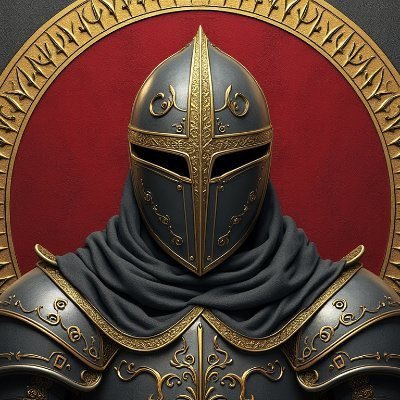
The Knights Templar was a large organization of devout Christians during the medieval era who carried out an important mission: to protect European travelers visiting sites in the Holy Land while also carrying out military operations. A wealthy, powerful and mysterious order that has fascinated historians and the public for centuries, tales of the Knights Templar, their financial and banking acumen, their military prowess and their work on behalf of Christianity during the Crusades still circulate throughout modern culture. After Christian armies captured Jerusalem from Muslim control in 1099 during the Crusades, groups of pilgrims from across Western Europe started visiting the Holy Land. Many of them, however, were robbed and killed as they crossed through Muslim-controlled territories during their journey. Around 1118, a French knight named Hugues de Payens created a military order along with eight relatives and acquaintances, calling it the Poor Fellow-Soldiers of Christ and the Temple of Solomon—later known simply as the Knights Templar. With the support of Baldwin II, the ruler of Jerusalem, they set up headquarters on that city’s sacred Temple Mount, the source of their now-iconic name, and pledged to protect Christian visitors to Jerusalem. In 1139, Pope Innocent II issued a Papal Bull that allowed the Knights Templar special rights. Among them, the Templars were exempt from paying taxes, permitted to build their own oratories and were held to no one’s authority except the Pope’s. The order became known for its austere code of conduct (which included no pointy shoes and no kissing their mothers, rules outlined in “The Rule of the Templars”) and signature style of dress, which featured a white habit emblazoned with a simple red cross. Members swore an oath of poverty, chastity and obedience. They weren’t allowed to drink, gamble or swear. Prayer was essential to their daily life, and the Templars expressed particular adoration for the mother of Jesus, the Virgin Mary. Though its original purpose was to protect pilgrims from danger, the Knights Templar progressively expanded its duties. They became defenders of the Crusader states in the Holy Land and were known as brave, highly skilled warriors. The Templars built numerous castles and fought—and often won—battles against Islamic armies. Their fearless style of fighting became a model for other military orders. In the late 12th century, Muslim armies retook Jerusalem and turned the tide of the Crusades, forcing the Knights Templar to relocate several times. The Fall of Acre in 1291 marked the destruction of the last remaining Crusader refuge in the Holy Land. European support for the military campaigns in the Holy Land began to erode over the decades that followed. Additionally, many secular and religious leaders became increasingly critical of the Templars’ wealth and power. By 1303, the Knights Templar lost its last foothold in the Muslim world and established a base of operations in Paris. There, King Philip IV of France resolved to bring down the order, perhaps because the Templars had denied the indebted ruler additional loans. Many of the knights were brutally tortured until they confessed to false charges, which included heresy, homosexuality, financial corruption, devil-worshipping, fraud, spitting on the cross and more. A few years later, dozens of Templars were burned at the stake in Paris for their confessions. De Molay was executed in 1314. The Catholic Church has acknowledged that the persecution of the Knights Templar was unjustified. The church claims that Pope Clement was pressured by secular rulers to destroy the order.

Victoria 🇺🇸⏳🗽🚔

32,839 views • 3 months ago

The Fourth Crusade (1202-1204 CE) was called by Pope Innocent III (r. 1198-1216 CE) to retake Jerusalem from its current Muslim overlords. However, in a bizarre combination of cock-ups, financial constraints, and Venetian trading ambitions, the target ended up being Constantinople, capital of the Byzantine Empire and the greatest Christian city in the world. Sacked on 12 April 1204 CE, Constantinople was stripped of its riches, relics, and artworks, and the Byzantine Empire was divided up between Venice and its allies. The Fourth Crusade thus gained its infamous reputation as the most cynical and profit-seeking of all the crusades. The Byzantines saw themselves as the defenders of Christendom, the beacon which shone out across the Mediterranean and central Asia, hosts to the holiest city outside Jerusalem, and the rock which stood against the tide of Islam sweeping in from the east. By the western half of the old Roman Empire, though, the Byzantines were regarded as decadent, shifty, and untrustworthy; even their religious practices were suspect. This essential division between the east and west had caused constant problems in all the previous crusades, and it was to crop up again in this one. There were also more concrete sources of division, the historical rivalry between popes and emperors, and the rising ambition of western states to wrest from Byzantium the remnants of its empire in Italy were fuelled by the failures of the crusades in permanently securing the Holy Land for Christendom. Blame was apportioned to either side for the lack of success. The Byzantines were considered to lack the will to fight the common Muslim enemy while, from the other side, the Crusaders were seen as opportunists out to grab the choicest parts of the Byzantine Empire in the east. In a sense, both sides were right in their judgement. The Third Crusade (1187-1192 CE), although achieving some notable military successes, had failed completely in its original objective of recapturing Jerusalem from the Muslim Sultan of Egypt and Syria, Saladin (r. 1174-1193 CE). The celebrated Sultan was now dead, but the Holy City remained in Muslim hands. Yet another crusade was required. The Fourth Crusade was thus called for by Pope Innocent III (r. 1198-1216 CE) in August 1198 CE. As previously, those who went to the Holy Land and fought the infidels would receive a remission of their sins, but as an added incentive, Innocent III now extended this ‘benefit’ to those who gave the necessary money to fund a warrior to go in their stead. The Pope’s timing was not the best, especially considering the Holy City had anyway been in Muslim hands since 1187 CE. In the final years of the 12th century CE, all four monarchs of Europe’s most powerful kingdoms, England, France, Germany, and Spain, were busy with internal affairs, and in the case of England and France, serious territorial squabbles with each other. Worse still, in April 1199 CE, the great Crusader king Richard I of England (r. 1189-1199 CE), who had promised to return to the Holy Land and finish his undone work during the Third Crusade, died on campaign in France. Unlike the previous Crusade, then, this was not to be a “Kings’ Crusade”. Still, a good number of second-tier nobles were inspired to join up or ‘take the cross’, as it was known, especially from northern France. There were the counts of Champagne and Blois (although the former would die before the expedition got underway), Geoffrey of Villehardouin (who would later write his Conquest of Constantinople, an important record of the Crusade), Count Baldwin of Flanders, and Simon de Montfort. 🎥© historyaillustration (IG) © Mark Cartwright #archaeohistories

Archaeo - Histories

31,986 views • 3 months ago