正在加载视频...

视频加载失败

Kurdish origin&distribution along Zagros mountains in #IRAN before invading Iraq’s northern territory as illegal migrants,declare rebellion&then illegally claim ownership. Interactive map.

18,974 次观看 • 6 个月前 •via X (Twitter)

0 条评论

暂无评论

原始帖子的评论将显示在这里

相关视频

Why Iran's Kurds Are the Most Divided Kurdish Population, and Why That Matters Now They speak at least four major dialect groups. They are split along sectarian lines far more deeply than Kurds elsewhere. Kurdish and Persian are both Iranian languages with no sharp linguistic wall between them. And they have lived inside an Iranian state for five centuries. In Iraq, Syria, and Turkey, Kurdish identity confronts Arabic or Turkish across a clear frontier. In Iran, it sits inside a graded continuum of dialect, sect, and civilisation that the state has always found easier to segment and absorb. Linguistically, they are not a compact Sorani-Kurmanji bloc. They are a mosaic. Central Kurdish (Sorani) accounts for roughly 35 to 40% of Iran's Kurds. Southern Kurdish and Laki together make up another 35 to 40%. Kurmanji accounts for about 22 to 27%. Gorani and Hawrami make up a smaller but historically significant remainder. Kurmanji itself is split across radically different settings. The Kurmanji speakers of Khorasan in the northeast are mostly Shia and long integrated into the Iranian state. The Kurmanji speakers of the Urmia belt are overwhelmingly Sunni and tied into the borderland world shaped by proximity to Turkey. Religiously, Iranian Kurds are not overwhelmingly Sunni the way Kurds in Iraq, Syria, and Turkey are. The best estimate is roughly half Sunni, around two-fifths Twelver Shia, and about a tenth Yarsani. The Sunni core is concentrated in the northwest. Kermanshah, Ilam, and Khorasan pull heavily in the other direction. The deepest difference is linguistic. In Iraq, Syria, and Turkey, Kurdish confronts Arabic or Turkish across a sharp civilisational wall: Indo-European versus Semitic or Turkic. In Iran, Kurdish and Persian are both Western Iranian languages with a common origin. The boundary is not a wall but a slope. Lori forms a continuum between Kurdish and Persian. Laki sits near that transition. As you move south through the Zagros, speech forms become less like northern Kurdish and more entangled with neighbouring Iranian varieties. Iranian Kurds have also lived inside an Iranian state framework for roughly five centuries since the Safavid consolidation, not inside a new nation-state barely a century old like Iraq or Syria. Iran is closer to a civilisational state than a standard nation-state, and Kurdish identity inside that frame is old, layered, and in many parts of the country deeply woven into the wider Iranian fabric. All of this is why Kurdish cohesion is structurally weakest in Iran. The divisions are not just multiple but mutually reinforcing: dialect, sect, geography, linguistic proximity to Persian, and centuries of state absorption. In the other three countries, Kurdish identity confronts the state-bearing identity across a sharper frontier. In Iran, it sits inside a graded continuum that the state has always found easier to segment, absorb, and contain. More details:

The National Context

95,621 次观看 • 4 个月前

The Demographics That Doomed a Kurdish National Project in Syria A micro-level look at the demographics of northern Syria reveals how much Kurdish nationalist expectations have diverged from ground realities, and why the broader territorial collapse of the SDF polity was, in many respects, foreseeable. In the debate that has followed, Kurdish nationalists have largely moved to blame the SDF and its ideological backers in the PKK for what went wrong, while the SDF has found itself on the defensive. But this framing disregards the demographic complexity of northern Syria, which differs sharply from the contiguous and compact Kurdish populations in Turkey, Iraq, or Iran. In Syria, Kurds are distributed across three geographically disconnected pockets: Afrin, Kobani, and Hasakah. More Kurds likely live outside what became SDF territory than inside it. Any strategy that prioritised consolidating control over those zones at the expense of the broader Kurdish population in Syria would have been short-sighted. Hasakah, where the SDF's self-rule ambitions were most far-reaching, is also the most demographically complicated for a Kurdish nationalist agenda. The governorate contains a large Arab rural population, and its major cities are deeply mixed. In Hasakah city, Kurds are likely a sizable minority, with Arabs and Christians together forming a majority. In Qamishli, Kurds likely constitute either a plurality or slim majority within the city itself, but the surrounding villages, particularly to the south, are solidly Arab, making any exclusively Kurdish project in the pocket inherently unstable. Afrin, by contrast, has been consistently underweighted in Kurdish strategic thinking despite carrying arguably greater long-term importance. Its proximity to the Mediterranean gives it geopolitical weight that neither Kobani nor the demographically fractured Hasakah pocket can match, and trading a more balanced position there for the sake of self-rule in Hasakah would have been a poor bargain. The argument that a different Kurdish party might have achieved better outcomes is also unconvincing. A more overtly nationalist party would have pushed harder for an explicitly Kurdish project and collided even more directly with demographic realities. What the SDF achieved is unprecedented in the Syrian context; a more nationalist posture would likely have produced less, not more. None of this strips the SDF of responsibility for its governance failures, which were severe - basic service provision in key cities such as Hasakah remained chronically poor throughout its rule. But the core criticism levelled by Kurdish nationalists has not been over governance. It has been, ostensibly, that the SDF was too accommodating of Arabs and Christians: precisely the accommodation that the demographic reality demanded. The current integration framework reflects a realistic accommodation of these constraints. It preserves certain layers of local self-administration while transferring coercive authority over the judiciary and security sector to institutions with legitimacy across Kurdish, Arab, and Christian communities alike. In an environment this mixed, that division of competencies is a structural necessity rather than a retreat. It also explains the differential approach Damascus has taken across the three pockets. In Kobani, which is more ethnically homogenous, the Syrian government has moved more aggressively to dismantle SDF structures, appointing a mix of politically diverse Kurdish figures and pro-Damascus elements in their place. In Hasakah, it has adopted a more measured posture, aware that the demographic complexity limits the viability of any exclusionary project and reduces the urgency of forced dismantlement. The practical terms of the deal are now taking shape. Both sides have agreed that state courts will be reactivated in Hasakah city this week and in Qamishli the following week, resolving a deadlock that had persisted for several weeks. Under the agreed formula, former state judges will be reinstated alongside select SDF-appointed judicial figures: those holding recognised legal qualifications will be integrated directly, while others will be required to complete the necessary certification before being absorbed into state institutions. The parties have also agreed to further prisoner exchanges in preparation for the transfer of detention facilities to the Syrian Interior Ministry. Beyond the SDF's core military structure, auxiliary forces including self-defence fighters are reported to have agreed to integration into the Syrian Defence Ministry as border guards, serving as individuals within the state military chain of command rather than as a collective formation. More, and an interactive map to explore, at the full article:

The National Context

46,044 次观看 • 3 个月前

The Pipeline Deal That Could Remake Iraq’s Oil Map As the Turkey-Iraq pipeline agreement is set to expire in July, the two countries have started negotiations on a new agreement. The treaty lapses during the sharpest contraction in Gulf energy shipping in recent memory, and that has turned a technical renewal into a contest over the shape of Iraq’s export map. The legal background shapes every Iraqi position in the talks. The pipeline went dark in 2023 after Iraq won arbitration against Turkey over unauthorized Kurdish exports between 2014 and 2018, with Turkey ordered to pay about $1.5 billion. Baghdad will not sign a successor agreement that leaves ownership of the crude, the marketing channel, or the payment route open to a parallel Erbil-Ankara reading. Ankara, for its part, is not negotiating a simple renewal. Turkish Energy Minister Alparslan Bayraktar has argued repeatedly that the line carries a nominal capacity of nearly 1.5 million bpd and has never been used at scale. Any new agreement, he says, must include a mechanism to guarantee fuller use. Reaching that volume requires extending the line south toward Basra, since northern production cannot fill it. Turkey folds this into the wider Development Road from Faw to Turkey, reframed as an energy corridor carrying oil, gas, petrochemicals, refining, and electricity alongside road and rail. Baghdad’s instrument is the Basra-Haditha pipeline, which the Oil Ministry calls the backbone of the northern export system. Baghdad has chosen a turnkey, state-financed model with full Oil Ministry ownership after rejecting an investment structure that would have handed an outside party long-term transit rights. If Turkey is seeking ownership leverage under the heading of investment, that is the Iraqi red line. The decisive feature of the Iraqi design is that Basra-Haditha is multidirectional. From Haditha, crude could move north to Ceyhan. In theory, it could also support future western exits toward Baniyas and Tartus on the Syrian coast, or southwest toward Aqaba in Jordan. These branches should not be read as equally imminent projects. Their immediate value is strategic optionality. They give Baghdad a map of alternatives, even before all of them become physical export routes. For the Kurdistan Region, the trajectory is unfavourable. Its 2014-built line, with a design capacity of nearly 900,000 bpd, remains physically useful in the short term while the ministry-controlled Kirkuk-Fishkhabur line, rated at nearly 1.5 million bpd, is rehabilitated as a federal bypass. Once that bypass and Basra-Haditha are in place, the KRG pipeline becomes a feeder rather than a strategic bottleneck. Baghdad’s aim is not necessarily to shut it. The aim is to strip it of independent commercial authority. Turkey signs with Baghdad alone, SOMO markets the crude, and revenue runs through the federal treasury. The KRG line may remain part of the infrastructure, but not as the basis for a parallel political economy. Whatever the structure, a deal struck before the deadline will not restore the pre-2023 model. The likeliest endpoint is Ceyhan returning as a federal corridor under SOMO and the treasury, the KRG line being tolerated as infrastructure without political-commercial autonomy, and Turkey gaining volume guarantees and investment access but not a chokehold over Iraqi oil. Baghdad’s wager is that holding the Syrian and Jordanian options open is what keeps Ceyhan a corridor rather than a second Hormuz. More details:

The National Context

13,412 次观看 • 2 个月前

Locals in Sandeshkhali claims that several Bangladeshi nationals have been living illegally in Booth No. 235 under Korakati Gram Panchayat after entering the area years ago with the support of local leaders and securing Indian documents. Their presence reportedly came to light only after the Special Intensive Revision (SIR) process began, triggering tension in the locality. Residents claim these individuals obtained Aadhaar, ration and other papers, and even accessed welfare schemes like Lakshmir Bhandar. Among those named are Shahin Gazi, posing as the son of a local resident, and Gafur Molla, who openly admits he crossed over from Bangladesh illegally and has been receiving food-security rations. Locals also accuse Marjina Bibi, Anjura Sheikh and Habibul Sheikh of obtaining Indian identity by posing as relatives of local families. A News18 ground report from Sandeshkhali shows several such individuals acknowledging their Bangladeshi origin despite holding Indian documents. Interestingly, indigenous Muslim residents say they want these infiltrators sent back to Bangladesh. These allegations also revive memories of the earlier incident when central agencies were attacked during a search at TMC leader Shajahan Sheikh’s premises. Opposition parties had then claimed that many of those who gathered in minutes to block officials were illegal entrants from Bangladesh. The SIR process is now prompting renewed scrutiny of identities in the region.

Amit Malviya

16,729 次观看 • 8 个月前

Riots Erupt in Northern Ireland After Migrant Assault on Teen Girl 🇮🇪 Outraged residents torch homes and clash with police after Roma migrants are accused of raping a teenage girl — but authorities and media blame the violence on “racism.” Rebel News is on the ground to bring you the other side of the story. After an overnight flight from Toronto, Rebel News reporters Lincoln Jay and Efrain Efrain Flores Monsanto 🇨🇦🚛 have touched down in Dublin and are already en route to Northern Ireland, where explosive riots have broken out in the wake of allegations that Roma migrants sexually assaulted a teenage girl in the town of Ballymena. The accused are reportedly members of the Roma community, who locals claim have established illegal operations in Ballymena’s town centre, including brothels and other criminal activity. As news of the alleged assault spread, so too did the anger — with homes belonging to Roma residents targeted in retaliatory attacks, and multiple reports of arson, street clashes, and police crackdowns surfacing across the region. Northern Irish authorities have been quick to brand the unrest as “racist thuggery,” but residents on the ground tell a more complex story. Many say that surging immigration, both legal and illegal, is overwhelming their communities and igniting tensions that politicians and legacy media refuse to acknowledge. “We're here to bring the other side of the story that the mainstream media won’t,” said Lincoln Jay from Dublin airport. “Why aren’t the politicians and police listening to the people who are angry, instead of simply condemning them as racists?” The Rebel News team will spend two days reporting from Northern Ireland before returning to Dublin on Sunday morning to cover a massive anti-immigration demonstration expected to draw tens of thousands of participants. Both Jay and Monsanto have covered unrest in Ireland before, and were personally dispatched by Ezra Levant to lead this mission in his place. Their full coverage, including video dispatches, interviews, and exclusive footage, will be posted at If you support this kind of on-the-ground journalism that cuts through the media fog, consider chipping in to help cover the cost of this assignment. Travel, lodging, and gear all add up — and Rebel News relies on viewers like you to make these trips possible.

Rebel News

51,639 次观看 • 1 年前

Iran’s Khatam al-Anbiya (Armed Forces) Spox: The Islamic Republic of Iran respects the interests and national sovereignty of neighboring countries and, up to now, has committed no aggression against them. Anywhere that serves as the source of aggression against Iran is a legitimate target, and in the face of the United States and the Zionist regime, there will be absolutely no retreat. Countries that have not provided airspace or facilities to the United States and the Zionist regime have not been our target up to this moment, and will not be our target going forward either (Azerbaijan, Oman & Turkey). However, all bases that serve as the point of origin for aggression against dear Iran will, as before, be struck heavily on land, at sea, and in the air (Persian Gulf countries). We say this explicitly: we strike them and destroy them so that it may serve as a lesson to anyone who dares aggress against our nation. And know this: From now on, anything built again in the name of the enemy, similar to these bases, facilities, and equipment, will be destroyed again and again with crushing blows. The Islamic Republic of Iran strongly welcomes the escorting of oil tankers and the claim of an American military presence for passage through the Strait of Hormuz, and we are definitely waiting for them… We recommend that before making any decision, the Americans remember the burning of the supertanker Bridgeton in 1987, and the tankers that were recently targeted. In this battle, after making a vertical entry into the region, there is no guarantee that your exit will also be vertical. The same applies to your ships, with this difference: you may intend to enter afloat, but it is far from impossible that you will go down vertically to the bottom of the Persian Gulf… A reminder to the corrupted Island-man: The ground and the map of the war are in our hands. This will continue…

Arya Yadeghaar

226,462 次观看 • 5 个月前

As the PKK Makes Peace with Turkey, It Is Quietly Building Up Along Iran's Border Despite the ongoing peace process with Turkey, under which it is expected to disarm and withdraw from its bases along Iraq's border with Turkey, the PKK and its affiliates are quietly expanding their presence along the Iranian frontier, particularly in Iraq's Suleimani province. Rather than disappearing, the movement appears to be concentrating its infrastructure further south, becoming the dominant armed actor along much of the Kurdistan Region's border with Iran. The latest indication comes from reports that the PKK is quietly digging new tunnels in the Halabja area, a border district directly adjacent to Iran's Kurdish area of Paveh, which has recently seen armed activity against the IRGC. If confirmed, this marks the latest stage of a southward expansion that has unfolded over more than a decade. That expansion has followed a clear geographical pattern. From its long-established stronghold in the Qandil Mountains, the PKK extended its infrastructure south into the Qaladze area, then into the Asos Mountains and Mawat district, now a major hub for PJAK, the PKK's Iranian affiliate, and arguably its second most important base after Qandil. From there, the organisation expanded towards Penjwen, another strategic border district with Iran. Its presence has also been reported as far south as Said Sadiq, and now, according to recent reports, it is constructing tunnel networks around Halabja. Although there are gaps between many of these positions, they are connected by a continuous mountainous chain stretching from Qandil southwards along the Iranian border. This terrain provides the PKK with a natural corridor, allowing relatively unrestricted movement despite the absence of permanent infrastructure across every section. The shift is notable because the PKK's expansion into the Suleimani area is relatively recent. When the organisation launched its insurgency against Turkey in the 1980s, its Iraqi bases were concentrated along the Turkish border, reflecting their role as staging grounds for operations inside Turkey. The movement established itself in the Haftanin area near Zakho, expanded eastwards into Amedi, then Khwakurk in Erbil province, before building permanent positions in the Gara Mountains and Qandil during the 1990s. Almost all of these areas lay within KDP-controlled territory. Turkey's increasingly aggressive military strategy gradually altered that geography. Rather than conducting temporary cross-border operations, Ankara began establishing permanent military positions inside northern Iraq, steadily pushing the PKK further south. The decisive turning point, however, appears to have come after the 2011 ceasefire between Iran and PJAK. While limited expansion had already begun, the PKK's most significant southward movement accelerated from 2012 onwards. That period also coincided with a major political transition inside the PUK. Following Jalal Talabani's stroke and prolonged absence from politics, Lahur Sheikh Jangi gradually assumed control over much of the party's security apparatus. It was during this period that PUK-PKK relations evolved into what increasingly resembled a strategic partnership, creating a far more permissive environment for the PKK's expansion throughout PUK-controlled territory. The locations identified above almost certainly represent a conservative estimate. Reports have periodically placed PKK elements further south around Kalar and as far west as Chamchamal. The systematic construction of tunnels and defensive infrastructure specifically along the Iranian frontier, however, is especially significant. As the organisation moves towards peace with Turkey, its strategic orientation is changing. Rather than remaining a Turkey-facing insurgency, it increasingly resembles an Iran-facing one. Under the reported terms of the peace process, the PKK is expected to vacate all positions along the Turkish border. Many of those areas, including Haftanin, Amedi and much of Khwakurk, are already effectively under Turkish military control. Only a handful of major positions, such as the Gara Mountains and parts of Khwakurk, remain and are widely expected to be evacuated as the process advances. If that occurs, the PKK's military geography will have been fundamentally transformed. Its presence along the Turkish border would effectively disappear, while almost all of its remaining infrastructure would be concentrated along the Iranian frontier. Equally striking is Turkey's apparent silence regarding this southern expansion. Turkish reporting on the peace process has consistently focused on evacuating positions along the Turkish border, with no indication that Ankara is demanding the PKK withdraw from areas such as Asos, Mawat, Penjwen or Halabja. This may suggest that Turkey's primary objective is not the complete removal of the PKK from Iraq, but securing its own border by replacing the PKK with permanent Turkish military control across the frontier zone. Another notable development is the rapid improvement in relations between Turkey and the PUK, despite the latter's continued close ties with the PKK. Turkey's intelligence chief recently travelled to Suleimani to meet Bafel Talabani and Qubad Talabani, and the following day Qubad met Turkish Foreign Minister Hakan Fidan in Ankara. Reports now suggest that Bafel Talabani could even meet President Recep Tayyip Erdoğan as the peace process advances. These contacts are unlikely to be occurring without the PKK's knowledge. While the PUK and the PKK remain distinct organisations with different priorities, their interests continue to overlap. The recent diplomatic engagement appears more consistent with coordination, or at least mutual understanding, than with any breakdown in relations. An equally important trend concerns Iran. Traditionally, both the PUK and the PKK have been regarded as relatively close to Tehran. Yet both have recently adopted noticeably more confrontational positions. PJAK has resumed violent clashes with the IRGC, while PUK leader Bafel Talabani has issued arguably his strongest criticism of Iran to date, directly accusing Tehran of aggression following recent Iranian strikes inside the Kurdistan Region. Whether this represents a temporary tactical adjustment or the beginning of a broader strategic realignment remains unclear. The PUK and the PKK are, however, likely to remain broadly aligned in their approach to Iran. Although they are separate organisations with distinct interests, they influence one another and have increasingly coordinated their policies over the past decade. Their calculations should therefore be analysed separately from those of the KDP, which operates under a different set of strategic incentives. There is little evidence that either the PUK or the PKK is positioning itself as part of a broader effort to overthrow the Iranian regime. Their posture instead resembles Turkey's: they would likely welcome a weaker Iran, but not one whose weakening comes through becoming an instrument of Israel or a wider externally driven regime-change project. That distinguishes them, at least for now, from the more speculative claims that periodically surround Kurdish actors during periods of regional crisis. Ironically, despite the KDP's historically deeper ties with Israel, it too has been cautious about any direct confrontation with Iran. Rather than openly aligning with Israeli objectives, it has generally sought to avoid being drawn into the conflict. The differences between the Kurdish parties lie less in whether they favour confrontation and more in how they manage their relationships with the competing regional powers. Beyond the implications for Iran, the peace process could fundamentally reshape the PKK's long-term strategic position. Even if the organisation ultimately disarms inside Turkey and transforms into a legal political movement, it would not necessarily cease to be a regional actor. By relocating much of its remaining infrastructure to the Iranian frontier, the PKK would retain strategic depth outside Turkey while simultaneously becoming a legitimate participant in Turkish politics. If the peace process succeeds, the PKK would no longer be simply an insurgent organisation or merely a parliamentary movement. It could evolve into a hybrid actor: a stakeholder in Turkey's emerging political order while preserving extensive regional networks beyond its borders. That would allow the movement to avoid surrendering all of its strategic leverage and becoming entirely dependent on Ankara's goodwill. This could also benefit Turkey. If Ankara integrates the PKK into a stable political framework while tolerating its continued regional presence, it could transform a long-standing security threat into an actor whose interests become tied to regional stability. Rather than eliminating the PKK outright, Turkey would be incorporating it into a new strategic architecture, one in which the organisation gains legitimacy inside Turkey while Ankara gains indirect influence through a network of Kurdish actors whose interests become intertwined with its own. If this interpretation proves correct, the peace process would represent far more than the end of an insurgency. It would mark a strategic reorganisation of Kurdish politics across the region, with the PKK shifting from a border-based guerrilla movement focused on Turkey into a transnational political actor whose centre of gravity lies along Iraq's border with Iran while simultaneously becoming embedded within Turkey's own political system. More:

The National Context

183,957 次观看 • 15 天前

🚨SHOCKING: Jack Posobiec Confronted at TPUSA HQ Over the ILLEGAL Iran War—Watch Poseobic Try To GASLIGHT Patriots To Support Trump.😬 The "Unfuck America Tour" crew just marched into TPUSA Headquarters and confronted Jack Posobiec to his face about the disastrous, illegal war in Iran. His response is a masterclass in establishment gaslighting, and it is a massive betrayal of EVERYTHING Charlie Kirk actually stood for. Let’s get one thing straight: Charlie Kirk was vehemently anti-war. He was the loudest voice in the room actively trying to talk Donald Trump out of getting involved in Iran before he was assassinated. Now, look at what the TPUSA syndicate has become. The Unfuck America crew absolutely nailed them on the shifting narrative. First, the establishment told us the Iranian civilians needed to rise up. Then it was about regime change. Then it was about "weapons of mass destruction." Now, they claim we "obliterated their capabilities," yet we are still bombing them. Trump campaigned as the "No War" president, and Posobiec is forced to admit on camera that they completely flipped the script. When confronted with the horrific reality that 175 school children were murdered in these strikes, Posobiec’s defense is pathetic. He tries to downplay it by saying, "Well, it's not an Iraq-style war with boots on the ground." Dropping cruise missiles next to a school is a war. And when called out on Trump's embarrassing gaffe—claiming Iran was firing "Tomahawk" missiles (which they don't even have)—Posobiec just shrugs it off as an intelligence cycle mix-up. They literally put up a map in a press conference showing a school right next to the target, and these guys are still trying to run cover for the military-industrial complex. The most infuriating part of this entire clip is Posobiec’s pathetic conclusion. He admits he was publicly against the war at first, but then shrugs and says, "Now we are in it." That is the exact defeatist, establishment mentality Charlie Kirk warned us about. You don't just roll over and accept an endless, unconstitutional war just because "we are in it." You fight to end it. TPUSA does not represent America First anymore. They represent the War Machine. 😭🇺🇸 FOLLOW: Zee Cohen-Sanchez and the Unfuck America Tour

Project Constitution

43,247 次观看 • 4 个月前

I want to make one bold declaration today, if anyone wants to place a bet, the bets are open. Donald Trump will NEVER deport all illegal immigrants from America, not even half of them, just as South Africa will never deport all illegal immigrants from its territory. Illegal immigrants primarily provide services that benefit the wealthy the most, not the poor. For example, if the cost of having a Haitian babysitter increases because the undocumented workers are deported, people’s attitudes will immediately shift and the Republicans will lose the mid term elections and not retain the White House in 2028. Trump wants a MAGA candidate to succeed him. If the cost of hailing an Uber goes up because Haitian illegal immigrants have been deported by Trump, there will be a shift, the same would happen in South Africa. Donald Trump, like all populist leaders, manipulates the minds of unsophisticated individuals who lack an understanding of how the economies of major countries like South Africa in Africa and America function. If all undocumented immigrants left South Africa today, the price of goods and services would rise significantly and there will be an uproar. The average South African would no longer afford meals out because the restaurants would either push up prices or shut down, it is that simple. That is why countries like Zimbabwe and its ruling ZANUPF party don’t care about the uproar in South Africa because they know that their citizens who are living illegally in South Africa will never be allowed to deported. I want to share a little story with you. In 2009, the then Attorney General of Britain, Patricia Scotland, was caught employing an illegal immigrant as a cleaner and exposed by the Daily Mail newspaper. Scotland was not found guilty because the cleaner had used fraudulent documentation. She was only fined £5000. This is the reality with many illegal immigrants across the world, they are in your homes, offices, buses, shops-everywhere with their illegal documentation! Speaking at rallies before an election is different from coming face to face with the dollar figures as you suddenly realise the cost of your election promises! Not all illegal immigrants are criminals, Trump will know this because two of his wives were immigrants! Here is America’s new Foreign Secretary Marco Rubio addressing this same issue in 2013 and giving it a sober response.

Hopewell Chin’ono

38,002 次观看 • 1 年前

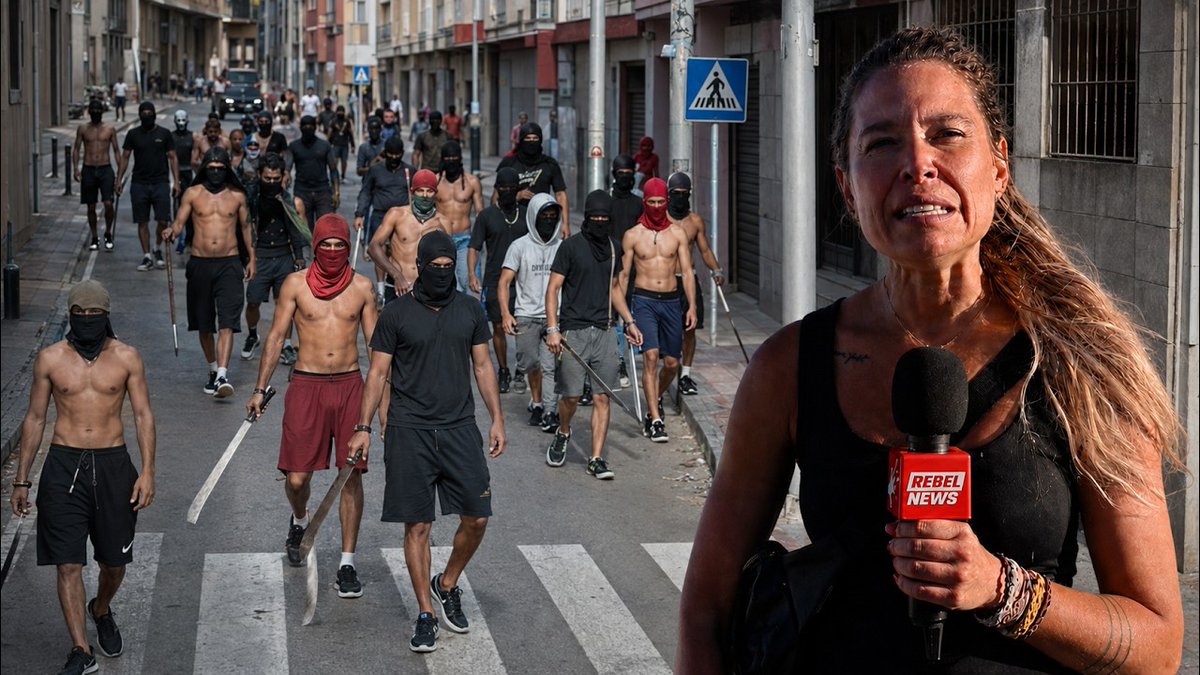
//The Wire//2100Z July 30, 2026// //ROUTINE// //BLUF: UNITED STATES CONDUCTS RETALIATORY STRIKES WITHIN IRAN. CYCLOSPORA OUTBREAK CONTINUES IN UNITED STATES. MIGRATION WAVE HITS SPAIN AFTER SUPREME COURT RULING RESULTS IN BORDER CROSSING BREACH.// -----BEGIN TEARLINE----- -International Events- Middle East: American strikes on Iran continued overnight, with most of the targets being struck in the same coastal regions of Iran that have been targeted since the ceasefire was broken. Iran has claimed to have struck several aircraft on the ground at Muwaffaq al Salti in Jordan, along with other targets around the region which will take some time to verify. On the American side, one new series of targets struck by the United States was reported in the border town of Abadan, which is geographically located right on the Iraqi border, a short distance from Bubiyan Island where American HIMARs launchers have been observed conducting ATACMS strikes within Iran. Spain: An emergency situation has been declared after thousands of migrants swarmed the small enclave of Ceuta on the south side of the Strait of Gibraltar. Several thousand migrants breached the border perimeter that separates the Spanish peninsular city of Ceuta, from mainland Morocco. After it became clear to the crowds that there were very few border guards, the fencing was breached by land, and small boats launched by sea to land on the beaches, circumventing the fencing. Immediately after the migrant waves arrived this morning, the city has been in a state of sheer bedlam. Riots have been reported throughout the peninsula and property owners have reported being swarmed with break ins, as the border itself has completely collapsed. Analyst Comment: The reason for the fray is due to a recent court ruling which has intensified illegal immigration efforts. This week, Spain's Supreme Court re-affirmed that their borders are open, and that migrants who are apprehended trying to cross over to this peninsula cannot be deported. Last month, Spain's amnesty program officially closed, but because it's very hard to prove an entry date for someone who crossed the border illegally, the boats are being launched like never before, which resulted in today's intensification once the fence was breached. -HomeFront- USA: Around the nation the outbreak of cyclospora has continued to remain a concern as the exact point of origin for the parasite remains largely unknown. Over the past few weeks, the infection has continued to spread around the nation, and now a total of 45x states are reporting citizens falling ill. The largest outbreak cluster remains in Michigan and Ohio, and most of the other states affected are located in the midwest, the northeast, and southeastern regions of the nation. -----END TEARLINE----- Analyst Comments: The war in the Middle East has reached a level of complexity that makes direct strikes and targeting efforts way more impactful than they otherwise would be. A few days ago, the Saudis struck targets in northern Iraq, targeting Iran-aligned militia groups. It was partially this action which resulted in Iran striking back at Saudi Arabia yesterday. The groups that were targeted by the Saudis, were allegedly smaller sub-groups within the Popular Mobilization Forces (PMF), which had not formally joined with the Iraqi government. For context, the PMF are an infamous collection of militia units and tribes, which align with Iran along religious lines in addition to sharing the geography along the Iranian border. In recent years, the PMF has been rolled into the Iraqi government, to serve as the official militia/homeguard for the nation. This results in a complex web of loyalties and relationships, as making the PMF a part of the official uniformed Iraqi military service makes them harder to strike due to the diplomatic situation. This is probably why the Saudis attacked when they didn't necessarily need to. They found a way to strike PMF factions that would probably result in a fracturing within the region, but also not really result in a retaliatory attack from the Iraqi government. Or at least, that was the gamble on the part of the Saudis. The fact that the PMF sporadically launch drones at the Saudis helped justify this targeting effort last weekend. However in effect, what this has done, has brought Iran and Iraq closer together...at least in terms of hating the Saudis. The problem is that the Saudis (much like others in the region) have a habit of kicking a hornets nest, then handing that nest to the United States to deal with. When the Saudis hit the PMF in Iraq, the militia groups in Iraq will probably take this as an opportunity to increase attacks on the American base in Erbil (as they have for years), and the Iraqi government might not be so inclined to reign them in...because the Americans are not reigning in the Saudis. In short, things are sliding sideways, and because it's complicated and can't be compressed into a quick soundbite for decision makers to consume, the danger is very likely going unnoticed. Even though it is complicated, this is a comparatively easy example of how escalations can take place not just vertically, but also horizontally. Vertical escalations take the form of increasingly more severe tit-for-tat airstrikes, but horizontal escalations are far less intense, while spreading out around the world. This has resulted in the situation sleepwalking into serious territory, which has largely gone unnoticed because it hasn't been flashy enough for headlines. The Saudis are striking the Iraqis, the Houthis are hitting the Saudis, somebody is striking the Egyptians, the Israelis have slipped back into the shadows, the Iranians are hitting the Jordanians and Americans, and the United States is perplexingly bombing coastal targets and bridges within Iran...which are rather forebodingly only used during the wintertime wet season. These horizontal escalations have been a mainstay of this conflict since the beginning, but right now these more indirect escalations are taking center stage as the United States and Iran slug it out with missiles, drones, and bombs, and the United States is unable to make progress for the time being. Analyst: S2A1 Research: NomadNet: 5fa68c88be727a0e1a250a75e5e79269 Disclaimer: No LLMs were used in the writing of this report. //END REPORT//

S2 Underground

18,728 次观看 • 10 天前

We know the games Senator Marcoleta and Mike Defensor has been playing in destabilising the government under President Marcos. The government must now throw all its weight and power, and back the necessary agencies in its deeper dive into the connections between Marcoleta and Defensor. The NBI must not dillydally any longer and facilitate instead the arrest of these individuals. Uncover the source of Mike Defensor’s funds and tear open all his involvement in illegal activities. How did he afford to give P30 million to Marcoleta, purportedly for contributions towards his Senate election campaign. Pursue the cases involving Defensor and his family on illegal human trafficking as recently uncovered. Seek the paper trail on how he accumulated his wealth, including his involvement and ownership in mining companies. Bear in mind, his family only had modest wealth before he entered politics and became Gloria Arroyo’s DENR Secretary. Deep dive into how the 18 Marines came into play and how Defensor and Marcoleta have coordinated their actions together. How were they funded especially that Defensor have denied involvement in the past. He and Marcoleta was also the handler of Sgt Orly Guteza along with his perjured affidavit before he disappeared. Pursue Marcoleta and Defensor’s cases on bribery and plunder relentlessness. Bring them to account. If in anyway the INC interferes in the just execution of our laws and engage in destabilisation, then arrest all their leaders. Throw everything and the whole weight of the government against them. This is how you make people straighten up and learn the hard way.

The King

26,942 次观看 • 2 个月前

Bournemouth beach in 2026 — once one of Britain’s cleanest, most family-friendly resorts — now looks like this. Video shared by The media SOI 🇬🇧 shows the shocking reality: mountains of litter, overflowing bins that don’t exist, and a beach dominated by non-white migrants while white British families are nowhere to be seen. The transformation is total and deliberate. This wasn’t an accident. Decades of open borders, small boats, and zero integration have turned a proud English seaside town into a dumping ground — both literally and figuratively. The same people who arrive illegally or as asylum seekers are handed hotels, benefits and priority housing while British taxpayers watch their favourite beaches and public spaces trashed and culturally replaced. British families used to spend summers here without a second thought. Now parents have to think twice before letting their kids play on the sand. The mess, the noise, the disregard for basic standards — none of this existed before mass migration. Specific policy demands that must be implemented immediately: • Stop the boats and turn every illegal vessel back using the Royal Navy. • Mass deportation of every illegal entrant, failed asylum seeker and foreign national with a criminal or anti-social record — no appeals. • British citizens first in housing, welfare, jobs and public services — full stop. • End two-tier everything: enforce littering fines, public order laws and basic British standards equally for everyone. • Halt all further migration from high-risk countries until every illegal arrival is removed and our beaches, towns and streets are restored. Bournemouth is not alone. This is happening from Brighton to Blackpool. The British people never voted for this. We never asked to become strangers on our own coastline. Enough is enough. Reclaim our beaches. Reclaim our country. Put British people and British standards first — always. 🇬🇧

Right over Left Everytime

236,728 次观看 • 2 个月前