Loading video...

Video Failed to Load

Go Home

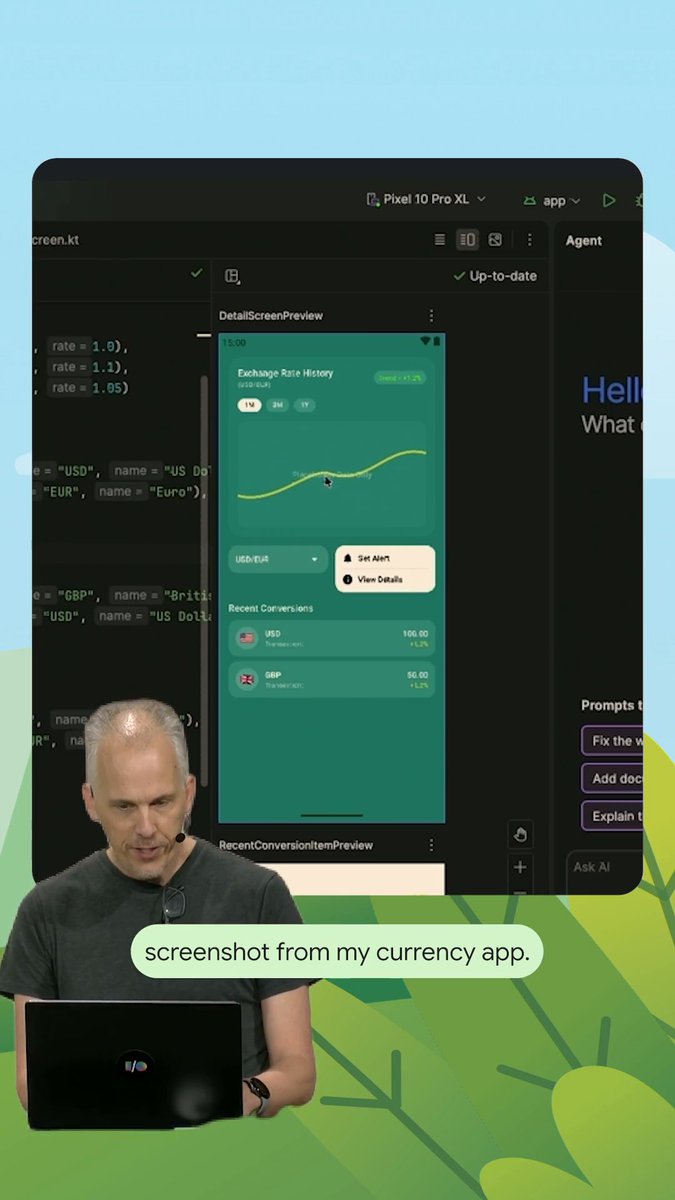
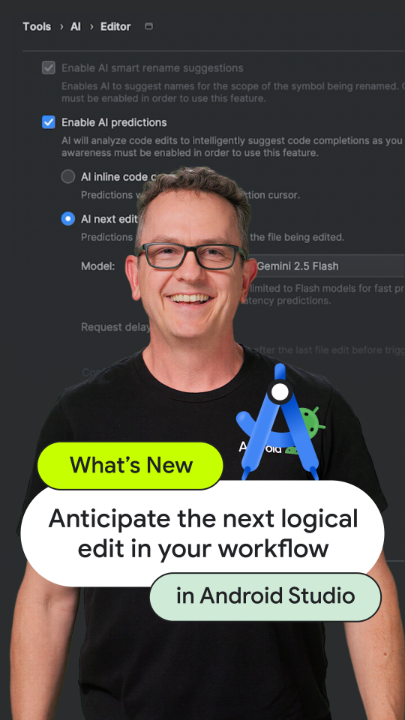
Less context-switching, more coding. 🛠️ The latest Android Studio updates bring natively integrated memory profiling, parallel chats, and context-aware crash remediation directly into the IDE - reducing manual friction across the board. Download Android Studio Quail 2 and start exploring these new features today!

15,849 views • 12 days ago •via X (Twitter)

0 Comments

No comments available

Comments from the original post will appear here

Related Videos

Everyone wants agent swarms. Very few people are talking seriously enough about the context layer that makes swarms useful. Even with one agent, context is fragile. Too little context and the agent guesses. Too much context and it wastes tokens, loses focus, or reasons over irrelevant noise. The sweet spot is precise context: the right knowledge, in the right structure, at the right moment. With many agents, that challenge explodes. Each agent produces decisions, assumptions, findings, summaries, risks, and partial conclusions. Unless that knowledge becomes shared, structured, and reusable, every new agent is forced to rediscover what another agent already learned. That is not a swarm. That is a crowd. Shared context graphs are what turn agent activity into agent collaboration, and OriginTrail DKG V10 brings them to life. Was just playing with some final polishing for the V10 release, and it is really powerful to see shared context graphs where multiple agents contribute knowledge into the same connected memory, with attribution visible directly in the graph ui. That matters for three reasons. First, agents can access and build on one shared memory instead of staying trapped in isolated sessions. Second, the graph structure helps them retrieve the exact context they need, instead of stuffing everything into a prompt and hoping the model sorts it out. Third, verifiability of provenance. You can see which agent contributed each piece of knowledge, trace the source, and decide what to trust. Tokenmaxxing starts with fewer tokens, but the deeper story is coordination - agents stop reloading the world and start building on shared, verifiable context. That is the foundation for serious multi-agent work across software engineering, research, finance, operations, project management, and far beyond. The future is not more agents, it is agents working from shared, verifiable context. But the more the merrier, of course.

Jurij Skornik

11,070 views • 2 months ago

Gemini-1.5 Pro has its spotlight stolen today, and people are poking fun at Sora vs Google memes. Well, I think it's the biggest boost in LLM capability so far in 2024. v1.5's 10M token context (1) excels at retrieval; (2) generalizes zero-shot to extremely long instructions like full tutorials and codebases; and (3) works across modalities such as text, audio, and video. Here's a stunning example: v1.5 learns to translate from English to Kalamang purely in context, following a full linguistic manual at inference time. Kalamang is a language spoken by fewer than 200 speakers in western New Guinea. Gemini has never seen this language during training and is only provided with 500 pages of linguistic documentation, a dictionary, and ~400 parallel sentences in context. It basically acquires a sophisticated new skill in the neural activations, instead of gradient finetuning. I talked about the Myth of Context Length many times before: don't get too excited by claims of 1M or even 1B context tokens. LSTMs already achieved literally infinite context length 25 yrs ago! What truly matters is how well the model actually uses the context to solve real-world problems, and Gemini-1.5 has surpassed the SOTA with flying colors. The paper is also well-written with lots of solid quantitative analysis on in-context memorization and generalization. Paper: “Gemini 1.5: Unlocking multimodal understanding across millions of tokens of context” Congrats to Jeff Dean Oriol Vinyals Sundar Pichai and team!

Jim Fan

278,483 views • 2 years ago