Video wird geladen...

Video konnte nicht geladen werden

Zur Startseite

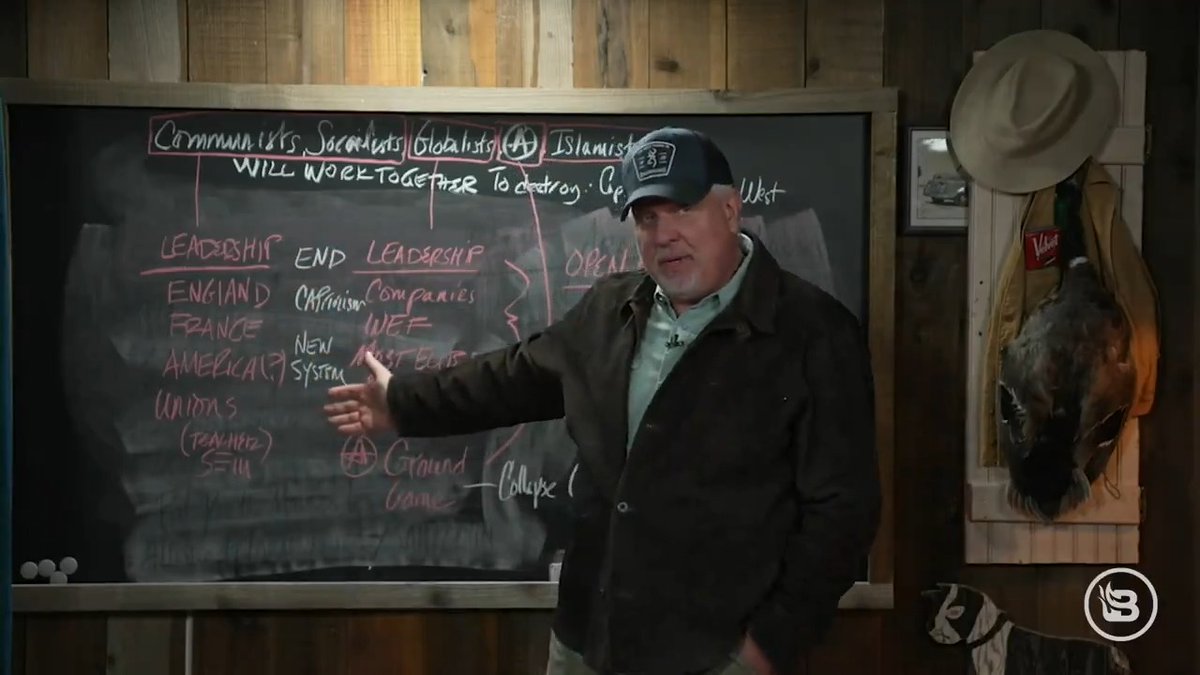
Listen and Learn The Cloward-Piven Strategy

4,764,509 Aufrufe • vor 2 Jahren •via X (Twitter)

9 Kommentare

Profilbild von Sweet Gemini
Sweet Geminivor 2 Jahren

One of the very first things I was educated on after 911. I tried to talk with family and friends and they all considered an out of control conspirator. One of my first posts on Twitter!

Profilbild von Info Battle Maiden
Info Battle Maidenvor 2 Jahren

Much of what he spews in this speech is the Cloward-Pivrm Strategy in action:

Profilbild von Rainmaker
Rainmakervor 2 Jahren

💡 Learn how Reinforcement Learning can boost your trading performance! In this free Substack article I share full code of a trading algorithm based on Reinforcement Learning that beats other Machine Learning models as well as simply buying and holding the stock.

Profilbild von Mark Moss
Mark Mossvor 2 Jahren

If you want to watch the full video, it’s right here 👇

Profilbild von El Joey
El Joeyvor 2 Jahren

Literally just ranting about this. The only thing you want from the government is for them to stay out of your business. They want you to depend on them so you don’t think for yourself

Profilbild von AntiCensorship
AntiCensorshipvor 2 Jahren

Thought police

Profilbild von Adam
Adamvor 2 Jahren

The question is, are we already cooked?

Profilbild von Only1Kelay
Only1Kelayvor 2 Jahren

This is hilarious 😂

Profilbild von Barbara Sanchez
Barbara Sanchezvor 2 Jahren

Credits to the creator @1MarkMoss

Ähnliche Videos

Ever heard of the Cloward-Piven strategy? We are experiencing it right now. The Cloward-Piven strategy is a political theory proposed by sociologists Richard Cloward and Frances Fox Piven in a 1966 article titled "The Weight of the Poor: A Strategy to End Poverty," published in *The Nation*. It advocates for overwhelming government systems, particularly welfare programs, to expose their inadequacies and force systemic change. Below is a concise outline of the strategy, based on their original proposal and its interpretations: ### Cloward-Piven Strategy Outline 1. **Objective**: - Use the poor and marginalized as a lever to create a crisis in the welfare system, compelling government reform. - Ultimately push for a guaranteed minimum income or broader socialist policies to address poverty. 2. **Core Mechanism**: - **Overload Welfare Systems**: Encourage mass enrollment in existing welfare programs to exhaust their resources and administrative capacity. - **Expose Systemic Flaws**: Highlight inefficiencies and inequities in the system through the resulting crisis, making reform politically unavoidable. 3. **Key Steps**: - **Mobilize the Poor**: Organize communities, activists, and advocacy groups to ensure eligible individuals apply for all available benefits. - **Maximize Demand**: Advocate for full utilization of welfare benefits, including public assistance, housing, and food programs, to strain local and federal budgets. - **Create Disruption**: The influx of applicants and resource depletion would lead to bureaucratic breakdowns, public dissatisfaction, and pressure for policy change. - **Push for Radical Reform**: Use the crisis to advocate for a guaranteed annual income or other structural changes to replace the existing welfare framework. 4. **Expected Outcomes**: - Short-term: Chaos and dysfunction in welfare administration, drawing public and political attention. - Long-term: Replacement of patchwork welfare programs with a universal income or more equitable system. 5. **Context and Application**: - Originally focused on the U.S. welfare system in the 1960s, particularly urban poverty programs. - Inspired activism like the National Welfare Rights Organization, which sought to implement the strategy through grassroots efforts. - Later interpreted (and criticized) by some as a deliberate tactic to destabilize capitalism or government systems broadly, though Cloward and Piven framed it as a means to achieve social justice. ### Notes - The strategy remains controversial, with critics arguing it promotes intentional societal collapse, while supporters view it as a tool to force accountability and reform. - No direct evidence suggests Cloward and Piven intended to "destroy" the system entirely; their focus was on reform through crisis. - Recent discussions on X and web sources often exaggerate or misrepresent the strategy, applying it to unrelated political contexts (e.g., immigration, voting systems). These interpretations lack grounding in the original 1966 proposal. If you want me to search X or the web for specific discussions or elaborations on Cloward-Piven, or if you'd like a deeper analysis of its historical impact, let me know!

TRUTH NOW ⭐️⭐️⭐️🗽 🎺

10,624 Aufrufe • vor 1 Jahr