Video wird geladen...

Video konnte nicht geladen werden

Zur Startseite

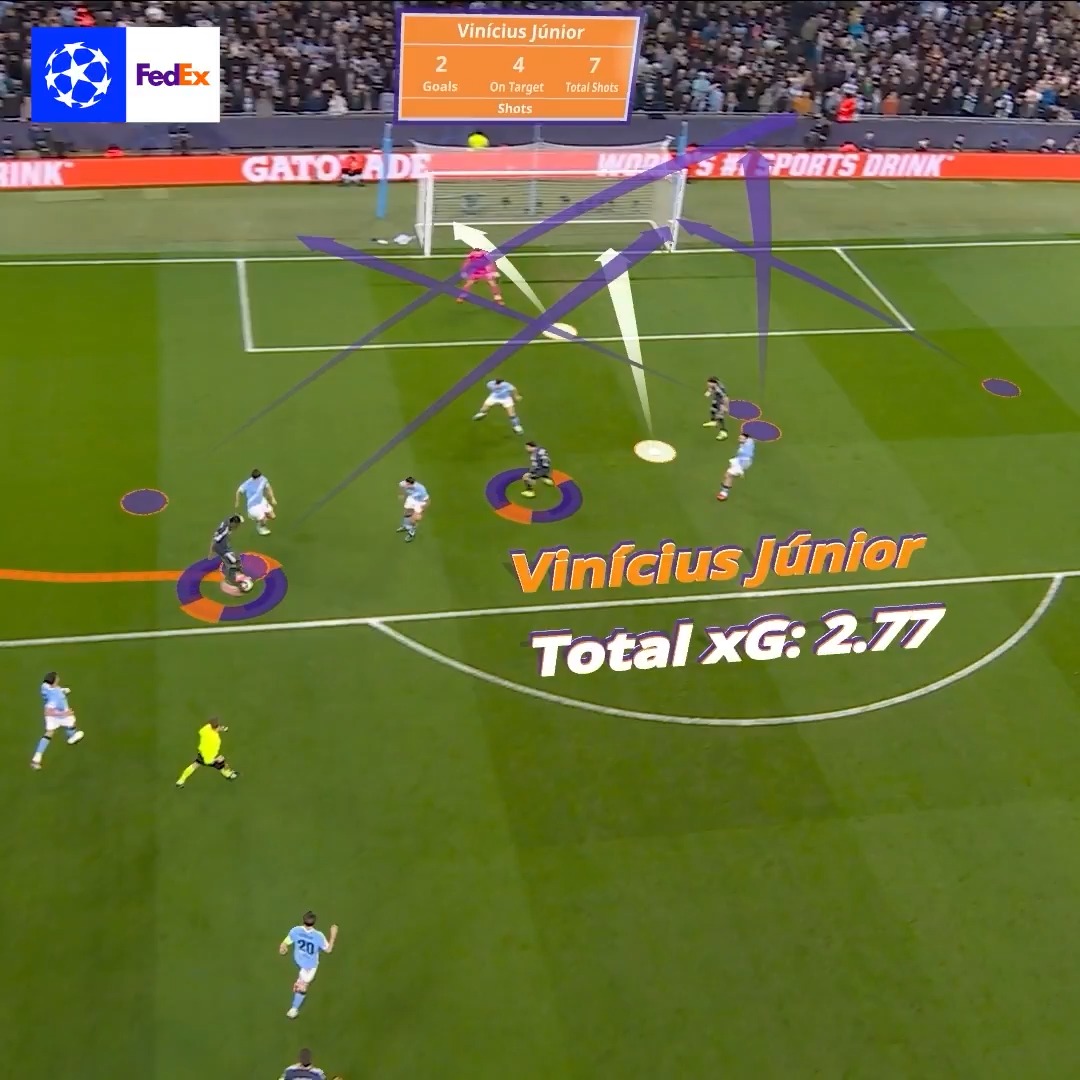
Madrid's high block & Inter's relentless pressing 🌪️ First-leg analysis 👇 #FPZunpacked | FedEx Europe

579,055 Aufrufe • vor 3 Jahren •via X (Twitter)

10 Kommentare

Profilbild von 🦍
🦍vor 3 Jahren

@FedExEurope Can we all agree that Cristiano Ronaldo is the Greatest Player of All Time?

Profilbild von Kinara_Softie💙
Kinara_Softie💙vor 3 Jahren

@FedExEurope Inter Milan versus Manchester City will be the finale

Profilbild von Aileen
Aileenvor 3 Jahren

@FedExEurope Milan v Manchester City

Profilbild von Ernest_Jnr
Ernest_Jnrvor 3 Jahren

@FedExEurope Times like this are stressed 😅

Profilbild von ᜰ
vor 3 Jahren

@FedExEurope @inakiangulo @Ramon_AlvarezMM

Profilbild von DondiegoNuovamenteSospeso ⭐⭐
DondiegoNuovamenteSospeso ⭐⭐vor 3 Jahren

@FedExEurope Cancellate il tweet, suvvia. 😜

Profilbild von PRubenus
PRubenusvor 3 Jahren

@FedExEurope The Aerial View is Sick! Camp Nou/Guessepe Maezza 👉🏾🔥

Profilbild von fritzo 🇨🇲
fritzo 🇨🇲vor 3 Jahren

@FedExEurope @SaveVidBot save this video

Profilbild von fritzo 🇨🇲
fritzo 🇨🇲vor 3 Jahren

@FedExEurope @SaveMyVideo save this video

Profilbild von Tojo
Tojovor 3 Jahren

@FedExEurope High block is the new name for parking the bus apparently.
Ähnliche Videos

Lower body mechanics to throw 95 mph. There are four things about the lower body that I wish I knew when I was a 16 year old throwing 78 miles an hour and trying to throw 90 miles an hour and beyond. The first is the leg lift and how well you're able to start creating momentum toward the target. One of the biggest mistakes people make is thinking they need to fall forward as soon as they lift their leg to create drift. What worked for me was coming to a balance point first and then starting to shift my weight from there. That's still a form of drift, and you see a lot of Japanese pitchers do this, like Yoshinobu Yamamoto. The second component is the back leg and how it creates linear momentum toward the target. One of the biggest mistakes I made was diving too much into the quad. I'd get onto my toes and sink into my quad, which led to less power and actually made rotating much harder. Another mistake I made was squatting as deep as possible into the back leg, almost like a pistol squat. What actually helped me was simply dropping down as quickly as possible. I let gravity pull me down. If you've created enough drift, even just a slight drift, that drop will create linear momentum down the mound. The third component is getting the pelvis to rotate into foot plant. The biggest thing here is matching your pelvis plane of rotation and making sure the pelvis rotates down into foot plant rather than rotating upward. One of my favorite cues for this is to slam the knee down or get onto your shoelaces. The last component is simple. It's the lead leg block. You're trying to block all of the momentum you've created like your life depends on it. For me, I tried to extend as high as I could. That actually helped my pelvis continue to rotate because as the front leg extends, the pelvis gets more open. Those are the four things I wish I knew about the lower body when I was trying to gain pitching velocity.

Josh Gessner

37,521 Aufrufe • vor 1 Monat

10 Lessons From Fred Smith, the founder of FedEx 1. Not trying guarantees failure: Fred Smith spent his childhood in leg braces. Doctors said he’d never walk normally. Through thousands of hours of excruciating therapy, he didn’t just walk; he became a varsity athlete. “Fear of failure must never be a reason not to try something,” he’d later say. When everyone said overnight delivery was impossible, he remembered the doctors who said he’d never play sports. 2. The power of incentives: The Memphis hub was a nightly disaster. Planes had to land, unload, sort, and reload in hours. Nothing worked until someone noticed the obvious: they paid workers by the hour. The longer it took, the more they earned. FedEx switched to paying by the shift. Same pay, go home when you’re done. The sort suddenly ran like clockwork. Charlie Munger loved this story: “Never, ever, think about something else when you should be thinking about the power of incentives.” 3. Loyalty is earned in the trenches: In Vietnam, Smith learned soldiers don’t fight for politicians; they fight for the person next to them. Years later, when FedEx ran out of money, employees worked without pay. Pilots used personal credit cards for fuel. Not because they had to. Because of the loyalty that was earned in the trenches. 4. Become a learning machine: Fred Smith read four hours a day. Every day. “People who supposedly have vision spend a lot of time reading and gathering information, then synthesize it until they come up with an idea,” he explained. All that reading showed him something nobody else saw: people would soon care more about tracking their package than getting it fast. 5. Take care of your people and they will take care of you. In 1974, investors moved to fire Smith. Every senior officer signed the same letter: fire him, and we all walk. One was even offered the presidency as a bribe. (He refused.) This was People-Service-Profit in action. The order of those words is important. People first, then service, then profit. Not the other way around. Most companies put this stuff on motivational posters. At FedEx, people bet their careers on it. 6. Reliability is rare. Speed without predictability is useless. FedEx guaranteed overnight delivery or your money back, a feat that seemed impossible at the time. The guarantee created trust with customers and accountability internally. There were no excuses. 7. All in or all out. FedEx had $5,000 left. The planes needed $24,000 to fly on Monday. So Smith took the five grand to Vegas and turned it into $27,000 at blackjack. When investors heard this story, they didn't see a gambling problem. They saw a founder who'd already bet his inheritance, his house, everything, and was still fighting. Two weeks later, they gave him $11 million. 8. Trust is built in drips and emptied in buckets. When Smith bought Flying Tigers, he faced a choice: protect the seniority of Tigers pilots or his own FedEx pilots. He chose Tigers. The FedEx pilots—the ones who'd saved his company with their credit cards—called it "treachery." FedEx recovered financially, but the family was dead. 9. Outcome over ego. FedEx lost $629 million in Europe because Smith assumed Europeans wanted overnight delivery. They didn't. Their countries were small enough that regular trucks worked fine. Rather than double down to save face, Smith killed the entire operation. Most CEOs would have thrown another billion at the problem rather than admit they were wrong. They confuse stubbornness with strength. But Smith had learned from military history: sometimes the smartest generals are the ones who know when to retreat. 10. Bounce, but don't break. Smith survived childhood disease, his friend's death, Vietnam combat, near bankruptcy, a coup attempt, and a $629 million failure in Europe. Despite disasters that would have broken most people, he kept going and built an $88 billion empire.

Shane Parrish

457,292 Aufrufe • vor 10 Monaten