Video yükleniyor...

Video Yüklenemedi

Ana Sayfaya Dön

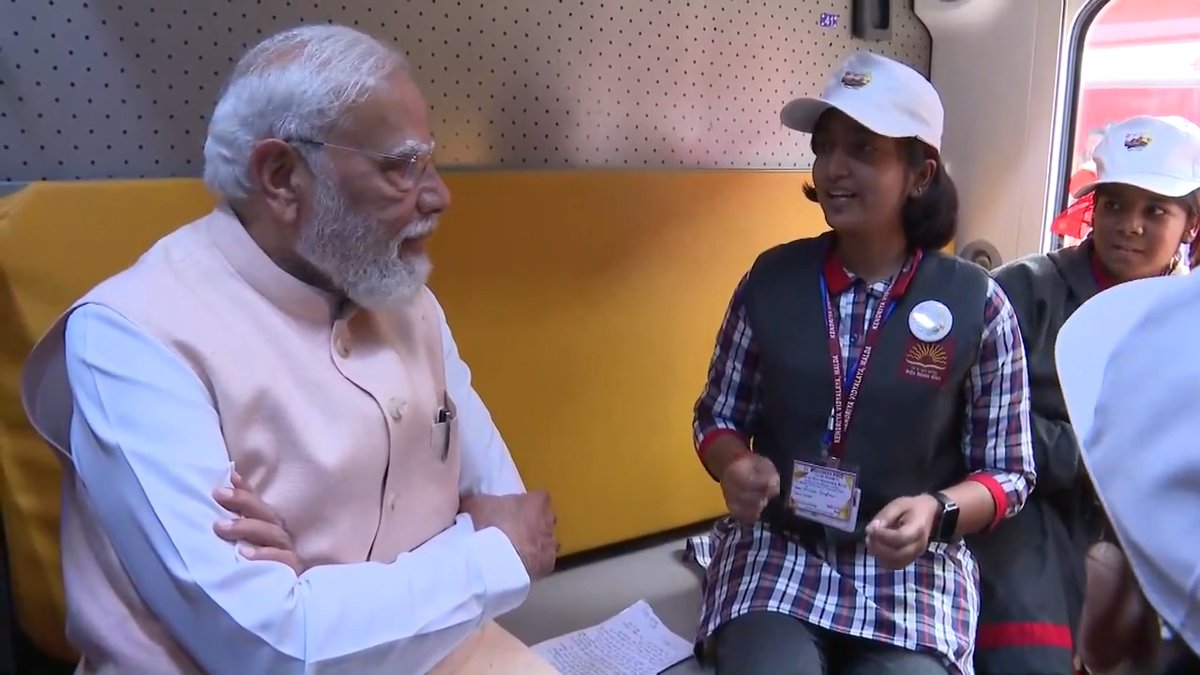
MALDA district ,West Bengal Muslim population is around 52% which makes it a MUSLIM dominated district Stones were thrown on Vande Bharat train ahead of launch at MALDA, just hours before Prime Minister Narendra Modi flagged off India’s first Vande Bharat sleeper train from Malda Town station But mind...

63,046 görüntüleme • 6 ay önce •via X (Twitter)

0 Yorum

Yorum bulunmuyor

Orijinal gönderinin yorumları burada görünecek

Benzer Videolar

Malda was not random. NIA has been given the investigation. Mofakkarul Islam, accused mastermind of Malda violence is a TMC leader, who has been arrested. He is seen with TMC leader Kalyan Banerjee in several pictures. My reading: when Bengal’s ruling machine panics over voter scrutiny, Malda is where the nerves show first. It is a border district with a 165.5 km frontier with Bangladesh and a key junction in North Bengal’s political geography. That geography matters. Because in a place like Malda, demography, documentation, migration anxieties, and electoral arithmetic are never separate conversations. They collapse into one political reality. District-level population data shows Malda’s religious profile and demography has shifted over time, making it one of Bengal’s most politically sensitive districts. Demographic data alone is enough. But in a border district long associated with infiltration debates, fake-currency routes, smuggling corridors, and political patronage, nobody can honestly pretend these issues are disconnected from voter-roll politics. Then comes Kaliachak. For years, Kaliachak and the wider Malda belt have repeatedly surfaced in reporting around cross-border criminality, counterfeit currency, and mob volatility. This is not some politically neutral patch of land. It is one of the most combustible belts in Bengal. So when seven judicial officers were gheraoed there for hours during voter-list adjudication, this did not look to me like a spontaneous local protest. It looked like a political stress reaction. But the issue is no longer merely what happened in Malda. The real question is: who benefits when voter scrutiny in a district like Malda is met with siege tactics, blocked highways, and intimidation of officers? My answer is blunt. Malda is politically precious. Historically it was a Congress bastion. Over time, as Congress weakened, Trinamool moved aggressively into this minority-heavy, border-sensitive belt because districts like Malda and Murshidabad became central to its political insulation. That is why Malda is not just another district for TMC. It is a bastion. And bastions are defended by every possible means once panic sets in. Now add the most recent development. Police have arrested Mofakkarul Islam, described in reporting as the alleged mastermind of the Malda gherao, from Bagdogra Airport while he was allegedly trying to leave for Bengaluru. Another accused was arrested with him. That matters. Because the moment the alleged main conspirator begins to look less like an outraged citizen and more like an operator trying to slip away, the moral theatre around “public anger” starts collapsing. Then the whole episode begins to look exactly like what many suspected from the start: organised pressure, political shielding, and then attempted escape once the heat came home asking difficult questions. To my mind, that is the real significance of Malda. This is where border anxiety, demographic change, identity mobilisation, electoral dependence, and administrative murk all collide. And that is precisely why TMC cannot afford to lose control of the district’s political arithmetic. Because once a serious clean-up begins in a place like Malda, the fight is no longer over names on paper. It becomes a fight over the ecosystem that benefited from blurred lines for years. The CPM played versions of this game. TMC perfected it. And now the Supreme Court has exposed what happens when that ecosystem feels threatened: highways are blocked, judges are surrounded, the state looks away, and grievance is weaponised into muscle. So no, Malda was not random. Malda was the point. Because in Bengal, when power feels threatened, it does not defend the voter list. It defends the vote-bank architecture of Trinamool Congress and Mamata Banerjee behind it.

Mahesh Jethmalani

64,243 görüntüleme • 4 ay önce

To every Bharatiya whose heart beats for Bharat Mata. As the Modi government issues fresh guidelines mandating the full rendition of Rishi Bankim Chandra Chattopadhyay’s immortal and soul-stirring composition, Vande Mataram, India’s National Song, at designated official functions, I, as a proud citizen of Bharat, extend my deepest respect, sincere affection, and heartfelt greetings to my fellow citizens who identify themselves as Bharatiya above everything else. Vande Mataram is not just our National Song but the very pulse of Bharat. It is not merely an artefact of the past but the foundation of Bharat’s glorious future. Just as Maa Durga’s fury against adharma manifested as Maa Kali and annihilated Raktabeej’s oppression, Rishi Bankim Chandra Chattopadhyay’s anger against the British, after being insulted and attacked in Berhampore despite serving as Deputy Collector because he was a Bharatiya with dignity, became the mother-seed of Vande Mataram. Rishi Bankim Chandra Chattopadhyay’s stay at Lalgola Palace, amid the sylvan beauty of Bengal, became a cloistered monastery for his meditation on nation, nationhood, and nationalism. From that meditation was born the hymn to Bharat Mata that reawakened Bharat Shakti and triggered the realisation of our nation’s civilisational identity. From its first publication in Bangadarshan, the literary journal Rishi Bankim Chandra Chattopadhyay edited, on 7 November 1875; to its inclusion in Anandamath, published in 1882; to Gurudev Rabindranath Tagore’s rendition of the hymn at the Calcutta session of the Congress in 1896; to the prabhat pheris that marked the uprising against Banga Bhanga, the partition of Bengal in 1905; to Bhikaji Cama’s incorporation of the two magical words in the 1907 version of the Tricolour—Vande Mataram became what Sri Aurobindo described as the “Mantra of Bharat.” For countless freedom fighters of Bengal, from revolutionaries like Khudiram Bose and Kanailal Dutta to the moderates, Vande Mataram represented a shared obeisance to Bharat Mata. It was the power that fuelled the surge of nationalism and pride; it was the roar of the famous trio Lal-Bal-Pal, who used these two words to mobilise the masses. Matangini Hazra, who became the face of the rising tide of nationalist fervour, faced death at the hands of the British colonial police chanting the two immortal words—Vande Mataram. During the freedom movement, newspapers flew flags on their mastheads emblazoned with these sacred words, which remind us of our loyalty to our nation and our duty towards Bharat Mata, who has nurtured us and given us our identity as a civilisational nation. Let us not reduce this song to an annual hashtag or a ceremonial chorus. Vande Mataram runs through the veins of every Bharatiya. It is our inspiration, our motivation, the core of our identity. It is the soul of Bharat Mata, the land we bow to. Vande Mataram.

Amit Malviya

43,033 görüntüleme • 5 ay önce

Driving Maharashtra’s Progress Through Enhanced Rail Connectivity! Delighted to witness the 'flagging off ceremony of the Nagpur to Pune Vande Bharat Express' by Hon PM Narendra Modi Ji (online), with our leader Hon Union Minister Nitin Gadkari ji. This marks an important milestone in strengthening the connection between Vidarbha region and Pune, bringing faster and more comfortable travel to thousands of people. Nagpur to Pune is a heavily travelled route, yet many passengers have to travel by private vehicles by paying expensive fares. Following a request from the State government and the positive support of Hon Union Minister Ashwini Vaishnaw ji, this new Vande Bharat service was introduced. This train covers the longest route among all Vande Bharat Express trains in the country. The train will run from Nagpur (Ajni) to Pune, stopping at key stations like Wardha, Badnera, Akola, Bhusaval, Jalgaon, Manmad, Kopargaon, Ahilyanagar, and Daund via the Daund chord line. This enhanced connectivity will reduce travel time, boost tourism, trade, and employment, making journeys smoother and more convenient. This development is part of a larger vision to enhance links between Western Maharashtra and Vidarbha, and to provide better access to important religious destinations. It reflects a commitment to modernising transport infrastructure to support growth across the region. MLA Mohan Mate, MLA Krishna Khopde, MLA Pravin Datke, along with railway officials, students, passengers and a large number of citizens were present. Narendra Modi Nitin Gadkari Mohan Mate Krishna Khopde Pravin Datke Ministry of Railways #Maharashtra #VandeBharatExpress #Nagpur

Devendra Fadnavis

101,263 görüntüleme • 1 yıl önce

🇨🇳 🚆I took the high speed train in China today We booked business class tickets, which was relatively cheap, just $90 for 3.5 hours You could get 2nd class tickets for just $20 by the way Also this train is the fastest train in the world now, faster than Japan's Shinkansen that I took a week ago Here is the business class lounge, it's a special entrance at the station with its own security, and free coffee and snacks, it does have a bit of a 1970 North Korea aesthetic which you honestly don't see here a lot, everything is modern. I think because the train company is state owned? But then the station itself does look hypermodern, any Chinese know why? Of course the video starts with a cough 😊👌 Today was a bit of an ordeal, we went to the station before, we didn't get tickets because there's so many "official" restrictions on luggage and we already lost so many things (like powerbanks), and gf was understandably scared to lose more stuff So we thought we'd first try enter the station and pass security and if we got through fine then by tickets on Trip app But then the Didi driver drove us to the dodgiest entrance of the station called West Squate (not the most popular one) where it was a crowd of ppl trying to enter, we were stopped and couldn't enter and the old man started yelling Chinese at us A group of Thai behind us were also yelled to leave by him So then we and the Thai were outside We then discovered it was because you need a ticket to enter the station in the first place, which again is pretty unique to China In Japan, you just walk in, buy a ticket 20min before and board, not in China Anyway a lot of lessons learnt again today, and that's why traveling in China is hard but also fun, but once you get it it's actually easier than abroad, like there's no train tickets at all, not even digital! You just scan your passport as it's all tied to your ID Very cool

@levelsio

654,727 görüntüleme • 8 ay önce