Загрузка видео...

Не удалось загрузить видео

На главную

Man, I just spent the afternoon in full vibe coding mode and whipped up this little Python script that takes any video file and converts it down to the exact JT format my Cybertruck's tailgate LED screen loves. We're talking 64x256 pixels, optimized frame rate, the whole deal so...

60,955 просмотров • 9 месяцев назад •via X (Twitter)

Комментарии: 0

Нет доступных комментариев

Здесь появятся комментарии из оригинального поста

Похожие видео

Jack Dorsey on becoming a better storyteller: "I found myself very early on thinking about something like thinking about this early idea for Twitter and saying to myself, I could build this awesome. You have those shower-like moments, or you're walking at midnight in some town in New York City, and you've got these amazing brand ideas. And then you start thinking, well, I could really start doing this if only X and if I had this person or if this technology existed or if this happened or this happened. And what I realized was that I was constantly making excuses for not working on it. And then the window had passed, and then I couldn't do anything. So I think it's really, really important to write it out or to draw it out or to code it. But you need to get it out of your head. And the reason you have to get it out of your head is that you need to be able to see it on a surface that is not in your mind. And once you can see it, and once you can step back from it, then you can also decide this passes my filter, my constraints, so maybe I can show it and share it with some other people. And then they will be like that's the stupidest idea ever and or that's somewhat interesting, but maybe this and this and this. So the sooner you can do that, then you have a lot of momentum around it, and you can really decide if you want to commit to it and work on it more or put it on the shelf for a later date. And the realization that I think everyone needs to have about that latter option, putting it on the shelf, is that you can come back to it and it will surface back up in another piece of work or another idea at some point in your life. So having that ability to close off a chapter and move on is really, really important. You can't have all these open threads, and that's what I realized I was doing. And that also encouraged me to really write more and to really think about what's the story? How are people coming to this? And like when I show my friends this, how are they going to react and I would write it down. I would actually treat it like a play. And when I realized that I was writing plays, I read a lot more plays for style and for substance and for technique and I think it's really good. I think there is another company that I have always looked towards for inspiration and I know a number of people in this room probably have a similar company in mind, which is Apple. Apple, I think, is run like a theater company. It has a great sense of pacing, has a great sense of story and has a great sense of execution and it's all about event-driven, it's all stage-driven, the stage being a billboard or the stage being a keynote or the stage being a product launch. All of it has a very, very cohesive end-to-end story. I mean you think about what happened when Steve Jobs came back to the company. The first thing he did was kill every product line the company was working on. And for two years,rs they had no product on the market whatsoever. All they had were a bunch of posters all around the world with Steve Jobs' heroes, and it said, think different. And it was just focused on bringing up the brand and making people aware of the brand again and how the brand is aligning to this particular feeling and story. And then they came out with the iMac and then built iTunes and then the iPod, and they realized that, wait a minute, people are carrying music on their phones now, so we better build a phone, an iPhone. And so this unfolding of the plot and the epic story has been very, very interesting to watch, especially if you look back to that time when he came back to the company. So I've learned a lot from that company and other companies that operate in a similar fashion."

Founder Mode

107,213 просмотров • 8 месяцев назад

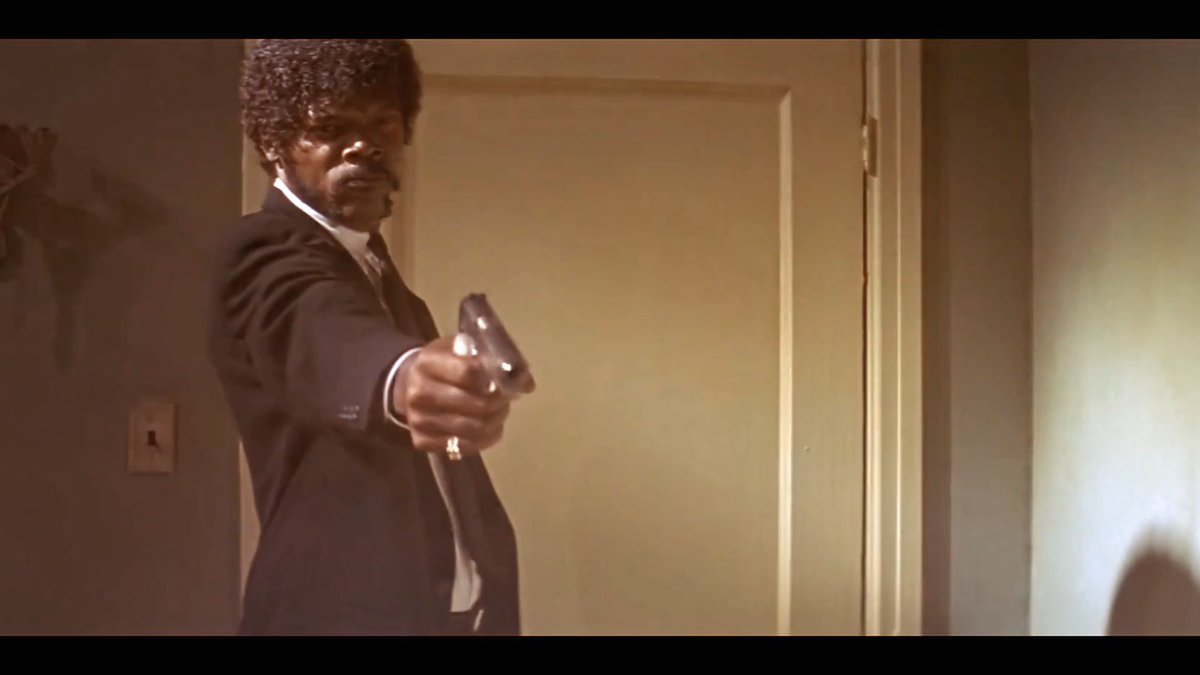
Samuel L. Jackson explains how he landed the role of Jules in Pulp Fiction, and what it was like seeing the film for the first time on the big screen: “Pulp Fiction and I came together in a very strange kind of way. I remember auditioning for Quentin for Reservoir Dogs in New York (for the role of of Detective Jim Holdaway, Mr. Orange’s police contact). And apparently I didn't get that role. But I was at Sundance the year that he screened it for the first time. I was sitting there and I watched that movie - I was awed by it. I mean, there were people running up the aisles when Michael Madsen was cutting the cop's ear off. People were going, "Oh my God, this is horrible!" All these “auteurs” were running out of the theatre. I was like, "This is good. This is happening. This is different." So after the film, I walked up to Quentin and said, "This film's amazing, man. It's great." And he looked at me and said, "Hey! How'd you like the guy who got your part?" And I was amazed that he even remembered who I was - but he remembered me. A year or so later, I got a phone call saying Quentin Tarantino wants to have dinner with you, because he'd seen Jungle Fever and he liked that Gator character. When we had dinner, we were sitting there talking. We started talking about Hong Kong films and cartoons and foreign movies and obscure things that we watched, horror movies. We found out we liked the same kind of stuff. And he told me he was writing this thing, and he was writing this part with me in mind. He was going to send it to me. I went off to do another film. I was in the backwoods of Virginia somewhere doing a film, and the script came. A little plain brown wrapper from Jersey Films. And Jersey's got these gangster images on the logo. And it said, "If you show this script to anybody, two guys named Ernie and Luigi will come and break both of your legs." Whatever. I went, "Yeah, right." So I sat down and read it. Boom. I read this thing. It's like, "Oh my God. This is awesome." And then I said to myself, "Nobody writes a script this good. There's no way that this script is as good as I thought it was." I closed it. I opened it again. I read it immediately. Okay. This is great - If whoever produces this film lets him shoot exactly what I just read, if they stay away from it, they don't try to edit any of this stuff out - this is going to be a great film. It's going to be kind of audience-specific, because I like that kind of stuff. I have friends that I knew would like it. It was a generational kind of film. I never thought it would cross over and do all this stuff. We shot it. We had a great time doing it. And the first time I actually saw the film was at the Cannes Film Festival. That night, it screened, and I was sitting there watching the film. The audience was loving this movie, loving it. About halfway through, I realized there were subtitles at the bottom of it. So I said, "Hey, these people are reading it, and they're getting it. This might be special. This really might be something special." And actually, by the time it was over, there were tears running down my face. I was just so pleased that I was part of that particular film… I never felt that satisfied, and that kind of full about a performance and about being part of something as I was in that particular moment.” Quote comes from an Interview with the American Film Institute 2010

Gangster Cinema Central

85,366 просмотров • 2 месяцев назад

[Eng] #Engfaแบรนด์รังนกแท้เส้นทางสู่ที่1 #EngfaWaraha #อิงฟ้ามหาชน‌ EF: And we successfully completed our first mission. Here it is... Long time no see! This is a crown. The winner of Miss Grand Thailand 2022, that's right. This is the crown for the 10th anniversary of Miss Grand. I was the 10th Miss Grand Thailand, so I became the owner of this crown. The crown is decorated with both diamonds and gemstones, and it's absolutely beautiful. I used to wear it to events all the time. While you're listening to me, you can continue making your payments, everybody. Back then, I wore it to events throughout the entire year because whoever held the Miss Grand title that year had to wear the crown to every event, whether it was to thank sponsors or attend various Miss Grand events. And this thing is heavy. It's really heavy. It was so heavy that every time I wore it, it would actually leave a dent on my head right here. It would leave a mark, like the crown had been pressing into my head. I did my duty perfectly throughout that entire year, wearing it for the full year. Then the following year, I got to wear the crown for the first runner up, which was Miss Grand International. So I hope everyone misses this little one. Today, we're going to put this crown back on for accomplishing our first mission, which is hitting 100,000 Baht. MC: Oh! This is like a flashback to that time! Ohhh, the whole look is coming back! EF: Oh my gosh, I miss it so much. I haven't worn it in such a long time. It's been so many years. And I got to wear it again when we did the photoshoot for the brand. So it was like, wow, I hadn't seen it in such a long time.

~ Amy EL ~

12,918 просмотров • 23 дней назад

Mel Gibson on how the waterfall sequence in "Apocalypto" (2006) was shot & a weird incident that happened during the filming: "Gibson: Well, it's a real waterfall. We used a SpiderCam. We put the Genesis on it. I think that's the first time that's happened. We had to span the waterfall and river with cranes and put the cables up. It was quite an elaborate setup to enable the camera to go over the guys shoulder, down on the water, over the edge, turn around and then pull back in one shot. Of course you're not going to make a real guy jump off something like that. He'll ki!! himself. A cow fell over one day. A cow was trying to swim across... it was just overtaken by the depth of water and it fell over the waterfall! It hit the water and I thought, "It's toast." It was about 170 feet, this waterfall. It came up somewhere on the other side and it was all busted up... then the waves got it, it was upside down, bouncing off the rocks... and it got into this deep water. One of the local guys, this is the weird thing of all... the cow's in the water, but this Mexican guy just goes up to it and it's like he said something to it, it was the weirdest thing I've ever seen, and the cow just walked up and started eating grass! Farhad Safinia: The cow was just munching grass. It felt like it didn't remember a thing. Interviewer: Is there any footage of that? Gibson: I kept telling them to turn the camera on. A lot of people wouldn't turn the camera on when I told them too. It used to make me crazy. With the guy jumping off the waterfall... we found a 15 story building in Vera Cruz and we hooked Rudy up to it on a wire and said, "Jump off, kid!" His knees banged together for a little but he did it 10 times. Then I'm watching and I'm giving him a hard time... afterwards all the stunt guys came up to me, and he'd put them up to it, they said, "I don't suppose you'd like to have a jump?" And I said, because I had to instill fear in the rest of the crew and I couldn't look bad, I just said, "Hook me up." They hooked me up and I went off. I would have presumed that they would have turned the cameras on, but they didn't. I'm like, "What?"" ("Talking Apocalypto with Mel Gibson and Co-Writer Farhad Safinia", Evan Jacobs, Movieweb, 2006)

DepressedBergman

192,878 просмотров • 4 месяцев назад

Rick Rubin tells Andrew Huberman how he deals with creative or writer’s block. He treats his work like a diary entry (and doesn’t worry about internal or external judgment): ➡️ “What's the cause of the block? The block is usually something that's either personal ("I'm not good enough") or it can be a confidence issue ("I don't have anything to say") or it could be...thinking about someone else ("nobody's going to like what I make"). Do you know what I'm saying? So, it's either fear of self-judgment or external judgment. If you're making something with a freedom of "this is something I'm making for myself for now", that is all [you have to do]. It is a diary entry. Everything I make is a diary entry. The beauty of a diary entry is that I can write my diary entry and you can't tell me that my diary entry wasn't good enough. Or that [the diary entry] is not what I experienced. Of course it's what I experienced: I'm writing a personal diary for myself and no one else can judge if it is my experience of my life. Everything we make can be that: a personal reflection of who we are in that moment of time. It doesn't have to be the greatest you could ever do. It doesn't have to have any expectation that it's going to change the world. It doesn't have to sell a certain number of copies for any reason. It doesn't have any of those things at all. It is "I'm making this thing for me and I want to do it to the best of my ability and to where I feel good about it". [The work] is honest of where I'm at and if you're living in this world of just being honest to where you're at, there's nothing blocking you. There are no blocks. The blocks are all based on dealing with a different force or a different perception that is made up.” ⬅️

Trung Phan

1,619,969 просмотров • 2 лет назад

Coinbase CEO Explains “Reverse Prompting” and the Rise of the AI CEO Brian Armstrong: “One of the big pushes we made in the last year was we got our own internal hosted AI model that was connected to all of our data sources, right?” “So it's like every Slack message, every Google doc, Salesforce data, Confluence, you know.” “So now the data is all aggregated and I've started to ask it really… it's not just like prompting it, ‘Hey, can you write this kind of memo for me,’ or something.” “I'm asking these AI agents now, ‘As CEO, what should I be aware of in the company that I might not be aware of?’ And it'll tell me, ‘Did you know that there's actually disagreement on this team about the strategy?’ And I was like, actually, I didn't know that.” “This is like reverse prompting. So instead of telling the AI agent what you want it to do, you ask it what you should be thinking more about.” @jason: “It's a mentor. It's a coach.” Brian: “Yeah. Like, what could make me a better CEO? And it's like, ‘Well, I looked at how you spent your time in the last quarter and here's how you said that you wanted to spend it, but you actually spent 32% of your time on this instead of 20%.’” “I've asked it other questions like, ‘What's the thing that I changed my mind on the most over the last year?’ Things like that.” “It'll prompt you with information you should be thinking about instead of the other way around.” Thanks to our partner for making this happen!: Our episode is sponsored by the New York Stock Exchange - a modern marketplace and exchange for building the future. It all happens at the NYSE 🏛.

The All-In Podcast

80,524 просмотров • 7 месяцев назад

Now that I am home and have access to my files I decided to do a quick test with one of my Vtubing avatars. It works way better with my larger iPad Pro (less crashing/more memory and more screen space) compared to the mini so I did want to bring that up. Importing the file over as GLB was more stable than just OBJ plus it kept the color info from the previous texture. I texture all my avatars on substance painter but have been looking at an alternative when I am out and about that is not on the computer and this actually hits all the right "wants". Adding a quick video of the way the app works for me. I like that it has layers, I can alter my brushes and even add stabilization when I am drawing (which I use that extensively on procreate so that was a huge plus). The stamp tools will come in handy as well but did not show it on this video. The file itself is imported as "one mesh" but each part is treated as their own separate piece which I show in the video. I do the same thing on substance painter making it really easy for me to texture. The app then exports the texture out for each object which is the same way I do so on substance. Overall I am extremely impressed with the work Sparseal has done on this application and see how useful this will be for my current work flow of texturing. I for one love the ability to be "portable" which is a big reason I sculpt so much with Nomad Sculpt on the iPad. Having the freedom to do your work away from a desk and if you feel like doing it outside is probable why I yearn for iPad apps so much like so. Give this app a look, it is free to try on the App Store (It is $19 to be able to export, but a one time buy). It is called "Wafer" for the iPad. I already use CozyBlanket from the same creator to do re topology so I expected this level of fantastic with this current app.

Val / LatinVixen ➡️ Megaplex

17,469 просмотров • 6 месяцев назад

Rory McIlroy says the way he beat his first-tee nerves was to picture the ball in the trees and walk the worst case all the way to its end. "I say this all the time. It's counterintuitive to a lot of people to do this, but I do. If you're trying to overcome anxiety or nerves or on performance, I do try to think about, well, what's the worst that could happen?" "I'm not gonna die on the golf course, thankfully." "I used to have, like, first tee nerves, like, big time. I would struggle on the first tee. And so I would say to myself, well, what's the worst that could happen?" "So if you hit it in the trees, okay, then what do you do? You go up there and you figure it out, you know, you're skillful enough to hit a punch shot out of the trees and, you know, get it up to the green and get it up and down and make a par and move on." "For whatever reason, imagining, like, the worst-case scenario, give me a level of comfort, because I felt like any worst-case scenario that I could bring up in my head, I'll be able to deal with." "Especially on the first tee for me... if you get nervous on the golf course, you get tight... it gives me a sense of freedom. And like, if I can swing free, that's when I play my best golf." "So whatever thought process I need to get into to get there, whether that's imagining the worst-case scenario." "I think I'm not standing behind a tee shot and visualizing myself hit a bad shot. Like, I'm visualizing myself hitting it where I want to. But I think just even before I get to that point, thinking, well, what's the worst that can happen?" "And then if the worst that can happen isn't that bad, it's like, well, that's okay. You'll be able to manage it." What I find wild is that he never once tries to calm himself down. He walks into the scary version instead, all the way through the punch shot and the par, and the nerves lose their grip because nothing is unknown anymore. The thing you are dreading shrinks the same way once its worst version has an ending you have already seen. - Rory McIlroy (Rory McIlroy) on The WHOOP Podcast (WHOOP)

Jay McHale

569,591 просмотров • 1 месяц назад