Загрузка видео...

Не удалось загрузить видео

На главную

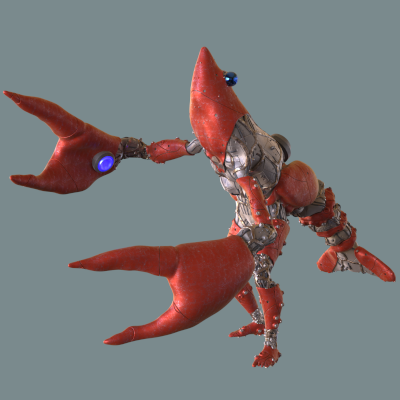
mech arm - base skeleton 💀 - add extra bones 🦴 - simple model with sweep 💊 - detailed surface with cops 🔩 - rig with apex ☝️ #Houdini
12,890 просмотров • 1 год назад •via X (Twitter)

Комментарии: 6

Фото профиля Rawrskis!
Rawrskis!1 год назад

Enquiring minds want to know more, please.

Фото профиля Pwnage
Pwnage1 год назад

Our newest gaming mouse in collab with Team BLG Valorant StormBreaker Max CF X Whzy Edition 🔷Carbon Fiber Composite only 43g 🔷5% larger in size 🔷Pwnage XERO Sensor - Custom PixArt 3950 🔷8kHz polling rate, Wireless & Wired 🔷and much more! Order now:

Фото профиля Egmontas Geras
Egmontas Geras1 год назад

that's awesome!

Фото профиля Jidlow
Jidlow1 год назад

Can you explain why you prefer apex over kinefx? I still can't get what's an advantage of apex...

Фото профиля tinybugbot
tinybugbot1 год назад

I don't fully understand APEX yet, so I can't say an overall. But just in this case, it has a lot of sub bones, so it was convenient to set them up using an Apex Script loop.

Фото профиля Arvid Schneider
Arvid Schneider1 год назад

any chance to get a hip file of this? very curious on the setup. even a dumbed down version would be amazing

Похожие видео

A quiet, solidly mounted anvil does make a meaningful difference in the quality of blacksmithing work. When an anvil rattles due to poor bolting, base imperfections, or instability, it absorbs and dissipates much of the hammer’s energy through vibration and movement rather than transferring it efficiently into the hot metal. This leads to less effective deformation with each blow, requiring more strikes before the workpiece cools, which can result in incomplete shaping, uneven grain flow, surface defects, or even cracks from rushed or insufficient hammering. Precision also suffers because vibrations make it harder to land accurate, controlled blows, especially during detailed operations like drawing tapers, punching, or fullering. The smith tires more quickly, leading to greater inconsistency across pieces or production runs, while the excessive bounce accelerates wear on both the anvil face and tools. In contrast, a quiet anvil—firmly bolted to a heavy stand, timber base, or concrete with a flat contact surface—returns nearly all impact energy to the metal. Forging feels crisp and “dead,” allowing cleaner, faster, and more predictable shaping with better metallurgical results, such as improved grain refinement and fewer internal flaws. Modern smiths often add rubber pads or reinforced mounts specifically to achieve this stability, making it one of the highest-return upgrades for consistent, high-quality manufacture.

🚫👁️Drinks on Saturday🇺🇸

254,270 просмотров • 2 месяцев назад