正在加载视频...

视频加载失败

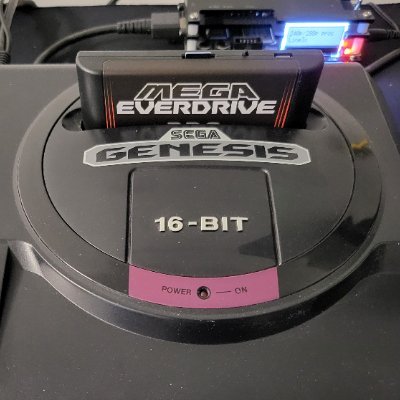
** Mega Parodius Update ( MegaDrive / Genesis ) ** 2 vid updates - In the first the Vic Viper players ship is heavily damaged .. only the bomb bay is operational ... so the viper goes on a bomb *blast* processing rampage !! ... This shows enemy destruction...

13,369 次观看 • 6 个月前 •via X (Twitter)

0 条评论

暂无评论

原始帖子的评论将显示在这里

相关视频

** Mega Parodius Update ** The team have been busy over last couple of weeks , implementing more of the games engine. WIP since last update : White Bell power up ( this is the text attack ) Blue Bell power up ( full screen explosion ) Catboss & animating Trees Updated Lazers to work on the BGB layer ( Plane A updated to 64x64 tilemap ) . Pyron has been doing excellent work on Blue bell Explosion, Whitebell power up text gfx - the slogans are great !! Arcade quality tree animations have been added. Feeding me a lot of videos so we can replicate the arcade port more accurately. Vector Orbitex has updated the music to mark IV for stage 1 making it smaller yet again , he's also added the Orchestra Hit in , potentially more samples can be added back in now also as the song now is a miniscule 57 kb. I keep telling him its 2025 - not 1990 for rom sizes haha , a professional is always a professional though !! The Blue Bell power up uses the static large sprite class I made for SOTA where it supports unlimited amount of sprites per object and detects all the reverses / flips & uses the same tile pointers where it can and crunches it down into single sprite object. We use up to 40 sprites in the Explosion but only 147 tiles needed in vram thanks to clever use of mirroring. The Catboss is easily the hardest enemy in the level for a few reasons - we also had to free up Plane A so the boss could shift upwards onscreen, so lazer effects were shifted to Plane B. The bit that caused me the most issues was when he sits in the water line between the two islands. He is quite wide and also has overlapping palettes and animating parts , to do it solely with sprites would have lead to severe dropout at times. At the waterline we have to simulate 3 background planes and sprites at that point and we only have 2 background planes. Luckily the MD sprite engine is very flexible and we were able to recreate the arcade look at this point with some sprite trickery, the water-line is now sprites . So we use Plane A + sprites to recreate him and use a lot of plane animation to reduce the amount of sprites needed. For example the face, the tail the propeller are all plane A animations . I analysed the SNES/PCE versions and we use less sprites than those versions for him so that will help reduce the chance of sprite dropout when attacking. The Catboss is only about 1/2 done , all damage states, the onboard penguin factory, bullets from Cannons yet to added etc. He wraps around at the end of the vid as theres no destruction routine in for him yet . No extra enemies in at this stage , tackling the hard parts first etc. We took the arcade GFX for the Trees that sway around under the Catboss, all the animations are in. There were some DMA bandwidth issues originally I had to sort out as the Catboss has several animating parts + swaying Trees was leading to overload so after some load balancing it all is playing nicely !! We still have loads of stuff to add , collisions are not in - normal enemy waves etc but yeah a lot of future issues were sorting out just getting this far. So the team is very happy with the progress !! #SGDK #Parodius #SegaGenesis #SegaMegadrive #indiegame

Shannon Birt

19,241 次观看 • 9 个月前

*** Parodius Demo Update *** After seeing my good friend Pyron amazing Parodius artwork , I could not let that go to waste. Its a crying shame Konami's shooters did not make it to MD at the time , time to rectify that (in time). The video shows some of the progress so far. Stage 1 scrolling using the streaming scroller from lufthoheit to automatically manage the tile management for the scrolling rather than using different sets etc. Its great when I can grab bits of code and apply them to new projects, it speeds things up !! Lufthoheits new stage is coming along well also and has its first enemies in , hopefully show something of that soon. The VRAM view is to the right , we will have plenty of vram left for objects without resorting to much manual management it seems. ~ 1/2 vram left. It looks like the biggest challenge for this level is the Cat Ship mid boss - the end boss seems easier in comparison for a few reasons. I've analysed the way it was done on PCE and SNES and will come up with the best option for MD. More to come on that soon. At present we will target mainly assembly , so performance won't be an issue . I'm not sure we need a sprite multiplexor for > 80 sprites , but we will use one anyway just to not have regrets/changes later on and for the Hint color effects the multiplexor can do also. We have an A level musician volunteering also for those concerned about the audio side of things - it wont dissapoint I'm sure. As this is now my 3rd / 4th project it will be done as time permits so no gaurantees on timelines sorry - we are all hoping to do well by the community however. #SGDK #Konami #Parodius #MegaDrive #SegaGenesis

Shannon Birt

12,526 次观看 • 10 个月前

** MEGA Parodius Scaling Effects Part 1 ** One of the big challenges with the Parodius Megadrive port is Stage 8's boss - The puffer-fish *Pooyan* with his full screen scaling effect. The goal is to be very close to the arcade (with extras on top ) so I thought lets tackle it head on to see how close we can get. I was also keen to jump into another scaling code rabit hole haha. Pyron pulled out all the stops and got me the source frames and reworked the BG tiles for this test - a big thankyou to him , Vector Orbitex is busy working on Stage 2 tracks so the team is working hard all round on this port. The MD has no sprite / background GFX scaling hardware , however the VDPs Vertical scroll can be updated per scanline to help vertical scaling on backgrounds, but there is a cpu cost to manage all the interupts so thats not free either. With the Horizontal scaling there is no help at all , apart from a semi-friendly packed pixel format for the cpu to work with, its not quite chunky format but better than planar format still for scaling. So its falls back to the 68k CPU to do all of the horizontal expansion which is the largest cpu cost. Basically drawing strips of either 1x, 2x, 3x or 4x wide columns at speed. So we are one week into this Boss's routine and you can see from the below video the horizontal scaling is implented ( vertical will be in the next update ) . We are scaling from 1x to 4x in the video below in 74 steps for testing . The column distributions are always a bit painfull to do - thankfully they are all worked out now. This is the third scaler I have built and the goal was with this one to make it really flexible for use in other projects also, sometimes when you optimise something to the last degree all the flexibility gets taken out of it. Currenty scaling at 12-25 FPS update here, I had some rules against some optimisations which I would use and some I wouldn't , thankfully we are a bit ahead of the Arcades animation frame rate here still and I may yet find optimisations that fit within the scope. We have vertical scaling and sprite spikes to add yet so Im hoping i can find a few more optimisations to offset things when they are implemented also. In a scale frame update we are processing close to 42000 pixels in ram before using DMA to send to VRAM . Using a 41x16 (656 tile scale buffer) - single buffered for now due to its size in VRAM. So thats nearly 21k in tiles ! I had to re-organise ram a bit to support a buffer of that size for the stage. The scaling function is written in 68k assembly , with a little C code handling the Vertical interupt code ( so the game logic can actually run & DMA updates etc ) . The DMA routines are in assembly also and customised for large chunk size ( big blocks of tiles ) which suits the scaler. I had some race conditions to sort out where the cpu was faster than DMA (sending tiles from RAM to VRAM ) and in some cases where it wasn't so it had to be balanced. We may be able to add more detail into the top and bottom of the background yet but its low priority for now until all the other bits are in !! #SGDK #SegaMegadrive #Genesis #Parodius

Shannon Birt

25,545 次观看 • 6 个月前

*** Parodius Update - LAZERS !! *** How many sprites do we have to use on the Sega Genesis to make 4 x 160 pixel wide lazers ?? 10 ? 20 ? ZERO !! Which is really great as when the options overlap all with Lazers using sprites would have lead to sprite severe overload / dropout otherwise. So yes we have some raster trickery going on . I think this might take the cake for the most exotic effect Ive added just for a power up type haha. Breaking down the effect. 1.) Lazer tile rows ( the tile rows the lazers are currently on ) are copied to an offscreen area of the plane . I used the DMA VRAM to VRAM copy mode for this. You can see these offscreen rows just above the Game Videos window in the Plane A tilemap view. 2.) Then a solid block of Lazer colored tiles is drawn at the position of the Lazer horizontally in the offscreen buffer we just copied too - these are 8x8 tiles. 3.) Then onscreen when as the display is being drawn we change to the Lazers row at the correct pixel line offset for exactly 1 scanline then change back to the normal screens next row. I'm using the Horizontal interupt system developed in SOTA for handling the interupts for this. The technique used has been done before on the NES ( Salamander tech demo ) , as usual some of the best techniques come from the 8 bit systems , still it presented challenges getting it working on the MD. These irregular spaced interupts on the Genesis are a little bit of a problem too . All the height sorting has to be done on the frame before. Whats very interesting about the VRAM to VRAM copy DMA (Copy DMA) is it runs asynchronous to the CPU. Normally ROM/RAM to VRAM write DMA (Write DMA) halts the CPU during the send operation but with a Copy DMA I can pipeline one Copy DMA setup while the previous one is copying still . So even though the Copy DMA is 1/2 the speed of a Write DMA with the pipelining and no stalling its probably on par or better in some cases , where a copy makes sense to use. Theres still need some fine tuning , might make smaller lazers with more breaks etc. The Lazers can be full screen width , or narrow as we want so bit of fine tuning here to come. Pyron Vector Orbitex #Parodius #SegaMegadrive #SegaGenesis #SGDK

Shannon Birt

16,162 次观看 • 10 个月前

*** SOTA RETROCON S.O.T.A UPDATE *** Whilst the Versao LTDA team is busy at Retrocon showing off our latest Sega Genesis SOTA update, here is a small snippet of how the game is progressing. This video has 3 parts, our menu screen, rain - wind sub section of level 1, then the boss. Everything is still wip including my gameplay skill lol ( and i thought the controller would help .. ) Some challenges overcome : The Menu screen uses shadow and highlight transparency modes in two ways, the background mode for the light rays and then the sprite mode for the mist - it has a nice overlapping effect too, due to using the forground plane for the light rays (s & h background mode) the entire forground is made up of sprites - all the words are sprites . SaviorMarks sent me a screenshot of an issue with boss leftover Mist sprites affecting the menu screen and I thought that looks really cool - lets do that haha . Sometimes bugs are keepers !! The rain section uses more than 80 sprites, a sprite multiplexor handles the rain whilst normal non plexed sprites make up the moon / clouds in the far background , the lamp posts and lamp light in the mid forground and Fences in the front forground . Without the multiplexor there was too much drop out on the rain at times. The rain is still blinked in alternating X positions due to the pixels per line limit , but it gives a great result still. The lamp lights use Shaded Active Dither as S&H here would not overlap the enemies / player . The Boss was a challenge with its size and full frame updates, up to 650 tiles are changed per animation frame into vram. Custom Dual priority DMA routines and extended DMA timings are used (still NTSC 224 pixels tall screen size but most of the vblank was used for updating tiles ) . These methods were used to update the bosses dual display buffers. I needed to have dual priority DMA buffers as the player / waterfall etc had to update their frames whilst the boss is constantly streaming tiles. There are also S&H transparent Mist sprites used for the boss sequence. It seems if you want everything to break at once target a demo for a retrocon event haha, we had lots of issues mainly with vram getting stomped and as all animating sprites need to be DMA streamed to fit into VRAM as the forgrounds and backgrounds take up a lot of tiles. Some new tools which show the VRAM allocation for the sprite engine on a frame by frame basis helped and a self defragging VRAM system helped quite a bit also. Thankfully things are in a good state now apart from a couple of small bugs that persist. Thanks to SaviorMarks and GamesCare for putting up with and testing all the bugged updates haha !! #SegaGenesis #SGDK GamesCare SaviorMarks #VersaoLTDA

Shannon Birt

10,243 次观看 • 11 个月前

** MEGA Parodius Scaling Effects Part 2 ** Well - this is the BIG one - literally !! Huge thanks to my team Pyron & Vector Orbitex for their efforts. Pyron has provided all the source frames for Puyon and his spikes / explosion and a lot of analysis video on how the spikes behave / move which was really helpful. Pyron also used his CRT setup for this video as we felt an emulator video would not do it justice - running on 100% real MD hardware FTW. Vector has provided the catchy boss music and its sounding great - as always ! The coding on this has been a bit insane - things done since part 1 post previous: Implemented dual buffering - Last video was single buffered - so VRAM is very tight now , we only have about 40/2048 tiles free. For the longest time I didn't think it would fit - I found a vram jigsaw puzzle that made it work in the end. Double buffering has cleaned up the stability of the animation and matches the arcade scaling effect now albiet costing 2x more VRAM . Vertical Scaling Implemented - the vertical scaler was taken from Lufthoheit ( my other shooter ) and its heavily optimised to reduce cpu usage. During the scaling the vertical scaler partitions the 68k processor registers into 2 sets, 4 registers are allocated to feeding the fast horizontal interrupt (h-int) that drives the vertical scaling , remaining 12 registers are for the horizontal scaler running in the background. This setup is much faster than normal backup / restore register methods, as we do not need to backup / restore registers in the h-int which would double CPU costs. The catch is the momment any background routine tries to use the H-ints registers it would break things so it has to be carefully timed. Added the spike projectiles - this was very tricky to get close to the arcade, they are semi heat seeking missiles basically and hence needed code that worked out angle differences to player at speed theres no time for arc-tan or similar so it uses faster lookup tables to work out the angles . They speed up over time and get larger and whats more we can't keep all the scales in VRAM - we have room for 2 spike buffers only. Also what was a real pain was working out scaled coordinates for the circular launch of the spikes . Added Fish Damage - Shock frame and Explosion frames from Arcade . Very proud of the fact we have the full arcade quality explosion is which is fully scaled also. Added Temporal Masking - which is fancy wording for don't draw nothing to buffer if nothing is there already there for the scaling . So empty Corners and edges can be optimised out to lower cpu costs and rom costs. I had to make some scripting for this and work out what areas did not need drawing at all in the frame, which should be force cleared by cpu and which areas should just be copied from rom. This reduced rom size by 30 kb and with a bit more work we could extend that to 60 kb & get a bit more speedup even doing so. Added a frame limiter . In the last video update we let the 68k burn hot and just pump out frames as fast as it could - here we match the arcade animation rate which does leave the cpu idling at times , particularly in the smaller frames - even at large though we could be running the animation 25 % faster , issue is though that would speed up the game logic and make it less arcade accurate. We had some real bullet / Spike hell simulations going without the limiter but yeah we had to tone it down a bit. Maybe in a hardcore mode we could let it run wild though ! Code is 95% 68k assembly with about 5% C code (v-int as its cold path ) driving things . This sort of thing needs all the speed it can get !! Well now after all that I can return to finish off Level 1 haha - just a wee sidetrack there . No doubt we will polish stage 8 boss some more in time too !! #SegaMegadrive #SegaGenesis #Parodius #SGDK

Shannon Birt

26,424 次观看 • 5 个月前

** Sega Genesis 3D Engine Update 8 ** Significant improvements all round as you can see and hear from the last update !! Foremost - A huge thanks to Toni Gálvez - Megastyle - BG. who has joined the project to create a bit of 16bit low poly magic. Toni's an Amiga fan but also crazy about game dev in general, he's worked on GBC, GBA, PC, MD, PSP, C64, CPC, MSX... and others. Gaming titles include War Times, Metal Gear, Rocketman, Tintin & Asterix to name a few. He's provided the great new ship model you see on screen - new striped buildings, all the backgrounds / palettes etc. There's a lot of models he's given me which need to be added, also he will be planning a lot of the level design. Very happy to have him help me turn this into something more than a tech demo as I have my hands tied pushing the MD as far as it can go haha - there is no cpu cycle to be spared. Also many thanks to my good friend CYBERDEOUS - Crouzet Laurent for the Music for this showing , I wanted to have the music load occurring so we have a realistic benchmark for performance and he was only too obliging. If you're into MD chiptunes check him out !! Since last update : New player model , substantially more detailed than the Arwing. Last update had a 23 triangle Arwing , this update has a 39 triangle custom model from Toni. We had several to choose from , others will be used for enemies . 3D Buffer size increased 25% to 256x160. This was quite tricky as I'm close to the DMA limit even with an extended vblank . Spent a few days thinking of how to do this as like anything retro every solution has a drawback, finally got a workable solution. It makes a big difference to have a bit more vertical height . Z Rotation added ( the screen tilting left to right ) , small hit to vertex transform on cpu thanks to look up tables doing the heavy lifting, saving 4 multiplies per vertex. Multiple speed ups in rendering code. Onscreen paths with no range checking used until Z is close enough to cause clipping , partial onscreen drawing pathes that need to check boundaries, quad rendering completely rewritten - was very very painfull to get right . I found out the hard way that things are great when they are not rotating in the Z axis haha . Partial buffer draw optimisations - which have helped with the massive dma load , sending up to a 20kb buffer in a single frame needs a lot of optimisation. Min / Max tile lines are analysed and only sent if dirtied , reducing most buffer swaps substantially. Still some issues to sort out , at times you can see the flicker near top of screen when frames are near full height . I need to optimise that a bit. Due to the onscreen buffer system a full Sprite background had to be implemented almost Neo Geo style. This flips the usual MD rendering system on its head as it uses both foreground and background layers for a foreground 3d plane and sprites for the background. This presents a few issues, one is to get a tilt effect on the background by using narrow sprites (16x32) we run out of sprites when trying to cover the screen. Thankfully the MD is not limited to 80 sprites, to fix this a 114 sprite multiplexor is used to draw the background, its completely made up of 16x32 sprites ! Why do things this way ? speed . Its the interleaved foreground/background layers that allow a double buffered ram system writing to write to vram using dma in a completely linear fashion - virtually no tile translation needed. The negative is you have no planes for the background, that's where the sprites come in . Thanks to H40 mode we still have a few sprites we can use for effects in the forground also . Thankfully we can implement a fairly good tilt still for the background using sprites, in future updates this will be able to move horizontally also and a bit of vertical movement. XGM1 music driver in use to simulate music cpu load, XGM2 unfortunately with the massive DMA needed to shift the 3d buffers would slow down at times rendering it unusable, XGM1 plays at full speed - albiet with a bit more of a cpu hit. Together with the sprite multiplexor and the music driver active theres a 10 % hit to cpu so I've had to play around with draw distances / object heights and other optimisations to offset that. Not to mention the larger buffer takes more cpu to fill also. Everything is placeholder so will be changed with proper stage design. We are averaging 20 FPS in the current video, I'll push for more as always !! Progress continues on my other projects , updates soon on those - retirement can't come quick enough . #SGDK #SegaGenesis #SegaMegadrive

Shannon Birt

24,031 次观看 • 1 天前

*** Mega Parodius Sega Megadrive Update *** Lately I've been having some fun seeing how far we can push the Parodius game engine . This is not arcade accurate - just for testing, decreased bullet timers and upped the bullet count to see what would happen re cpu usage when things are made a lot busier ! Maybe something like this could be insane mode in the options etc. Since last update we are a lot more optimised under the hood . The C based sprite engine, particularly visibility checking was speedup , overall 25 % faster. Then re-wrote the sprite engine completely in 68k assembly , 30% faster again. It took about 3 days and 1500 lines of assembly , thankfully the gains were worth it. All these gains will be back ported to S.O.T.A also as its using the same sprite engine. Usage is around 19% of cpu per frame with a full sprite load - 33 % cpu left in the busiest frame currently . Parodius is using a write the sprite list every frame type engine , so priority and meta-sprite objects can be handled with ease albiet its still a bit slower than static allocation sprite engines such as the one in lufthoheit but this is a bit easier to code for in the long run. All collision checks are been done , we are using a spatial grid system to get the collision checks done faster than a brute force approach . To get to maximum sprite count destruction is disabled in the video. We hit 80 sprites onscreen in this sequence , the sprite counter is one the Left side. We use about 16 sprites in the top hud and water line , about 21 for player attacks / missiles / shots / options . Up to 35 bullets + enemies . No lazer usage here as the Lazers use zero sprites thanks to the raster tricks , this video is all about the sprites ! Improved the water line when the Catboss is active , as he is Sprites + Forground we are doing some tile rotation tricks eg bit scrolling to give the impression of parrallax at that point . Vector Orbitex has updated the stage 1 music again and has made things even higher quality , hes mixed pcm and fm channels together to create higher quality orchestral hits for example . Pyron has started converting assets from stage 2/3 , some amazing work there . Hes well ahead of me at present which is a good thing. Still lots of incomplete animations missing logic etc , its slow going with RL getting in the way haha and 2 other projects !! Still its fun !! #SGDK #SegaMegadrive #SegaGenesis #Parodius

Shannon Birt

16,084 次观看 • 7 个月前

** Mega Parodius Update ** Since last showing : Added HUD power up line. Added animating water layer. Added HUD Score / Hi Score & Lives top HUD. Added Missiles - the way they run on the ground and follow hills is pretty cool I think . Added Double shot . Added 2 Lazer segments per Ship / Option as per Arcade , also variable width lazers ( this was a major pain to get working ) - now they can be up to 256 pixel wide. The longer attack is pressed the longer the lazer segment. Still need to add Lazer collision detection with forground, Lazer coding is the gift that keeps giving it seems ! Stage 1 music is on its 3rd revision from Vector Orbitex , the Orchestral beat was added via the PSG chip since the last update . Its really a treat for the ears working with Vector !! Pyron has been feeding me lots of samples for the voices / SFX , also retouching a tonne of GFX from the arcade and early start on Level 2 artwork, which is looking superb ( as usual from Pyron ) even at this early stage. Speedup Horizontal Interupt Sorting routines by converting from C to Assembly for a 40-50 % speedup . Took 3 days but was worth it . Good thing is this will be backported to S.O.TA also. Using nested macros in Assembly for the lazer segments ( there are 10 of them ) I've been able to clean up the Lazer handling code and with the sorting routine speedup its helped as its now handling twice as many lazers segments. Using forground for game objects like we do here for the lazers is much more painfull that it should be due to the forground plane wrapping around. So every lazer segment has to check for plane wrapping boundaries etc. Worst case 10 lazers get split into 20 smaller segments to handle the plane wrapping . Benefit ofcourse is the massive coverage we have with no sprite overloading , I estimate its saving up to 40 sprites to use the FG for Lazers !! Hopefully get some enemies in the next update !! #SGDK #Parodius #SegaMegadrive #SegaGenesis

Shannon Birt

17,584 次观看 • 9 个月前

YO ADRIAN! I DID IT! Update on my TMNT SNES port. This is the most extensive OAM overhaul I've ever done with a port, and I'm damn proud of myself! Lot of reverse engineering with the OG OAM engine, and I was finally able to incorporate a new method of writing to the buffer. This game does some heavy ADC/TAX for OAM buffer rotation to try to work around the sprite flicker. But that ADC/TAX rotation was complicating things for me when I was trying to incorporate a 16-bit index engine. What is also tricky, is that this game uses 8x16 sprites, and what is special on the NES, its hardware creates the bottom 8x8 sprite tile, without the need of the OAM to have it present. You can't do that on the SNES, you have to create that 2nd 8x8 sprite tile within code. The reason this is such a big deal, is before with 8x16 titles i've worked on, I would first simply copy the games original oam buffer to my snes buffer, but that addded alot of extra cpu time, this is present in my Legend of Zelda SNES port. Later ports I've done, I don't do that anymore, I modify the games original storage of OAM values, and send them directly to my custom snes OAM buffer, eliminating extra cpu cycles. So what's the big deal? My method of doing 8x16 sprites, is using my first 256 byte oam buffer for the top 8x8 tile, and my second 256 byte oam buffer for the bottom 8x8 tile. The issue I was having, was errors with sprite priority when sprites overlap each other. I noticed this right away during the dam sequence where the turtles have to disarm the bombs. Here is a before and after my port. Now I can finally move on with the port! 🙂

infidelity

13,377 次观看 • 10 个月前

So how is the Sega Dreamcast's very own native port of Mario Kart 64 coming along? Well, lets take a look at some footage I just captured directly from my DC of jnmartin's latest build! Minor texture corruption is still present on some of the sprites here and there, plus there's no audio yet, BUT MY OH MY! She's running like a dream and looks SHARP as hell at with progressive scan at twice the resolution! You'll immediately notice virtually all of the texture corruption on the text and UI sprites have been fixed. You can now actually see your item box, and clouds are drawn properly in the background, rather than over the top of the scene in the foreground. Somehow, along with fixing all of this in the past few days, jnmartin has also found the time to get the monitors in the backgrounds of Luigi's Raceway and Wario Stadium correctly projecting a view of the scene onto their screens. This somewhat-advanced effect (for the time) was actually done on the N64 (in this game) WITHOUT doing a secondary render-to-texture pass, which requires submitting the scene a second time to the GPU. Instead, the framebuffer was divided into small, tiled chunks (1/6 of its total size), with only a single small chunk getting updated per frame. This way, the amount of direct VRAM access from the CPU (which is typically slow as hell) is kept to a minimum within the duration of a particular frame, with multiple frames being required to update the entire screen. But anyway, she's starting to look and play incredibly well, and those of us with early access to the builds have been thoroughly enjoying revisiting this title on our favorite platform!

Falco Girgis

45,534 次观看 • 1 年前

.Logan on our latest piece in Human Progress about what unifies the enemies of civilization: What unifies all of the enemies of civilization is that they all slow down the growth of knowledge. Now, you ask, how can we take advantage of this fact, namely that all of the enemies of civilization share in common this feature that they curb the growth of knowledge? This fact tells us that we can, if we so choose and if we make the right decisions, outpace them in the growth of knowledge. So, one strategy to defeat the enemies of civilization is basically to outpace them in this great war of memes and growing wealth and knowledge, such that eventually, the memes that comprise the enemies of civilization, as well as the wealth that the enemies of civilization control, is an ever smaller fraction of the total meme pool and wealth that civilization has to offer. So, this is what success would look like if we think about outpacing them. But there's also the strategy of replacing the memes that comprise the enemies of civilization with better ideas. This is just a fancy way of saying we could also persuade people. So that would be a kind of inside-out approach, rather than the out-pacing, which is kind of from the outside in. And of course, we can walk and chew gum at the same time. We can continue to build and outpace the enemies of civilization while persuading people that the relevant ideas that curb the growth of knowledge are mistaken. And by the way, just to make the conversation a little less abstract, the enemies of civilization that we wrote about in our piece, which is an excerpt of the script we wrote for your upcoming documentary, those enemies are socialism, environmentalism, scientism, relativism, dogmatism, and doomerism. And I don't think I ever told you this, Arjun, but what I like about the list we came up with is that understanding the inner workings of each of these enemies of civilization, that is to say, understanding the how and why of how each enemy of civilization curbs the growth of knowledge, gives unique insights into the nature of progress and epistemology. This clip was recorded and made using Airchat.

Arjun Khemani

23,354 次观看 • 1 年前