Video wird geladen...
Video konnte nicht geladen werden
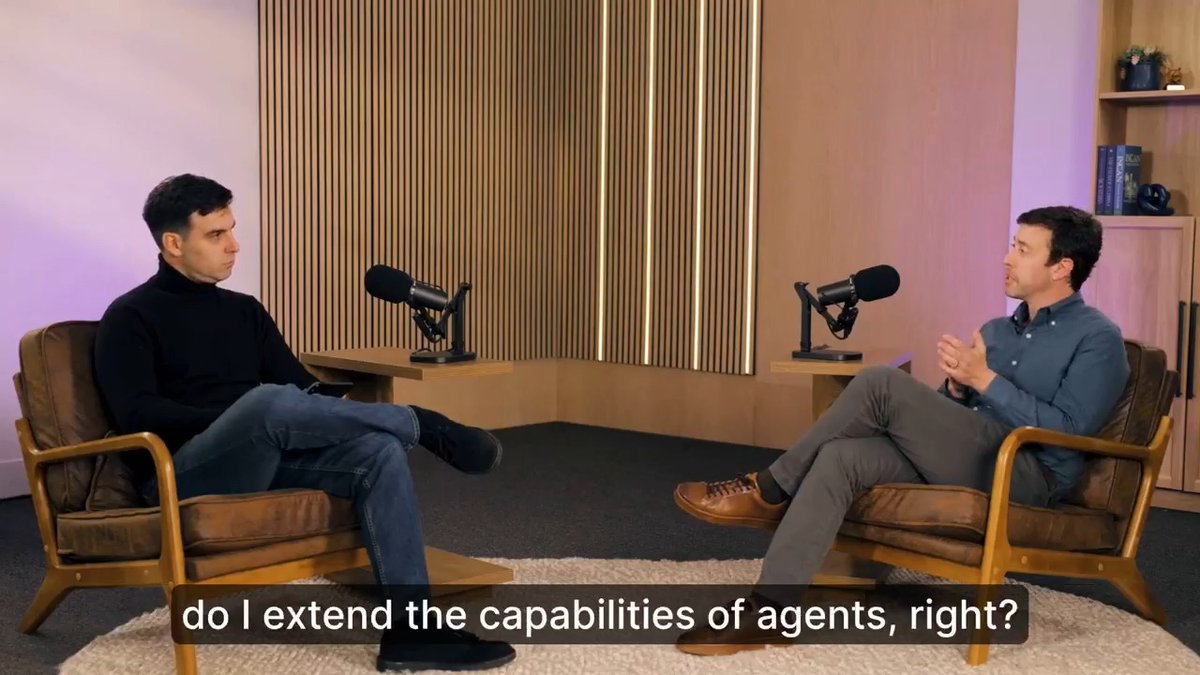
Memory isn’t just a feature in AI, it’s the difference between a system that responds and one that truly understands. In the first episode of The Long Walk, Sudarshan Kamath and I dive into how memory is shaping the next generation of voice agents, and why it’s becoming critical... show more

30,331 Aufrufe • vor 8 Monaten •via X (Twitter)
36 Kommentare

Full video here:
is the brains behind this operation. Hats off 🫡

@kamath_sutra It’s the biggest risk and opportunity in AI at the same time. Haha
@kamath_sutra So was the moon landing :)

@kamath_sutra memory to the moon
@kamath_sutra :)!!

@kamath_sutra Lfg! two legends collaborating
@conor_ai @kamath_sutra Our mission collab is loading

@kamath_sutra legend!
@kamath_sutra Back at you!

@kamath_sutra Since when has Short King CEO become Context King CEO?
@kamath_sutra 😉😉😉

@kamath_sutra Without memory, AI is just another parlor trick.
@kamath_sutra Without memory humans are also just another parlor trick
@kamath_sutra Facts

@kamath_sutra Love the music overlay here lol
@kamath_sutra Hats off to @RounakLenka

@kamath_sutra Complete video on why enterprise memory is important
@kamath_sutra Agreed

@kamath_sutra Love the music on the video
@kamath_sutra 🎸🎸

@kamath_sutra Wow this is really cool
@kamath_sutra Agreed!

@kamath_sutra So we're finally admitting RAG is a band-aid? Big if true.
@kamath_sutra Always have

@kamath_sutra Love this
@kamath_sutra Nice to meet you, stranger!

@kamath_sutra Memory pieces it altogether
@kamath_sutra Memory = intelligence

@kamath_sutra Interesting
@kamath_sutra +1

@kamath_sutra Every time I have to re-explain context to an AI, I feel this. Memory isn't a feature. It's the foundation. Loved the conversation.
@kamath_sutra Thanks! More to come soon :)

@kamath_sutra iconic sf duo
@0xJsum @kamath_sutra Let’s make it a trio with @Aiplus__
@kamath_sutra @Aiplus__ 😳