Loading video...

Video Failed to Load

Go Home

Merab thinks Ilia Topuria was laughing while watching Justin Gaethje vs Paddy Pimblett 👀 "They're just fighting hard but there is no good technique. Ilia will be laughing now because Ilia has such high level boxing." (via Merab “The Machine” Dvalishvili)

468,007 views • 8 months ago •via X (Twitter)

0 Comments

No comments available

Comments from the original post will appear here

Related Videos

I think this little boy has already discovered one of life’s greatest mysteries: babies are absolutely hilarious… even when they do absolutely nothing. 😂❤️ There is something wonderfully funny about watching children interact because they have absolutely no interest in following the social rules adults spend years learning. An adult sees a baby and usually asks, “How old is he?” “Is he sleeping well?” “Does he eat properly?” “Who does he look like?” This little boy seems to have a much simpler approach: “Look at this tiny human. I love him. He is extremely entertaining.” And honestly, I respect the logic. The baby isn't telling jokes. He isn't doing magic tricks. He isn't performing some impressive dance. He is basically just lying there, staring around, peacefully existing. And somehow, that is enough. The boy looks at him and starts laughing as if the baby has just delivered the funniest comedy routine of the year. This is one of the things I love most about children. Their sense of humor doesn't need an explanation. They can find something fascinating that adults would completely overlook. A funny face. A strange little sound. A pair of tiny feet. Someone blinking at the wrong moment. Or apparently… a baby simply lying there. And the funniest part is that the baby seems completely unaware that he has become the star of the show. He isn't trying to impress anyone. He isn't even trying to be funny. He has apparently been hired for the role of “adorable baby” and has decided to take his responsibilities very seriously by doing absolutely nothing. Meanwhile, his older companion is having the time of his life. This is what makes childhood so special. Children haven't yet developed that complicated filter that tells them what is supposed to be interesting and what isn't. They don't need an expensive toy, a spectacular view, or some carefully planned activity. Give them another child and five minutes, and somehow they will invent their own entertainment. Adults spend money looking for happiness. Children can apparently find it lying on a blanket. And there is something refreshing about that. We grow up and become experts at overthinking everything. We worry about appearances, expectations, productivity, and whether we're having a “meaningful” experience. Children don't seem to care. They see something they like, and they react. They laugh because they're happy. They get excited because something catches their attention. They stare because they're curious. And when they have absolutely no idea what is happening, they simply keep watching. Maybe that's why moments like this feel so refreshing. There is no performance, no hidden agenda, and no attempt to make the moment look deeper than it is. It's just one little boy having a surprisingly serious conversation with a baby who hasn't learned how to talk yet. And somehow, the conversation seems to be going very well. I don't know what the baby was thinking. Maybe he was thinking about milk. Maybe he was thinking about sleep. Maybe he was thinking, “Why is this guy laughing at me?” But the boy clearly wasn't asking for an explanation. He was having fun. And perhaps that's one of the sweetest things about childhood: You don't need a reason to laugh when everything around you is still new. Adults could probably use a little more of that. 😂❤️

💖🌼Music, Kindness, and Inspiring Stories

40,645 views • 28 days ago

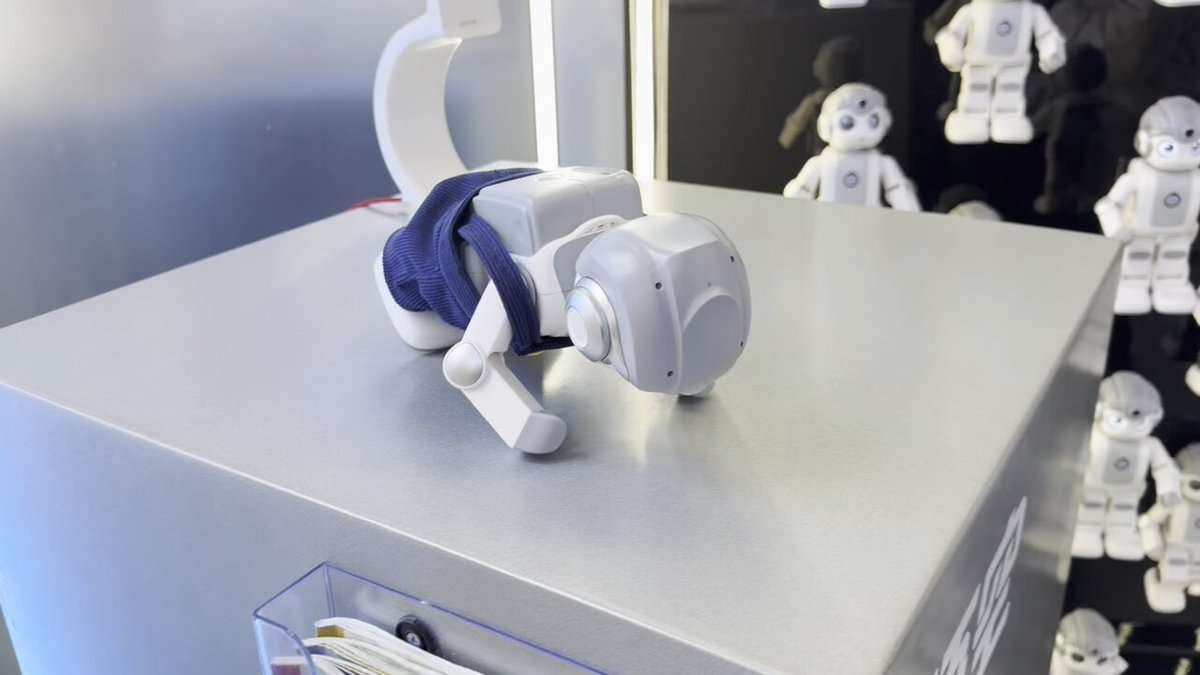
I spent a month in Shenzhen visiting factories and robotics companies, and the contrast with the U.S. was striking. While Figure and Boston Dynamics hide their humanoids behind closed doors, Chinese companies have massive showrooms open to the public. But what really stood out wasn't just the transparency, it was how good they are at selling. Take UBTech: they've already sold 1,200 humanoid units at $200k each to factories. And here's the kicker, these robots aren't even that useful yet. They can only pick up and drop boxes at 1/10th the speed of a human, and factories still need to hire system integrators to train them for specific tasks. My theory is that these factories are terrified of getting left behind in the robotics/AI wave. They're investing in new tech not because it's ready, but because they can't afford to wait. The second surprise was the breadth of their robotics portfolio. These companies aren't just building humanoids, they're deploying service robots everywhere: restaurants, hotels, apartments. Consumer robots are cleaning houses, pools, pet waste, dishes. They're covering the entire spectrum. But the education piece shocked me most. I picked up what I thought was a high school or college robotics textbook, it was for primary school. The government mandated AI and robotics education starting in elementary school. Almost every single school in China now has AI and robotics curriculum, complete with education robots so kids can learn by building. They're creating a generation that grows up fluent in robotics and AI. China owns the supply chain and the hardware stack. But here's what I think people are missing: the race isn't just about who can build robots faster or cheaper. The U.S. advantage has always been in the layer between hardware and human, the interaction design, the software intelligence, the intuitive interfaces that make complex technology feel natural. China is building the physical infrastructure, but they're also learning fast. Every deployed service robot, every classroom full of kids building with education kits, every factory running humanoids, that's all data collection at scale. The window for the U.S. to establish its wedge is narrowing. It's not enough to be better at AI or software anymore. We need to be building the integration layer, the intelligence that makes physical AI actually useful, not just impressive in a showroom. Because right now, China isn't just manufacturing robots. They're manufacturing a robotics-native culture, and that might be the most defensible moat of all.

Miyu Horiuchi

90,718 views • 7 months ago