Loading video...

Video Failed to Load

Go Home

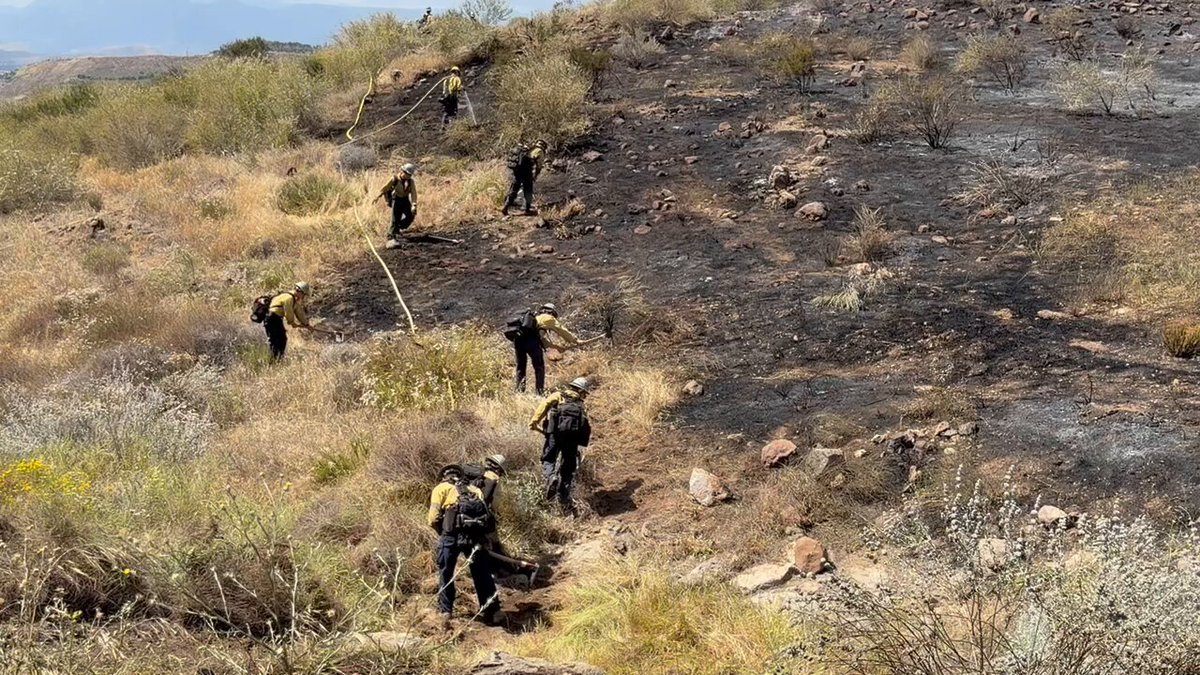
Miami-Dade Fire Rescue and the Florida Forest Service (FFS) continue working to contain two grass fires in West Miami-Dade. According to FFS, the Quarry 2 Fire has burned approximately 17,600 acres and is 97% contained, while the Well Fire has burned approximately 1,425 acres and is 60% contained. #MDFR...

11,585 views • 1 month ago •via X (Twitter)

0 Comments

No comments available

Comments from the original post will appear here

Related Videos

San Bernardino County Fire and CAL FIRE Partner on Front Country Fuel Reduction Project SAN BERNARDINO, CA — The San Bernardino County Fire Protection District, assisted by CAL FIRE, began Phase 1 of the North San Bernardino Front Country Fuel Reduction Project. This proactive wildfire mitigation effort is designed to reduce fire risk and improve protection for communities along the northern edge of the City of San Bernardino. The project will establish a 50-foot-wide fuel break extending approximately one mile from Highway 18 west to Devils Canyon. Crews will be removing vegetation and reducing available fuels that could contribute to wildfire growth and spread. Historically, several significant wildfires have originated in this area and threatened homes and neighborhoods throughout North San Bernardino. The construction of this fuel break will help slow the spread of future wildfires, improve firefighter access, and provide an additional layer of protection for residents and property. Work on the project is expected to take approximately one to two weeks to complete. Residents may see firefighting personnel, equipment, and vegetation removal operations occurring throughout the project area during this time. While this project represents an important investment in wildfire preparedness, San Bernardino County Fire reminds residents that the threat of wildfire exists year-round. There is no better time than now for homeowners to create and maintain defensible space around their homes by removing dead vegetation, clearing combustible materials, and following recommended fire-safe landscaping practices. For more information on defensible space and wildfire preparedness, visit Date: June 22, 2026 Location: San Bernardino, CA Media Contact: Christopher Prater, Public Information Officer, [email protected]/(909) 665-2383

San Bernardino County Fire

10,066 views • 1 month ago

To ensure your safety and the security of our community, a curfew is now in effect from 6:00 PM to 6:00 AM in all mandatory evacuation areas impacted by the Palisades and Eaton wildfires. We urge you to avoid these areas during these hours for your protection and to allow emergency personnel to work effectively. Who is exempt: Disaster response workers, credentialed media, and essential personnel may access these areas but must carry proper identification at all times. What you need to know: The Los Angeles County Sheriff’s Department (LASD) will strictly enforce this curfew. Violators may face serious consequences under LA County Code section 2.68.320, including fines of up to $1,000 or possible imprisonment. Enhanced safety measures: To safeguard evacuated neighborhoods, LASD has increased patrols. Officers will act swiftly to address any violations, ensuring that these areas remain secure during this critical time. How you can help: We kindly ask for your full cooperation. Please stay informed by checking official updates from fire authorities and emergency services. You can access the latest evacuation orders and fire conditions through: • •Local radio or television stations •Social media accounts of the LA County Fire Department and LASD Your safety is our highest priority. Together, we can navigate this challenging time and ensure the best outcomes for everyone involved. Thank you for your understanding and support. Stay safe, The Los Angeles County Sheriff’s Department

LA County Sheriffs

93,339 views • 1 year ago

From a Canadian firefighter who knows what’s going on: #canada #wildfire #smoke (Worth the read) “I know you may know, but people need to know and understand that most Canadian wildfire management agencies have fire “zonation” policies similar to Alaska. This means in large areas of their jurisdictions, especially in the northern part of the country, wildfires are left to run there natural course w little or no direct action or suppression. We’ll protect values at risk, ie. infrastructure, communities, critical habitat or culturally significant features on the landscape, we’ll map them and maybe try to burn them to natural barrier, fight one flank and let the rest roll (limited action) but we are not putting them out. On many of the fires we don’t even try. A number of these fires are huge boreal gobblers (I am currently assigned to a 250,000 ha fire, well over 600,000 acres and you could fit the org. chart on one side of a beer can). The only thing that is going to put out this fire out and many across the country is winter, 5 months from now. It’s going to be a long, smoky summer for everyone. You have a wide reach, it would be great if you can help people understand these dynamics in the Canadian wildfire scene when they’re bitching about the smoke. Cheers 🍻 and thanks.” Pretty decent picture of what’s going on. Thanks for the insight. In the industry we call this letting a fire “Do its thing”. It’s especially common in these vast boreal forests. Siberia does the same thing. Identify hazards and values at risk, mitigate, let it go. Cheers.

The Hotshot Wake Up

5,301,301 views • 3 years ago

A bag for life? In an airplane emergency evacuation, you should not bring your carry-on luggage. This is not a suggestion. It is a life-saving principle. Here’s why: 1. It slows down the evacuation. An evacuation is designed to be completed in 90 seconds or less. Every second matters. Opening overhead bins, pulling bags out, and maneuvering them down the aisle creates congestion and blocks exits. 2. It endangers other passengers. A narrow aisle becomes impassable when even a few people stop to retrieve luggage. Those behind may be trapped in smoke, fire, or toxic fumes with no way forward. 3. It can damage evacuation slides and rafts. Cabin baggage can puncture or tear slides. If a slide fails, an entire exit becomes unusable. That directly reduces survival chances for everyone on board. 4. It increases the risk of injury. Bags can strike people in the face, hit children, or cause passengers to fall while exiting. In a high-stress environment, even small obstacles become dangerous. 5. It shows disregard for crew authority. Cabin crew are trained to shout commands like “Leave everything!” for a reason. In some cases, they are trained to physically remove bags from passengers if necessary because the risk is that serious. Now consider two real-world scenarios: The 2019 crash of Aeroflot SSJ-100 Flight 1492 The aircraft made an overweight emergency landing in crosswind and windshear conditions after lightning strike and loss of key electrical systems. It bounced three times. On the third impact, the main landing gear collapsed, punctured the wing, and caused a major fuel spill and fire. Only 37 of the 78 occupants survived. Forty-one died. The final report blamed several passengers for retrieving cabin baggage from overhead bins during evacuation. While difficult to quantify exactly, it almost certainly slowed the process in a rapidly worsening fire. In a post-crash fire, seconds determine survival. On 2 January 2024, a Japan Airlines Airbus A350 was engulfed in flames after a runway collision in Tokyo. The cabin quickly filled with smoke, and the fire intensified outside. All passengers followed crew instructions and left their baggage behind. All 379 passengers and crew evacuated successfully. No fatalities. No serious injuries. The difference was discipline and strict adherence to instructions. If passengers are determined to take baggage, there is very little cabin crew can realistically do in the chaos. That is why passenger behaviour is critical. So let’s settle this: No bag is worth a life. Not yours. Not someone else’s. In an evacuation, leave everything behind and get out.

Turbine Traveller

52,433 views • 5 months ago

You’re on a journey on this kind of lonely road with your car and your car suddenly develops a fault, You can’t call for help and your lines can’t be reached due to network issues, what do you do? Except the car will stop and the engine won’t come up again, please reduce your speed and accelerate softly till you get to a nearby town, if it is an overheating issue, keep driving, put the gear in the neutral position and switch off the engine and let the car keep moving, switch it back on when you have to ascend a hilly road and the car can’t move freely on its own again. If the battery signal comes up while driving, chances are that your alternator has failed, or the alternator belt is damaged, apply the same method and switch off your AC, radio system or anything that may drain the battery while driving till you get to a safe place. If it is a flat tyre, maintain a low speed till you get to a safe place to change and use your spare, keep moving. Yes!!! Damage that tyre till you get to a safe place, just keep moving and make sure you have a spare tyre always and it is in a good condition. If the engine suddenly goes off on top speed, chances are that a fuse is damaged and this is why I will make a thread on how to identify different fuses and how to have them fixed temporarily in case of Emergencies. If your car jerks or experiences a lazy movement while driving, it’s likely to be a fuel related issue, fuel pump most likely, switch off the engine intermittently and put the gear in Neutral position, keep moving… if the fuel pump rests for about 5mins, it’ll pick up back when you ignite the engine, this will/may at least take you to a safe place or where you can have access to network to make calls. If you hear strange sounds like knocking sounds or the oil signal starts to blink, relax and reduce your speed, keep moving. Manage it till you get to a safe place or can have access to network. If your gear/transmission system isn’t selecting well, apply the same method, reduce your speed but keep moving, slow movement is better than no movement, your life and safety matters a lot. Please note that there are some Mechanical issues that nothing can solve on the road except patience and just to pray to God for safety and help, for example, you run into a pothole unknowingly and the oil pan hits the road and your engine or gear oil leaks away, or your ball joint or tie rod head pulls out, I’ll suggest you leave the car there, roll up your windows and lock up the car and start trekking till you get network or help, staying with the car may make you vulnerable to attacks or attract unexpected company, just keep walking away from the car for safety. Most importantly, please stay safe and be conscious of your environment. Be friendly with your Mechanic too or any Mechanic you see on the road. Don’t manage faults in cars and risk traveling with it.

Wanjohn D-Mecho

437,496 views • 2 years ago