Video yükleniyor...

Video Yüklenemedi

Ana Sayfaya Dön

Michael Douglas on why he agreed to star in 'Basic Instinct' (1992) & the strong response by the gay community against the movie: "I took the movie because I felt that we were getting so conservative. It was becoming the No Generation. It was the height of the AIDS...

38,598 görüntüleme • 4 ay önce •via X (Twitter)

0 Yorum

Yorum bulunmuyor

Orijinal gönderinin yorumları burada görünecek

Benzer Videolar

Blake Edwards on the conditions he laid out before accepting to direct "A Shot in the Dark" (1964): "'A Shot in the Dark' (1964) is nothing like Marcel Archard’s play, that’s for a start. I was asked to save the situation. They had quite a bit of money involved in this project. Peter Sellers was threatening to pull out because he didn’t like the screenplay. He said that the only way he would continue with the project would be if I took it over. I said that the only way I could possibly take it over, under such emergency conditions, would be that I would not be obliged to do anything like Archard’s play because a) I didn’t like it, b) I thought it was not a motion picture and c) I wasn’t ready to make a movie at that point. So they asked me what I wanted to do because the picture had to start in something like four weeks. I said that if they wanted me to save them, I’d have to take something with which I was familiar to begin with. I was familiar with the character of Clouseau. I needed a detective, somebody to solve a murder. I couldn’t throw the whole thing out. I had to use the idea that the maid was accused of killing the chaffeur and this had to be solved. So I thought that Peter Sellers was just the natural thing and that now I was going to try to be as broad with the character as I could be. “How far can I go now in terms of Inspector Clouseau?” I wrote the screenplay and was on the stage in four weeks with it. Fortunately, it turned out to be a reasonably funny movie. It proved something for me—that if a gag is well-designed you can pull it off." (Blake Edwards' interview with Jean-Francois Hauduroy, Cahiers du cinéma, 1966) P.S: On this 62 years ago, "A Shot in the Dark" (1964) premiered in New York City, USA.

DepressedBergman

20,460 görüntüleme • 1 ay önce

James Woods & Oliver Stone explain how this scene criticising the American foreign policy was filmed, it's importance & how they fought to have it in the final cut of 'Salvador' (1986): "James Woods: The big final speech with Chester Colby, the CIA guy and the general; Oliver is famous for this, he comes up with that entire speech to me. I was just supposed to sit, to have like a couple of lines & give the the pictures [to them]. [Then] they go, "this stuff's sh!t". I [thought] okay fine [and] I leave. Oliver comes up with the entire history of the battle of El Salvador and American involvement, literally five pages. He asked "do you think you could throw some of this stuff in?" I said I don't know how to pronounce and I what the f**k. [Seeing] all these names I asked, "when do you want to shoot this?" he said, "now". I remember standing by a wall and somebody comes to me I said look, "I've got to learn this stuff" and literally five minutes later we shot it and it was the only time I think I'm really any good in the movie, because I'm really trying to make a point as I can't remember anything because he just gave it to me; so I felt more real there and the rest of time [I felt] like acting, trying to be an actor, but that was the one time that he actually came up and just threw the crap at me and I thought okay I guess I'll try to remember it. Oliver Stone: At that point we were so close to the edge. We were almost closed down several times. The movie was always financially in dire shape so I said, "I got to, this is probably the last movie I make". I really thought so. [I decided] to throw in everything I feel about this situation. I don't think it was last minute [speech] but I did hit him with the speech because [I felt] I this is our only chance [or else] the American people were never going to hear it. We fought for it all the way through. People wanted to cut it of course for various reasons talkie and all that but no we stuck with it and we said we're going to make this movie and we're going to say this, it's never been said before and I'm glad we did do it. I really am [glad] although it is a little bit static, but the argument remains a valid one. Although it might be a little bit stiff, it is valid and it's still an argument that exists to this day. Who thought in 1986 that this thing was going to get even worse? We thought the issue of Vietnam was behind us. I was shocked when I went to South Central America and saw American soldiers all over Honduras fighting the contras in Nicaragua against the the revolutionaries. It was all 'Deja Vu' and I was shocked and that's why this movie got made- because we didn't want another Vietnam but we didn't see what was coming." ("NYFF Q&A: Oliver Stone & James Woods, 'Salvador'", 2011)

DepressedBergman

124,334 görüntüleme • 8 ay önce

'"Jaws' (1975) was a fun movie to watch but not a fun movie to make. It was made under the worst of conditions. People versus the eternal sea. The sea won the battle—but where we won was with audiences in every country." --- Steven Spielberg Full Excerpt: "Being on 'Jaws' became a living nightmare, and not because I didn’t know what I was doing or because I was struggling to find the movie in my head. I knew the film I wanted to make. I just couldn’t get the movie I had in mind on film as quickly as I wanted. When we got out to the ocean, a lot of the crew got seasick, and once that passed, a kind of lethargy set in because we weren’t seemingly getting anything done. The end never seemed to be in sight, and yet I was the only person who could reassure the crew that there would be an end to this some day. I remember on the 60th day of shooting, crew members came to me asking, “When are we going to be done with this movie?” And I would honestly say, “I don’t know. We could finish it if I get fired, if I’m dragged off the movie and replaced by someone who could complete it quickly. Or maybe they’ll shut us down. ” Whenever I talked about the possibility of me being fired or the show being shut down, most of the crew was happy about it—this wasn’t a labor of love for anybody. This was a physically impossible chore and people wanted to go home. (...) I never left the island because I knew that, if I did, I would never come back. Yet I never wanted to quit. Ever. I had terrible, despairing days where I could see nobody hiring me again, and I could imagine Jaws being my last studio movie. I thought I would probably go on to make independent films if I could get doctors and dentists to put up enough money to finance a little movie with four people playing cards in a room. Basically, I didn’t have much hope for any longevity for my career, but I wanted to finish Jaws because I had never stopped believing in the movie. 'Jaws' (1975) was a fun movie to watch but not a fun movie to make. It was made under the worst of conditions. People versus the eternal sea. The sea won the battle—but where we won was with audiences in every country." ("‘Jaws Became a Living Nightmare’: Steven Spielberg's Ultimate Tell-All Interview", Anthony Breznican, Vanity Fair, 2023) P.S: On this day, 51 years ago, "Jaws" (1975) was released in the USA.

DepressedBergman

43,406 görüntüleme • 1 ay önce

Paul Sorvino, who played Paulie in Goodfellas, nearly backed out of the film two days before production. The self-described “softie” had spent months agonizing over the role, convinced he didn’t have what it took to play a mafia boss. He explains… “I didn’t think I could do it, because it was not the kind of role that I felt I really had an affinity for. The externals were easy: middle-aged Italian man. The difficulty was in the lethality that I felt I didn’t possess. And so even though I wanted to do it, I was sort of faking when I went to the meeting and giving Martin the impression that I knew exactly what to do with it - when I had no idea what to do with it. But I wanted so much to be in a Scorsese movie. I guess he just figured I was capable of it. It was about two months of preparation to try to get this quality that I knew it called for. I was kind of agonizing over it - I was thinking, “I’m gonna ruin this movie.” I was looking for something to get out of it till two days before we started production. By virtue of constantly searching to find that kind of quality that killers have, I was preparing to go out one night, passed by the mirror to check for spinach in the teeth, and I jumped back. I literally frightened myself. I saw a look in my eyes that frightened me. ‘Who was that?’ I said, ‘That’s Paulie.’ And once I found it, the role became just a duck in water. It just was so easy to do.”

Gangster Cinema Central

567,725 görüntüleme • 2 ay önce

This man was criticized for expecting a “thank you” for a good deed. He always saw the same man walking when he drove to work. He assumed the man was walking because he did not have any other means of transportation. He used his own money and bought the man an electric scooter, the man took the scooter and just silently walked away, no thank you or anything else at all. I don’t think that was too much to ask, a thank you goes a long way, otherwise it makes people look ungrateful. Back in college, I had a classmate that I always saw walking home after class. It didn’t matter whether it was raining or snowing, or hot out. Whenever I drove past him he always looked miserable and I could tell he didn’t like to walk all the time. In class I had asked him where he lived, and I found out it was on my way home so I offered to drop him off because it was really cold out and had snowed about a foot. He agreed and we chatted on the way home, nothing serious just pleasant conversation. I dropped him off and went on my way home. For me this was a one time thing, I only offered because how bad it was snowing. After class the next day, he walked with me and when I got to my car he got in. I didn’t agree or offer him a ride that day but he assumed that since I was ok with giving him a ride the day prior that I would be ok with it this day too. I didn’t say anything about it because at this point I didn’t care really. So the next day came and went, once again he walked with me to the car but that day was different. I wouldn’t be going his way because I had to work after class. So before I got to the car I said “I’ll see you tomorrow.” He looked dumbfounded and said aren’t you taking me home? I said no, I have to get to work. He then asked me how he would get home, and I told him the same way you always have. He then gave me excuses for why I was being a jerk because I was making him walk in the cold. I didn’t argue I just told him I helped him out when I could, but I wasn’t about to go out of my way because he didn’t have a car and besides I didn’t want to be late for work. He didn’t speak to me for the rest of the semester because of it, something tells me I was better off not offering to help in the first place.

SonnyBoy🇺🇸

36,929 görüntüleme • 9 gün önce

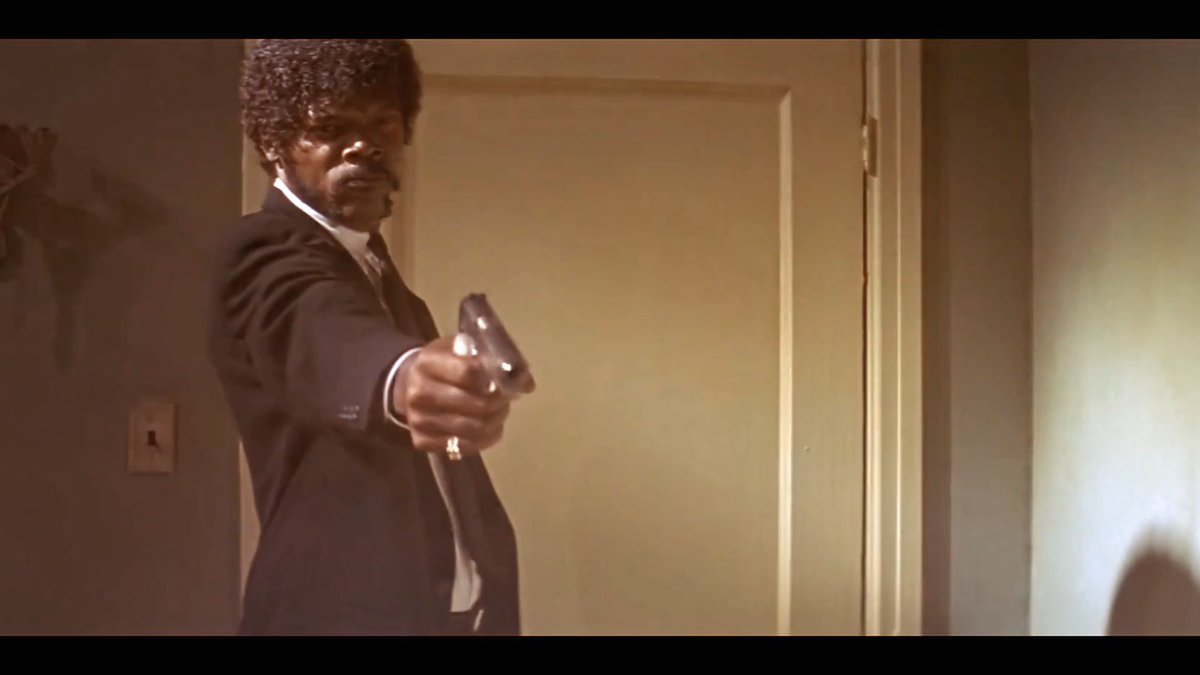
Samuel L. Jackson explains how he landed the role of Jules in Pulp Fiction, and what it was like seeing the film for the first time on the big screen: “Pulp Fiction and I came together in a very strange kind of way. I remember auditioning for Quentin for Reservoir Dogs in New York (for the role of of Detective Jim Holdaway, Mr. Orange’s police contact). And apparently I didn't get that role. But I was at Sundance the year that he screened it for the first time. I was sitting there and I watched that movie - I was awed by it. I mean, there were people running up the aisles when Michael Madsen was cutting the cop's ear off. People were going, "Oh my God, this is horrible!" All these “auteurs” were running out of the theatre. I was like, "This is good. This is happening. This is different." So after the film, I walked up to Quentin and said, "This film's amazing, man. It's great." And he looked at me and said, "Hey! How'd you like the guy who got your part?" And I was amazed that he even remembered who I was - but he remembered me. A year or so later, I got a phone call saying Quentin Tarantino wants to have dinner with you, because he'd seen Jungle Fever and he liked that Gator character. When we had dinner, we were sitting there talking. We started talking about Hong Kong films and cartoons and foreign movies and obscure things that we watched, horror movies. We found out we liked the same kind of stuff. And he told me he was writing this thing, and he was writing this part with me in mind. He was going to send it to me. I went off to do another film. I was in the backwoods of Virginia somewhere doing a film, and the script came. A little plain brown wrapper from Jersey Films. And Jersey's got these gangster images on the logo. And it said, "If you show this script to anybody, two guys named Ernie and Luigi will come and break both of your legs." Whatever. I went, "Yeah, right." So I sat down and read it. Boom. I read this thing. It's like, "Oh my God. This is awesome." And then I said to myself, "Nobody writes a script this good. There's no way that this script is as good as I thought it was." I closed it. I opened it again. I read it immediately. Okay. This is great - If whoever produces this film lets him shoot exactly what I just read, if they stay away from it, they don't try to edit any of this stuff out - this is going to be a great film. It's going to be kind of audience-specific, because I like that kind of stuff. I have friends that I knew would like it. It was a generational kind of film. I never thought it would cross over and do all this stuff. We shot it. We had a great time doing it. And the first time I actually saw the film was at the Cannes Film Festival. That night, it screened, and I was sitting there watching the film. The audience was loving this movie, loving it. About halfway through, I realized there were subtitles at the bottom of it. So I said, "Hey, these people are reading it, and they're getting it. This might be special. This really might be something special." And actually, by the time it was over, there were tears running down my face. I was just so pleased that I was part of that particular film… I never felt that satisfied, and that kind of full about a performance and about being part of something as I was in that particular moment.” Quote comes from an Interview with the American Film Institute 2010

Gangster Cinema Central

85,366 görüntüleme • 1 ay önce

David Friedberg: The Eric Swalwell allegations were widely known about by California insiders, but held back for the perfect moment. Was this a hit job to clear the path for a preferred candidate in California? “Back in December, when it was first rumored that Swalwell was going to run for governor, I started making some calls to various folks to be like, ‘Hey, what do we think of this guy? Is he going to be a good candidate?’ I spoke to several people who independently told me that there's knowledge about this guy sending pics to employees, and that this guy has a bunch of stuff that's going to come out about him. And I largely kind of dismissed it, because I was like, if this is true, this would've all come out already. If multiple people are telling me about this, then I've got to assume that it's a rumor that's being used to block him from running for governor. And then everything that I had been told started to come out in the last week. So the striking aspect of all of this for me was how much knowledge there was about these various incidents with the guy, how so many people had this knowledge, and how no one had actually brought the knowledge to bear. Which begs the question, why did they not do what was right by the victims? Or, why did the victims sit on the sidelines waiting for the right moment to all come out together? These were all being held back purposefully and deliberately for a very particular moment in time when they were all brought forward to be used. And that's what was so striking to me is just how coordinated all of this was. My sense of it is that there are certain insiders, and he's not an insider. Katie Porter, I think, is who the Democratic establishment wants to be governor. She's an insider to national Democrats, she's an insider to California Democrats, and I think that she's the preferred candidate.”

The All-In Podcast

34,980 görüntüleme • 3 ay önce